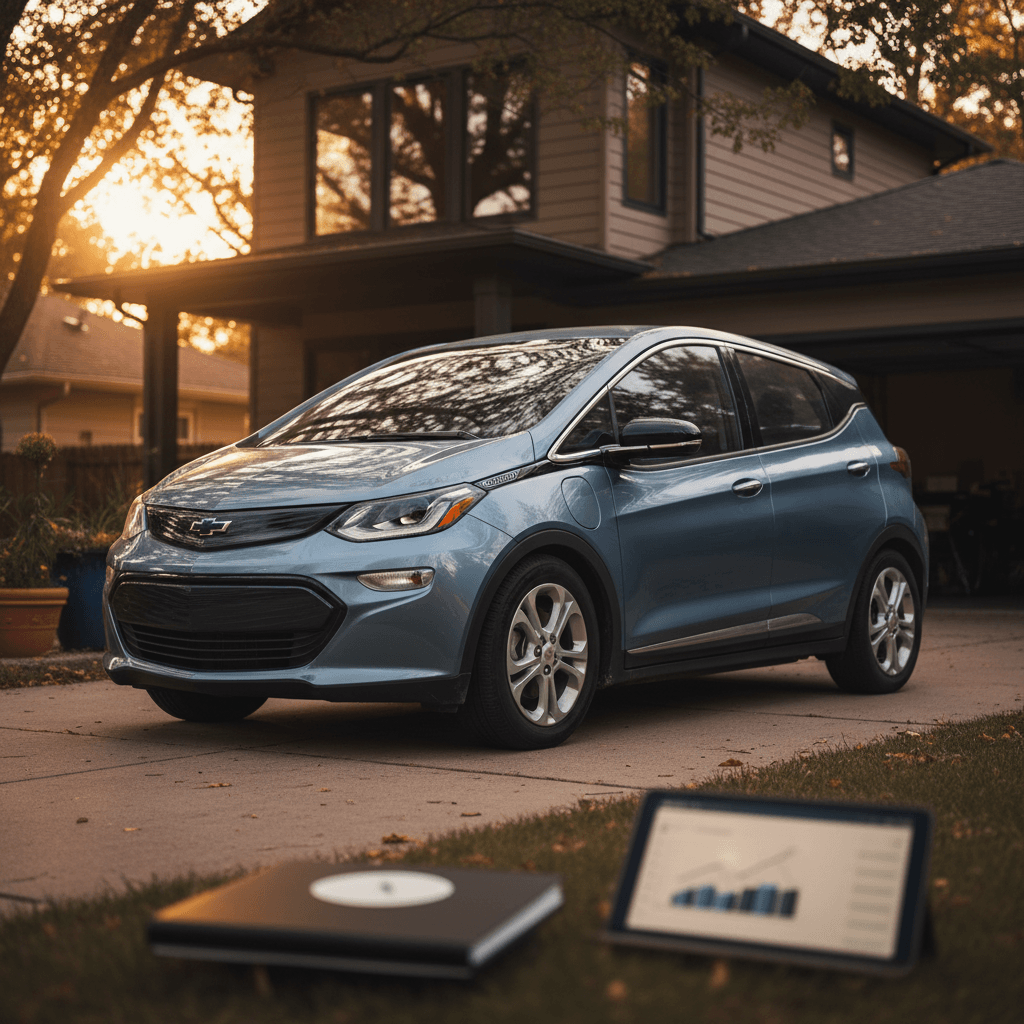
If you’re thinking about selling a 2022 Chevrolet Bolt EV in 2026, you’re in an interesting spot. The car has already taken its biggest depreciation hit, Chevy has ended this generation of Bolt, and the battery recall story has left many owners wondering what their cars are really worth. The good news: with the right pricing and prep, you can still unlock strong value when you sell your 2022 Bolt EV.
Why 2022 Bolt EV values are tricky
What a 2022 Chevrolet Bolt EV Is Worth in 2026
Let’s start with ballpark numbers. As of early 2026, major pricing guides put a 2022 Chevrolet Bolt EV somewhere in the low-to-high teens depending on condition, trim, location, and mileage. For example, one widely used appraisal tool pegs typical trade‑in/retail values around the roughly $12,000–$18,000 range for average‑mileage cars in typical condition. Actual offers in your ZIP code may sit a bit lower or higher, but that’s the right neighborhood.
2022 Bolt EV Value Snapshot (Typical 2026 Ranges)
Think of those numbers as the playing field, not the final score. A 2022 Bolt EV with higher miles, prior damage, or open recalls may land below those ranges. A car with unusually low miles, a documented battery replacement, and spotless history can realistically push to the top end or a bit beyond, especially in EV‑friendly metro areas.
Don’t forget local demand
Key Factors That Change Your 2022 Bolt EV Value
Two 2022 Bolts can sit side‑by‑side and differ in value by thousands of dollars. When you’re trying to sell, these are the variables smart buyers, and modern platforms like Recharged, will zero in on.
Main Value Drivers for a 2022 Bolt EV
Each factor can move your sale price meaningfully up or down
Mileage & use
Battery recall status
Accident & title history
Battery health & range
Remaining warranty
Trim, options & market
Document everything before you list
How the Battery Recall & Warranty Affect What You Can Ask
You can’t talk about 2022 Chevrolet Bolt EV value without talking about the high‑voltage battery. GM’s well‑publicized battery fire recall ultimately encompassed all 2017–2022 Bolt EVs and EUVs, and many cars received new battery modules or full packs. That history still shapes what knowledgeable buyers are willing to pay.
- Many 2022 Bolts either left the factory with the updated battery hardware or had new modules/packs installed under recall.
- A fresh or low‑mileage replacement battery can, in practice, be the single most valuable component on the car.
- If your car only received software limits (for example, temporarily capped to ~80% state of charge) and no hardware replacement, some buyers will see more risk and discount accordingly.
- The standard 8‑year/100,000‑mile battery and electric component warranty is still in force on 2022 models, and replacement packs may carry revised coverage dates, something buyers love to see.
Why a new pack can boost your price
Make sure you understand exactly what was done on your car. Log into your Chevy owner account or call the EV concierge line and ask for recall and warranty history in writing. For serious buyers, or if you list with Recharged, that information becomes part of the story that supports your price.
How to Price Your 2022 Bolt EV to Actually Sell
The worst mistake you can make is to anchor on a single website’s number. To land on a realistic price for your 2022 Bolt EV, you’ll want to triangulate across guides, real‑world listings, and actual offers.
Building a Realistic Price Range for Your 2022 Bolt EV
Use multiple data points, then choose a strategy based on how quickly you want to sell.
| Source | What You’ll See | How to Use It | Typical Result |
|---|---|---|---|
| Online price guides (KBB, Edmunds, etc.) | Trade‑in, private‑party, and dealer retail ranges based on generic assumptions. | Set your initial expectations and define rough low/medium/high values. | Gives a starting band, often a bit optimistic for private sellers. |
| Local listings (marketplaces, classifieds) | Real asking prices for 2022 Bolts near you. | Compare trim, miles, and condition directly to your car. | Shows where buyers in your area get numb to high prices. |
| Instant‑offer sites & dealer appraisals | Real offers with the car’s VIN, options, and mileage factored in. | Establish a floor, what you could get if you sold quickly, today. | Often 10–25% below the price you might get in a well‑executed private sale. |
| Specialized EV platforms like Recharged | Value ranges tied to battery health, history, and current EV demand. | Set a data‑backed ask that reflects your car’s real‑world strengths. | Helps justify a better price with objective battery and pricing data. |
Aim for a price that’s competitive, but leaves a little room to negotiate.
Step-by-Step: Setting Your Asking Price
1. Define your floor number
Use instant‑offer quotes and dealer trade‑in values to decide the minimum you’d be willing to accept for your 2022 Bolt EV. That’s your walk‑away point during negotiation.
2. Study comparable local listings
Search for 2022 Bolts with similar mileage, trim, and options within 100–200 miles. Note what’s actually selling, not just what’s been sitting for months.
3. Adjust for your car’s specifics
Add value for a documented battery replacement, remaining battery warranty, one‑owner history, and clean cosmetic condition. Subtract for high miles, accidents, or open recalls.
4. Pick a strategy: speed vs. money
If you need to sell quickly, price your car in the lower half of the local range. If you can wait and your Bolt is especially clean, you can start near the top and expect negotiations.
5. Leave room to negotiate
Most buyers expect a small win. Price the car $500–$1,000 above your true target number at typical used‑car price points like $14,995 instead of $14,373.
Leverage a professional valuation
Best Ways to Sell: Trade-In, Private Sale, or Recharged
There’s no single “right” way to sell every 2022 Bolt EV. The best choice depends on your priority: maximum dollars, minimal hassle, or something in between.
Dealer trade‑in
- Pros: Fast, rolled into your next deal, no strangers or paperwork headaches.
- Cons: Typically the lowest dollar amount; many franchised dealers still undervalue used EVs.
- Best for: If you’re buying another car the same day and prioritize convenience over every last dollar.
Private sale
- Pros: Highest potential sale price, especially for clean, well‑documented Bolts.
- Cons: Time‑consuming, you handle test drives, buyer questions, payment safety, and title work.
- Best for: Owners comfortable managing listings and negotiations who want to squeeze out top value.
Selling with Recharged
- Pros: EV‑specialist team, Recharged Score battery report, fair market pricing, and help handling offers and paperwork.
- Cons: Not every location or vehicle fits every program; timing and exact options vary.
- Best for: Owners who want more money than a trade‑in but less hassle than a do‑it‑yourself sale.
How Recharged can help you sell
Step-by-Step: Preparing Your 2022 Bolt EV for Sale
You don’t have to detail your car like a concours show entrant to move it, but a half‑day of prep can easily be worth several hundred dollars, sometimes more. Buyers form their impression long before they ask about kilowatt‑hours and warranty dates.
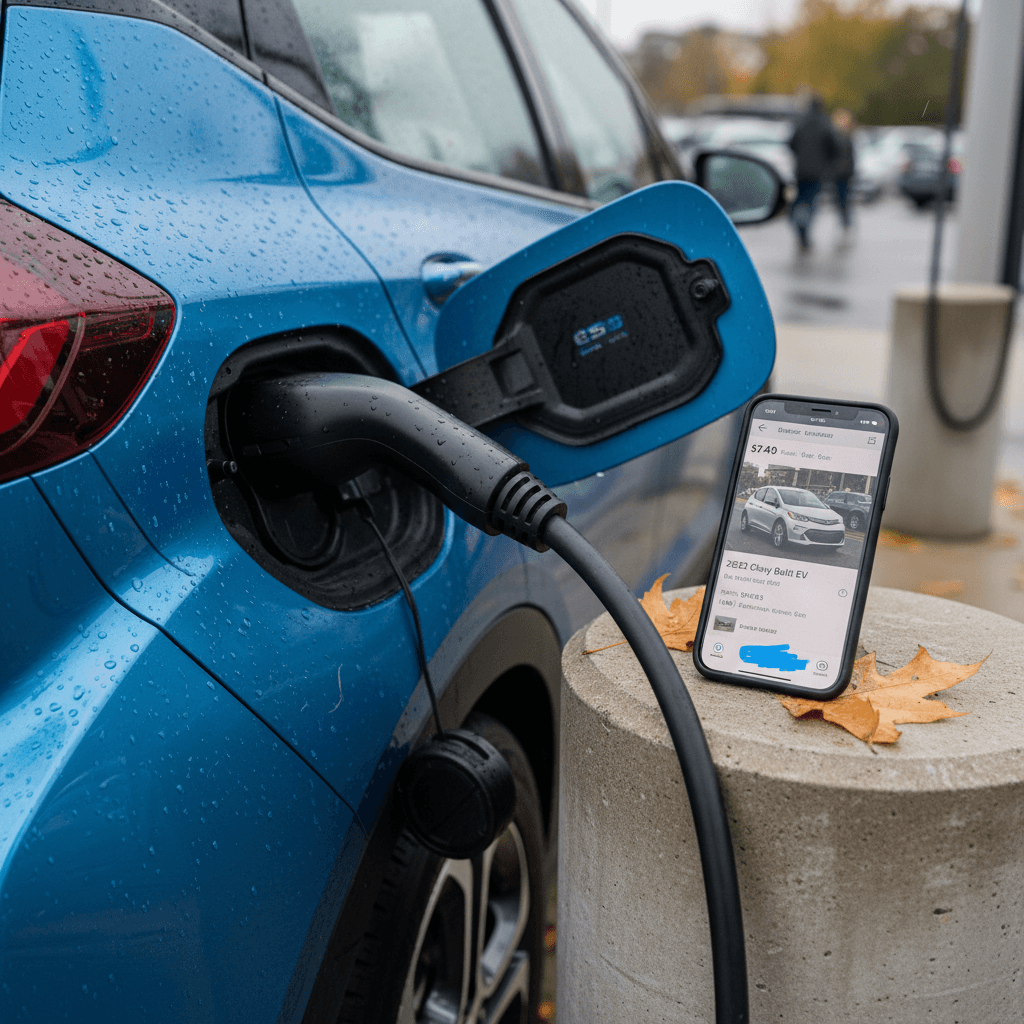
Pre‑Sale Checklist for a 2022 Bolt EV
1. Complete all recalls and open campaigns
Schedule a dealer visit to ensure every recall, battery, seatbelt pretensioner, software updates, shows as completed. Keep the repair orders; they’re worth including in your listing photos.
2. Get the car truly clean
A professional interior and exterior detail pays for itself. At minimum, vacuum thoroughly, clean glass, wipe touchscreens, and remove personal items and stickers.
3. Charge the battery for showings
Aim to meet test‑drive buyers with 70–100% state of charge. Seeing an honest indicated range near the EPA‑rated 259 miles inspires confidence in battery health.
4. Gather documents in one folder
Title (if you have it), registration, key fobs, owner’s manuals, charging cable, service records, recall paperwork, and any battery‑diagnostic reports such as a <strong>Recharged Score</strong>.
5. Fix inexpensive turn‑offs
Replace burned‑out bulbs, address obvious cosmetic scuffs where a simple touch‑up or paintless dent repair will help, and clear any warning lights before listing.
6. Photograph like a pro
Shoot in daylight with the car clean and dry. Capture all four corners, interior, instrument panel with range shown, charger and port, and any flaws you’re disclosing.
Be honest about flaws
Negotiation Strategies Specific to Bolt EV Buyers
Shoppers considering a 2022 Bolt EV tend to be more informed than the average used‑car buyer. They’ve read about recalls, they have opinions about charging, and many are cross‑shopping other affordable EVs. Use that to your advantage by preparing for the questions they’re likely to ask.
- Be ready to explain the recall history calmly, with paperwork.
- Know your recent average efficiency (mi/kWh) and typical range at different states of charge.
- Have an answer for why you’re selling that doesn’t sound like you’re fleeing a problem.
- Decide in advance how you’ll respond if a buyer brings up future battery issues or resale anxiety.
Common buyer concern: the recall
Many buyers will open with some version of, “Did this one have the fire recall?” Rather than getting defensive, answer in specifics:
- Explain what work was done and when.
- Show the documentation and point out the remaining battery warranty.
- If you have a third‑party or Recharged Score battery report, use it to demonstrate real‑world health and range.
Common buyer concern: long‑term value
Some shoppers worry that the end of this Bolt generation or broader EV market headlines will crush resale. You can’t predict the future, but you can frame the present:
- Highlight the total cost of ownership advantages, fuel savings and low maintenance.
- Note that early, steep depreciation actually makes used Bolt EVs a value play.
- Emphasize that they’re buying after the biggest price drops have already happened.
Know your non‑price levers
Should You Sell Your 2022 Bolt EV Now or Keep It?
Deciding whether to sell your 2022 Bolt EV in 2026 isn’t just about today’s value, it’s also about what keeping it looks like over the next 3–5 years. The Bolt is efficient, practical, and cheap to run, but like most EVs, it depreciates faster than many comparable gas cars.
Sell Now vs. Keep Driving: Quick Comparison
Use this to sanity‑check your timing decision
Reasons to sell now
- You’re approaching the mileage where battery warranty coverage will expire in the next few years.
- You want a newer EV with faster DC fast‑charging, more range, or advanced driver‑assist tech.
- Your local used‑EV market is still relatively strong, and you’ve received solid offers.
- You simply don’t need the car anymore and prefer cash or lower monthly payments.
Reasons to hold onto it
- Your Bolt meets your daily range needs comfortably and cheaply.
- You have a replacement or low‑mileage battery with years of warranty left.
- You don’t yet see a clear upgrade that justifies the cost difference.
- Insurance and registration costs are manageable, and you like the car.
“A well‑maintained 2022 Bolt EV with documented battery history can be one of the best values in the used‑EV market, whether you’re the seller capturing that value, or the buyer enjoying it.”
If you decide selling is the right move, your job is to turn that underlying value into real money. That means pricing with data, presenting your Bolt EV honestly and professionally, and choosing a selling channel that matches your appetite for effort and risk. Whether you trade in, sell privately, or work with an EV‑specialist marketplace like Recharged, understanding how 2022 Chevrolet Bolt EV value really works in 2026 is your best leverage.