If you’re cross‑shopping a Lexus RX against the all‑electric Lexus RZ 450e, the obvious question is: which one will actually cost less to own? Sticker price is only the start. Fuel or charging, maintenance, insurance, depreciation and even battery health all shape total cost of ownership over 5–10 years.
Gas vs electric in the same showroom
Lexus RX vs RZ 450e: who this guide is for
This breakdown of Lexus RX vs Lexus RZ 450e total cost of ownership is geared toward shoppers who are: considering a new or used luxury SUV; debating whether their next Lexus should be gas, hybrid or fully electric; or wondering how a used EV holds up financially. We’ll focus on U.S. owners, but the principles apply broadly.
- Current RX owners debating whether their next vehicle should be electric
- Shoppers comparing a used RX to a used or nearly new RZ 450e
- Drivers putting 8,000–15,000 miles a year on mostly mixed city/highway routes
- Budget‑minded luxury buyers who care more about total monthly cost than MSRP bragging rights
How to use this guide
Quick take: which Lexus costs less to own?
At a glance: RX vs RZ 450e cost highlights
In many typical U.S. scenarios, an RZ 450e will cost less month‑to‑month to operate than a comparable RX, thanks to much lower energy and maintenance costs, if you drive enough miles and can charge at home. But the RX still wins on predictable resale value and long‑distance flexibility, and cheap gas in your area can tilt the equation back toward the RX.
Key specs that shape total cost of ownership
Lexus RX vs Lexus RZ 450e: core specs that impact your wallet
Approximate U.S.-market specs for commonly cross‑shopped trims. Always verify specific model‑year numbers when you buy.
| Spec | Lexus RX (gas V6 or turbo) | Lexus RX Hybrid | Lexus RZ 450e (AWD) |
|---|---|---|---|
| Powertrain | Gasoline ICE | Gas–electric hybrid | Battery‑electric (dual motor) |
| EPA combined efficiency | ~24–25 mpg | ~36–37 mpg | ~3.0 mi/kWh (roughly) |
| Battery capacity / tank | ~17 gal tank | ~17 gal tank + small battery | ~71–72 kWh usable |
| Official range | ~410–450 mi | Similar or higher than gas | ~220–230 mi depending on wheels |
| Recommended fuel/energy | Premium unleaded in many trims | Regular or premium unleaded | Electricity (AC and DC fast charging) |
These specs drive fuel/charging bills, maintenance needs and depreciation over time.
Wheel size and options matter
Purchase price, incentives and financing
MSRP and transaction prices move, but the pattern is consistent: RX and RZ 450e pricing overlaps at the upper end of the RX lineup and the mid‑to‑upper trims of the RZ. Electric incentives and financing, though, can shift real cost quickly, especially on a used EV.
Upfront cost levers that change the math
Price tags matter, but so do incentives and interest rates.
Sticker and transaction price
Depending on model year and trim, a new RX can undercut a well‑equipped RZ, or vice versa. Dealer discounts and supply levels tend to be more aggressive on gas SUVs in some regions and on EVs in others.
EV incentives and rebates
The RZ 450e may qualify for federal or state EV incentives, especially if you buy used or lease. These can effectively knock thousands off the price versus a comparable RX.
Financing terms
Captive finance arms sometimes promote subvented APRs or lease specials on EVs to move volume. A slightly higher price with a lower rate can bring the monthly payment close to an RX with a higher APR.
Used EV sweet spot
Fuel vs electricity: what you’ll really spend to drive
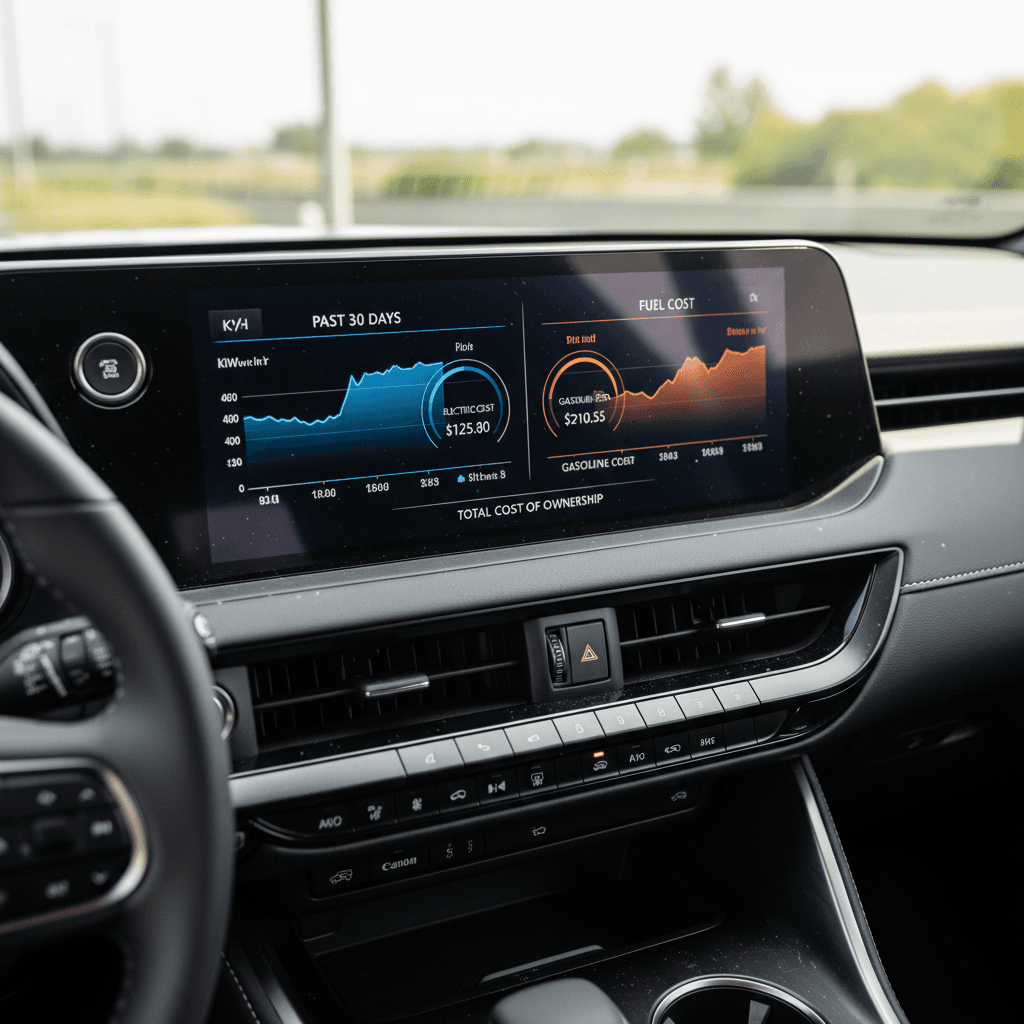
Energy is often the biggest day‑to‑day difference between an RX and an RZ 450e. Let’s use simple, realistic assumptions to keep things apples‑to‑apples. Update the numbers for your local gas and electricity rates.
Example RX monthly fuel cost
- Mileage: 1,000 miles/month
- Real‑world efficiency (gas RX): ~25 mpg
- Gas price: $4.25/gal (adjust for your area)
You’ll burn about 40 gallons, or roughly $170/month. A more efficient RX hybrid at ~36 mpg would land closer to $120/month in the same scenario.
Example RZ 450e monthly charging cost
- Mileage: 1,000 miles/month
- Efficiency: ~3.0 mi/kWh
- Energy needed: ≈333 kWh
- Home electricity rate: $0.13–0.20/kWh
That works out to roughly $45–65/month if most charging happens at home. Occasional DC fast‑charging on road trips adds cost, but the RZ still undercuts the RX in most cases.
Charge smart to widen the gap
Maintenance and repairs: where EVs usually win
Beyond fuel, maintenance is where the RZ 450e quietly claws back money. EVs have fewer moving parts than gas or hybrid SUVs. No engine oil, spark plugs, exhaust system, or complex multi‑speed automatic transmission means fewer routine services and fewer big‑ticket failures as the miles add up.
Maintenance differences that add up over 5–10 years
Fewer wear items can offset higher EV purchase prices.
RX (gas or hybrid) maintenance profile
- Regular oil and filter changes
- Transmission fluid services on some trims
- More complex cooling and emissions systems
- Brake wear, though hybrids recapture some energy
Over 5–8 years, expect a baseline of recurring shop visits even if nothing major fails.
RZ 450e maintenance profile
- No oil changes or exhaust components
- Simpler drivetrain with single‑speed gearbox
- Brake wear often reduced due to strong regeneration
- Focus on tires, cabin filters, coolant and inspections
Many EV owners see meaningfully lower routine maintenance spend, especially once free dealer maintenance ends.
Out‑of‑warranty surprises
Insurance, taxes and fees
On paper, you might expect an electric Lexus to be cheaper to insure. In practice, insurers price on repair costs, claim history and driver profile, not just powertrain. That can make the RZ 450e similar or slightly more expensive to insure than an RX of equal value in some ZIP codes.
- Some states and insurers still treat EVs as higher‑cost to repair because of specialized parts and labor.
- Luxury SUVs, regardless of fuel type, tend to land in higher insurance brackets than compact cars.
- A few states offset lost gas‑tax revenue with extra annual registration fees for EVs, nudging RZ ownership costs up slightly.
- RX owners, on the other hand, continue to pay fuel taxes every time they fill up. Those taxes are baked into your per‑gallon price rather than your registration bill.
Net effect: usually a wash
Depreciation and resale value: RX stability vs RZ uncertainty
Lexus has built its reputation on slow‑and‑steady depreciation. The RX is one of the brand’s resale all‑stars; used‑vehicle buyers recognize it, and that supports strong trade‑in values years down the road. The RZ 450e doesn’t yet enjoy that track record, and the EV marketplace is evolving quickly.
How RX typically behaves
- Strong demand on the used market keeps values supported.
- Gas and hybrid RX models appeal to a wide audience, including buyers wary of charging infrastructure.
- Historically, RX owners can count on solid equity at trade‑in time if mileage and condition are reasonable.
How RZ 450e may behave
- Early‑life depreciation tends to be steeper for EVs, especially newer nameplates.
- Rapid improvements in range and charging tech can make first‑generation EVs feel dated faster.
- On the flip side, steep new‑car depreciation can turn into an opportunity for savvy used‑EV buyers who let someone else take the initial hit.
Watch the equity gap
Battery health and range on a used RZ 450e
For a used RZ 450e shopper, the big unknown is battery health. Capacity loss over time can trim usable range and change how often you rely on DC fast charging. That, in turn, nudges both cost and convenience.
Battery health questions to ask on a used RZ 450e
1. How was the RZ charged?
Frequent DC fast‑charging and lots of high‑state‑of‑charge storage (sitting at 100% for long periods) can accelerate degradation. Look for a history of mostly home or workplace Level 2 charging.
2. What’s the current estimated range?
Compare the vehicle’s estimated full‑charge range to its original EPA rating. A modest drop is normal; a dramatic drop may hint at harder use or an underlying issue.
3. Is the battery still under warranty?
High‑voltage battery warranties often run 8–10 years and a set mileage limit. Knowing how much coverage is left helps you price future risk.
4. Has the car had software updates?
OEM updates can tweak range predictions and thermal management. Confirm that the vehicle has received key updates, especially if it’s an early build.
5. Can I see an independent battery report?
Whenever possible, request a third‑party <strong>battery health report</strong> so you’re not guessing about remaining capacity.
How Recharged approaches battery risk
5‑year total cost comparison scenarios
Let’s compare simplified, directional 5‑year ownership scenarios. Numbers will shift with exact trims, rates and driving patterns, but the patterns hold: the more you drive and the more you can charge cheaply at home, the more the RZ 450e tends to pull ahead on operating cost.
Illustrative 5‑year cost patterns: RX vs RZ 450e
Very rough, directional examples for a U.S. owner, assuming similar purchase prices and typical usage. Not a quote, update with your own inputs.
| Scenario | Lexus RX (gas) | Lexus RX Hybrid | Lexus RZ 450e |
|---|---|---|---|
| 8,000 mi/yr, low energy prices | Energy spend modest; RX advantage is simple fueling and strong resale. | Hybrid slightly better than gas RX on fuel, but savings are small at low miles. | Energy savings are modest; total cost looks similar to RX once depreciation is factored in. |
| 12,000 mi/yr, typical U.S. prices | Fuel costs become noticeable; hybrid RX pulls ahead of gas. | Hybrid offers a good balance of range and fuel savings. | Home‑charged RZ often shows meaningfully lower 5‑year energy+maintenance spend, partially offsetting higher depreciation. |
| 15,000+ mi/yr, home charging | Gas RX becomes noticeably more expensive to feed. | Hybrid RX still burns plenty of fuel at this mileage. | RZ’s low energy cost per mile and reduced maintenance can outweigh extra depreciation, especially if bought used at a discount. |
Think of these as patterns, not precise forecasts.
Run your own numbers
Which Lexus is right for you? Profiles by driver type
RX vs RZ 450e by driver profile
High‑mileage commuter (12,000–18,000 mi/yr)
RZ 450e often wins on <strong>total monthly cost</strong> if you can charge at home or work.
Fuel savings stack up quickly versus a gas RX; even the RX hybrid may struggle to match per‑mile energy cost.
Range and charging infrastructure on your routes still matter, test‑drive your real‑world pattern.
Suburban family with mixed driving
If you road‑trip often in remote areas, RX convenience and range remain hard to beat.
If your miles are mostly local and you have a garage, an RZ 450e plus occasional rental for long trips can make financial sense.
Factor in resale: an RX may leave you more predictable equity at trade‑in time.
Urban or short‑trip driver
Total miles may be low enough that RX fuel savings or RZ charging savings don’t move the needle dramatically.
Here, pick based on parking and charging convenience, driving feel and which interior layout you actually like living with.
Used buyers should compare a well‑priced, low‑mile RX against a discounted RZ with verified battery health.
Budget‑conscious used buyer
A used RZ 450e that has already taken its initial depreciation hit can deliver <strong>luxury EV driving at a surprisingly attainable price</strong>.
A used RX offers more predictable long‑term value and is easier to resell anywhere in the country.
Whichever way you lean, prioritize condition, service history and independent inspections over chasing the lowest price on paper.
How Recharged can help you shop smarter
Comparing a Lexus RX to a Lexus RZ 450e on total cost of ownership is tough to do from a spec sheet alone. That’s where a marketplace built specifically for EVs and used vehicles can help. Recharged combines verified battery diagnostics, fair‑market pricing and EV‑specialist support so you can see the financial trade‑offs clearly before you sign anything.
What Recharged brings to the table for RX and RZ shoppers
Data, diagnostics and a simpler buying experience.
Recharged Score battery health report
Every EV on the platform, including models like the RZ 450e, comes with a Recharged Score Report showing verified battery health and key ownership indicators. That lets you compare a used RZ against a used RX with hard data, not guesswork.
Financing and trade‑in options
Recharged offers financing, trade‑in and instant offer or consignment options, so you can roll your current RX or another vehicle into the deal, and see your true monthly cost clearly.
Nationwide delivery & EV‑savvy support
Shop fully online or visit the Recharged Experience Center in Richmond, VA. EV‑specialist advisors can walk you through charging, incentives and how your driving pattern affects RX vs RZ ownership costs.
Ready to find your next EV?
Browse VehiclesLexus RX vs RZ 450e total cost of ownership: FAQ
Frequently asked questions
Bottom line: look past the sticker price
Choosing between a Lexus RX and a Lexus RZ 450e isn’t just a question of whether you’re ready to plug in. It’s a question of how and where you drive, how long you keep vehicles, and whether you can take full advantage of EV charging and incentives. For higher‑mileage drivers with home charging, the RZ 450e’s lower energy and maintenance costs can outweigh extra depreciation. For frequent road‑trippers and short‑term owners, the RX’s range, familiarity and resale stability still carry the day.
The smartest move is to run your own numbers with realistic inputs, then shop vehicles with transparent condition, service history and, for EVs, verified battery health. Whether you end up in a refined RX or make the jump to an RZ 450e, that approach keeps your budget in the driver’s seat, and that’s where it belongs.