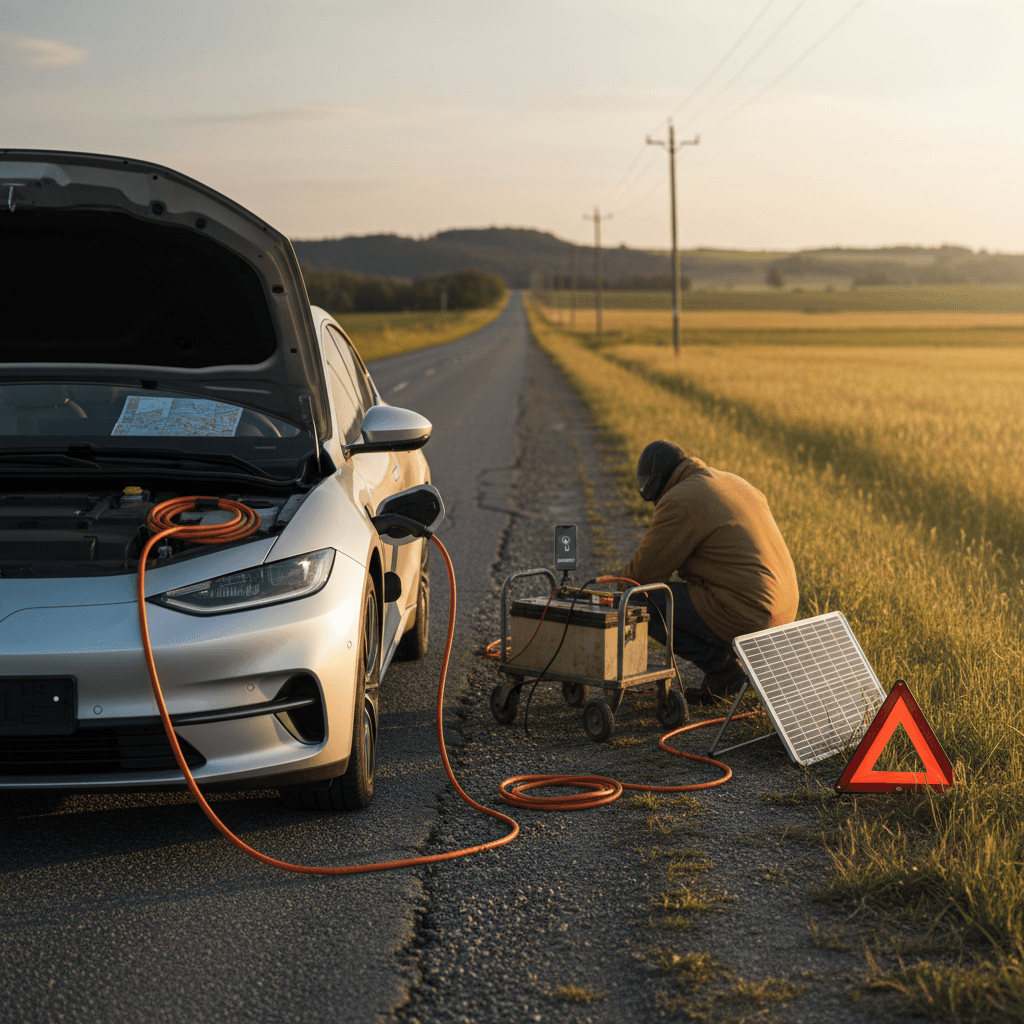
Running out of charge is the EV version of running out of gas, and it’s the scenario many drivers fear most. The good news is that roadside electric car charging options are improving, but they’re not as universal, or as cheap, as a five-minute gas can rescue. This guide walks you through what actually happens if your battery hits 0% on the road, the services that can help, and how to prepare so you almost never need an emergency save.
Why this matters for EV owners
What is roadside electric car charging?
When people talk about roadside electric car charging, they usually mean one of two things: either a mobile charging unit that comes to your stranded EV and adds some energy on the spot, or a tow to the nearest functioning public charger. In both cases, the goal is the same, get you enough range to reach a safe charging location.
Two ways to get power when your EV is stranded
Both aim to get you moving, but they work very differently.
Mobile roadside charging
What it is: A service truck carries a DC fast charger or large battery pack and plugs directly into your EV where you’re stopped.
- Typically adds 15–40 miles of range in 15–30 minutes.
- Offered in limited metro areas or as a premium add‑on.
- Designed as a one‑time “boost,” not a full charge.
Tow to a nearby charger
What it is: Traditional roadside assist, your EV is winched onto a flatbed or dollies and moved to a Level 2 or DC fast charger.
- Available almost everywhere roadside assistance exists.
- Often included with your EV, insurance or auto club.
- Slower overall, but more widely supported today.
Don’t expect a full charge on the shoulder
How roadside EV charging actually works today
1. You call roadside assistance
Your first call is usually to an automaker’s roadside number, your insurance provider, or a third‑party club like AAA. You’ll tell them your state of charge (if visible), your exact location, and whether the car is in a safe spot.
They’ll decide whether you qualify for towing, mobile charging, or both based on your plan and location.
2. A truck is dispatched
In most parts of the U.S., the default response is a flatbed tow truck. In a few metro areas, partners now run mobile charging units that can deliver a partial charge where you’re parked.
Response times typically mirror gas‑vehicle roadside calls, roughly 30–90 minutes depending on traffic and distance.
3. If it’s a mobile charging truck
- Technician verifies your vehicle is safe to charge and checks for damage.
- They connect a high‑power DC or AC charger, often 10–25 kW, from a battery pack or generator on the truck.
- After 15–30 minutes, you might get roughly 20–40 miles of range, enough to reach a nearby Level 2 or DC fast charger.
4. If it’s a tow
- Your EV is loaded onto a flatbed (or lifted with dollies if necessary) to avoid drivetrain damage.
- The driver takes you to a public charging station, a dealership, or your home charger, whichever your plan allows.
- You’ll then charge normally from that station, which could take 30–90 minutes on DC fast, or several hours on Level 2.
Pro tip: check coverage before you need it
Mobile EV charging vs towing: what you’ll really get
Mobile roadside charging vs traditional towing
How common roadside electric car charging solutions compare in the real world.
| Factor | Mobile roadside charging | Tow to charger |
|---|---|---|
| Availability (U.S., 2025) | Limited metro areas | Nationwide |
| Typical range added | 15–40 miles | Depends on charger you reach |
| Time on scene | 15–40 minutes charging | 15–30 minutes loading/unloading |
| Total downtime | ~45–90 minutes | ~1.5–3+ hours including charging |
| Included in basic plans? | Sometimes, often extra | Usually yes (within mileage limits) |
| Best use case | Short boost on a busy highway | Severely depleted battery or damaged car |
In most of the U.S., towing is still more widely available than true roadside charging, but that’s slowly changing in major metro areas.
Good news for EV drivers
What roadside electric car charging really costs
Costs vary widely depending on who you call, how far you are from a charger, and whether mobile roadside electric car charging is treated as a premium add‑on. But you can group most situations into a few buckets.
- Automaker‑included roadside assistance: Many new EVs include limited towing for a few years or a certain mileage. If you’re within the limit and close to a charging station, your out‑of‑pocket may be $0.
- Auto club or insurance add‑on: EV roadside assistance is often bundled with traditional roadside service. Expect a monthly or annual fee plus potential per‑use charges if you exceed distance caps.
- Standalone mobile charging providers: In cities where mobile EV charging trucks operate, emergency boosts are usually priced like a premium service call, often comparable to a short‑distance tow plus a session fee.
- After‑hours or remote rescues: If you’re far from major highways, the cost can climb quickly due to dead‑head miles and time, just as it does for ICE vehicles.
Watch your towing distance caps
Portable EV chargers you can use in a pinch
A lot of drivers hear “roadside electric car charging” and assume they need to buy a gas‑generator or a huge battery pack. In reality, your best self‑help tools are usually portable Level 1/Level 2 EV chargers that plug into existing outlets, paired with a bit of planning.
Why portable EV chargers matter for roadside situations
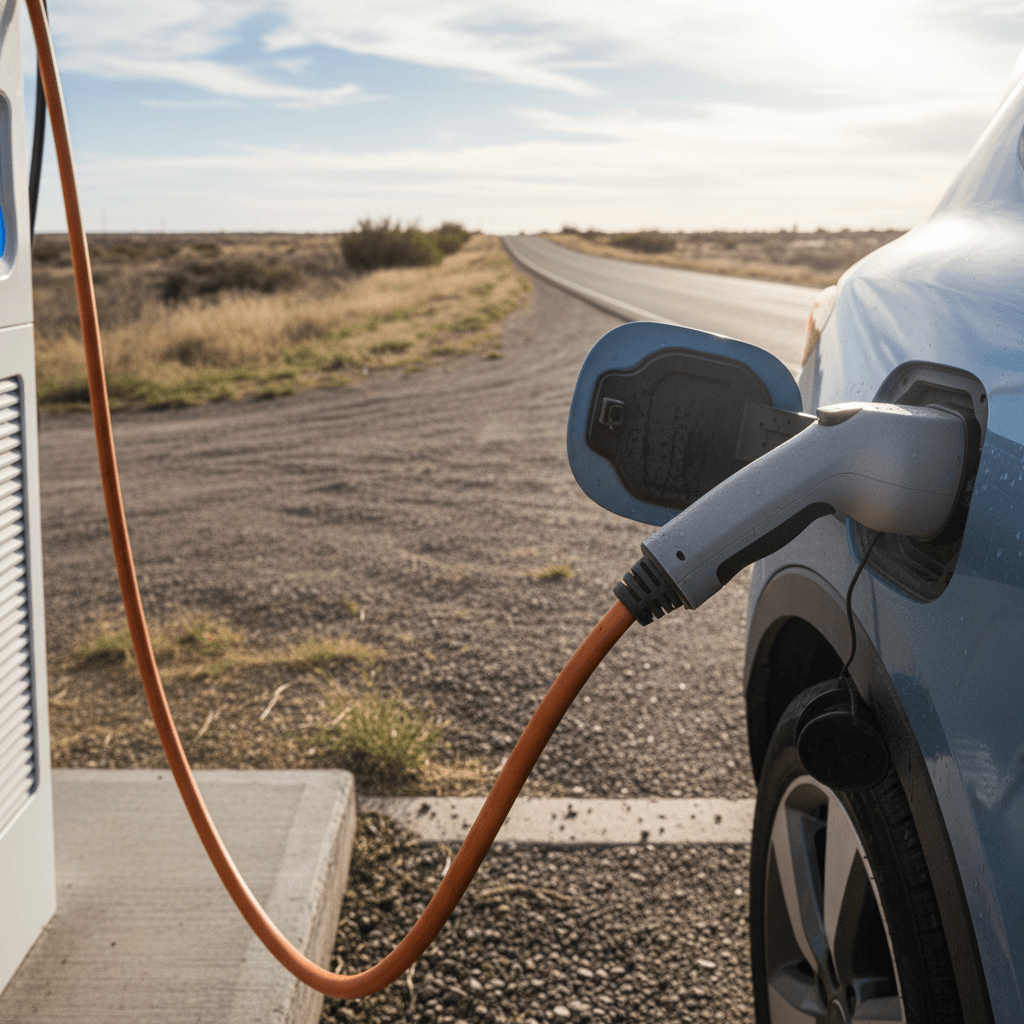
Common portable EV charger types used in roadside situations
These aren’t full‑blown mobile charging trucks, but they can keep you from being stranded overnight.
Dual Level 1/2 travel chargers
Units like Hardwiire’s dual‑voltage portable chargers or DUEVOLT’s 16–40A models can plug into 120V or 240V outlets with interchangeable NEMA plugs.
They’re ideal if you might access RV parks, friends’ garages, or workplace outlets during a long trip.
Compact Level 2 only
Travel‑friendly Level 2 chargers with a NEMA 14‑50 plug can deliver up to ~9.6 kW when you find a compatible 240V outlet.
Think: RV parks, some hotels, and dedicated EV‑ready parking spots.
EV‑ready trunk kit
Some drivers build a small "EV go‑bag" that lives in the trunk: portable charger, outlet adapters, gloves, and a heavy‑duty extension cord rated for EV use.
You still need a safe outlet, but you’re ready when you find one.
How this plays with Recharged EVs
How to prepare your EV so you don’t get stranded
Roadside electric car charging is a safety net, not a daily strategy. The more you plan ahead, the less you’ll need emergency help at all. Here’s a pragmatic prep list.
Roadside EV charging preparedness checklist
1. Know your true usable range
Every EV is different, and real‑world range changes with weather, speed and load. Use a few weeks of regular driving to see how far your car comfortably goes from 100% to 20%, and treat that as your practical range.
2. Set conservative navigation alerts
Most EV nav systems and apps let you warn at a certain state of charge. Set warnings around 20–25%, not 5–10%. That buffer is your insurance against unexpected detours or closed chargers.
3. Map backup chargers on road trips
When planning a long drive, identify at least one backup charger near each planned stop, preferably on a different network. Apps like PlugShare, ChargePoint and Electrify America’s app make this simple.
4. Save key roadside numbers in your phone
Program your automaker’s roadside number, your insurance roadside line, and any membership (AAA, etc.). When you’re stressed on the shoulder, you don’t want to hunt through PDFs.
5. Build a simple trunk kit
Include a portable EVSE that matches your car, a few labeled outlet adapters, a flashlight or headlamp, gloves, and a reflective vest. If you ever need roadside charging at night, you’ll be glad you did.
6. Practice “what if” at low stakes
On a quiet weekend, drive down to 10–15% near home and practice finding a new charger on the fly. Better to make mistakes close to home than on a 600‑mile holiday trip.
Roadside charging considerations when buying a used EV
If you’re shopping the used market, roadside electric car charging should be part of your due diligence. You’re not just buying a vehicle, you’re buying into its charging behavior, efficiency, and how it’ll handle those rare but stressful low‑battery moments.
Battery health and range buffer
A used EV with more degradation leaves you less margin for error. A car that once offered 250 miles might now realistically do 190–200 in mixed driving. That makes careful planning and roadside coverage more important.
With Recharged, every vehicle includes a Recharged Score Report with verified battery health so you know how much real‑world buffer you’re working with before you ever hit the highway.
Onboard charging hardware
Some older EVs charge more slowly on DC fast chargers or have lower‑power onboard AC chargers. That affects how long you’ll sit once you reach a charger after a tow.
When you buy through Recharged, our EV specialists walk you through these limits and how they’ll feel in day‑to‑day driving and road‑trip scenarios.
Financing and protection tie‑ins
Safety, risks and myths about “dead” EVs
A lot of the anxiety around roadside electric car charging comes from misunderstanding what happens when an EV hits 0%. In most modern cars, there’s still a small buffer below “zero” to protect the battery, and the car will warn you well before it actually stops. Still, roadside situations carry real safety considerations.
- Always prioritize personal safety over saving the battery. If you’re on a blind curve or narrow shoulder, move yourself and passengers to a safer spot first.
- Turn on hazard lights, set the parking brake, and use reflective triangles or flares if you have them, just as you would in a gas car breakdown.
- Never try to tow an EV with the drive wheels on the ground unless the manufacturer specifically permits it; you can damage the motor or inverter.
- Avoid questionable outlets. If a 120V outlet looks damaged, overloaded, or sketchy, don’t plug in your portable charger just to grab a few miles of range.
- Don’t panic about “battery death.” One deep discharge won’t usually ruin your pack, but make it a habit and you can accelerate long‑term degradation.
What not to do
FAQ: roadside electric car charging
Frequently asked questions about roadside EV charging
Bottom line: how to think about roadside EV charging
Roadside electric car charging used to be a big unknown. In 2025, the picture is clearer: towing to a charger is widely available, mobile charging trucks are emerging in major markets, and portable Level 1/2 chargers give prepared drivers another layer of backup. The real win, though, is avoiding emergencies altogether by planning your trips, understanding your EV’s true range, and keeping a healthy buffer.
If you’re considering a used EV, it’s worth choosing one whose battery health, charging speed and support options match how and where you drive. That’s exactly what Recharged is built around, transparent battery data, fair pricing, and EV‑savvy guidance so you can enjoy electric driving without constantly worrying about what happens at 0%.