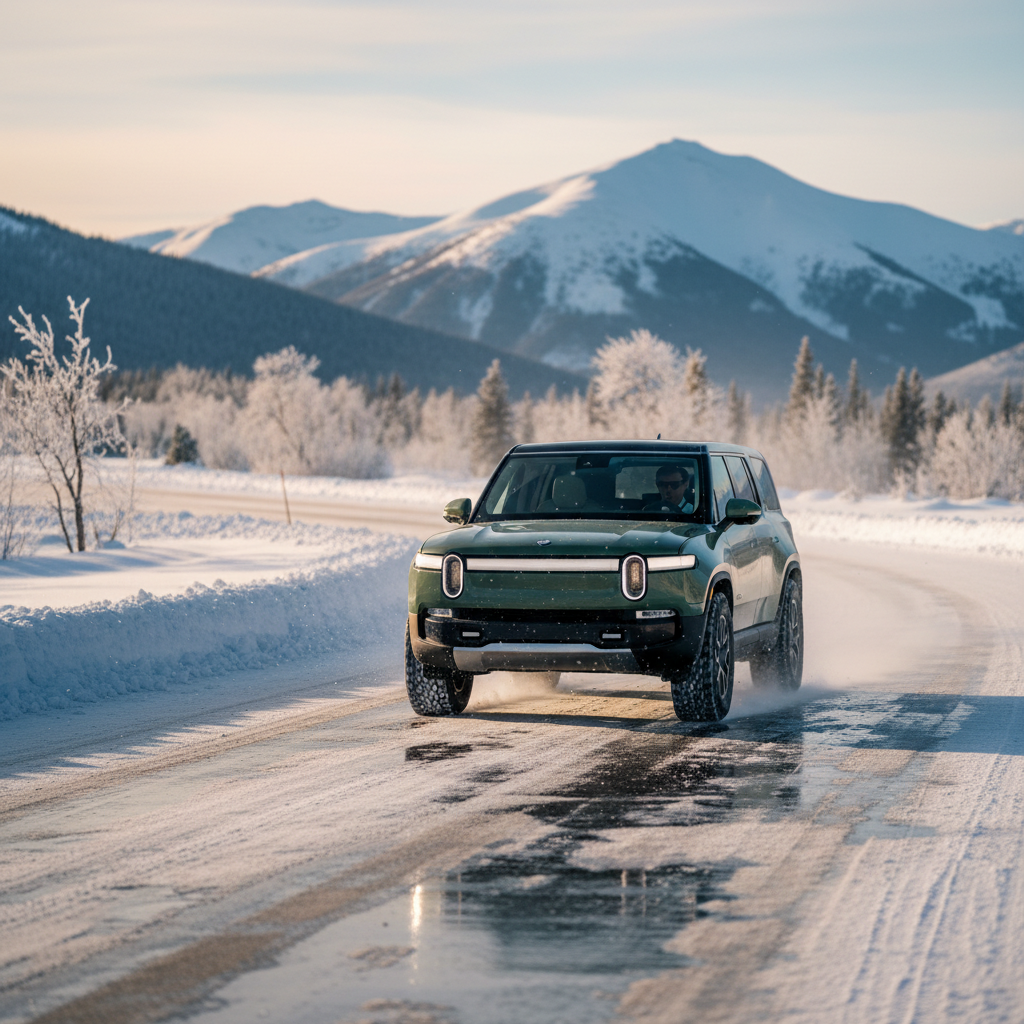
You bought a Rivian R1T because it looks like it could tow Mount Rainier off its foundations. Then winter shows up, the dash says 260 miles at 100%, and you’re getting 160. Rivian R1T winter range loss is real, and it can be jarring if you’re coming from gas trucks that mostly ignore the laws of thermodynamics on their dash gauges.
Quick take
Rivian R1T winter range loss at a glance
Typical winter range impact for Rivian-type EV trucks
The headline is this: your Rivian isn’t broken. Winter turns every EV into a smaller‑battery version of itself. The good news is that the R1T has a big pack and a smart thermal system, so if you understand what’s going on, and adjust how you drive and charge, you can make winter range loss predictable instead of terrifying.
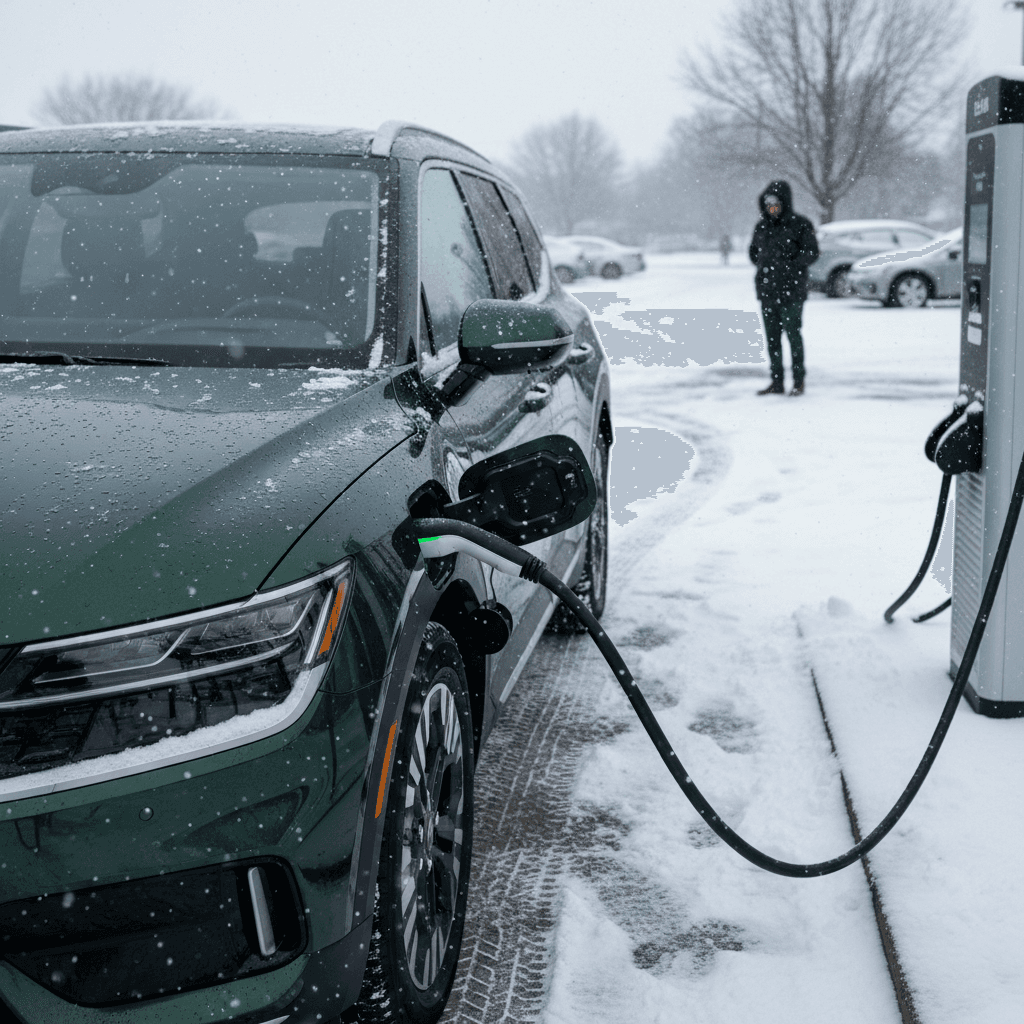
Why your Rivian loses range when it gets cold
Every EV suffers in the cold for three main reasons: battery chemistry, heat, and drag. Your R1T is a rolling case study in all three.
The science behind winter range loss
Three invisible forces stealing miles from your R1T
1. Battery chemistry slows down
Lithium‑ion batteries hate the cold. At low temperatures, chemical reactions inside the cells slow down, so they can’t deliver energy as efficiently. Rivian’s thermal management system burns energy to warm the pack back into its happy zone.
2. Heat is the new “fuel”
In a gas truck, cabin heat is free waste from the engine. In an R1T, every BTU of warmth comes from your battery. The resistive heater is powerful, and hungry, especially if you’re starting with a cold‑soaked pack and cabin.
3. Air and road get “thicker”
Cold air is denser, which increases aerodynamic drag. Snow, slush, and winter tires pile on rolling resistance. Your 835‑hp snow tank is pushing a heavier, stickier world out of its way.
Don’t blame just the heater
How much range does a Rivian R1T really lose in winter?
Rivian doesn’t publish a simple "winter range" number, and neither does any other automaker. But combining independent winter testing with owner reports paints a consistent picture: the R1T behaves like the rest of the EV pack, just with more weight and often more aggressive tires to drag through the snow.
Typical Rivian R1T winter range scenarios (large or max pack)
Approximate, real‑world numbers based on owner reports and independent EV winter studies. Your results will vary.
| Scenario | Conditions | Estimated Range Retained | What That Looks Like |
|---|---|---|---|
| Mild winter commute | 35–45°F, mostly city and suburban, 21" road tires | ~80–85% | Truck rated around 320 miles behaves like ~260–270 miles. |
| Freeway drive in freezing temps | 20–32°F, 65–70 mph, dry roads | ~70–80% | Expect ~220–250 miles from a 320‑mile rating. |
| Short trips with cold soak | 10–25°F, errands, parked outside between drives | ~60–70% | Feels like "half range" because you keep paying the warm‑up penalty. |
| Snowy highway slog | 0–20°F, snow or slush, 20" all‑terrain tires | ~50–65% | Long day at 1.3–1.7 mi/kWh; 320‑mile rating behaves more like 170–210. |
Think in percentages, not perfect numbers. Winter is all about margins.
If you read through Rivian owner threads, a pattern emerges: people report roughly 20–30% loss in ordinary cold weather, and up to 40–50% loss in the ugly stuff, single‑digit temperatures, heavy snow, big headwinds, or lots of short cold‑soaked trips.
How this compares to other EVs
The 7 biggest factors that kill R1T winter range
Winter range loss isn’t random punishment from the weather gods. It’s usually the sum of a few predictable choices and conditions. For the R1T, these seven matter most:
- Outside temperature and wind chill
- Trip length (lots of short hops vs. long stretches)
- Speed, above 65 mph the penalty stacks fast
- Tire choice and pressure (20" A/T vs. 21" road tires, winter tires, low PSI)
- Drive mode (Conserve vs. All‑Purpose vs. Snow/Off‑Road)
- Cabin climate settings and seat/steering wheel heaters
- How and when you charge and precondition the truck
Tires: the quiet range killer
Switching from 21" road tires to 20" all‑terrain rubber can cost you tens of miles of range even before winter. Add snow, slush, and low tire pressure, and you’ve effectively turned your Max Pack into a smaller battery.
For mixed winter use, keep pressures at spec, and if you don’t truly need A/T or deep‑lug snow tires, the more efficient tread will pay you back in miles.
Speed: 70 feels like 85 in winter
Above about 60 mph, aerodynamic drag rises dramatically. Combine that with dense cold air and you get a double hit. An R1T at 75 mph in 20°F air, on boxy truck aerodynamics, is fighting physics with a battery, not a V8.
Dropping from 75 to 65 mph often delivers more real‑world range than obsessing over climate settings.
The worst‑case cocktail
Daily driving vs. road trips in the cold
Not all winter miles are created equal. The same R1T that feels hopeless on a week of two‑mile errands can feel reasonably efficient on a four‑hour highway run. The difference is how many times you make the truck pay the warm‑up tax.
How winter affects different types of R1T driving
Why your commute feels worse than your ski trip
Short‑trip city life
Pattern: 2–8 mile trips, parked outside between drives.
- Battery and cabin cool off between trips.
- Truck repeatedly spends energy reheating pack and cabin.
- Displayed "mi/kWh" looks terrible (sometimes under 1.5).
Takeaway: It feels like horrific winter range, but it’s really the cost of comfort spread over tiny drives.
Long highway runs
Pattern: 50–200 mile stints, consistent speed.
- Pack warms up and stays warm.
- Climate becomes a smaller slice of total energy use.
- Efficiency stabilizes, often near 2.0–2.4 mi/kWh in typical cold.
Takeaway: Less dramatic range loss, easier to predict, and much easier to plan around for road trips.
A simple mental model
12 ways to minimize Rivian R1T winter range loss
You can’t negotiate with entropy, but you can stack the odds in your favor. Here’s a practical checklist you can actually live with, not a monk’s vow of climate‑control abstinence.
Practical ways to keep more winter range
1. Always leave home with a warm, plugged‑in truck
If you can charge at home, schedule departure in the Rivian app so the truck preconditions while plugged in. Warming the pack off wall power instead of the battery can save a big chunk of early‑drive energy.
2. Preheat cabin and seats, then back off the fan
Warm the cabin before you leave, then once you’re comfortable, lean on <strong>heated seats and steering wheel</strong>. They use much less energy than the air heater blasting away at full tilt.
3. Slow down 5–10 mph on the highway
In winter air, dropping from 75 to 65 mph can be the difference between making the next charger comfortably and white‑knuckling it at 3% state of charge. Your ETA moves by minutes; your usable range moves by tens of miles.
4. Use Conserve or Snow mode when it makes sense
Conserve mode reduces power and can improve efficiency on clear roads; Snow or All‑Purpose with gentle throttle keeps you safe when it’s slick. Don’t obsess over drive mode, but avoid Off‑Road unless you actually need it.
5. Check tire pressures every few weeks
Cold air drops PSI. Running several pounds low increases rolling resistance and range loss. Set pressures to Rivian’s door‑jamb spec when the tires are cold, especially on 20" all‑terrain or winter tires.
6. Clear snow and ice before you drive
Driving around with four inches of snow on the truck is like towing a parachute. Brush off the bed cover, roof, and front end; you’ll reduce drag and avoid frozen chunks flying off at highway speed.
7. Avoid lots of tiny cold starts when possible
Combine errands into fewer, longer drives. Paying the warm‑up penalty once and then staying on the move is far more efficient than five separate cold‑start runs.
8. Precondition before DC fast charging
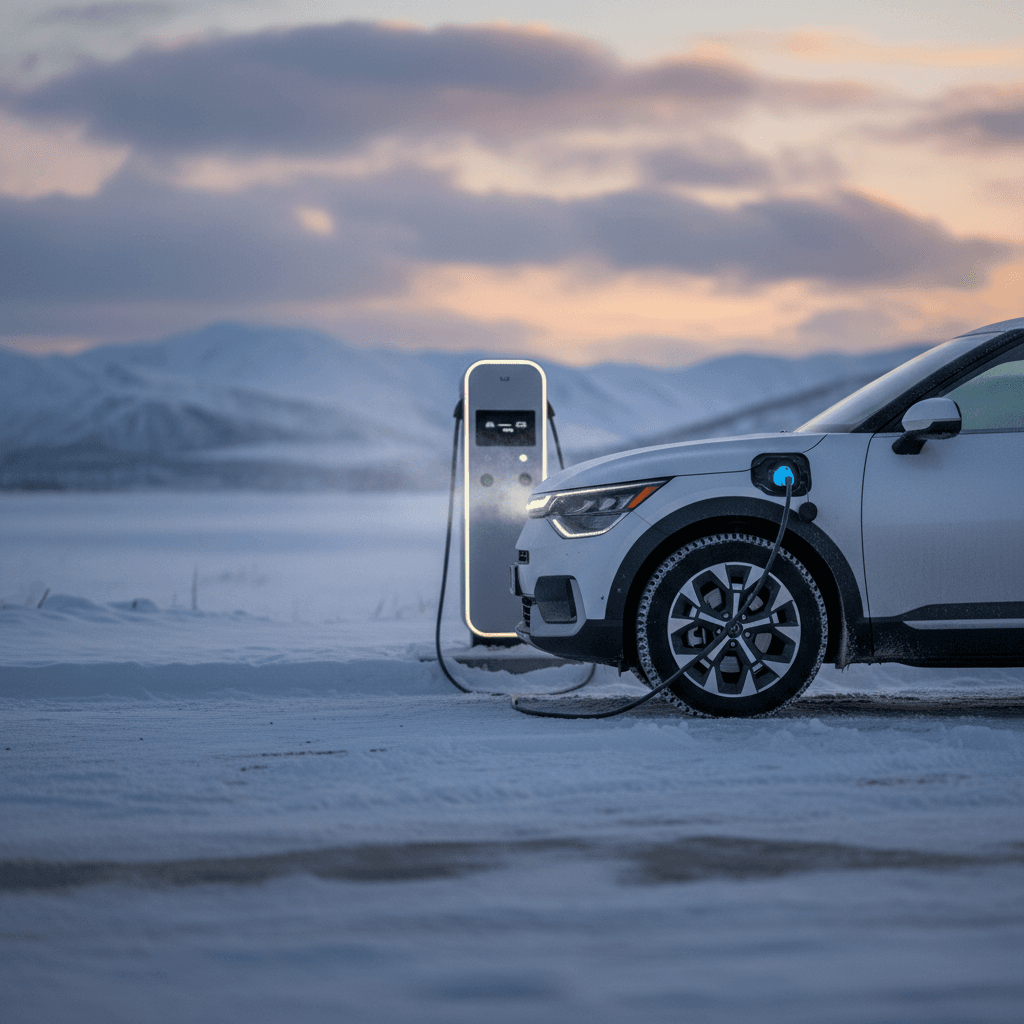
If you’re heading to a DC fast charger, set it as a destination so the truck warms the pack en route. A warm battery charges <strong>much faster</strong>, which matters on winter road trips when charging speeds can otherwise plummet.
9. Plan extra margin into your route
In winter, don’t plan to arrive at chargers with 5–10%. Give yourself 15–25% buffers, especially in snow country or with elevation. You’re not gaming a test cycle; you’re trying to get to the cabin without drama.
10. Pack light(er) when you can
Every pound you throw in the bed or gear tunnel is one more pound to haul up every hill. Heavy cargo and towing can knock another 20–25% off range on top of winter losses, so treat payload as part of the equation.
11. Use range, not miles, as your mental unit
Think in percentages and efficiency (mi/kWh), not the EPA number. Over time you’ll build your own "winter normal" for your routes, which is far more useful than the optimistic sticker spec.
12. Update software and watch Rivian release notes
Rivian continues to tweak thermal, range prediction, and charging behavior via software. Staying current means you benefit from incremental improvements to winter performance and more accurate estimates.
Planning a winter road trip in an R1T
The R1T is a terrific ski‑town truck, silent, sure‑footed, and hilariously overqualified for plowed roads. Winter road trips just demand more intention than they did with your old gas rig and a 26‑gallon tank.
Winter road‑trip rules of thumb for Rivian R1T owners
Simple planning guardrails so your holiday trip doesn’t turn into a range thriller.
| Planning Area | Winter Rule of Thumb | Why It Matters |
|---|---|---|
| Leg length | Plan legs 25–35% shorter than summer | Build in a buffer for headwinds, snow, and lower charging speeds. |
| Arrival SOC | Target 20–30% at chargers | Protects you from unexpected detours or slow/occupied stations. |
| Charging stops | Charge a bit more than apps suggest | Rivian and third‑party route planners assume decent conditions; winter often isn’t. |
| Charger mix | Prefer reliable DC fast networks | Rivian Adventure Network, major public DC networks, or Tesla Superchargers with NACS access when available. |
| Overnight parking | Plug in when you can | Even a slow Level 2 keeps the pack warm and topped up, cutting cold‑soak losses. |
| Elevation | Treat big climbs like extra distance | Uphill in the cold burns more energy; you’ll regain some on the way down, but not all. |
These aren’t laws of physics, but they’re good house rules for cold‑weather travel.
Use multiple planning tools
Buying a used R1T? What winter range tells you
If you’re shopping used, winter is actually a great time to learn what an R1T is really like to live with. Range loss on a cold February test drive doesn’t automatically mean a bad battery, it might just mean the laws of physics are still in effect.
How to read winter range when shopping used
Questions to ask the seller and yourself
Ask about driving conditions
When a seller says, “I only get 180 miles in winter,” dig deeper:
- What temps and speeds?
- What tires and pressures?
- Short hops or long drives?
You’re trying to separate normal winter physics from real efficiency problems.
Look at long‑term efficiency
Scan the truck’s lifetime or recent mi/kWh in the energy screens. Big picture matters more than one brutal cold snap. A healthy R1T that’s been driven reasonably will have consistent efficiency trends, even if recent numbers look bad from an Arctic week.
Leverage independent health data
A Recharged Score Report includes verified battery health diagnostics, so you can tell the difference between a pack that’s simply cold and one that’s truly degraded. That’s especially valuable on trucks that have towed or fast‑charged heavily.
How Recharged helps de‑risk winter range
Ready to find your next EV?
Browse VehiclesIf you’re comparing an R1T to other used EVs, remember: nearly every EV loses range in the cold. What you’re really deciding is whether the R1T’s capability and character are worth planning your winter a little more carefully, and whether its battery has been treated well enough to deliver on that promise for years to come.
Rivian R1T winter range loss: FAQ
Common questions about R1T winter range loss
Bottom line: Live with the loss, not the anxiety
Winter doesn’t turn the Rivian R1T into a bad truck; it just turns it into an honest one. Physics that your old gas pickup hid behind a vague fuel gauge show up on a crisp digital display. If you know that losing 20–30% in normal cold and up to 40–50% in extremes is par for the EV course, you can plan around it instead of fearing it.
Drive a little slower, precondition when you can, keep your tires honest, and build real‑world margins into your winter routes. And if you’re shopping used, lean on hard data, like the verified battery health in a Recharged Score Report, to separate healthy trucks from tired ones. Do that, and your R1T will feel less like an anxious science experiment and more like what it actually is: one of the most capable winter vehicles on the road, with a battery that just wants a little consideration when the temperature starts with a minus sign.