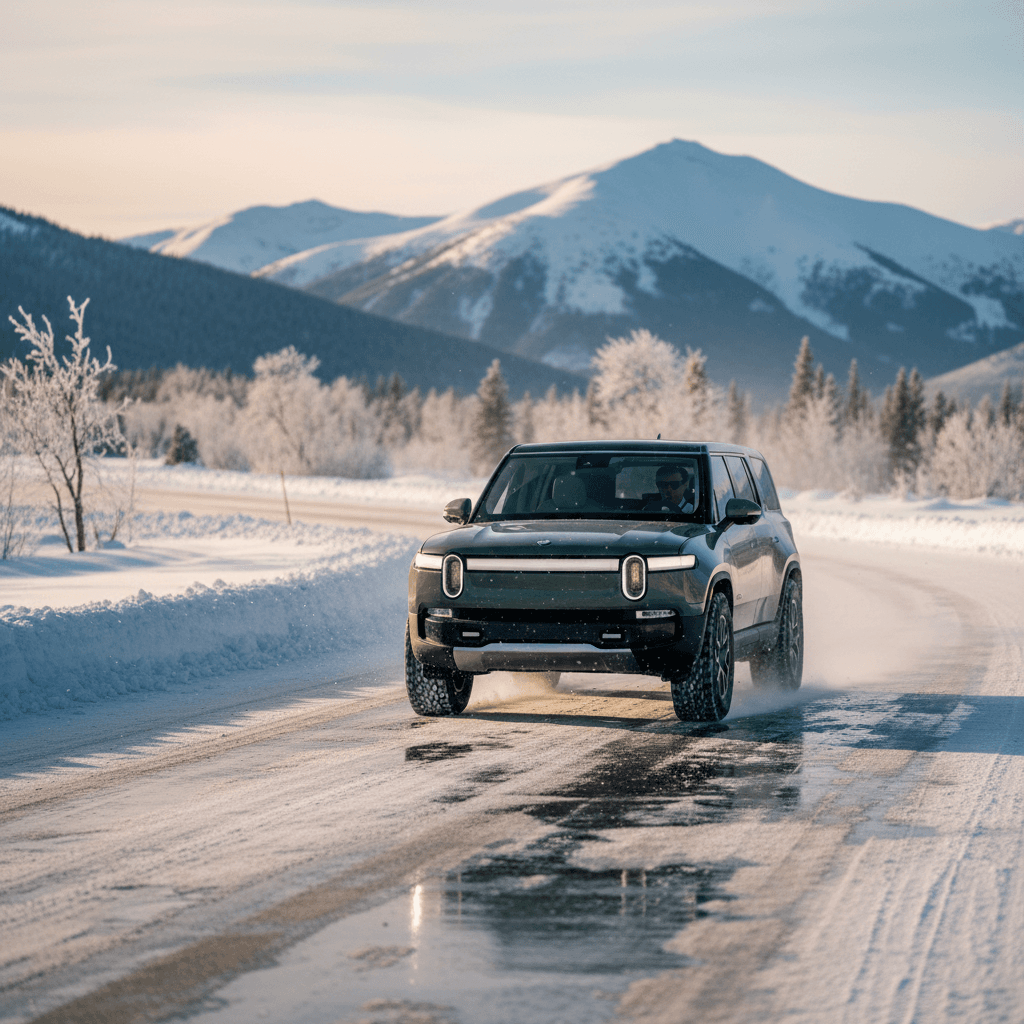
If you live where winter is a season and not a suggestion, you’re probably wondering whether the Rivian R1S is truly one of the best SUVs for snow and ice, or just good on Instagram. The answer is nuanced: the R1S can be a flat-out winter weapon, but only if you set it up and drive it right.
Short answer
Rivian R1S in Snow and Ice: Big Picture
On paper, the R1S checks almost every winter box: standard all-wheel drive, sophisticated traction and stability control, multiple drive modes including Snow, and air suspension that can crank the ground clearance to around 14 inches. In the real world, owners report plowing through unplowed blizzards, deep slush, and slick backroads with an ease that makes traditional SUVs feel a generation behind, until they hit ice or steep, polished hills on the wrong tires.
Rivian R1S Winter Highlights at a Glance
Weight cuts both ways
Why the Rivian R1S Can Be a Winter Beast
Key R1S Strengths in Winter
What makes it feel so planted when the weather turns ugly
Dedicated Snow Mode
Snow mode is available on quad‑motor and dual‑motor R1S trims. It adjusts throttle response, traction control, and regenerative braking to keep the truck predictable on packed snow and ice.
Air Suspension & Clearance
The R1 platform offers multiple ride heights. You can run lower for stability on plowed roads, then raise it toward off‑road heights to clear deep snow ruts without plowing with the bumper.
Instant, Tunable Torque
Electric torque arrives immediately, but the software dials in power delivery and slip limits so you don’t just spin all four tires. It’s especially effective pulling away from slick intersections.
Quad‑motor and dual‑motor grip
Early R1S models came with a quad‑motor setup that lets the truck individually meter torque at each wheel. Newer dual‑motor Enduro versions still deliver excellent traction, just with one motor per axle instead of four. In both cases you’re getting real all‑wheel drive, not a slip‑then‑grip system that waits for trouble before it reacts.
Stability tuning that’s on your side
Rivian’s Snow mode uses unique traction and stability settings to keep the truck controlled without feeling like the computers are fighting you. Paired with the R1S’s long wheelbase and wide track, that makes it impressively calm on rutted, half‑plowed highways that make lighter crossovers feel nervous.
Use the truck like the tool it is
Snow mode, Ride Height and Regen: Getting the Settings Right
You can take a great winter platform and make it miserable with the wrong settings. The good news: once you learn the Rivian’s menus, it’s easy to tailor the R1S to whatever winter is throwing at you today.
Recommended R1S Settings for Snow and Ice
Use this as a starting point, always adjust to conditions and your own comfort level.
| Condition | Drive Mode | Ride Height | Regen Braking | Notes |
|---|---|---|---|---|
| Light snow on plowed roads | Snow | Standard or Low | Low or Standard | Prioritize stability. Lower height keeps center of gravity down. |
| Deep, unplowed snow | Snow or All‑Terrain | High or Highest | Low | Give yourself ground clearance; steady throttle is key. |
| Freezing rain / glare ice | Snow | Standard | Low | Treat it like a heavy rear‑drive sedan with very good electronics, gentle with every input. |
| Mixed highway + side streets | Snow in town, All‑Purpose on clear highway | Standard | Standard | You can switch modes on the fly as conditions change. |
Drive conservatively until you learn how your specific R1S, tires, and roads behave in winter.
Don’t let regen surprise you
Think of it this way: Snow mode is about predictability. It softens how hard the truck launches, trims back regen, and lets the stability system step in earlier. You’re not chasing lap times; you’re chasing that easy, drama‑free feeling of just cruising through nastiness without surprises.
Tires Matter More Than Badges: Getting Grip Right
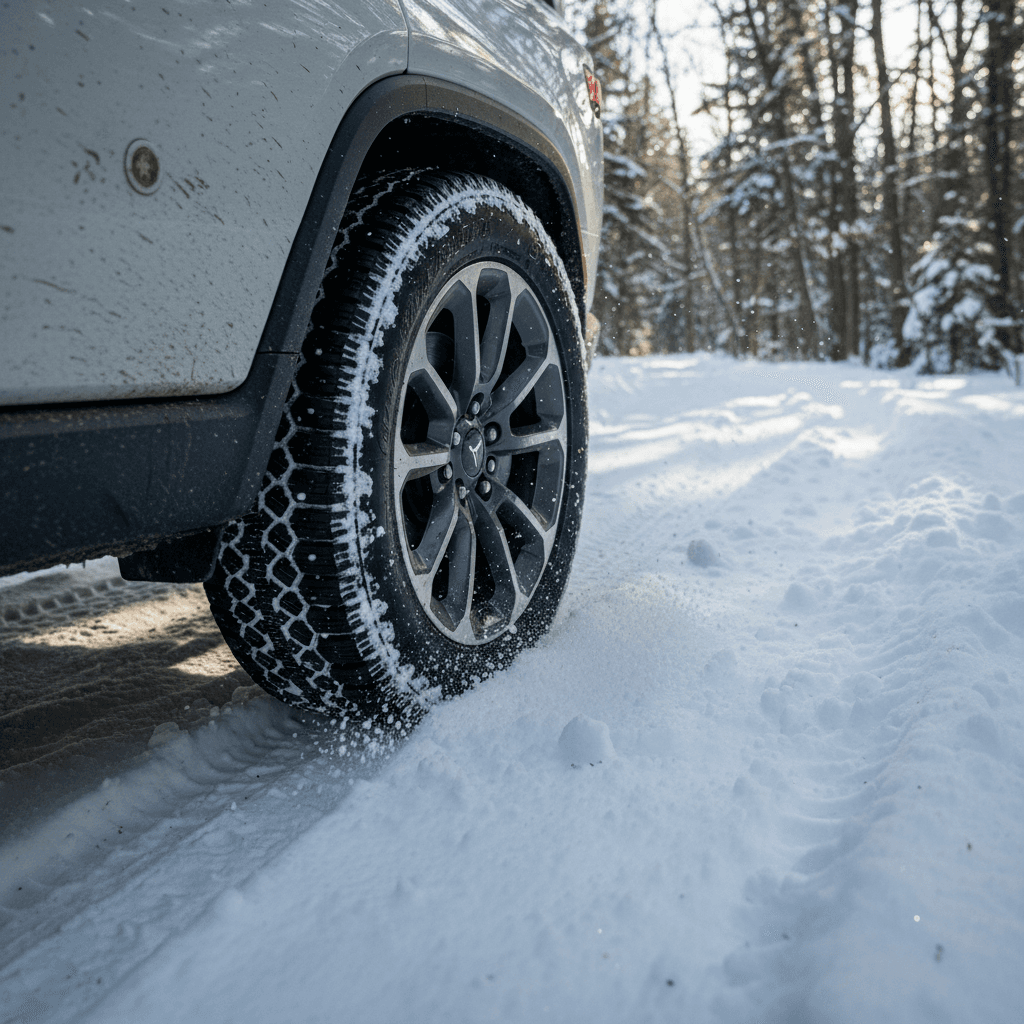
Most of the glowing R1S winter stories, and most of the horror stories, can be traced back to one thing: tires. The factory all‑seasons will get you through occasional snow. If you live with real winter, a dedicated winter tire transforms the truck.
- All‑season tires: Fine for light snow in milder climates, but they harden in real cold and give up grip on ice and packed powder.
- All‑terrain tires: Better bite in loose snow, but many ATs still slide and take longer to stop on ice than a proper winter tire.
- Dedicated winter tires: Softer compounds and aggressive siping hang onto ice and slush in a way no all‑season can match. On a heavy EV like the R1S, that difference is dramatic.
Best winter setup for most owners
One more thing: don’t overestimate what weight can do for you. Yes, the R1S’s mass helps it claw forward in deep snow, but stopping distances on ice will still be long. The truck might feel invincible right up until you ask it to change direction or stop in a hurry.
Rivian R1S vs Other Winter SUVs
Compared with traditional gas SUVs
Put an R1S on true winter tires next to something like a three‑row crossover or body‑on‑frame SUV on the same rubber, and you’ll usually find the Rivian easier to meter. The electric torque is smoother, and the traction and stability systems can react in milliseconds, not engine revolutions.
You also get the advantage of air suspension and multiple modes at your fingertips, where some gas SUVs are still asking you to choose between “Snow” and “4WD Lock” and hope for the best.
Compared with other electric SUVs
Versus many EV crossovers, the R1S feels more like a modern Land Cruiser that happens to be electric. It’s tall, heavy, and reassuringly overbuilt. You sit up high, see the road, and feel like you’ve got options when the plows fall behind.
The trade‑off is efficiency: in deep cold, the R1S will drink watt‑hours faster than smaller EVs. If your winter use is lots of long‑distance highway driving between sparse chargers, that’s something to factor into your plans.
Who the R1S Suits Best in Winter
Match the truck to your winter reality
Mountain-town daily driver
Steep grades, real snowpack, and frequent storms? On proper winter tires, the R1S’s combination of torque, stability control, and clearance makes it feel tailor‑made for ski‑town duty.
Suburban commuter with storms
If you mostly battle plowed highways with the occasional nor’easter or lake‑effect dump, the R1S will feel like overkill in a good way, as long as you remember its weight under braking.
Flat, icy plains
In wide‑open, flat country where black ice is the bigger enemy than deep snow, the R1S is very good, but not meaningfully better than lighter SUVs on the same tires. Physics still rules.
Range, Heating and Charging in Cold Weather
Here’s the part most marketing photos skip: cold weather doesn’t just challenge traction; it challenges range and charging. The R1S is no exception. The battery has to keep itself warm and power generous cabin heat for three rows, which all eats into range.
Winter range and charging tips for R1S owners
Precondition before you leave
Use the Rivian app to warm the cabin and battery while you’re still plugged in. You’ll start with a warm pack and full cabin heat without stealing as much from your driving range.
Plan shorter legs in deep cold
When temperatures drop into the teens or below, assume a healthy range haircut compared with summer. On road trips, plan more frequent, shorter charging stops instead of stretching for the far‑out station.
Use seat and wheel heaters first
Heated seats and steering wheel use much less energy than blasting cabin heat. Use them to stay comfortable while keeping the main HVAC a notch lower than you might in a gas SUV.
Clear snow from charge port and lights
Brush off the nose of the truck and make sure the charge port door can fully open and close. Packed snow can freeze solid and make plugging in, or seeing, much harder than it needs to be.
Don’t arrive at chargers empty
In bad weather, error on the side of arriving at a fast charger with a bigger buffer than you would in summer. Slick roads, detours, or heater use can all add unexpected consumption.
Cold doesn’t mean fragile
Common Winter Complaints, and How to Fix Them
Typical R1S Winter Complaints and Practical Fixes
Most “bad winter” stories are solvable with tires, settings, and habits.
| Complaint | Likely Cause | Simple Fix |
|---|---|---|
| “It still slides a lot in Snow mode.” | All‑season or worn tires; too much speed on ice. | Swap to quality winter tires, lower speed, and drop regen to low. |
| “Stopping distances feel way too long.” | Heavy vehicle + marginal tires + ice. | Give yourself more following distance, brake earlier, and upgrade tires. |
| “Range is terrible when it’s below freezing.” | Battery heating and cabin HVAC drawing big power. | Precondition while plugged in, use seat/wheel heat, and plan for 20–40% more consumption in deep cold. |
| “Snow packs into the wheel wells and underbody.” | Deep, wet snow and repeated freeze‑thaw cycles. | Raise the ride height in deep snow, wash the underbody when temps allow, and avoid backing into deep berms. |
| “Headlights and cameras get covered with slush.” | No headlamp washers; messy roads. | Stop occasionally to wipe lenses and lights; carry a soft brush and microfiber cloth in the cargo area. |
If your R1S feels sketchier than expected in winter, start here before you write it off.
Winter is not the time to test limits
Spec Checklist: Best R1S Setup for Snow and Ice
What to look for in a winter‑ready R1S
1. Motor configuration that fits your needs
Quad‑motor R1S trims offer the ultimate in torque vectoring, which is brilliant in slippery conditions. Dual‑motor trucks are still excellent, especially on proper winter tires. Don’t overpay for power you won’t use if your winter driving is mostly paved roads.
2. 20‑inch wheels if possible
The taller sidewalls on 20s shrug off potholes and ruts better than 21s or 22s, and they make finding winter tires easier and cheaper. If you’re shopping used, a truck already wearing 20s is a nice bonus.
3. Proven winter tires
Ask specifically what tires are on the vehicle. A set of name‑brand winter tires that still have deep tread is worth more to you than a flashy wheel upgrade with tired all‑seasons.
4. Working heated features
Verify operation of heated seats in all rows and the heated steering wheel. In a large EV, those features are your best friends on cold mornings, for comfort and range.
5. Clean underbody and no rust surprises
If the truck has lived in the rust belt, have the underbody inspected for corrosion or damage from packed snow and ice. A <strong>Recharged Score Report</strong> includes this kind of check so you’re not guessing from photos.
How Recharged can help
Buying a Used Rivian R1S as Your Winter Rig
Shopping used is one of the smartest ways to get into an R1S, especially if you’re mainly chasing its winter capability. Early depreciation works in your favor, and winter doesn’t care whether the original buyer paid MSRP or you got a deal.
What matters most for winter duty
- Battery health: Cold amplifies any existing battery degradation. A healthy pack means more usable winter range and less stress on road trips.
- Service history: Look for records of any suspension work, alignment, or winter‑related repairs. Hard winter use can accelerate wear.
- Previous climate: A truck that’s already survived a few winters in Minnesota or Colorado may have more underbody exposure than one from a milder state.
How Recharged fits into the picture
Recharged exists to make used EV ownership simpler and more transparent. When you buy a used R1S through Recharged, you get:
- A Recharged Score battery and condition report so you know how the pack and key systems are holding up.
- Expert EV guidance to help you pick the right spec for your winter reality, motor layout, wheels, tires, and more.
- Financing, trade‑in options, and nationwide delivery, so you can shop the best winter‑ready R1S for you, not just what’s parked nearby.
Make it your four-season family hauler
Rivian R1S Snow & Ice FAQ
Frequently Asked Questions About the Rivian R1S in Snow and Ice
Bottom Line: Is the Rivian R1S Best for Snow and Ice?
If your mental picture of winter driving is white‑out highways, unplowed side roads, and the occasional mountain pass that looks like a ski run, the Rivian R1S belongs on your short list. Set up with the right tires and settings, it delivers a combination of traction, composure, and comfort that few SUVs, gas or electric, can touch.
Is it magically immune to snow and ice? No. It’s still a heavy, powerful vehicle that demands respect on slick surfaces. But driven with a cool head and shod in proper winter rubber, the R1S feels less like a science experiment and more like the kind of all‑weather family hauler people will be talking about for years.
If you’re thinking about making a used Rivian R1S your next winter rig, Recharged can help you sort the heroes from the hopeless with verified battery health, transparent pricing, expert guidance, and nationwide delivery. Winter is unforgiving; your SUV doesn’t have to be.