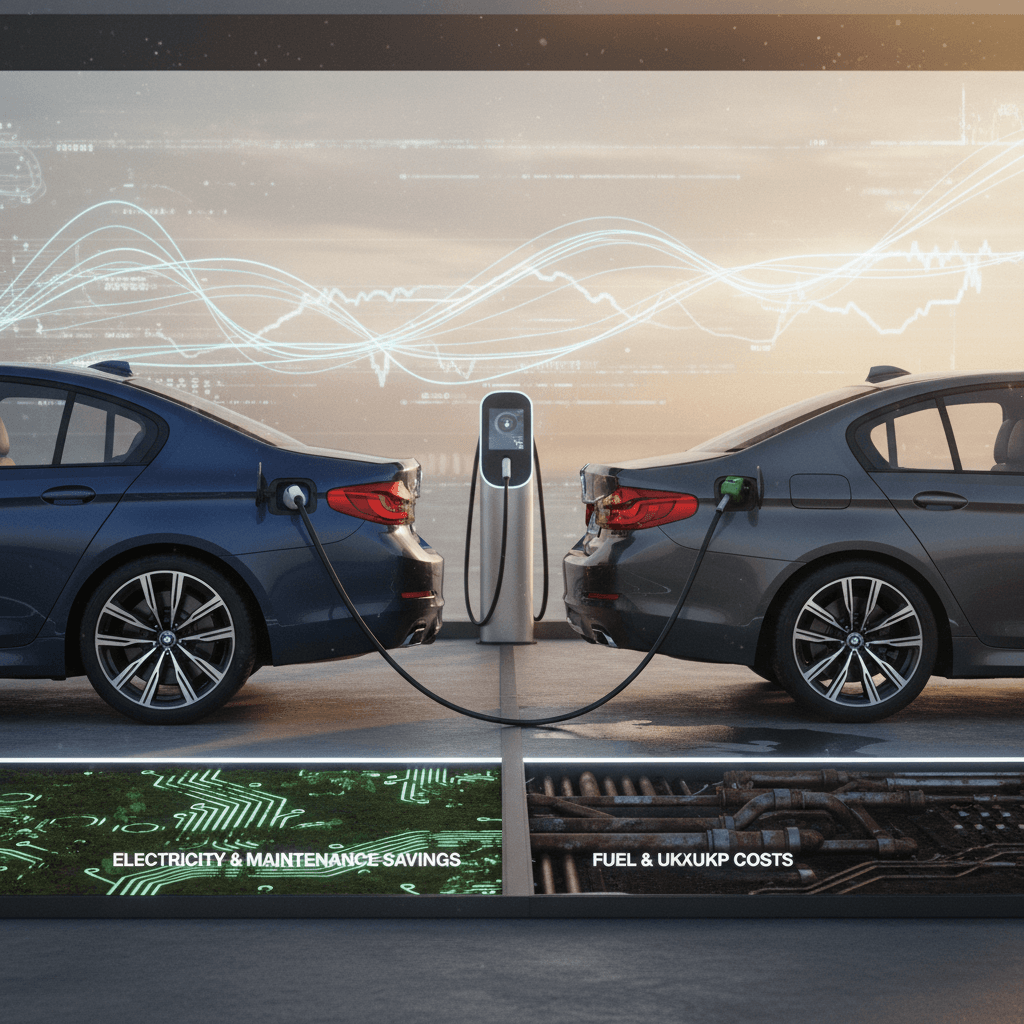
You’re not cross‑shopping a BMW i5 with a Corolla. You’re deciding between two flavors of the same luxury sedan: one powered by electrons, the other by premium unleaded. The question behind the question, “BMW i5 total cost vs gas car equivalent”, is really, “Will the EV actually save me money, or is it just a nicer way to spend the same?” This guide runs the numbers for a typical U.S. driver and then zooms in on the details that spec sheets never capture.
How we’re comparing costs
BMW i5 vs gas 5 Series: who this guide is for
If you’re choosing between an all‑electric BMW i5 and a gas‑powered 5 Series like the 530i or 540i, you’re the audience here. You care about comfort, performance, and brand image, but you also care how much it will actually cost to live with the thing over 5–10 years. We’ll focus on shoppers who: - Drive ~12,000 miles per year - Have access to home charging (garage or driveway) - Would otherwise be buying a new or lightly used BMW 5 Series If you’re looking at a used i5, we’ll talk about that specifically later, including how Recharged’s battery health diagnostics change the risk profile.
The contenders: BMW i5 and its gas equivalents
Which BMWs actually compare?
Lining up the i5 against its closest gas 5 Series siblings.
BMW i5 eDrive40
All‑electric, rear‑wheel drive.
- EPA combined use roughly mid‑30s kWh/100 miles (about 2.8–3.0 mi/kWh)
- MSRP for recent model years typically in the high‑$60Ks before options
- Comparable performance to a well‑optioned 530i/540i for real‑world driving
BMW 530i (gas)
2.0‑liter turbo four‑cylinder, mild hybrid.
- EPA combined ~30 mpg for recent models
- MSRP usually mid‑$60Ks when equipped like an i5 (M Sport, tech packages)
- Traditional 5 Series feel with lower power than i5 but familiar fueling
BMW 540i (gas)
3.0‑liter inline‑six, mild hybrid.
- EPA combined typically around the high‑20s mpg
- MSRP close to or above an i5 when similarly optioned
- More effortless power, higher fuel thirst
Think of the i5 eDrive40 as a fully loaded 530i that happens to be electric. Performance and price hover in the same neighborhood; the i5 xDrive40 and M60 start to overlap with the 540i and M Performance territory. For this cost comparison, we’ll treat the i5 eDrive40 as the baseline EV and the 530i as the main gas equivalent, while pulling in 540i where it changes the math.
Use your local prices, not ours
Energy costs: electricity vs premium gas
Energy cost snapshot for a typical U.S. driver
- Annual mileage: 12,000 miles
- Electricity price: ~18¢/kWh U.S. residential average in 2026
- Gas price: assume $5/gal for premium (many metro areas hover near this)
- BMW i5 energy use: ~35 kWh/100 mi (0.35 kWh/mi) combined, depending on wheel size and climate
- BMW 530i fuel economy: ~30 mpg combined for recent models
Public fast charging can flip the script
Annual energy cost: BMW i5 vs BMW 530i
Illustrative example using 12,000 miles/year, U.S. average home electricity cost, and $5/gal premium fuel.
| Model | Efficiency (combined) | Energy price assumption | Cost per mile | Annual energy cost (12,000 mi) |
|---|---|---|---|---|
| BMW i5 eDrive40 | ~35 kWh/100 mi (~2.9 mi/kWh) | $0.18/kWh (home) | $0.06 | $756 |
| BMW 530i | ~30 mpg on premium | $5.00/gal | $0.17 | $2,004 |
Your actual numbers will vary with local gas and electricity prices, but the gap in trend is similar.
Maintenance and repair: where EVs quietly win
BMW i5 maintenance profile
- No oil changes, spark plugs, or exhaust system
- Regenerative braking stretches brake pad life dramatically
- Single‑speed transmission with fewer wear items
- Tire wear can be higher (torque + weight), especially with big wheels
Most of your scheduled service is inspections, cabin filters, brake fluid, and maybe coolant for the battery system at long intervals.
BMW 530i / 540i maintenance profile
- Regular oil changes and filters
- More complex multi‑speed gearbox, more fluids
- Turbo plumbing, exhaust, emissions hardware, all things that age
- Brake wear is higher because you rely on friction brakes more
Under warranty and with a maintenance plan, costs are cushioned; out of warranty, every winter cold‑start and traffic jam is a tiny tax on longevity.
Across 5–8 years, real‑world data from EV fleets and early adopters all point the same direction: EVs tend to cost less to maintain, largely because there’s less under the hood to service or fail. Luxury German gas sedans are famous for driving beautifully when new and not‑cheaply when old. The i5 doesn’t magically become a Camry, but it neatly sidesteps some of the 5 Series’ greatest hits: oil leaks, exhaust work, transmission services.
Rough maintenance estimates
Insurance, taxes, and incentives
On paper, the i5 and a similarly priced 5 Series live in the same insurance neighborhood: expensive cars loaded with driver‑assist tech and pricey headlights. Some insurers still rate EVs a bit higher, some don’t. You should assume insurance is roughly a wash between a well‑optioned i5 and a comparable 530i/540i, maybe a few hundred dollars either way depending on your carrier.
- Taxes and registration: A more expensive i5 may cost slightly more in states that tax based on MSRP. A few states add small annual EV fees; others add nothing.
- Incentives: Federal and state EV incentives can dramatically tilt the total cost of ownership, but they change often. Some i5 configurations may qualify when leased, even if they don’t for a direct purchase.
- HOV and local perks: In some metro areas, EVs still get car‑pool lane access, discounted tolls, or preferred parking. These don’t show up in spreadsheets, but they matter in real life.
Let incentives pay for your EV premium
Depreciation and resale value
With BMWs, depreciation is as inevitable as gravity. The interesting question is not whether the i5 or 530i loses value, but how they lose it. The 530i follows a familiar curve: a big drop in the first 3 years, then a more gentle slide, limited mostly by mileage and condition. The i5 adds a new variable, battery health, and the market is still deciding how to price it.
How buyers think about used BMW i5 vs used gas 5 Series
Same badge, different fears.
Used BMW i5
- Buyers fixate on battery degradation and DC fast‑charging history
- Software updates and charging standards (NACS vs CCS) matter
- Lower running costs make a healthy‑battery i5 very attractive
EV‑specific inspection, like the Recharged Score battery report, can turn a “maybe” into a yes by quantifying remaining battery life.
Used BMW 530i / 540i
- Buyers worry about oil leaks, gaskets, turbos, transmissions
- Maintenance records become almost as important as mileage
- Per‑mile fuel cost stays high forever; there’s no software update for 30 mpg
The story is familiar, which comforts some buyers, but also means the market heavily discounts older, higher‑mileage cars.
Why battery reports matter on a used i5
5‑year total cost comparison: BMW i5 vs gas 5 Series
Let’s put everything on one page. We’ll assume you’re choosing between a well‑equipped i5 eDrive40 and a similarly optioned 530i, both driven 12,000 miles per year for 5 years, financed or leased in a way that makes the monthly payment roughly proportional to MSRP. We’ll ignore financing interest for simplicity and focus on out‑of‑pocket costs you actually feel: energy, maintenance, and net depreciation.
Illustrative 5‑year total cost of ownership: BMW i5 vs BMW 530i
Rounded estimates for a typical U.S. driver. Not a quote, but a directionally accurate comparison.
| Category (5 years) | BMW i5 eDrive40 | BMW 530i (gas) | What this means |
|---|---|---|---|
| Energy (fuel/electricity) | ≈$3,800 | ≈$10,000 | i5 saves roughly $1,200–$1,400 per year in energy if mostly home‑charged. |
| Maintenance & wear | ≈$2,500–$3,000 | ≈$4,000–$5,000 | Fewer moving parts and less brake wear give the i5 a modest edge. |
| Depreciation | Similar in dollar terms today | Similar in dollar terms today | Market is still settling; a healthy i5 with verified battery could age better. |
| Incentives (if applicable) | −$0 to −$7,500+ | Usually $0 | EV incentives can completely erase any MSRP premium. |
| Total non‑depreciation cost | ≈$6,300–$6,800 | ≈$14,000–$15,000 | Even before tax credits, the i5 can be $7,000–$8,000 cheaper to run over 5 years. |
Assumes 5 years / 60,000 miles, home charging, and no major accidents or repairs outside normal wear.
When the i5 might not be cheaper
Daily living: the ownership experience
Total cost of ownership isn’t just money; it’s also how much friction your car adds to your life. Here, the i5 and 5 Series diverge in personality more than in dollars.
Everyday life with an i5 vs gas 5 Series
Home charging vs gas stations
With an i5 and a Level 2 charger at home, you wake up to a “full tank” most mornings. The 530i demands periodic detours to the gas station and exposes you to fuel price spikes. If you road‑trip constantly in remote areas, the gas car still has a broader refueling network.
Driving feel and refinement
Both cars are quiet, but the i5 is <strong>electric‑quiet</strong>: instant torque, no shifts, near‑silence in traffic. The 530i and especially 540i have more mechanical theater, gear changes, engine sound, that some drivers genuinely prefer.
Cold‑weather behavior
In winter, the i5 will use more energy to heat the cabin and battery, trimming range and nudging up cost per mile. The gas 5 Series also gets worse mpg in cold weather, but the hit is often less dramatic. A garage and pre‑conditioning help the i5 enormously.
Long trips and downtime
EV road trips require route planning and charging stops; the 530i just asks for your credit card and a few minutes at the pump. If you routinely cross wide charging deserts, the 530i still has the easier life. On the flip side, your daily commute might drop to zero fuel stops per month in an i5.
Future‑proofing and regulations
Cities and states are slowly nudging drivers toward lower‑emission vehicles with incentives today and restrictions tomorrow. An i5 already aligns with that future; a 530i is betting that regulators and fuel prices will remain kind longer than history suggests.
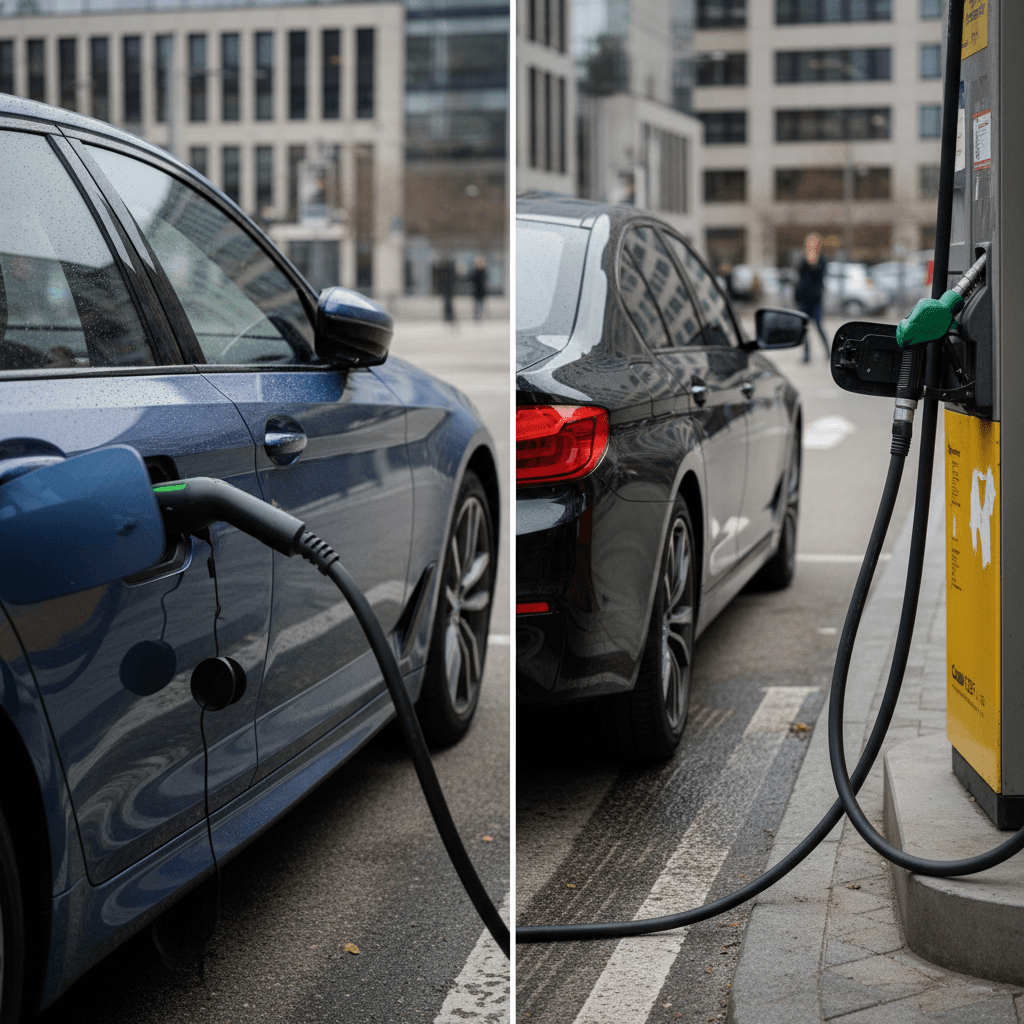
When the BMW i5 makes financial sense, and when it doesn’t
Best and worst‑case scenarios for BMW i5 ownership
Same car, different lives.
Scenarios where the i5 shines financially
- You drive 12,000–15,000 miles per year or more
- You have a garage or driveway and can install or already have Level 2 home charging
- Your utility offers time‑of‑use rates, so you can charge off‑peak
- Local or federal EV incentives cut a meaningful chunk off the price
- You plan to keep the car at least 5 years
Scenarios where a gas 5 Series may still win
- You drive under 7,000 miles per year and rarely hit the highway
- You have no home charging and shaky public charging nearby
- You live where electricity is unusually expensive and gas is cheap
- You take frequent long‑distance trips in regions with sparse fast‑charging
- You plan to keep the car only 2–3 years and can get a screaming lease deal on a 530i
How a used BMW i5 changes the math
Where things get interesting, especially for value‑hunters, is the used BMW i5. EVs often depreciate faster than comparable gas cars in the first few years, partly because the market fears battery replacement costs and evolving charging standards. For a savvy buyer who can verify battery health, that fear is a discount.
The used‑i5 sweet spot
This is precisely where a marketplace like Recharged steps in. Every used EV listed includes a Recharged Score Report that measures real battery health, fast‑charge history, and fair market pricing. Instead of guessing whether a used i5 is a future money pit, you’re looking at data, how much range it’s likely to retain, how the pack has been treated, and how the asking price stacks up to the broader market.
Trading in your gas BMW for an i5
FAQ: BMW i5 total cost vs gas 5 Series
Frequently asked questions
Bottom line: should you choose the i5 or gas 5 Series?
If you drive a normal amount, can plug in at home, and live with anything resembling average U.S. electricity prices, the BMW i5 almost always undercuts its gas 5 Series twin on total cost of ownership over 5 years. The fuel savings plus lower maintenance are too large to ignore, and incentives can turn the financial argument into a rout. The 530i or 540i still make sense for edge cases, highway nomads, infrastructure deserts, or drivers who simply prefer the feel of an engine to the hush of a motor, but those are now the exception, not the rule.
If you’re ready to let the numbers, not the noise, guide you, start by looking at real used BMW i5s with verified battery health. On Recharged, every EV comes with a Recharged Score Report, EV‑specialist support, financing options, trade‑in or consignment for your current car, and nationwide delivery, so you can pick the 5 Series that wins both on experience and on your spreadsheet.