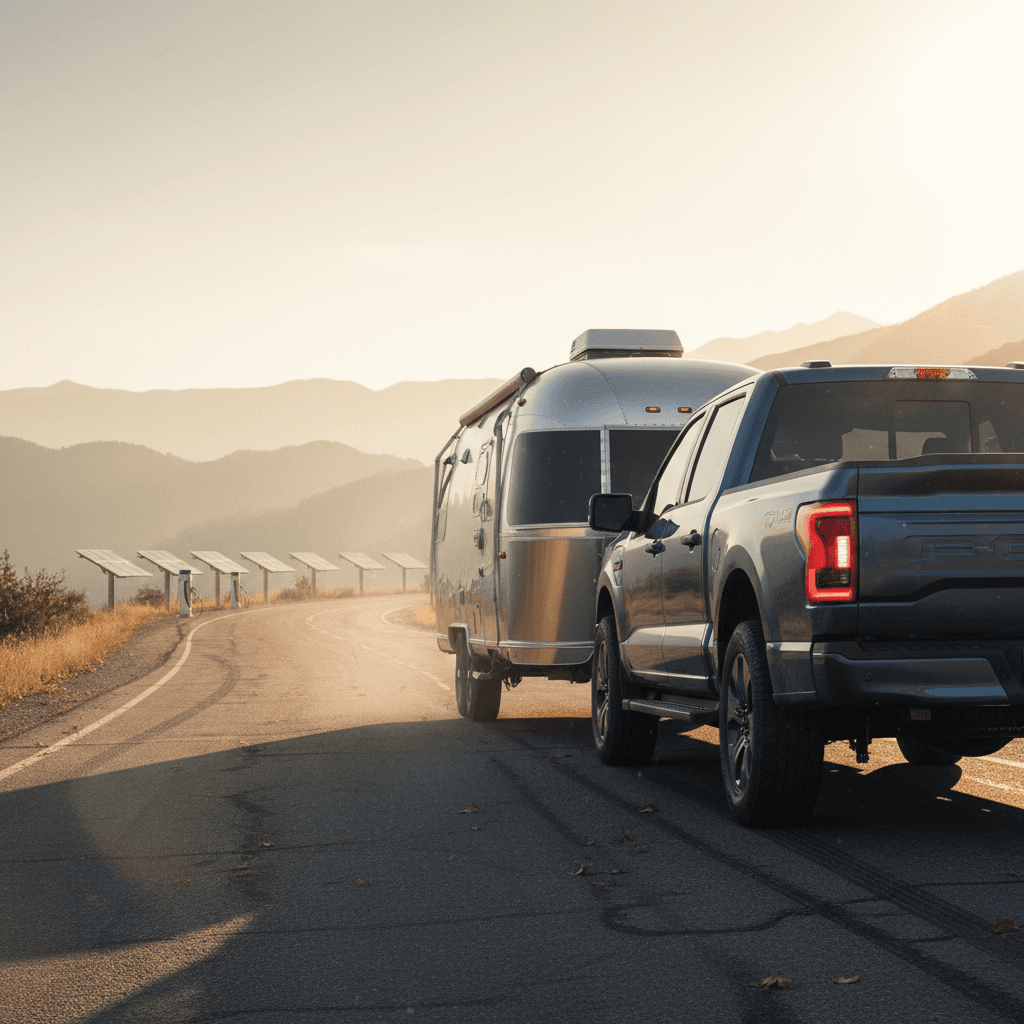
If you’re considering a Rivian R1T for camping, boats, or toy haulers, you’ve probably heard the phrase “your range gets cut in half when towing.” That’s close to the truth, but the real story behind Rivian R1T towing real‑world range is more nuanced. The pack you choose, the trailer you pull, the speed you drive, and the weather you’re in all dramatically change how far you can actually go between fast‑charge stops.
Quick take
Why Rivian R1T towing range really matters
Traditional truck buyers think in terms of fuel stations every few miles. With an electric truck, you’re thinking in terms of fast chargers that might be 80–120 miles apart, and not every site is trailer‑friendly. Knowing your Rivian R1T’s towing range isn’t about winning a spec‑sheet comparison, it’s about avoiding white‑knuckle drives into a charger with 2% remaining and a 6,000‑pound trailer behind you.
The good news is that the R1T is one of the few electric pickups on the market engineered from day one with towing and overlanding in mind. It offers up to 11,000 pounds of towing capacity and EPA ranges up to around 410–420 miles depending on model year and pack. In practice, though, how you configure and use the truck is what determines whether it’s a fantastic tow rig or a frustrating one.
Rivian R1T headline towing & range numbers
Rivian R1T towing basics: capacity, packs, and trims
Before you zero in on range numbers, you need a handle on what the truck itself can do. Rivian has evolved the R1T quickly, but the key towing story is consistent: serious capacity plus serious range, until you add a serious trailer.
Rivian R1T towing & range overview (recent model years)
Approximate specs for common 2023–2025 Rivian R1T configurations. Exact figures vary slightly by wheels, tires, and software updates.
| Model years | Battery pack | Drive unit | Max tow rating | EPA range (no trailer) |
|---|---|---|---|---|
| 2023–2024 | Standard / Standard+ | Dual‑Motor | 11,000 lb | ~270–315 mi |
| 2023–2024 | Large | Dual‑Motor | 11,000 lb | ~352 mi |
| 2023–2024 | Max | Dual‑Motor | 11,000 lb | ~400–410 mi |
| 2023–2024 | Large | Quad‑Motor | 11,000 lb | High‑200s to low‑300s mi (trim‑dependent) |
| 2025+ (Gen 2 est.) | LFP Standard / Large / Max | Dual‑Motor / Tri‑Motor | 7,700–11,000 lb (by trim) | Up to ~420 mi best‑case |
Use this as a starting point; always verify the exact configuration of any specific truck you’re buying or towing with.
Check the sticker, not just the brochure
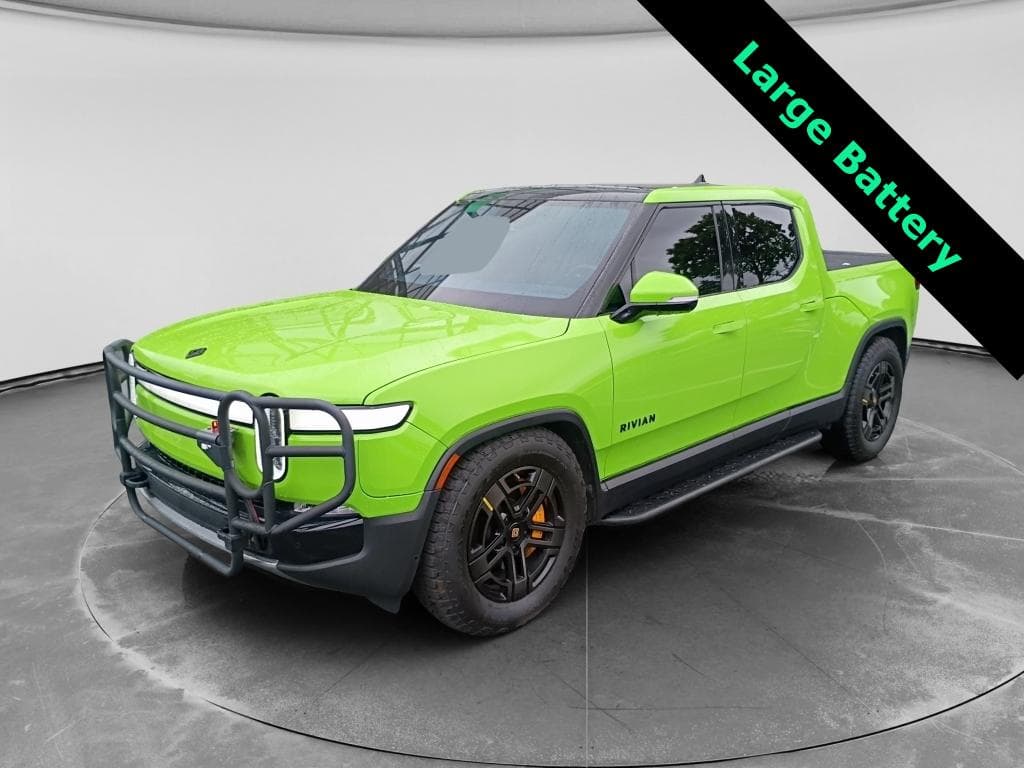
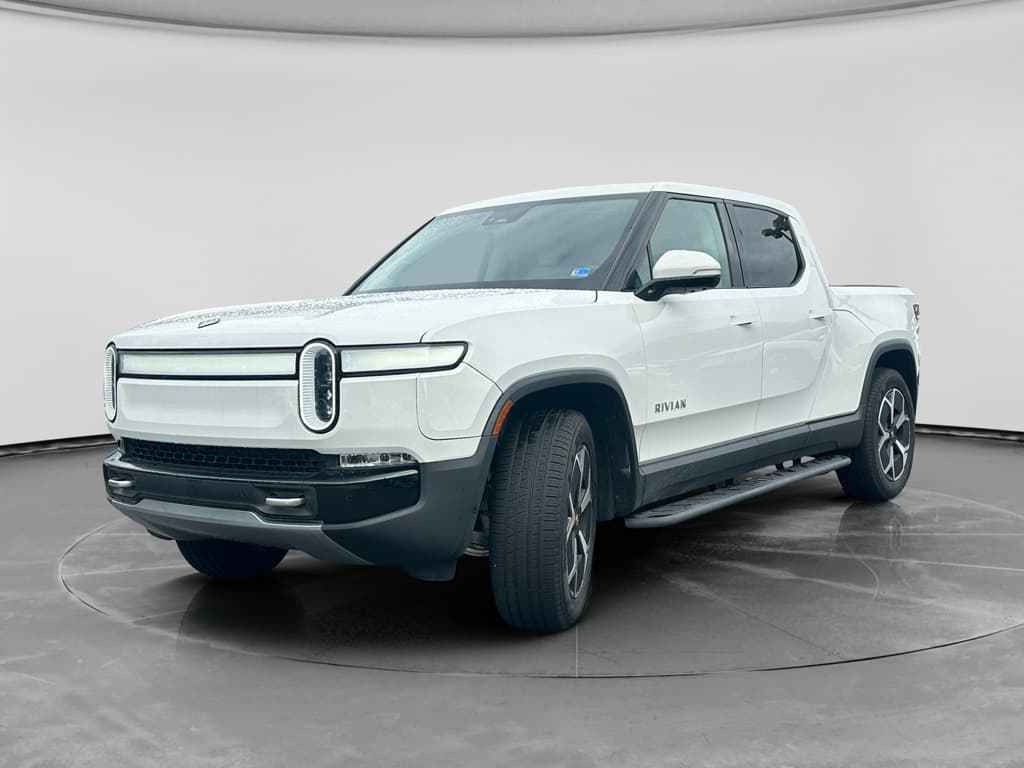
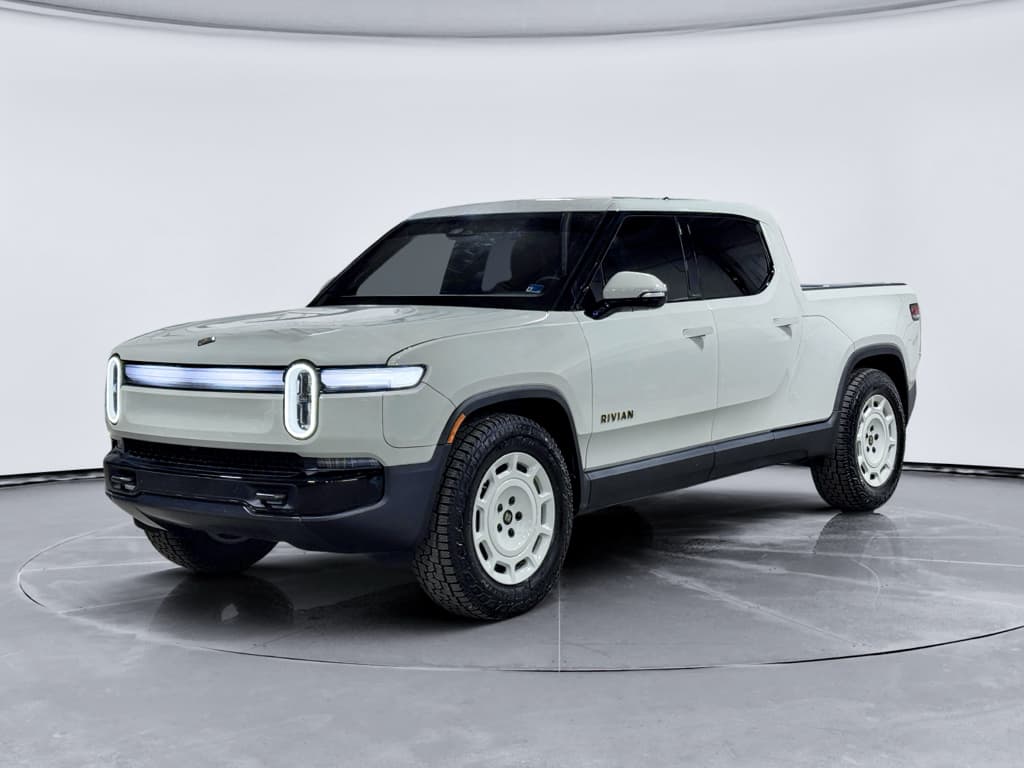
For shoppers, the battery pack is the big swing factor. A Standard‑pack R1T that’s perfect for daily driving can feel constrained on long towing trips, while a Max‑pack truck gives you a much bigger buffer between chargers. If you’re buying used through a marketplace like Recharged, the battery pack, wheel/tire package, and real battery health all feed directly into how usable that truck will be as a tow rig.
How much range you actually lose when towing
Rivian engineers have been unusually candid: their own testing showed that towing at or near the R1T’s 11,000‑pound max can cut range by about half. Independent owners who tow heavy trailers, especially in the cold, have reported losses closer to two‑thirds. On the flip side, owners pulling lighter, more aerodynamic trailers at modest speeds see much more forgiving numbers.
Rule‑of‑thumb range bands when towing with an R1T
Assumes highway‑heavy driving, 60–70 mph, mild grades
Light, low trailer
Examples: small utility trailer, light aluminum boat, single‑axle gear hauler under ~3,000 lb loaded.
- Typical range loss: ~30–40%
- Good aero, modest weight
- Plan on roughly 60–70% of your solo highway range
Mid‑size camper / toys
Examples: 18–23 ft travel trailer, two ATVs, mid‑size boat in the 4,000–6,000 lb loaded range.
- Typical range loss: ~45–60%
- Boxy shape adds big aero penalty
- Plan on ~40–55% of your solo highway range
Heavy, tall loads
Examples: 25–30 ft travel trailer, full car hauler, enclosed toy hauler near the R1T’s rated limits.
- Typical range loss: ~55–65%+
- Worst in cold weather and headwinds
- Plan conservatively on ~30–40% of solo range
Cold weather is a multiplier
Real‑world Rivian R1T towing examples
Laboratory numbers are helpful, but for towing you care about what happens at 65–70 mph with a real trailer. Here’s how a few widely discussed tests and owner experiences translate into simple planning rules you can actually use.
Sample real‑world towing scenarios for the Rivian R1T
These examples blend Rivian’s own testing with independent highway trips to illustrate realistic planning assumptions. Numbers are rounded to keep them easy to remember.
| Scenario | Trailer & conditions | Observed usable range | What to plan for |
|---|---|---|---|
| Moderate camper, warm weather | ~6,100 lb double‑axle camping trailer, 70 mph, mild temps | ~110 mi from full to low‑state‑of‑charge warning on a Large‑pack R1T | Plan on 90–120 mi between fast‑charge stops in similar conditions. |
| Very heavy load in freezing temps | 10,000+ lb trailer, sub‑freezing temps, multiple highway stints | Roughly two‑thirds of expected solo range lost over the trip | Plan on 30–40% of your solo EPA range as a safe towing number in true winter road‑trip conditions. |
| Light trailer on a calm day | 2,000–3,000 lb open trailer, 60–65 mph, mild weather | Reports of 60%+ of solo highway range still usable | Plan on 60–70% of your solo highway range when weight and aero are both friendly. |
Use these as directional benchmarks; your results will vary with wind, terrain, temperature, and how aggressively you drive.
A simple mental shortcut
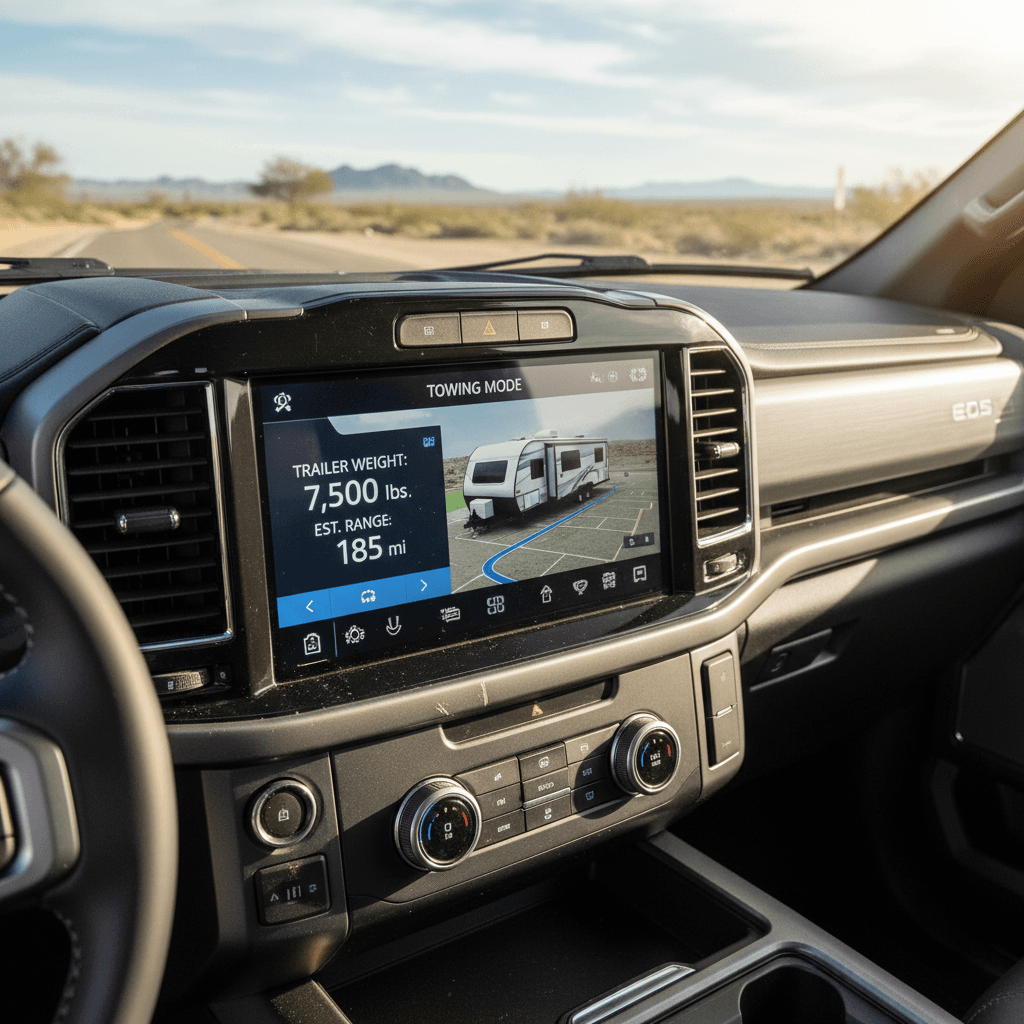
Towing range planning by battery pack
Battery size doesn’t change the percentage of range you lose, but it radically changes your comfort margin. Below are ballpark highway‑heavy towing ranges you can use for rough trip planning. These assume a reasonably efficient driving style, 60–70 mph, and a mid‑size camper or toy hauler in the 4,000–6,000‑pound range.
Approximate Rivian R1T towing range by battery pack
Based on common 2023–2024 configurations and the 45–60% loss band most owners see with mid‑size trailers.
| Pack & config (recent years) | Solo highway range (realistic) | Typical towing loss band | Practical towing range band |
|---|---|---|---|
| Standard / Standard+ Dual‑Motor | ~185–250 mi | ~45–60% loss | ~75–135 mi per charge |
| Large Dual‑Motor | ~245–280 mi | ~45–60% loss | ~110–150 mi per charge |
| Max Dual‑Motor | ~280–320 mi | ~45–60% loss | ~125–175 mi per charge |
| Large Quad‑Motor | ~200–260 mi (wheel/tire‑dependent) | ~45–60% loss | ~90–140 mi per charge |
These are planning numbers, not promises. Always leave a buffer and verify charger availability along your route.
Don’t plan off the EPA label
Key factors that make or break your towing range
1. Aerodynamics: Shape beats weight
A 4,000‑pound, low‑slung boat behind your R1T might cost you less range than a 3,000‑pound, 22‑foot boxy camper. That’s how big the aero penalty is. Once you’re past about 50 mph, the frontal area and shape of the trailer matter as much, or more, than what the scale says.
- Keep bikes, cargo boxes, and gear as low and tucked in as possible.
- Aerodynamic "teardrop" campers tend to tow more efficiently than tall, flat‑front RVs.
- Roof‑mounting gear on the truck plus a tall trailer is a double hit.
2. Speed: 5 mph can be 10–15% of your range
EVs are brutally honest about the cost of speed. Pushing from 60 to 70 mph with a trailer can easily add 15–25% to your energy use per mile. On a long tow day, that might mean one extra fast‑charging stop, or skipping it.
- Use cruise control where safe to smooth out throttle inputs.
- If you’re range‑limited, try 60–65 mph in the right lane and watch your projected range jump.
- Big headwinds can mimic the effect of driving 10 mph faster, watch your consumption screen.
3. Temperature & elevation
Cold batteries are less efficient, and cabin heating adds a constant load. Climbing long grades with a heavy trailer is another range killer, even though you’ll recoup some energy on the way down through regen.
- Precondition the battery while plugged in before a cold‑weather departure.
- Use seat and steering‑wheel heaters to reduce HVAC draw when possible.
- Expect the worst‑case combination, cold, wind, hills, and a tall trailer, to deliver your lowest‑ever range.
4. Tires, ride height & drive mode
Off‑road tires and high ride heights look great in photos and on the trail, but they hurt highway towing range. So does using sportier drive modes that prioritize response over efficiency.
- If your route is mostly highway, set the R1T to its lower, more aerodynamic ride height.
- All‑terrain tires cost you a few percent even before you add a trailer; factor that in.
- Use a towing‑appropriate drive mode and avoid unnecessary sprints, smooth wins.
Use the energy screen, not just the guess‑o‑meter
Charging strategies when you’re towing
Once you accept that towing cuts range sharply, the next step is to manage charging so your travel days still feel reasonable. The R1T can DC fast‑charge at competitive speeds for a pickup, but towing means more frequent stops and more planning around trailer‑friendly sites.
Smart charging habits when towing an R1T
Save time and avoid stressful low‑state‑of‑charge arrivals
Prioritize pull‑through or end stalls
Many DC fast chargers were never designed with trailers in mind. Look for stations with pull‑through stalls, outer‑row chargers you can back into, or adjacent parking you can briefly occupy while you charge, obeying posted rules.
Charge more often, to lower SOC
Like most EVs, the R1T charges fastest from low state‑of‑charge up to roughly 60–70%. When towing, it’s often quicker overall to stop more frequently and charge from, say, 15% to 65% several times rather than sit through a single deep 10–95% session.
Use towing‑aware route planning
Use apps that show real‑time charger availability and trailer‑friendly sites. Rivian’s onboard nav is improving, but tools like A Better Routeplanner (ABRP) can model towing consumption and help you avoid sketchy gaps between chargers.
Don’t arrive empty with a trailer
Shopping for a used R1T if you plan to tow
If you’re looking at a used Rivian R1T from a marketplace like Recharged, you have a huge opportunity: you can buy specifically for your towing needs instead of just taking whatever’s on the local dealer lot. A few decisions up front will determine whether your road‑trip days are relaxed or rushed.
Used R1T towing priorities
1. Choose the right battery pack
If towing and road trips are high on your list, a Large or Max pack is worth the premium. The extra 30–70 miles of solo highway range often turns into an extra 20–40 miles per towing leg, enough to skip a stop or choose a better charger.
2. Confirm towing package & hitch rating
Verify that the truck has the factory tow package and understand the difference between standard and weight‑distributing hitches. The R1T’s full 11,000‑pound rating assumes the right hitch setup and tongue weight management.
3. Pay attention to wheels & tires
Big 22‑inch wheels with sporty tires look fantastic but can ding efficiency, especially when towing. If you’re range‑sensitive, 20‑inch or 21‑inch wheels with more efficient tires will help you squeeze out extra miles per charge.
4. Review battery health, not just age
With any used EV, you want more than an odometer reading. A Recharged Score battery health report gives you an objective view of remaining capacity and DC fast‑charge history so you’re not guessing about real‑world range on day one.
5. Match the truck to your trailer, not your dream trailer
Be honest about what you’ll tow 90% of the time. If your realistic trailer is a 3,500‑pound camper, a Large‑pack R1T is more than enough. If you’re eyeing a 28‑foot toy hauler, you’ll want every kWh you can get and a well‑planned charging strategy.
How Recharged can help
Ready to find your next EV?
Browse VehiclesChecklist: planning a trip towing with an R1T
Before any serious towing trip, especially your first with an electric truck, spend a few minutes turning guesswork into a plan. This simple checklist will catch most of the surprises before you’re already hitched up and late to the campground.
R1T towing trip‑planning checklist
Estimate your real towing range
Start with your solo highway range (from previous trips or reputable tests), then multiply by a conservative factor: 0.4 for a big, boxy trailer; 0.5 for a mid‑size RV; 0.6 for a light, low trailer. Use the lower end until you’ve validated your own numbers.
Map chargers that work with trailers
Use mapping tools to find pull‑through, corner, or otherwise trailer‑friendly chargers along your route. Drop any sites with a history of poor reliability or awkward access, even if they’re perfectly spaced.
Plan your SOC targets
For each leg, decide your target departure and arrival SOC (for example, leave at 80%, arrive at 20%). Check that each hop fits comfortably within your estimated towing range, with extra margin for elevation changes and weather.
Check weather and winds
Strong headwinds and cold temperatures can turn a "comfortable" leg into a close call. A day or two before departure, look at wind forecasts and temperatures and adjust your legs or departure times if needed.
Pre‑condition and pack smart
Pre‑condition the cabin and battery while the R1T is still plugged in, especially in winter. Pack the trailer so heavy items sit low and over the axles, and avoid unnecessary roof cargo that adds drag.
Have a Plan B for each long leg
For every segment that pushes your comfort zone, identify a backup charger or safe place to stop if consumption is worse than expected. That way, you’re reacting to data, not improvising under stress.
Rivian R1T towing & range FAQ
Frequently asked questions about R1T towing range
Bottom line: is the Rivian R1T good for towing?
If you go in expecting gas‑truck behavior, you’ll be disappointed. But if you treat towing with a Rivian R1T as its own discipline, one where you trade fuel stops for fast‑charge planning and live within a 100–175‑mile towing envelope, the truck shines. It’s quick, quiet, stable, and, with the right trailer, more relaxing than many traditional half‑tons.
For buyers, the key is to match battery pack, trailer, and travel style. Occasional local towing and regional trips? A Large‑pack truck is a sweet spot. Frequent cross‑country RV adventures? A Max‑pack R1T and a carefully chosen, more aerodynamic trailer will serve you better. However you slice it, understanding your Rivian R1T towing real‑world range up front is what turns EV towing from an experiment into a confident, repeatable routine, and that’s exactly the kind of transparency Recharged was built to deliver when you’re shopping used.