If you’re used to miles per gallon, the way EVs talk about efficiency can feel like alphabet soup: miles per kWh, kWh per 100 miles, MPGe. This guide breaks down EV efficiency miles per kWh in plain English, shows what “good” looks like in 2026, and gives you simple shortcuts to compare models and estimate your real-world costs, especially helpful if you’re considering a used EV.
Quick definition
Why EV efficiency (miles per kWh) matters
With gas cars, efficiency mostly affects how often you hit the pump and how much you spend doing it. With EVs, efficiency is tied to almost everything: range, battery size (and cost), charging time, and long-term running costs. Two EVs can have the same range, but one may need a much bigger, more expensive battery to get there because it’s less efficient.
How efficient are modern EVs?
Why shoppers should care
The three main EV efficiency metrics explained
Miles per kWh, kWh/100 miles, and MPGe
Same physics, different ways of presenting it
Miles per kWh (mi/kWh)
What it is: How many miles you drive on 1 kWh of energy.
- Higher is better.
- Easy to use for range and cost math.
- Common in reviews and owner forums.
kWh per 100 miles
What it is: How many kWh the car uses to go 100 miles.
- Lower is better.
- This is the official EPA label number for EVs.
- Great for cost-per-100-miles math.
MPGe (miles per gallon equivalent)
What it is: EV miles per unit of energy equivalent to one gallon of gas (33.7 kWh).
- Lets you compare EVs to gas MPG.
- Helpful for big-picture efficiency.
- Less useful for your day-to-day cost math.
Simple conversion shortcuts
- mi/kWh → kWh/100 mi: 100 ÷ (mi/kWh)
- kWh/100 mi → mi/kWh: 100 ÷ (kWh/100)
- MPGe → kWh/100 mi: 33.7 ÷ (MPGe ÷ 100)
Miles per kWh explained in plain language
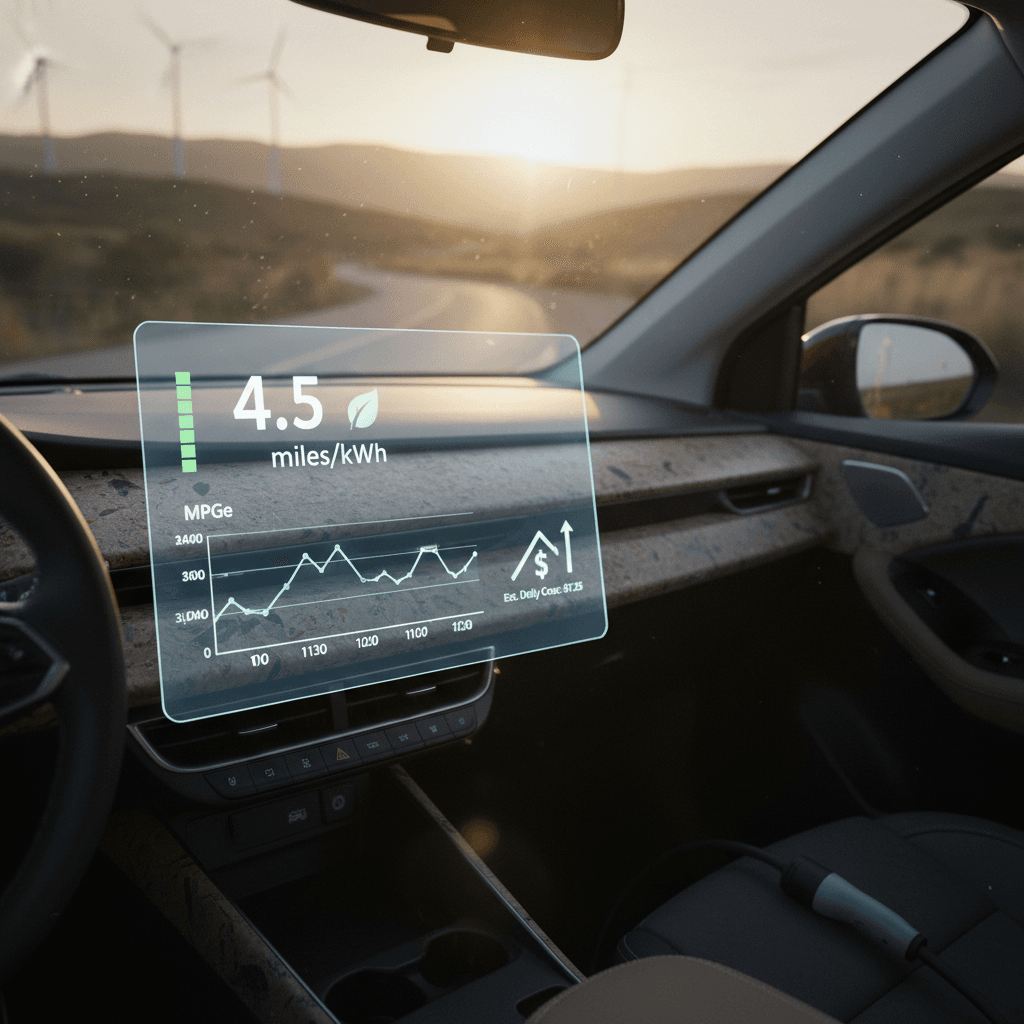
Think of miles per kWh as the EV version of miles per gallon. A gallon of gas just gets replaced by a kilowatt-hour of electricity. If your EV averages 3.5 mi/kWh, it means that for every 1 kWh the battery sends to the motors, you travel about 3.5 miles.
Most EV dashboards will show some version of this: either mi/kWh, Wh/mi (watt-hours per mile), or kWh/100 mi. They’re all just different ways of expressing the same relationship between energy in and miles out.
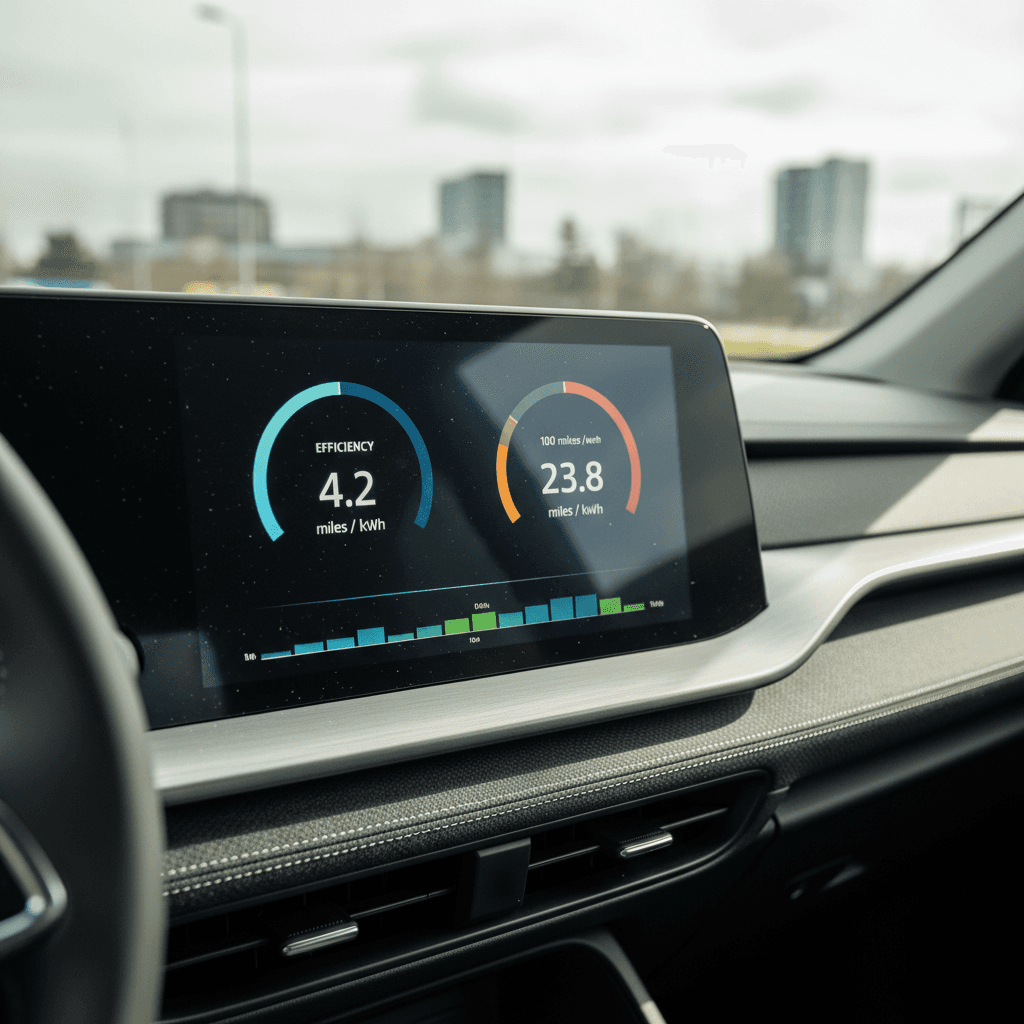
How common EV efficiency readouts relate to each other
You can convert between efficiency units without a calculator once you see the pattern.
| Display | What it means | Example value | Equivalent |
|---|---|---|---|
| mi/kWh | Miles per kilowatt-hour | 3.3 mi/kWh | 30.3 kWh/100 mi, 303 Wh/mi |
| kWh/100 mi | kWh used per 100 miles | 28 kWh/100 mi | 3.6 mi/kWh, 280 Wh/mi |
| Wh/mi | Watt-hours per mile | 250 Wh/mi | 4.0 mi/kWh, 25 kWh/100 mi |
Lower Wh/mi and kWh/100 mi mean higher miles per kWh.
Don’t obsess over single-trip numbers
What counts as “good” EV efficiency today?
There’s no single “right” number, because a three-row SUV, a compact hatchback, and a performance sedan live in different universes. But we can outline rough ranges based on today’s market and EPA data.
Typical miles per kWh ranges by vehicle type (combined driving)
Approximate real-world averages for 2024–2026 EVs
Compact & small crossovers
- Great: 4.0–5.0+ mi/kWh
- Solid: 3.3–3.9 mi/kWh
- Poor: Under 3.0 mi/kWh
Examples include efficient models like Hyundai Kona Electric, Fiat 500e, or Tesla Model 3–class vehicles.
Mid-size SUVs & sedans
- Great: 3.5–4.2 mi/kWh
- Solid: 3.0–3.4 mi/kWh
- Poor: Under 2.7 mi/kWh
Think Hyundai Ioniq 5/6, Kia EV6, BMW i4, and similar.
Large SUVs & pickups
- Great: 2.7–3.3 mi/kWh
- Solid: 2.2–2.6 mi/kWh
- Poor: ~2.0 mi/kWh or less
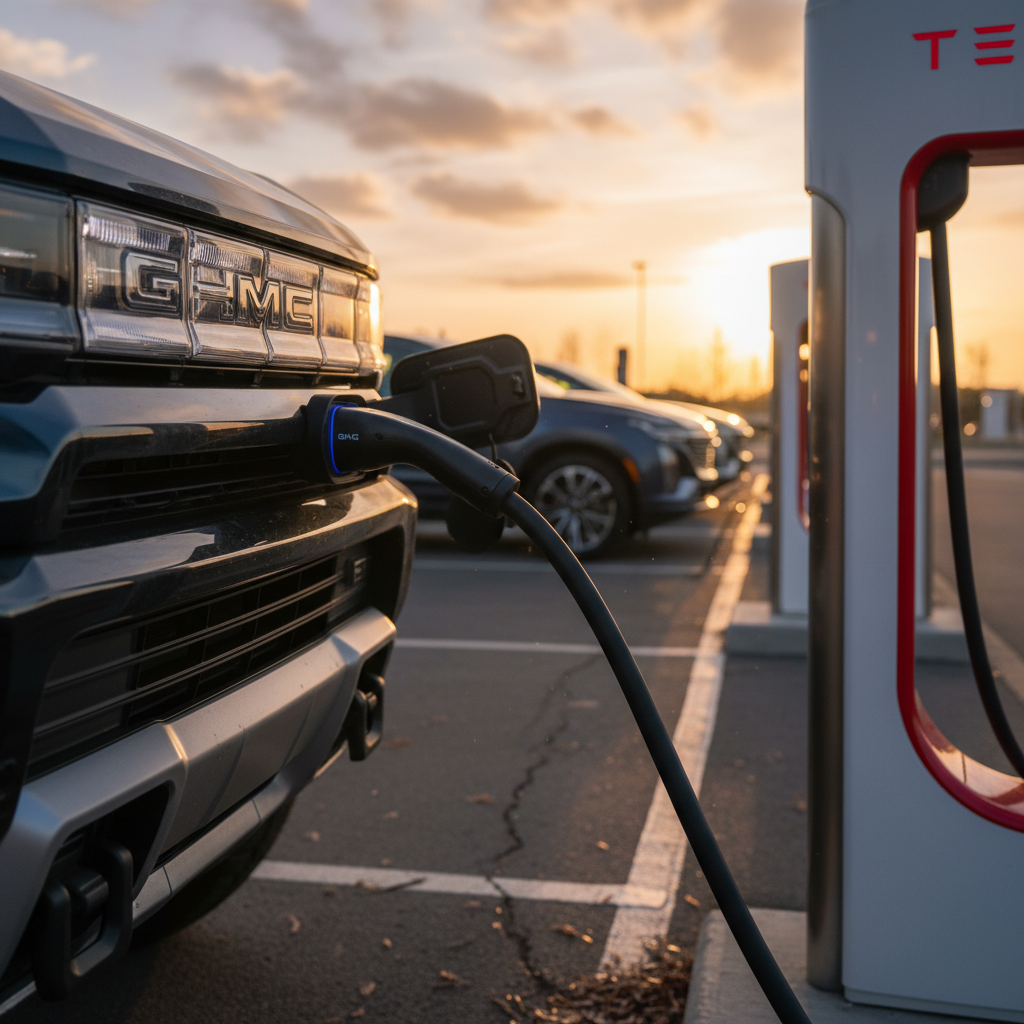
Heavy trucks like GMC Hummer EV often sit near the bottom of the efficiency charts.
How EVs compare to gas cars
8 factors that impact your real-world miles per kWh
If your EV isn’t matching its window-sticker efficiency, you’re not alone. Just like EPA MPG for gas cars, EPA efficiency ratings are a standardized test, not a guarantee. Here are the biggest levers that change your day-to-day miles per kWh.
Major drivers of EV efficiency
1. Speed and aerodynamics
Pushing air out of the way dominates energy use at highway speeds. Above ~65 mph, your miles per kWh usually drop fast. Boxy SUVs and trucks pay an extra penalty compared with sleek sedans.
2. Temperature and climate control
Batteries and people both dislike extremes. Cold weather increases internal battery losses and forces the cabin heater to work harder, while very hot weather means the A/C and battery cooling systems are running more often.
3. Vehicle weight and size
Heavier vehicles need more energy to get moving and keep moving. A three-row SUV or electric pickup will almost always post lower mi/kWh than a compact hatchback, even if they share similar motors and batteries.
4. Driving style
Aggressive acceleration, rapid lane changes, and tailgating that forces constant braking all waste energy. Smoother driving, using eco modes, and anticipating traffic can noticeably raise your mi/kWh.
5. Tire type and pressure
Big wheels, sticky performance tires, or underinflated tires all hurt efficiency. Low-rolling-resistance tires and correct pressures can add meaningful range, especially on highway commutes.
6. Terrain and elevation
Long climbs raise energy use; long descents give some of it back via regenerative braking. Hilly or mountainous routes usually yield worse efficiency than flat suburban cruising.
7. Accessory use
Roof boxes, bike racks, light bars, or driving with the tonneau cover open on a truck all hurt aerodynamics. Even added weight from cargo adds up on long trips.
8. Software and updates
Automakers routinely tweak thermal management, motor control, and aero-related features via software updates. The same model can get more efficient over time, as we’ve seen with several recent EV refreshes.
Cold-weather reality check
How to estimate range and charging cost from miles per kWh
Once you’re comfortable with miles per kWh, estimating range and cost becomes a quick back-of-the-envelope exercise. You don’t need to be a math person, just remember a couple of simple formulas.
1. Estimating real-world range
Formula: Battery usable kWh × real-world mi/kWh = approximate range.
Example: 77 kWh battery × 3.3 mi/kWh ≈ 254 miles.
On a road trip, you’ll rarely use 0–100% of the battery, so many drivers plan around 10–80% or 10–90% of capacity.
2. Estimating charging cost
Formula: (Miles driven ÷ mi/kWh) × electricity price per kWh.
Example: 1,000 miles/month ÷ 3.0 mi/kWh ≈ 333 kWh. At $0.15/kWh, that’s about $50/month in home charging.
Public DC fast charging is usually more expensive, often comparable to a 25–35 MPG gas car on a cost-per-mile basis.
Use kWh/100 miles for quick comparisons
Using efficiency data when shopping for a used EV
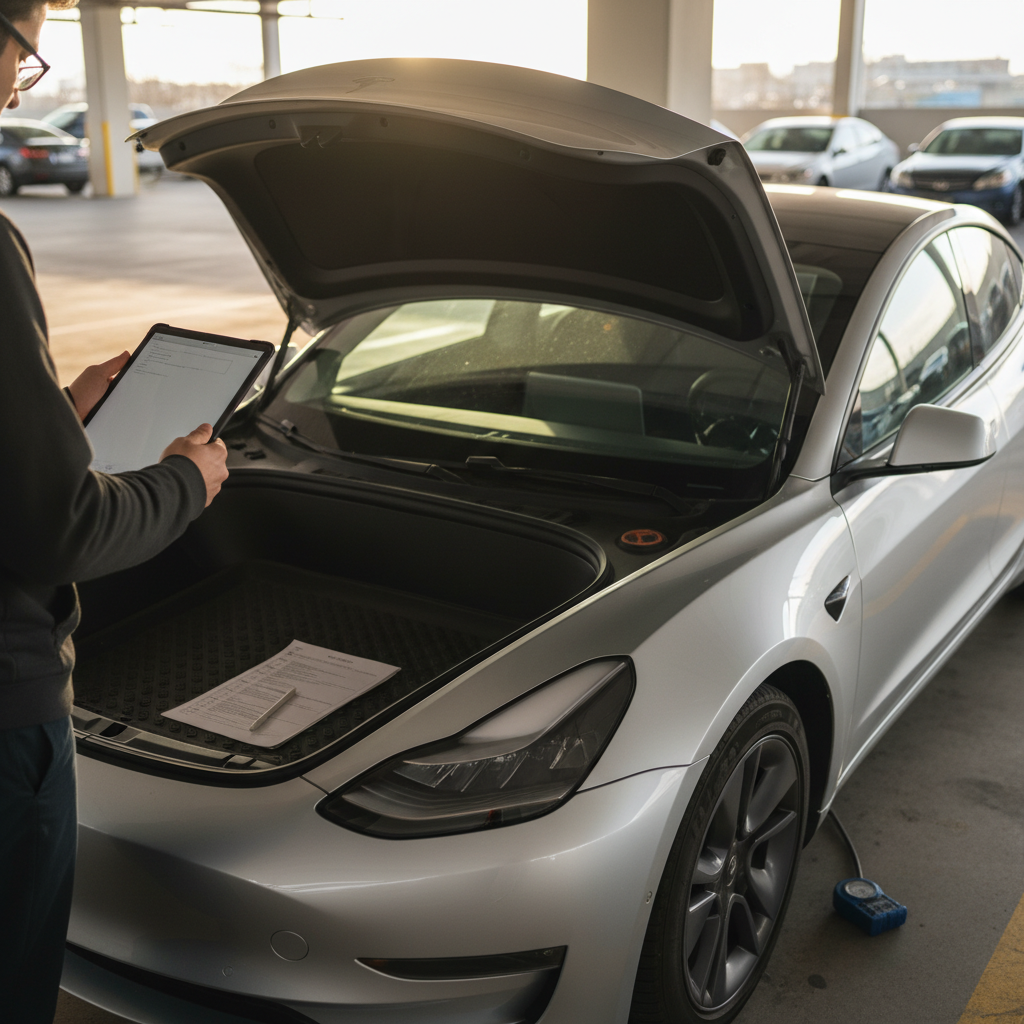
When you’re looking at a used EV, it’s easy to focus on battery size and EPA range and skip over efficiency. That’s a mistake. Efficiency tells you how smartly the car uses that battery, and it can also hint at how the previous owner drove and maintained it.
How to make EV efficiency part of your used-car due diligence
Combine EPA data with car-specific information
Step 1: Look up official ratings
Start with the EPA label values for:
- MPGe
- kWh/100 miles
- Combined range
This gives you the baseline the car was designed for when new.
Step 2: Compare to real-world reports
Check owner forums, independent tests, and long-term reviews. If a model consistently does much worse than its label, take that into account.
Step 3: Check in-car efficiency history
Many used EVs still have long-term trip meters showing average mi/kWh over thousands of miles. If the long-term average is far below EPA, the car may have lived a hard life of high-speed, short, or very cold-weather driving.
Step 4: Pair efficiency with battery health
An efficient car with a degraded battery may still have underwhelming range. Use efficiency and a battery health assessment to understand how far the car will actually go per charge.
EPA vs your commute
How Recharged helps you understand real-world efficiency
EV specs on a window sticker are only half the story. That’s why every vehicle listed on Recharged comes with a Recharged Score Report that digs deeper than a basic CARFAX or a generic range number.
- Verified battery health: We use advanced diagnostics to measure usable battery capacity, so you know how much energy the pack can still store.
- Vehicle-specific efficiency context: The report explains how the model’s typical mi/kWh compares to similar EVs and what that means for your likely real-world range.
- Transparent pricing and cost-of-ownership insights: Our experts help translate efficiency numbers into estimated monthly charging costs based on your driving and local electricity rates.
- Expert-guided support: Not sure if a 2.8 mi/kWh SUV or a 3.8 mi/kWh crossover makes more sense for you? Our EV specialists walk you through the tradeoffs, battery size, efficiency, and total cost of ownership.
From numbers to confidence
EV efficiency FAQ: miles per kWh, MPGe, and more
Frequently asked questions about EV efficiency
Key takeaways on EV efficiency
Miles per kWh is the simplest way to think about EV efficiency: it tells you how many miles your car extracts from each unit of energy. Once you’re comfortable moving between mi/kWh, kWh/100 miles, and MPGe, you can quickly compare different EVs, sanity-check range claims, and estimate charging costs for your commute or road trips.
When you’re shopping, especially in the used market, look at efficiency and battery health together. A high-efficiency model with a healthy pack can deliver the same real-world range as a less efficient one with a much bigger battery, often for less money up front and over time. Recharged’s combination of verified battery diagnostics, transparent pricing, and EV-specialist guidance is designed to turn those efficiency numbers into clear, confident decisions for your next electric vehicle.