If you’ve gone hunting for Rivian R1T half shaft issues, you’ve probably heard the stories: the clunk when you pull away from a stop, the tock when regen kicks in, the service visits that fix it…until they don’t. The R1T is one of the most interesting EV trucks on sale, but its half shafts have become something of a recurring character in the ownership saga.
The short version
Overview: What’s Going On With R1T Half Shaft Issues?
On the R1T, half shaft issues are primarily about noise, vibration, and premature wear at the front axles rather than spectacular mechanical failures. Owners most often report:
- A single or repeated clunk/tock when transitioning from acceleration to regen, especially at parking‑lot speeds
- Clicking or knocking when pulling away from a stop or turning at low speed
- A faint buzz or vibration under acceleration in certain ride heights
- Cases where half shafts were replaced once…only for the noise to return 5–20k miles later
Rivian has iterated on the design, adjusted lubrication, and even replaced related components like hubs and subframes on some trucks. But as of early 2026, half shaft complaints haven’t vanished. They have simply shifted from “what on earth is this?” to “this again?”, which is a different kind of problem.
Quick Primer: What Half Shafts Do on an EV Truck
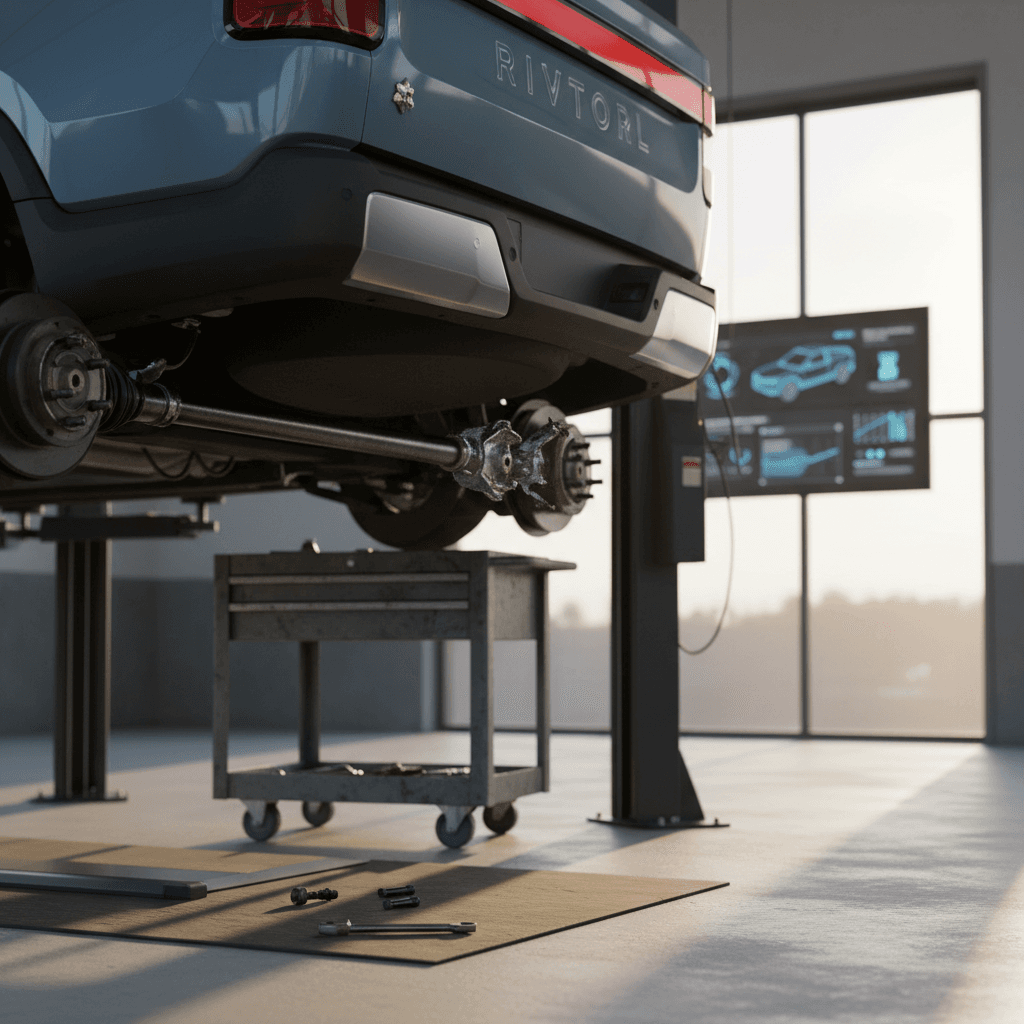
Half shafts are the short axle shafts that connect the drive unit (motor/gearbox assembly) to the wheels. On a Rivian R1T, you have multiple motors and a fairly complex independent suspension, which means several half shafts working at different angles as the truck changes ride height.
- They transmit the instant torque of the EV motors to the wheels.
- They pivot and articulate with the suspension and steering, via constant‑velocity (CV) joints.
- They rely on precise fitment and grease to avoid play, wear, and noise.
Why EV torque matters
Common Rivian R1T Half Shaft Symptoms
Not every odd noise is a half shaft crying for help. The R1T also has busy air suspension, underbody panels, and big tires, all of which can make their own sounds. Still, there are some classic half shaft symptoms owners describe over and over.
Typical R1T Half Shaft Symptoms
What you might notice behind the wheel
Low‑speed clunk or tock
A distinct single tock/clunk when you move from brake to throttle, or when regen first grabs at 5–25 mph. Often felt through the steering wheel or pedals.
Clicking under load
Repeated clicking or light knocking when accelerating from a stop or making tight turns (driveway, parking garage). Sometimes louder on one side.
Vibration on hard acceleration
A light vibration or buzzing through the wheel or floorboard when you really lean on the power, especially in Sport mode or standard ride height.
Noise vs. imminent failure
Why Rivian R1T Half Shafts Are a Hot Topic
So why all the attention on this one wear item? Three reasons: design complexity, real‑world usage, and the pattern of repeat replacements some owners have seen.
1. Complex driveline, big loads
Quad‑motor R1Ts route power to each wheel independently. The front half shafts sit between powerful motors and heavy 21–22" wheels and tires, all riding on height‑adjustable air suspension. That’s a lot of weight and torque moving through relatively compact components.
Throw in lift and squat as the truck changes ride height, and you have CV joints working at steep angles under serious load.
2. Real‑world reports of repeat wear
Owners have documented patterns like: front half shafts replaced at ~30–40k miles for knocking, noise returning 5–20k miles later, then more lubrication, new washers, or a second replacement set.
In some high‑mileage cases, owners report multiple front half shaft replacements over ~100k miles. It’s not universal, but it’s common enough that R1T shoppers now ask about it the way people once asked about Turbo Subarus and head gaskets.
Gen 2 hardware and newer builds
How Rivian Service Typically Handles Half Shaft Complaints
When an owner reports a clunk, click, or buzz, Rivian service usually walks through a playbook. The exact sequence can vary by service center and build year, but the general pattern looks like this:
- Verify the noise with a technician ride‑along and check suspension ride height settings.
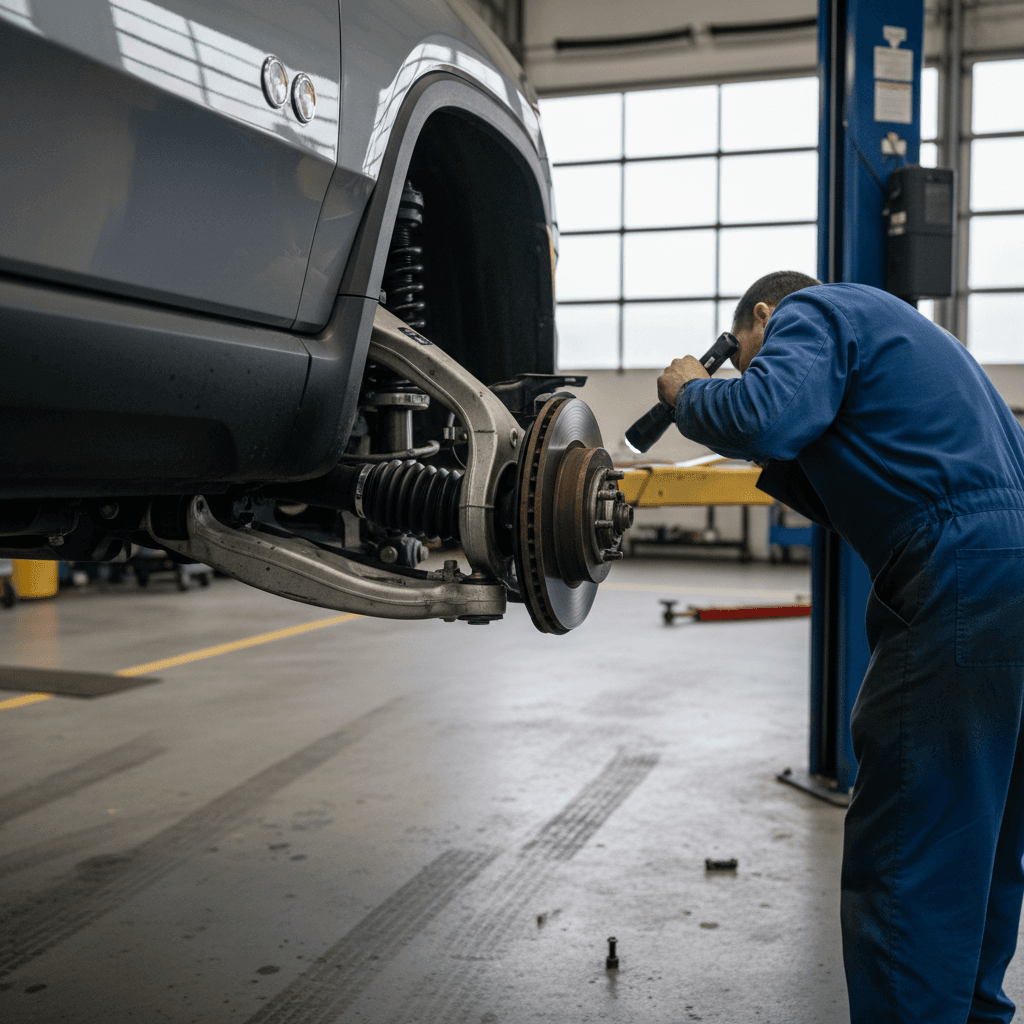
- Inspect the front drivetrain: boots, hub nuts, torque, and visible play in the half shafts and hubs.
- Apply updated lubrication and hardware at the hub/shaft interface (including revised grease and so‑called “ting” or tuning washers) if the issue is mild.
- If the noise persists or play is excessive, replace front half shafts, often along with hub/bearing assemblies.
- In some early trucks with persistent issues, Rivian has also replaced front subframes or upgraded jounce lines and other suspension components that can add their own noises.
The good news for current owners
Repair Costs and Warranty Coverage
Where things get interesting, read: expensive, is after that 5‑year/60k‑mile comprehensive warranty lapses. Rivian’s longer powertrain warranty focuses on big‑ticket items like the drive units and battery, not the shafts themselves.
R1T Half Shaft Coverage & Typical Cost Range
Approximate U.S. figures as of early 2026; actual pricing varies by dealer, region, and whether Rivian provides goodwill assistance.
| Scenario | Likely Coverage | Owner Cost (Approx.) | Notes |
|---|---|---|---|
| Within 5 yr / 60k mi warranty | Usually covered | $0 | Noise and premature wear generally addressed under comprehensive warranty. |
| Outside 5 yr / 60k mi, under powertrain | Usually not covered | $1,500–$3,000+ | Front half shafts and hubs treated as wear items; some owners report ~"nearly 3k" invoices. |
| Repeat failures within short mileage | Case‑by‑case goodwill | $0–$1,000+ | Rivian has occasionally stepped in with goodwill when issues recur soon after prior repairs. |
| Independent shop, out of warranty | Owner pays all | Varies widely | Limited aftermarket experience; parts and procedures are still largely OEM‑centric. |
Use these numbers as directional guidance, not quotes. Always confirm with Rivian service for your VIN.
Don’t assume the long powertrain warranty covers this
Living With an R1T Long‑Term: Should Half Shafts Scare You?
For all the forum noise, the R1T doesn’t have a widespread record of half shafts catastrophically failing at highway speed. What you’re mostly looking at is an annoying, sometimes recurring maintenance item that can be pricey once you’re out of warranty, especially if you rack up miles quickly.
R1T Half Shaft Issues in Context
When you should worry
- Your truck is near or past 60k miles and starting to clunk or click under load.
- You’ve already had half shafts replaced once and the same noise is back within 10–20k miles.
- The noise escalates into a strong shudder or grinding, not just an occasional tock.
In these scenarios, you want a clear diagnosis, a detailed repair invoice, and a conversation about goodwill coverage if you’re just outside warranty.
When it’s more annoyance than danger
- A light, intermittent tock at parking‑lot speeds that doesn’t worsen over time.
- No vibration through the steering wheel at highway speed, just a small feel at low speed transitions.
- Noise that began right after suspension work and doesn’t correlate with load on the driveline.
It’s still worth documenting, but you’re probably not on the verge of a dramatic failure.
Used R1T Buyers: Checklist for Half Shafts & Drivetrain
If you’re shopping a used R1T, especially a 2022–early‑2023 quad‑motor, half shafts should be on your short list of things to check, right alongside battery health and tire wear. The goal isn’t to run away from any truck that’s had half shaft work; it’s to understand the pattern and price the truck accordingly.
Used R1T Half Shaft & Drivetrain Checklist
1. Drive it like an owner, not a valet
On the test drive, do several slow 0–25 mph accelerations and decelerations. Listen for clunks as you come on and off the pedal, especially while turning in a parking lot. Then do at least one brisk 30–60 mph pull in a safe area and feel for vibration through the wheel.
2. Cycle ride heights
If the truck has adjustable suspension, move between Low, Standard, and High while driving slowly. Some owners report noises that only show up in certain heights, where half shaft angles are most extreme.
3. Ask for service history
Specifically ask whether <strong>front half shafts, hubs, or the front subframe</strong> have ever been replaced or re‑torqued, and at what mileage. A truck that’s already had the updated parts installed, recently, isn’t necessarily a deal‑breaker. It can be a plus if it’s quiet now.
4. Inspect boots and hubs
Have a qualified shop, or a service like <strong>Recharged</strong>, inspect the CV boots for tears, check for grease leakage at the hubs, and verify there’s no obvious play if you rock the wheel by hand with the truck lifted.
5. Budget for one out‑of‑warranty repair
On older, high‑mileage examples, it’s reasonable to mentally set aside a couple of thousand dollars as a contingency for front‑end driveline work in the truck’s future. That’s not unique to Rivian; it’s modern, complex trucks in general, but the R1T makes that line item more likely.
6. Lean on third‑party evaluation
If you’re not comfortable parsing driveline noises, consider shopping through platforms that specialize in EVs. At Recharged, for example, every used EV gets a <strong>Recharged Score Report</strong> with a detailed inspection of driveline behavior, not just a generic test drive.
How Recharged Evaluates R1T Half Shafts & Drivetrains
Rivian R1Ts are some of the most coveted used EV trucks on the market right now, which is why they’re starting to pop up in more and more listings. At Recharged, we’re careful not to confuse desirability with invincibility, especially around known pain points like half shafts, hubs, and front suspension.
Inside a Recharged R1T Drivetrain Evaluation
What we look for before a truck earns our badge
Targeted road test
Our specialists perform low‑speed maneuvers, tight turns, and full‑throttle pulls specifically tuned to surface half shaft clunks, clicks, or vibrations. Anything abnormal gets flagged long before a listing goes live.
Under‑body inspection
On a lift, we check for play at the hubs, condition of CV boots, evidence of grease leakage, and any signs of prior driveline work. We note whether updates like newer half shafts or hubs have been fitted.
Recharged Score Report
The results appear in a transparent Recharged Score and detailed report, alongside verified battery health and fair‑market pricing. That way, you’re not just taking a seller’s word that “they all do that.”
Make the truck work for you
FAQ: Rivian R1T Half Shaft Issues
Frequently Asked Questions About R1T Half Shafts
Bottom Line: Smart Ways to Own or Shop an R1T
The conversation around Rivian R1T half shaft issues is really a conversation about expectations. You’re not buying a farm truck with leaf springs and a live axle; you’re buying a 7,000‑pound, quad‑motor rocket sled with air suspension and cutting‑edge software. Some complexity is going to show up in the service bay.
If you already own an R1T, take noises seriously, get them documented under warranty, and don’t be shy about a second opinion if the explanation doesn’t match what you feel from behind the wheel. If you’re shopping used, treat half shafts the way you treat battery health: a key risk to quantify, not a reason to walk away from a great truck.
At Recharged, our job is to make that quantifying easier. Every EV we list, including Rivian R1Ts, gets a Recharged Score Report with verified battery health, transparent pricing, and a deep look at real‑world driveline behavior, so you can buy the adventure truck you want without inheriting someone else’s mystery clunk. And if you’re ready to upgrade into an R1T or out of one, we can help with financing, trade‑ins, instant offers, consignment, and nationwide delivery, all from your couch or at our Experience Center in Richmond, VA.