The Rivian R1T is one of the most interesting electric trucks on the road: fast, comfortable, and incredibly capable off‑road. But as a first‑generation product from a new automaker, it also comes with quirks. If you’re researching Rivian R1T common problems and fixes, whether you already own one or are eyeing a used truck, you’re asking the right questions.
Gen 1 vs. Gen 2 R1T
Rivian R1T common problems: what’s normal for a first‑gen EV truck?
- More issues than average new vehicles, especially in the first 1–2 years of production.
- Most problems are annoyances rather than catastrophic failures, rattles, warning lights, sensor glitches, trim, and weather‑sealing.
- Serious issues (loss of power, suspension failures, water intrusion) are real, but relatively rare and often covered by warranty or recalls.
Rivian R1T reliability snapshot
Most common Rivian R1T problems owners report
Top R1T problem areas at a glance
What you’re most likely to run into as an owner
Suspension & steering feel
Software & infotainment
Water leaks & seals
- 12V system warnings and random alerts.
- Turn‑signal and exterior lighting issues on certain build ranges.
- Trim fit, paint imperfections, and rattles that take more than one service visit to chase down.
Air suspension, steering shake, and alignment problems
The R1T’s height‑adjustable air suspension and big, heavy battery pack are central to its magic, and to some of its headaches. Owners across both early and later trucks report issues like front‑end popping, uneven ride height, and steering vibration, especially on 20‑inch wheel setups with aggressive tires.
- Front axle popping or clunking when turning at low speed
- Steering wheel shake between ~60–75 mph
- Truck leaning slightly to one corner when parked
- “Suspension fault” or “ride height unavailable” warnings
- Harsh ride or knocking over sharp bumps
Likely causes
- Front half‑shafts and CV joints on early trucks developing play, leading to popping noises.
- Air springs or dampers failing or leaking, especially at higher mileage or in harsh climates.
- Control arm bushings or ball joints wearing faster than expected on a 7,000‑lb truck.
- Poor factory alignment or wheel balance from delivery, made worse by big all‑terrain tires.
Typical fixes
- Front axle/half‑shaft replacement and re‑torqueing for popping or clunking.
- Replacing a failed air spring, damper, or height sensor if one corner sits low or shows a fault.
- Road‑force wheel balance and full alignment to cure highway shake and uneven tire wear.
- Software calibration of the suspension after hardware repairs or height changes.
All of this should be handled under warranty on newer trucks; document the symptoms with video if they’re intermittent.
Baseline your alignment early
Software glitches, screens, and driver‑assist quirks
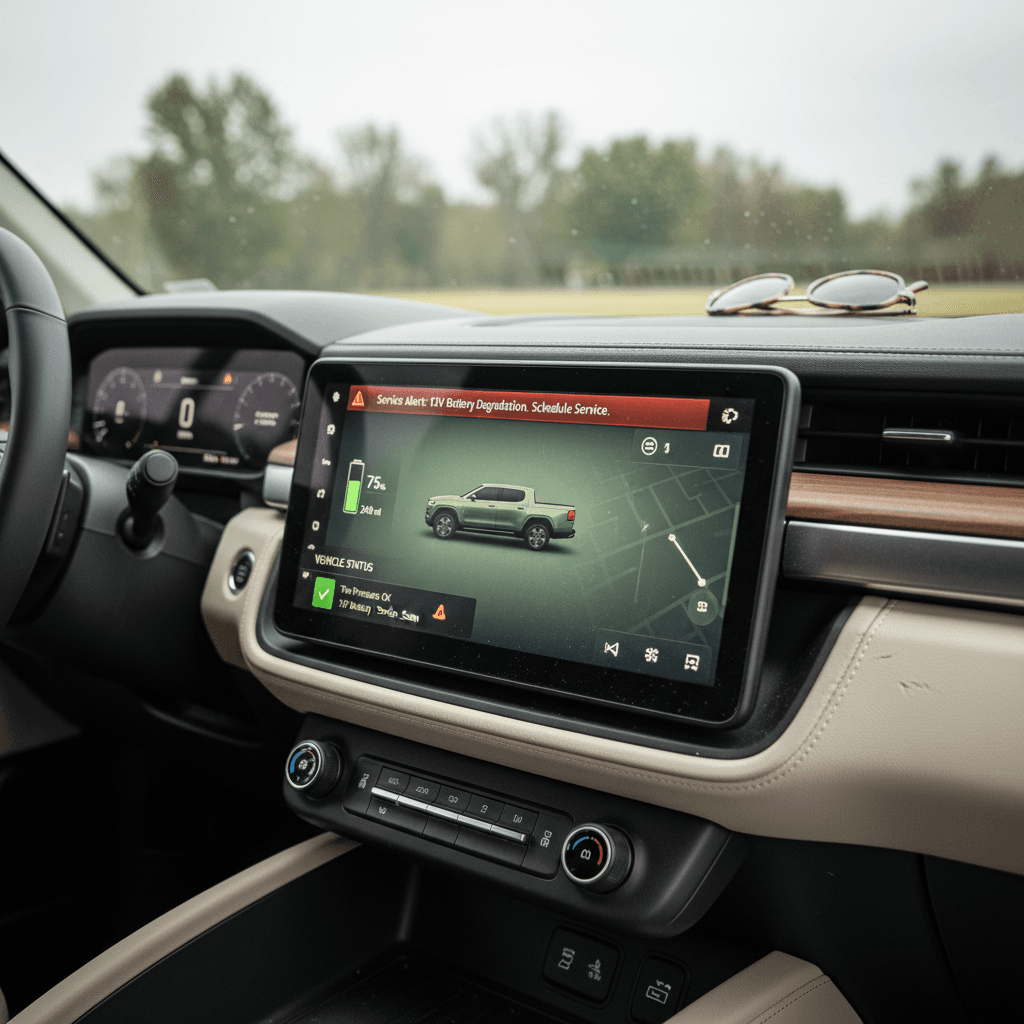
Rivian leans hard on software: almost every function in the R1T, from climate to glovebox release, runs through the central touchscreen. That makes over‑the‑air updates a superpower, but it also means software bugs can be surprisingly disruptive.
- Infotainment display freezing or going black mid‑drive
- Surround‑view or backup cameras temporarily unavailable
- Random reboots of the center or driver screen
- Inconsistent behavior from adaptive cruise and lane‑keeping
- Driver‑assist alerts that feel overly sensitive or late
Highway Assist recalls and updates
Quick DIY steps
- Soft reboot the screens using the steering‑wheel buttons when the UI freezes.
- Check for pending software updates in the Rivian app and install them promptly.
- Power‑cycle the vehicle fully (park, exit, lock, wait a few minutes) to clear minor glitches.
- Note the time, location, and behavior when a driver‑assist feature misbehaves so service can pull logs.
When to involve Rivian service
- Driver‑assist warnings or interventions that feel unsafe or inconsistent.
- Repeated infotainment reboots over days or weeks, not just once.
- Cameras frequently unavailable, especially in rain or at night.
- Any message indicating a safety feature is offline (ABS, airbags, stability control).
Capture photos or videos of the behavior; Rivian can correlate them with internal logs to pinpoint root causes.
Electrical gremlins, 12V issues, and warning lights
Like other EVs, the R1T uses a large high‑voltage battery to move the truck and a traditional 12‑volt system to run computers, lights, locks, and safety systems. If the 12V side misbehaves, you’ll see a flurry of warnings long before anything mechanical is wrong.
- “12V battery fault” or “Electrical system malfunction” messages
- Random driver‑assist or stability‑control warnings that clear on restart
- Turn signals or exterior lights not working correctly on certain 2024–2025 trucks
- Door or gear‑tunnel sensors reading open when fully closed
Take 12V warnings seriously
- Replacing a 12V battery module or related wiring harness.
- Updating software that manages the DC‑DC converter and power distribution.
- Swapping out defective lighting modules or turn‑signal assemblies on affected VIN ranges.
- Re‑seating or replacing door and tunnel latches and sensors that send incorrect signals.
Water leaks, weather sealing, and corrosion risk
Water intrusion is one of the more frustrating Rivian R1T problems because it’s intermittent and often shows up only in certain weather or wash conditions. Reports range from minor door‑seal weeping to more serious leaks into the gear tunnel, taillights, or underbody areas that can rust hardware over time.
- Damp carpet near door sills after rain or a car wash
- Condensation or standing water in taillight housings
- Musty smell in the cabin or gear tunnel
- Visible drips from roof rails, windshield, or rear window trim
Owner checks you can do
- Run a hose test over doors, glass, and the frunk while someone sits inside and watches for drips.
- Inspect door, frunk, and tunnel seals for kinks, tears, or misalignment.
- Lift floor mats and gear tunnel panels periodically to check for hidden moisture.
- Look for corrosion on exposed bolts and brackets when the truck is on a lift.
Typical service fixes
- Replacing or re‑seating weatherstripping and body seals.
- Resealing taillights or replacing lamp assemblies with chronic condensation.
- Applying sealant to known leak points (roof racks, glass seams, firewall grommets).
- Drying and cleaning interior carpets, then checking for mold or corrosion.
If you catch water issues early, they’re usually cosmetic; left alone, they can become expensive interior repairs.
Build quality, trim issues, and interior rattles
Not every R1T has big, dramatic failures. A lot of owner dissatisfaction comes down to the small stuff: paint chips that should have been caught at delivery, misaligned panels, door rattles, or squeaks from the dash and seats. These won’t strand you, but they’re irritating in a six‑figure truck.
Common build‑quality complaints
Annoying, but usually fixable under warranty
Door & interior rattles
Paint & panel alignment
Seat & cabin squeaks
Document everything at delivery
Key Rivian R1T recalls and what they fix
Because the R1T is both new and complex, it has seen a steady drumbeat of recalls covering both hardware and software. That’s not unique to Rivian, Tesla, Ford, GM, and others are in the same boat, but you should absolutely know a truck’s recall history before you buy or dismiss a problem as “just a bug.”
Examples of Rivian R1T recall themes
Exact campaigns vary by model year and VIN. Always run your specific truck through the NHTSA recall lookup and Rivian app.
| Issue type | What can happen | Typical remedy | Owner cost |
|---|---|---|---|
| Driver‑assist software | Hands‑free or adaptive cruise may misclassify other vehicles, raising crash risk. | Over‑the‑air update to driver‑assist software logic. | None; covered by Rivian. |
| Exterior lighting | Front turn signals or marker lights may fail to illuminate or meet brightness rules. | Replace affected lamp modules with updated parts. | None; recall repair. |
| Seat belt or anchor hardware | Anchors may be installed incorrectly, potentially reducing crash protection. | Inspect and, if needed, reinstall or replace seat‑belt hardware. | None; recall repair. |
| Steering or suspension hardware | Loose fasteners or components could affect steering feel or suspension integrity. | Inspect, re‑torque, or replace affected parts. | None; recall repair. |
Use this as a high‑level guide, not a substitute for checking your own VIN.
Good news: recalls are fixable history
How to diagnose R1T problems before calling service
You don’t need to be an engineer to narrow down what’s wrong with your R1T. A systematic approach will save you time, make your service requests more effective, and help you decide if an issue is urgent or can wait until your next visit.
Simple R1T troubleshooting workflow
1. Reproduce the problem
Can you make the issue happen on demand? Note the exact speed, road type, temperature, and settings when it occurs. “Shake at 68 mph on smooth highway” is more helpful than “sometimes wobbly.”
2. Capture evidence
Take short videos or photos of warnings, noises, or leaks. For rattles, record audio from where it’s loudest. For software bugs, screen‑record in the Rivian app if possible.
3. Check for updates & notifications
Open the <strong>Rivian app</strong> and the truck’s Service tab for any pending software updates or active campaigns that might be related to what you’re seeing.
4. Try safe basic resets
Reboot the infotainment, fully power‑cycle the truck, and test again. If the problem disappears for days, note that in your service request, it still matters, but it may be less urgent.
5. Look for patterns
Does the problem only appear in the rain, on cold mornings, or with a roof rack installed? Correlating patterns helps technicians avoid costly parts‑swap guessing.
6. Open a detailed service ticket
Use Rivian’s app to submit a clear, concise description with attachments. Group related issues together, but don’t bury five unrelated problems in one sentence.
Buying a used Rivian R1T: problems to check for
If you’re shopping for a used Rivian R1T, the goal isn’t to avoid every truck that’s ever seen a service center, that would eliminate most of them. Instead, you want a truck with a traceable, resolved history and healthy fundamentals: battery, drive units, suspension, and structure.
High‑value checks for a used R1T
What to prioritize before you sign
Battery & charging health
Chassis, leaks, and repairs
Paper trail & recall status
Ask for service history and confirm recalls have been completed. A truck with documented axle or suspension work that now drives straight and quiet is usually a better bet than one with no history you can verify.
Run the VIN through both NHTSA and the Rivian app (if you have access) to confirm there are no open campaigns for software, seat belts, or lighting.
How Recharged helps with used R1Ts
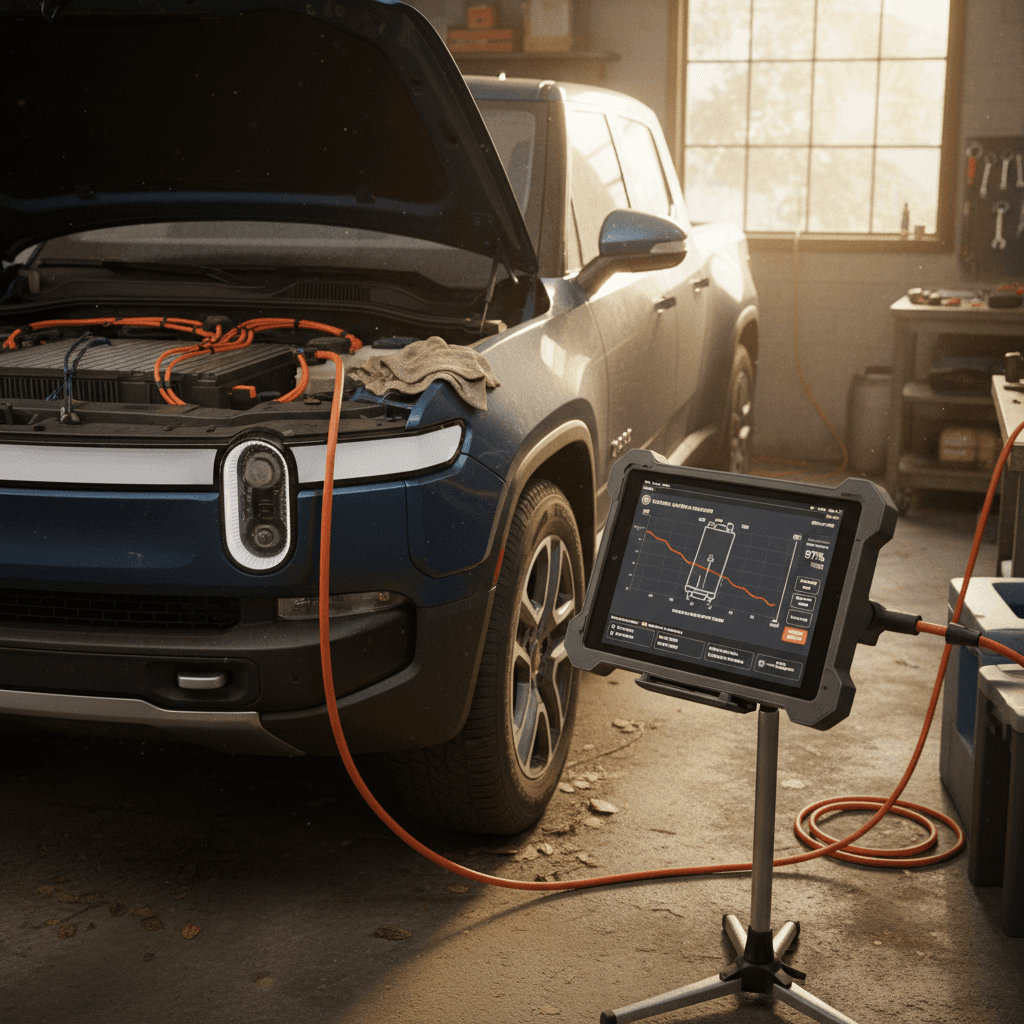
Buying a used R1T from Recharged means every truck comes with a Recharged Score Report: independent battery diagnostics, fair‑market pricing, and a structured inspection that looks for exactly the problems in this guide.
You can dig deeper into used‑EV inspection basics, or let our EV specialists walk you through specific R1T questions, trade‑in options, and nationwide delivery.
Be wary of repeated, unresolved issues
Rivian R1T problems: frequently asked questions
Frequently asked questions about R1T problems
The bottom line: is a Rivian R1T worth it despite the problems?
Viewed coldly, the Rivian R1T is not a paragon of trouble‑free reliability. It’s a first‑generation electric adventure truck from a young company, and that shows up in extra software polish cycles, more service visits than average, and the occasional hardware miss. But it’s also one of the most compelling EVs on sale, with performance, comfort, and capability that simply don’t exist anywhere else in one package.
If you go in with clear eyes, understanding the common R1T problems and fixes, budgeting some time for service, and choosing a truck with a clean inspection and recall history, the ownership experience can be deeply satisfying. And if you’d rather not be your own service advisor, shopping a used Rivian R1T through a specialist like Recharged, with battery health diagnostics and expert guidance baked in, can take much of the guesswork out of going electric with a truck this ambitious.