If you’re eyeing a used Rivian R1S, you’ve probably heard mixed stories: some owners swear it’s the best vehicle they’ve ever owned, others talk about early build issues, half-shaft replacements, or software gremlins. That naturally leads to a big question: is there a Rivian R1S worst year to avoid used, or is the reality more nuanced?
New brand, steep learning curve
Quick answer: Rivian R1S worst years to avoid used
There isn’t a single, clearly disastrous "do-not-buy" model year for the R1S in the way some older ICE vehicles are infamous. But there are some patterns if you’re shopping used:
- 2022 R1S (very early VINs): treat as the highest-risk group. These were the first customer builds, and owner reports point to more trim issues, alignment and suspension noise, and growing pains with service and parts availability.
- Early 2023 R1S: generally better than the earliest 2022 builds, but still within Rivian’s steep learning curve. Pay close attention to service history, half-shaft and suspension work, and early recall completion.
- Late 2023–2024 R1S: often the sweet spot for used buyers. Many manufacturing kinks are ironed out, more over-the-air (OTA) refinements are baked in, and you still get plenty of warranty coverage.
- 2025+ R1S: too new to draw firm conclusions on long-term reliability, but some high-profile software and driver-assistance recalls show that rapid feature rollouts can bring new bugs. On the used market, these will mostly still be priced like new.
The real "worst year" to avoid
Why people worry about used Rivian R1S years
1. Brand-new automaker risk
Unlike Toyota or Honda, Rivian doesn’t have decades of mass-production experience. The R1S is built in Normal, Illinois, and 2022 launched as their first SUV model year. Early years inevitably expose design and manufacturing bugs.
2. Complex, heavy EV SUV
The R1S is a three-row, off-road capable, 7,000+ lb electric SUV. That combination stresses suspension, half-shafts, air suspension, and cooling systems more than a simple compact EV commuter would.
Add in the fact that most R1S owners road-trip, tow, or off-road at least occasionally, and you get a vehicle that’s more likely to expose weak points early in its lifecycle. That’s precisely why it’s smart to shop by build quality and service history, not just model year.
Rivian R1S reliability by model year
R1S model-year snapshot (used market view)
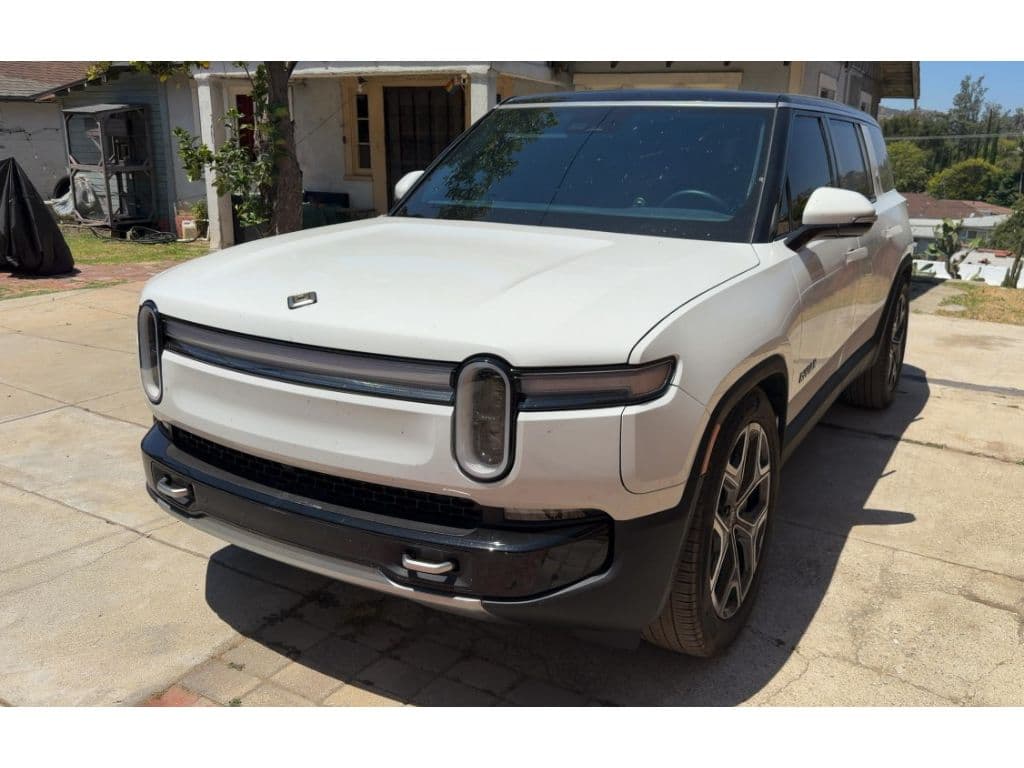
2022 R1S: first customer year, highest variability
The 2022 Rivian R1S is the launch year. These SUVs tend to be the cheapest on the used market, and they’re also where you see the widest spread of experiences:
- More reports of trim and wind-noise fixes (triangle windows, roof applique, hatch alignment).
- Early cases of half-shaft replacements and front suspension noises or clunks, especially on vehicles used off-road or heavily loaded.
- Occasional HV system warnings or 12V battery issues that led to tows and service visits.
- Service network was still scaling, so some early owners faced long parts waits and confusing communication.
When to be cautious with a 2022
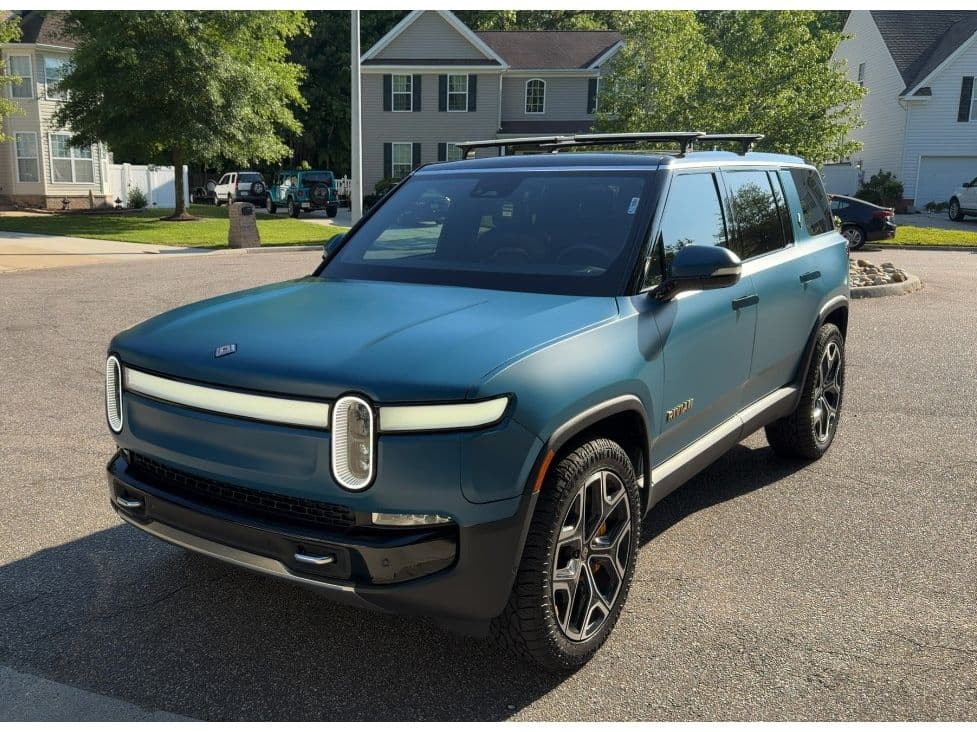
2023 R1S: still early, but noticeably more dialed-in
By 2023, Rivian had more real-world data and had worked through some early assembly and software bugs. Owner reports still show issues, but the center of gravity shifts:
- Many 2023 R1S owners report flawless or mostly minor issues, things like tire wear, alignment, or occasional software hiccups.
- Others still experience repeated half-shaft replacements, dampers, or arms on higher-mileage family haulers and tow rigs.
- A few 2023s have seen HV system or heater-coil related warnings that triggered conservative shutdowns and required service visits, but these appear as outliers rather than a systemic failure pattern.
- Service processes, parts availability, and communication improve versus the 2022 experience, but can still be frustrating depending on region.
Late-2023 often hits the sweet spot
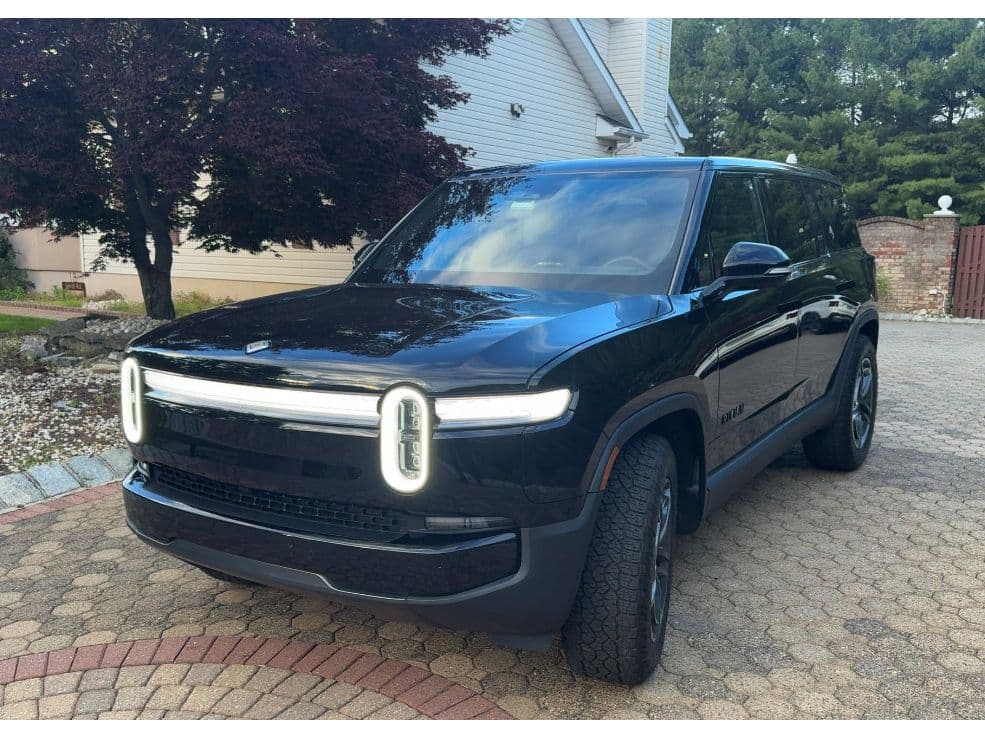
2024–2025 R1S: more powertrain options, more software, new kinds of risk
The 2024 and 2025 R1S expand configurations with Dual-Motor and Performance Dual-Motor setups, plus ongoing OTA improvements to drive modes, climate, regen behavior, and driver assistance. That’s good news for efficiency and performance, but it also means:
- More of the vehicle’s behavior depends on software. That can introduce new bugs even as earlier ones are fixed.
- Some 2025 vehicles have been involved in driver-assistance related recalls, especially around Highway Assist behavior, addressed via OTA updates and notices.
- A small number of owners report serious early issues like battery-pack or cooling faults that sidelined nearly-new 2025 R1S SUVs for weeks while parts were sourced and root causes found.
Too early for a clear verdict
Common Rivian R1S problems to watch for
Typical used R1S issues (and how serious they really are)
Not every R1S will have these, but they’re the patterns to check for.
Suspension & half-shafts
What you’ll see: clunks, clicks under acceleration, or repeated half-shaft replacements in service records.
Risk level: Annoying and not cheap out of warranty, but usually fixable. Heavy off-road or towing use can accelerate wear.
Water leaks & wind noise
What you’ll see: reports of water under floor mats, wind noise around triangle windows or roof, hatch seals adjusted.
Risk level: Mostly NVH and corrosion concerns; check carpets, headliner, and service bulletins.
Software & warning cascades
What you’ll see: screens lighting up with multiple warnings, vehicle going into a conservative "limp" or refusing to drive.
Risk level: Often resolved via OTA updates or module replacement, but frustrating if you’re far from a service center.
Less common but higher-consequence issues
These are rarer, but worth screening for carefully on any used R1S.
HV battery & cooling faults
What you’ll see: vehicle-battery warnings, failure to DC fast charge, repeated tow-ins, long stays at service while parts are sourced.
Why it matters: Battery-pack or coolant-system defects are expensive and complex. You want clear documentation of what failed, what was replaced, and how long the vehicle has been trouble-free since.
Airbag, belt, and safety system issues
What you’ll see: airbag warning lights, safety-belt recalls, or steering/safety-system related visits.
Why it matters: These are safety-critical and should be handled by recall campaigns and updated parts. Always confirm recall completion before you buy.
Read between the lines in the service history
Recalls and software updates: what they really mean for you
Rivian, like every new automaker, has had a steady stream of recalls on the R1T and R1S, ranging from suspension and steering to airbag and driver-assistance software. That can sound scary, but you need to separate signal from noise.
How to think about R1S recalls when buying used
Use recalls as a diagnostic tool, not just a red flag.
| Recall type | Fixed by | What it tells you | Buying implication |
|---|---|---|---|
| Software (driver assistance, braking, HVAC) | Over-the-air update | Shows Rivian is iterating quickly; bugs are part of the process. | Confirm vehicle is on current software. OTA recalls are low-friction but still matter. |
| Hardware safety (seat belts, airbags, steering) | Service visit & parts | Core safety items got redesigned or reworked. | Verify completion. Avoid vehicles that missed appointments or have open campaigns. |
| Chassis & suspension (control arms, fasteners, half-shafts) | Service visit & parts | Reflects early production torque specs, part durability, or supplier issues. | Completed work with updated parts is a plus; repeated failures are a warning sign. |
An R1S with completed recalls is often safer than one that never got them done.
Completed recalls are a good thing
How to evaluate a used Rivian R1S like a pro
Step-by-step used R1S evaluation
1. Start with the VIN and build date
Ask for the <strong>full VIN and build month</strong>. Earlier 2022 builds deserve more scrutiny. A late-2023 or 2024 build is usually more refined, but don’t skip the rest of this checklist.
2. Pull full service and recall history
You want documentation of <strong>every visit</strong>: recalls, warranty work, and customer-pay repairs. Look for patterns, not just one-off fixes.
3. Inspect underbody, suspension, and driveline
On a lift, check for <strong>leaks, torn boots, fresh half-shafts, and uneven tire wear</strong>. Clunks over bumps or clicks under load during a test drive need explanation.
4. Check for water leaks and NVH issues
Feel under front floor mats and cargo area for moisture, inspect headliner for staining, and listen for <strong>wind noise</strong> around the windshield, triangle windows, and roof at highway speeds.
5. Stress-test charging and software
Verify the R1S can <strong>AC charge normally</strong> and, ideally, complete at least one DC fast-charge session without errors. Cycle drive modes, air suspension, and Highway Assist where safe.
6. Confirm warranty, including any extended coverage
Rivian’s <strong>basic and battery warranties</strong> are key to your downside risk. If the prior owner bought extended coverage, understand what carries over and how long you’re protected.
Distance to service matters
Battery health, range, and fast charging
Battery degradation hasn’t been a major headline issue for the R1S yet. The bigger headaches show up when there’s a manufacturing defect in the pack or cooling system: those vehicles can suddenly refuse to DC fast charge or even become undriveable until repaired.
What "normal" looks like
- Gradual, predictable range loss over years, not months.
- Consistent DC fast-charging curves, especially from 10–60% state of charge.
- No recurring HV system warnings or random shutdowns.
Red flags on a used R1S
- Owner mentions "communication errors" when fast charging or repeated station failures across networks.
- Multiple visits for HV battery or coolant system faults.
- Long stretches in service with vague explanations and no clear, final fix.
Get objective battery data, not just a guess
Pricing, depreciation, and which R1S is the best value
Like most premium EVs, the R1S has seen sharp early depreciation. That hurts the first owner and creates opportunity for you, if you buy carefully.
How model year affects used R1S value
General patterns you’ll see in the U.S. used market (exact numbers vary by spec and mileage).
| Model year | Typical buyer profile | Pros | Cons |
|---|---|---|---|
| 2022 | Value-focused, higher risk tolerance | Lowest prices, lots of inventory, great if you get a well-sorted example. | Highest variability; early-build quirks; more out-of-warranty years ahead. |
| 2023 | Balanced value & refinement | Good depreciation, more dialed-in builds, many still with long factory coverage. | Still first-gen; some units show repeated suspension or software issues. |
| 2024–2025 | Early adopters who want latest hardware | Newest hardware and software, more dual-motor options, longest warranty runway. | Higher prices, limited long-term reliability data, still subject to fresh recalls. |
Think in terms of value bands, then narrow down by build quality and history.
Where the smart money tends to go
How Recharged helps you shop a used R1S with confidence
A Rivian R1S is not a set-it-and-forget-it used Camry. It’s closer to buying an early Model X: compelling, capable, and complex. That’s exactly the kind of vehicle Recharged is built around.
What you get with a used R1S from Recharged
Our process is designed around EV-specific risk, not generic used-car checklists.
Recharged Score battery & health report
Every vehicle we sell includes a Recharged Score Report with verified battery health, charging behavior, and key component checks, so you’re not guessing about pack condition or past abuse.
EV-focused inspection
Our inspections go beyond fluids and brake pads. We look at suspension wear, underbody damage, water intrusion, OTA status, and fast-charging behavior, all tuned to EV failure modes.
EV-specialist support & financing
You can talk through trade-in, financing, and model-year tradeoffs with EV specialists, not generalists. If you’re comparing an early 2022 vs. a pricier 2023 R1S, we’ll help you weigh risk versus savings.
Ready to find your next EV?
Browse VehiclesIf you’re near Richmond, VA, you can also explore vehicles in person at our Recharged Experience Center. If you’re elsewhere in the U.S., our fully digital buying experience and nationwide delivery mean you can still get a vetted R1S without playing reliability roulette.
Rivian R1S years to avoid: FAQ
Frequently asked questions about used Rivian R1S years
Bottom line: should you avoid a used Rivian R1S?
You don’t need to avoid the Rivian R1S outright, but you also shouldn’t treat it like any ordinary used SUV. The real risk isn’t simply owning a 2022 vs. 2023, it’s buying an R1S with uncertain history, unresolved recalls, or unclear battery health.
If you’re willing to do the homework, or let a specialist do it for you, the R1S can be a fantastic used buy: unique capability, compelling design, and a more affordable way into a genuinely modern EV SUV. Focus less on finding a magic "good year" and more on finding a well-documented, well-sorted example, and you’ll stack the odds firmly in your favor.