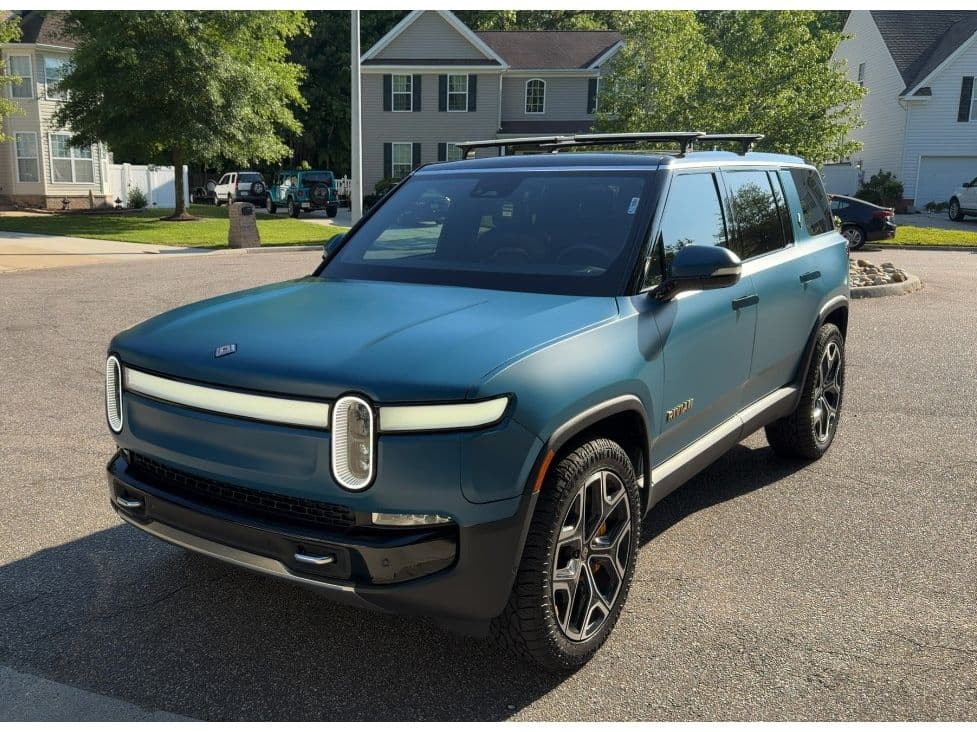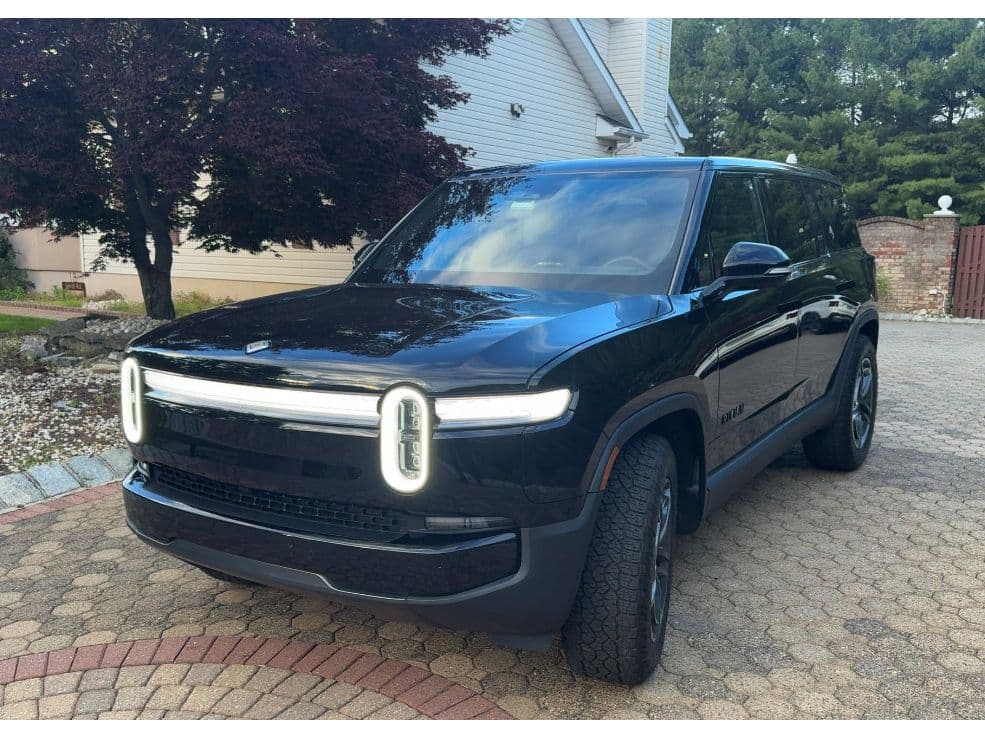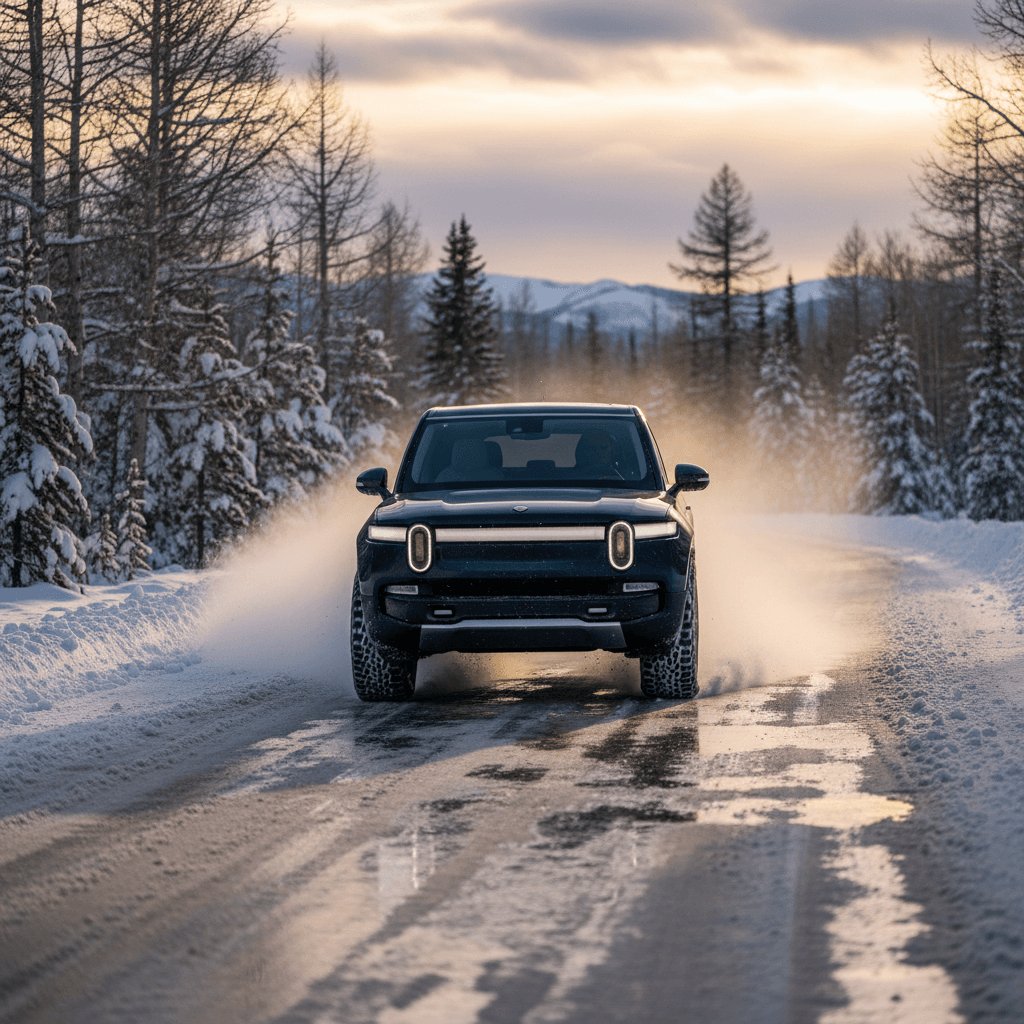
If you live where snowplows have nicknames and the wind has an attitude, the question isn’t “Is the Rivian R1S cool?” It’s “Will the Rivian R1S in winter get my family over that icy mountain pass, in the dark, at 12°F, with skis on the roof and a dog in the back?” This winter driving review looks past the spec sheet and into what the R1S is actually like in snow, ice, slush, and deep cold.
Context for this winter review
Who this Rivian R1S winter review is for
Is this the right winter SUV for you?
Three types of drivers considering a Rivian R1S
Ski‑weekend families
You’re hauling kids, gear, and maybe a dog to the mountains every winter. You want serious traction, room for everyone, and confidence on unplowed roads.
Commuters in real winters
You see plow berms, black ice, and frozen slush all season long. You need something that feels planted on the highway and predictable in bad weather.
Adventure and backroad people
You’re more likely to be at a trailhead at dawn than at a mall. You care about ground clearance, AWD control, and recovery options.
If you’re in any of these camps, and you’re cross‑shopping a used Model X, Volvo EX90, or full‑size ICE SUV, the Rivian R1S winter driving experience is absolutely worth understanding in detail.
Quick verdict: Can the Rivian R1S handle winter?
Rivian R1S winter snapshot
The short answer
Snow and ice traction: Where the R1S shines, and where it doesn’t
The Rivian R1S is heavy, well over three tons in many trims, and that’s a double‑edged snow shovel. Mass helps you bite down through loose snow and maintain highway stability. It also punishes you if you overdrive conditions, because momentum is merciless on ice.
- Quad‑ and Tri‑Motor versions can meter torque to each wheel with absurd precision, which makes climbing slick hills or pulling away from icy intersections feel almost videogame-easy.
- Dual‑motor R1S models still deliver full‑time AWD in Snow mode and have impressed owners in 6–12 inches of snow on stock all‑season or all‑terrain tires.
- Ground clearance is generous, especially in higher suspension settings, so you’re less likely to beach the battery pack on rutted, plow‑pile entrances or unpaved winter roads.
Traction isn’t magic
Low‑speed, deep‑snow behavior
- Starting off in fresh snow: The truck eases in power very gently in Snow mode, which keeps all four tires hooked up instead of instantly spinning.
- Deep driveways and side streets: The combination of ground clearance and torque control lets you plow through 6–8 inches of snow with surprising calm, especially on proper winter or all‑terrain rubber.
- Parking lot antics: Turn off stability nannies and the R1S will still play, but it’s less tail‑happy than some ICE SUVs simply because electronics are working overtime to keep you composed.
Highway and packed‑snow behavior
- High‑speed stability is excellent. The long wheelbase and battery‑in‑the‑floor layout make the R1S feel planted on packed snow at legal speeds.
- Crosswinds are muted by the weight, but slush ruts can still tug at the wheel; the steering is accurate enough that small corrections are easy.
- Emergency maneuvers: When you lift or brake hard on slippery surfaces, the truck’s stability systems and ABS intervene quickly, but again, physics sets the limits.
Winter drive modes: How Snow mode really behaves
Rivian’s Snow mode is more than a cute snowflake icon. It re‑calibrates how the truck delivers power, traction control, and regen so the big EV behaves more like a seasoned snow driver and less like a torque‑happy dragster.
How Rivian drive modes change winter behavior
Simplified overview of how key modes feel in cold, slippery conditions.
| Mode | Use in winter? | Throttle feel | Regen behavior | AWD behavior |
|---|---|---|---|---|
| Snow | Primary winter mode | Soft, progressive | Gentler regen to avoid upsetting traction | Locks in AWD, highly interventionist |
| All‑Purpose | Fine in light snow | Normal, responsive | Medium regen; now configurable | Full‑time AWD with stability help |
| Sport | Generally avoid | Very sharp | Strong regen | Torque split geared to performance |
| Conserve / Efficiency | Avoid on snow/ice | Dulled but FWD‑biased | Normal regen | Front‑biased, can feel nervous on slick surfaces |
For winter, Snow mode or All‑Purpose with conservative settings are your safest bets.
Snow mode pro tip
One recurring owner request is for a true zero‑regen setting for steep, icy descents, where even light regen can momentarily overcome available traction. Until Rivian adds that, your move is to dial regen to its lowest level and be gentle with both pedals.
Cold-weather range: What you actually get
Every EV turns into a bit of a homebody in winter, and the R1S is no exception. You’re pushing a square‑jawed, three‑row brick through dense, cold air while burning energy to heat a big cabin and a frigid battery. Even recent tests of the 2026 R1S have seen efficiency fall to around 1.8–2.0 mi/kWh on cold‑weather mixed driving, meaning you can burn through range faster than the EPA sticker suggests when temps dive.
- In mild cold (around freezing, mixed city and highway), plan on 15–25% range loss compared with warm weather.
- In real winter (teens, steady highway, snow tires, roof box or bikes), seeing 25–35% loss is completely normal.
- Short, stop‑and‑go winter trips are the least efficient of all because the truck repeatedly warms the cabin and pack from cold.
How to protect range in a Rivian R1S winter
1. Precondition while plugged in
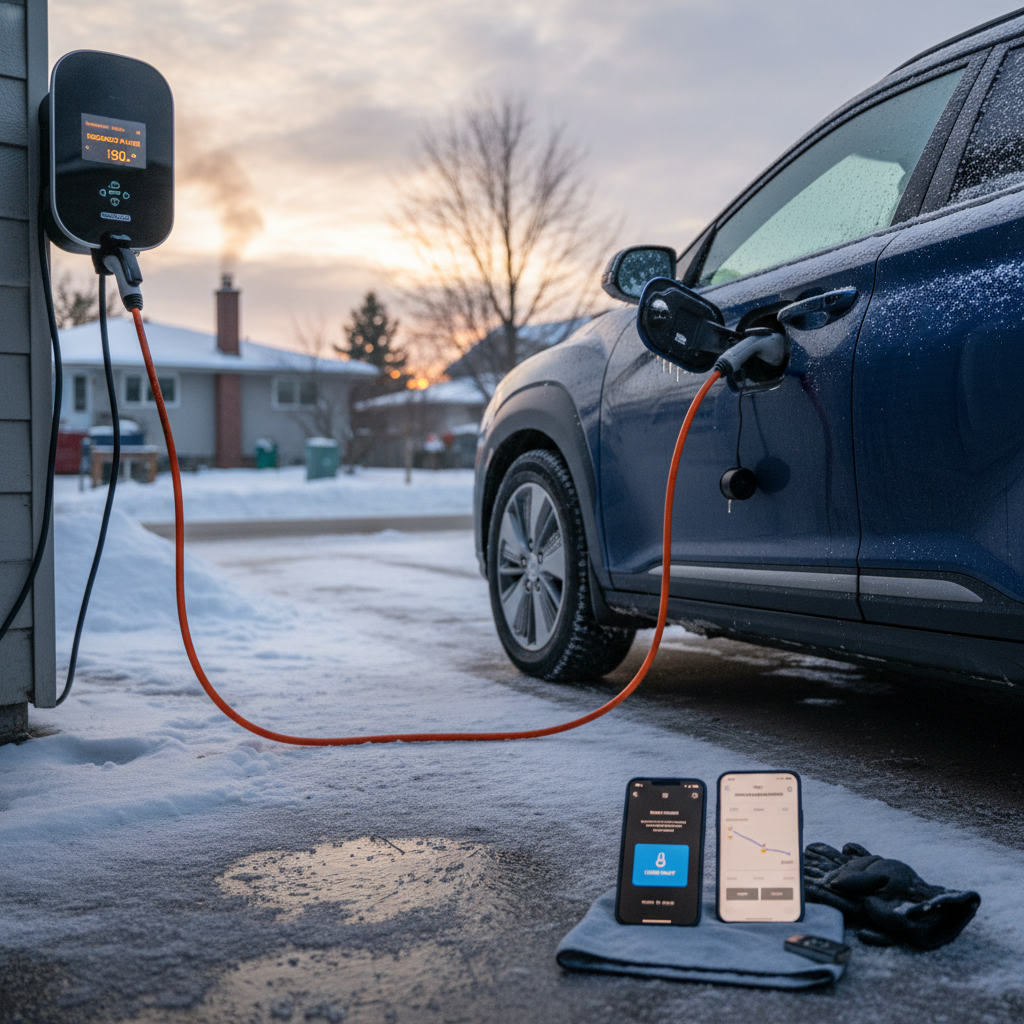
Use the Rivian app to heat the cabin and battery <strong>before</strong> you leave, while you’re still on shore power. This preserves more of your usable range for driving.
2. Start trips with a warm pack
If you can, stack errands so you’re not repeatedly driving on a stone‑cold battery. EVs are significantly more efficient once everything is up to temperature.
3. Moderate your speed
Aerodynamic drag is brutal in cold dense air. Dropping from 80 mph to 70 mph on a snowy highway can make a surprising difference to your remaining range.
4. Use seat and wheel heaters
You stay comfortable with fewer kilowatts going to cabin heat when you lean on <strong>seat and steering wheel heaters</strong> and slightly lower the HVAC setpoint.
5. Be conservative with trip planning
In winter, treat a 300‑mile rated pack like a 200–220‑mile real‑world pack at highway speeds, especially with a full load and snow tires.
Don’t flirt with 0% in winter
Tires, wheels, and ride height: The real MVP in snow
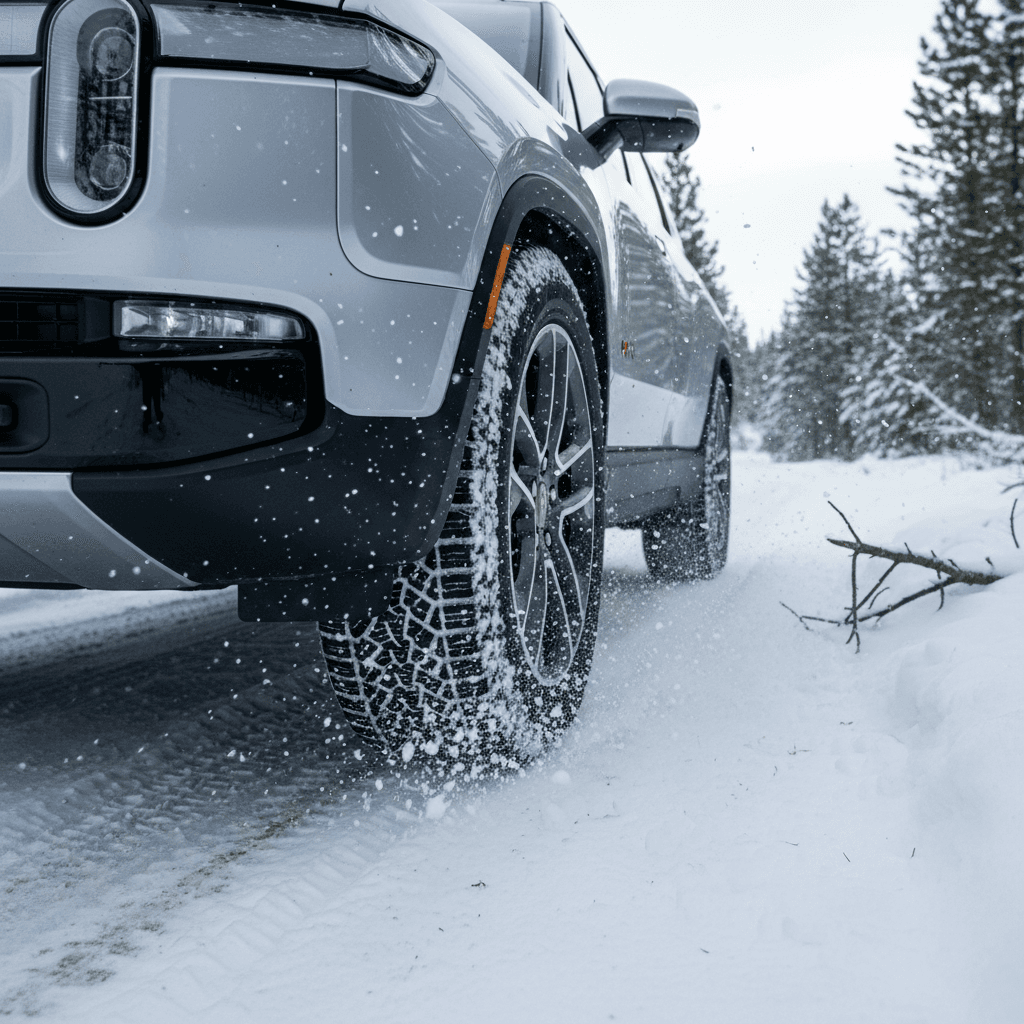
If there’s a single deciding factor in the Rivian R1S winter driving story, it’s rubber. Rivian themselves now recommend the Nokian Hakkapeliitta R5 SUV as the official winter tire for R1T and R1S in North America, a nod to how much of the winter magic comes from the contact patch, not the battery pack.
Choosing the right tires for your winter R1S
Match the compound to your climate, not your Instagram feed
Dedicated winter tires
Best for: Upper Midwest, Rockies, Northeast, places with real winter, months of snowpack, and steep grades.
Pros: Outstanding ice braking, deep‑snow traction, confidence on unplowed roads.
Cons: Lower efficiency, mushier feel on dry days, seasonal swap cost.
All‑terrain tires
Best for: Mixed off‑road duty, forest roads, and moderate winter use.
Pros: Strong bite in slush and loose snow, acceptable manners year‑round.
Cons: Louder, less efficient, not as good as true winter rubber on ice.
21" and 22" all‑seasons
Best for: Occasional snow trips, mostly plowed urban/suburban driving.
Pros: Quiet, efficient, comfortable.
Cons: The limiting factor on ice and deep snow, especially with performance‑oriented 22" sizes.
Wheel size and winter sanity
Visibility, braking, and handling in the worst stuff
Traction is only half the battle. What separates a merely competent winter vehicle from a truly confidence‑inspiring one is how it behaves when visibility tanks and you have to brake or swerve on less‑than‑ideal surfaces.
- Headlights and snow at night: The R1S’s strong LED lighting can, in heavy falling snow, make it feel like you’ve engaged warp speed, lots of light reflecting off nearby flakes. Owners in Gen 1 and Gen 2 trucks have noted that in whiteout conditions they sometimes prefer lower beams or different configurations to reduce reflection.
- Braking feel: Blending friction brakes with regen on ice is always tricky. The R1S does a commendable job, but like any EV, you’ll feel subtle transitions as the system juggles regen and ABS. Smooth pedal inputs matter.
- Steering and body control: The air suspension and active damping keep roll well‑checked, even on winter tires. Quick lane changes on a cold highway feel secure, as long as you’re realistic about speed.
Watch your following distance
Winter ownership, costs, and battery health
One under‑appreciated upside of an EV winter is what you’re not doing: no cold oil starts, no idling at 0°F while you scrape the windshield, no engine block heaters. But you are asking a lot of a very expensive battery pack.
Energy and operating costs
- Higher kWh consumption in winter will bump your electricity bill, but per‑mile cost typically still undercuts gasoline in most U.S. markets.
- If you fast‑charge more often on winter road trips, factor in DC fast charging rates, which are closer to fueling costs than home charging.
- On the flip side, there’s no winter tune‑up, no exhaust issues, and far less mechanical wear compared with a traditional SUV.
Battery health in the cold
- Cold temperatures temporarily reduce available capacity and power, but they’re generally easier on long‑term battery degradation than sustained heat.
- What hurts batteries long‑term is staying at 100% for long periods and repeated fast‑charging from low states of charge, not simply being cold.
- For a used R1S, an independent battery health report is worth its weight in snow shovels, especially if the truck lived on DC fast chargers.
Where Recharged fits in
Buying a used Rivian R1S for winter driving
Shopping the used market for an R1S is where idealized winter‑ad copy meets the reality of previous owners’ choices: wheel size, tire type, charging habits, and where the truck actually lived.
Used Rivian R1S winter buyer checklist
1. Check tire type and remaining tread
If the truck is on worn‑down all‑seasons, budget immediately for proper winter or all‑terrain tires. No software update can fix bald rubber on ice.
2. Look for wheel and suspension spec
A truck on 20" wheels with air suspension is ideal for winter. Massive 22" performance wheels look great but are more vulnerable to potholes hiding under snow.
3. Ask about winter usage
A vehicle from Arizona is not a deal‑breaker, but if you’re in Minnesota, a truck already set up with winter wheels, block heater accessories, and chains or socks can save time and money.
4. Review battery health and DC fast‑charge history
Cold doesn’t kill packs, but chronic high‑rate fast charging can contribute to wear. A <strong>verified battery health report</strong> from a seller or platform like Recharged gives peace of mind.
5. Test drive in poor conditions if possible
If you can, schedule a drive on wet or slushy roads. Pay attention to traction behavior in Snow mode, brake feel, and how the suspension copes with winter‑scarred pavement.
6. Plan your charging network
Before you buy, map out your winter ski routes and confirm DC fast‑charging options along the way. With newer R1S models adopting NACS, access to major fast‑charge networks is improving.
Leaning on a specialist
Ready to find your next EV?
Browse VehiclesFAQ: Rivian R1S winter driving questions answered
Rivian R1S winter driving FAQ
Bottom line: Is the Rivian R1S a good winter SUV?
Taken as a winter tool rather than a tech toy, the Rivian R1S is deeply impressive. With the right tires and a little range discipline, it does the old‑school SUV jobs, snow days, ski trips, icy commutes, while letting you remote‑preheat a quiet, emission‑free cabin from your phone. It’s not immune to the realities of cold‑weather range, and it will happily carry too much speed into a slippery corner if you ask it to. But as an all‑electric answer to the question, “What do I drive when it’s truly awful outside?” the R1S is near the top of the pile.
If you’re considering a used Rivian R1S as your all‑season family hauler, pairing a clean example with verified battery health, smart winter tires, and a little EV‑specific know‑how turns it into a formidable winter companion. That’s where platforms like Recharged, with battery diagnostics, transparent pricing, financing support, and nationwide delivery, can bridge the gap between curiosity and confidence the first time you point that square jaw into a February blizzard.