If you own, or are eyeing, a Ford Mustang Mach-E, you’ve probably heard stories about **winter range loss**. Some drivers report losing a third of their range once the temperature dips. Others say their Mach-E handles winter just fine. The truth sits somewhere in the middle, and understanding it will save you a lot of stress, and potentially a lot of money, especially if you’re considering a used Mach-E.
Quick Take
Ford Mustang Mach-E Winter Range Loss at a Glance
How Winter Hits Mach-E Range
The headline for any **Ford Mustang Mach-E winter range loss** discussion is simple: if your EPA rating says 270 miles, plan on **180–205 miles** of real-world range in typical freezing conditions, and less if it’s brutally cold, windy, and you’re running 75 mph on the highway.
How Much Winter Range Loss Is Normal on a Mach-E?
Let’s translate the numbers into something you can actually plan around. Different tests and data sets don’t all agree perfectly, but they tell a consistent story for the Mach‑E.
Approximate Ford Mustang Mach-E Winter Range Loss
These figures summarize what owners and testers commonly see in North American winters. Your results will vary with speed, elevation, wind, and how often you precondition.
| Scenario | Ambient Temp | Driving Style | Typical Winter Range vs EPA | What That Means for a 270‑mi EPA Mach‑E |
|---|---|---|---|---|
| Cool fall day | 40–50°F | Mixed city/highway | ~90–95% of EPA | 240–255 real miles |
| Typical winter day | 20–30°F | Mixed city/highway | ~70–75% of EPA | 190–205 real miles |
| Cold winter highway | 15–25°F | Mostly 65–75 mph highway | ~60–70% of EPA | 160–190 real miles |
| Deep freeze | 0 to −10°F | Short trips, heavy heat | ~55–65% of EPA | 150–175 real miles or less |
Use these as planning numbers, not promises. Always leave a winter buffer of at least 20–30% state of charge.
Watch the GOM, Not Just EPA
Owners in northern states and Canada frequently report **25–40% range loss** once temps drop below freezing, especially on highway commutes and short hops where the car is reheating the cabin repeatedly. That puts the Mach‑E on the higher side of winter loss compared with some EVs, but still in line with what you should expect from a large, heavy electric SUV.
Why the Mustang Mach-E Loses Range in Cold Weather
Cold weather punishes every EV, but the Mach‑E’s combination of weight, SUV shape, and strong cabin heater make the effect more obvious. There are three main culprits:
- Battery chemistry: Lithium‑ion cells are less efficient when cold. Internal resistance rises, so you lose energy as heat and the car limits power to protect the pack.
- Cabin and battery heating: Warming a big cabin from 10°F to a comfortable 72°F takes serious energy, especially if your Mach‑E uses more resistive heating and less heat‑pump efficiency. The car may also use energy to keep the battery at a usable temperature, even when parked.
- Higher drag and rolling resistance: Cold air is denser, winter tires are softer, and slushy roads add rolling resistance. At highway speed, aero drag increases exponentially, so winter highway trips are where you see the biggest hit.
It’s Not Just an EV Thing
The Mach‑E’s software also plays a role. Its battery management system adapts the predicted range to your recent driving. If you’ve done several short, cold trips with max heat and high speeds, the car will assume that’s the new normal and lower its estimate accordingly.
Model Years, Battery Types & Heat Pumps: Does It Matter?
Not every Mustang Mach‑E behaves exactly the same in winter. Model year, battery chemistry, and whether your specific trim has an updated heat pump all influence how much winter range loss you’ll see.
Key Mach-E Variants That Affect Winter Range
When you’re comparing new vs used, or base vs Premium, keep these differences in mind.
Standard vs Extended Range
Standard‑range packs (mid‑200‑mile EPA) simply have less energy to start with, so a 30% loss bites harder in winter. Extended‑range packs give you more buffer, especially for highway trips and DC fast charging in the cold.
NCM vs LFP Chemistries
Some newer Mach‑E trims use LFP batteries, which prefer regular 100% charging but can feel more sluggish in the cold. NCM packs are more traditional. Either chemistry will see winter loss; LFPs especially benefit from frequent full charges to keep the range estimate accurate.
Heat Pump Updates
Ford has been steadily improving the Mach‑E’s heating system. Newer model years and certain trims get a more efficient heat pump, which can reduce how much energy cabin heating steals in winter compared with older resistive‑heavy setups.
Used‑Buying Tip
Real-World Mach-E Winter Range Examples
Lab tests are helpful, but what matters is what Mach‑E owners see on real roads. Here’s how those numbers translate into day‑to‑day use.
Example 1: Typical Suburban Commuter
Car: 2023 Mach‑E Premium AWD, extended‑range (EPA ~270 mi)
Climate: Midwest city, 20–30°F winter days
Use: 25‑mile each‑way commute, mostly 45–65 mph
- Morning range after full charge: ~205–215 miles estimated.
- Round‑trip commute plus errands uses 70–90 miles of range.
- Owner reports about 25–30% loss vs mild weather, but never worries about running low when charging nightly.
Example 2: Highway Road Tripper
Car: 2024 Mach‑E AWD SR, standard‑range (EPA ~240 mi)
Climate: Northeast corridor at 15–25°F
Use: 200‑mile highway trip at 70–75 mph with family and cargo
- Real‑world winter range: 140–170 miles between DC fast charges.
- Charging stops more frequent than in summer; driver plans chargers every 100–130 miles for buffer.
- Preconditioning the battery en‑route to DC fast chargers speeds charging and reduces stress.
Short-Trip Winter Trap
Is It the Weather or Your Driving Habits?
When Mach‑E owners say, “My range is terrible in winter,” it’s usually a combination of **temperature and behavior**. Important habits either amplify or soften that winter penalty.
Habits That Kill (or Help) Winter Range
Tweak these before you blame the car.
Hurts Range
- Lots of 70–80 mph highway driving.
- Cranking cabin heat to 75–80°F instead of using heated seats and wheel.
- Repeated short trips from a cold soak.
- Frequent remote preconditioning when unplugged.
- Roof box, bike rack, or heavy cargo.
Helps Range
- Keeping highway speeds near 60–65 mph when you can.
- Preheating the car while plugged in.
- Relying on heated seats and wheel; cabin set around 68–70°F.
- Using Eco or Whisper mode and smoother acceleration.
- Planning routes that avoid extended 80+ mph stretches in deep winter.
It’s also worth watching **vampire drain**, energy your Mach‑E uses while parked. Leaving sentry‑style monitoring, frequent remote checks, or aggressive preconditioning schedules running in the background can nibble away several percent of charge per day in cold weather.
Key Mach-E Settings to Improve Winter Range
Ford built several tools into the Mustang Mach‑E to take the sting out of winter. The trick is knowing where they live in the menus and using them intentionally.
Must-Use Mach-E Features in Winter
1. Use Departure Preconditioning While Plugged In
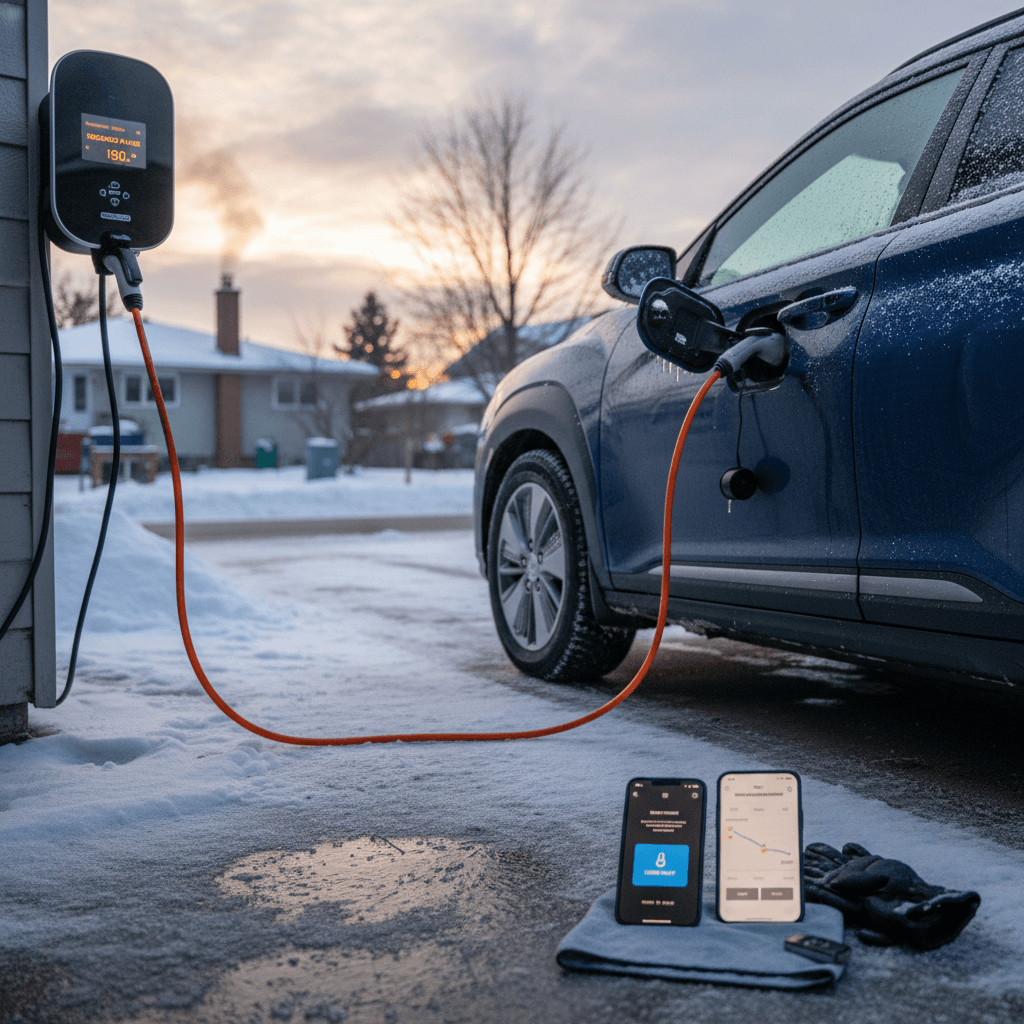
Through FordPass or the in‑car menus, set a **departure time** so the Mach‑E warms the cabin and battery while it’s still on shore power. That way, propulsion energy goes to driving, not thawing.
2. Turn On En‑Route Battery Preconditioning
When you select a DC fast charger as your destination in the built‑in navigation, the Mach‑E can precondition the battery on the way. That helps you charge faster in winter and spend less time at the plug.
3. Favor Heated Seats & Steering Wheel
Heated surfaces use far less energy than blasting cabin heat. Try setting the cabin to 68–70°F and using seats and wheel on higher settings; many owners gain **10–20 miles** of usable range this way.
4. Check Tire Pressure Regularly
Tires lose pressure as temperatures fall, roughly 1 psi per 10°F. Under‑inflated tires increase drag and hurt range. Keep them at the door‑jamb spec, adjusting for big seasonal temperature swings.
5. Use Eco/Whisper Mode in Deep Winter
These driving modes soften throttle response and make it easier to drive efficiently. They also help in slippery conditions by dialing back aggressive power delivery.
Good News for City Drivers
Checklist: 10 Ways to Protect Your Mach-E’s Winter Range
If you want a simple, practical plan to tame **Ford Mustang Mach-E winter range loss**, work through this list. Many owners see their effective winter range improve by dozens of miles just by changing these habits.
Cold-Weather Range Protection Plan
1. Start Every Morning Plugged In
Whenever possible, charge at home or work so your Mach‑E begins the day warm and at a healthy state of charge. Even a 120V outlet can help maintain battery and cabin temperature overnight.
2. Precondition Only When Plugged In
Remote warmups while unplugged feel luxurious but chew through range. Save those for emergencies; most of the time, preheat and defrost while still connected to the charger.
3. Build a 20–30% Winter Buffer
In deep winter, plan trips as if your usable range is about **65–70% of EPA** and aim to arrive at chargers with at least 15–20% remaining, especially in rural areas.
4. Slow Down 5–10 mph on the Highway
Aerodynamic drag skyrockets at higher speeds, especially in cold dense air. Dropping from 75 to 65 mph can add double‑digit miles of range on a long winter leg.
5. Pack Smart, Not Heavy
Roof racks, boxes, and extra cargo all hurt range. If you’re road‑tripping, put loads inside the cabin when you can and remove unused roof accessories between trips.
6. Use the Defroster Strategically
Defrost uses a lot of power. Use it to clear windows, then back it down and rely more on seat and wheel heating plus normal HVAC to maintain comfort.
7. Keep Software Updated
Ford continuously refines range estimation, thermal management, and charging behavior via over‑the‑air updates. Staying current can improve both winter accuracy and performance.
8. Avoid Repeated Deep Discharges in the Cold
Running the pack from 100% to single digits repeatedly in winter is hard on any battery. When possible, work in the **20–80% zone** and save full swings for road trips.
9. Know Your Local Charging Network
Before a big winter drive, map out Level 2 and DC fast options on your route. Apps from major networks plus in‑car navigation help you avoid arriving at a charger that’s out of service or congested.
10. Practice a Winter Shakedown Run
On a free weekend, do a 100–150‑mile loop in cold weather and note your energy use. That real‑world baseline will give you far more confidence than any spec sheet.
Shopping Used: How to Judge a Mach-E’s Winter Range
If you’re considering a **used Ford Mustang Mach‑E**, winter range is more than a comfort issue, it’s a key part of total ownership costs. The last thing you want is to discover in January that the car you just bought can’t comfortably make your regular trips without multiple charging stops.
Questions to Ask the Seller
- “What range do you see in January?” Ask for real numbers at common state‑of‑charge levels, not just “it’s fine.”
- “Is the software fully up to date?” Updates can fix bugs and improve range estimation, especially for newer heat‑pump systems.
- “How was the car used?” Lots of DC fast charging and deep discharges in hot or very cold climates can age a pack faster.
Why a Battery Health Report Matters
Winter range loss is mostly about physics, but underlying battery health still matters. A Mach‑E with a tired pack will feel that winter hit sooner and more severely.
Every vehicle sold through Recharged includes a Recharged Score Report with verified battery health and real‑world range insights. That gives you a clear picture of how a specific used Mach‑E should perform in both summer and winter, before you buy.
Use Data, Not Just the Dash
If you plan to finance or trade a vehicle toward a Mach‑E, working with an EV‑focused retailer like Recharged can also help you choose the **right battery size and trim** for your climate and driving pattern, instead of just chasing the lowest price.
Ford Mustang Mach-E Winter Range Loss: FAQ
Frequently Asked Questions About Mach-E Winter Range
Bottom Line: Should Winter Range Loss Scare You Off a Mach-E?
If you focus only on the EPA sticker, **Ford Mustang Mach-E winter range loss** can look intimidating. But seen through the lens of real‑world numbers and smart habits, the picture changes. A well‑maintained Mach‑E with an appropriately sized battery is entirely capable of handling cold‑climate commuting, school runs, and even long winter road trips, as long as you plan for a 25–35% hit when the mercury drops and build in a winter buffer.
The key is to buy wisely and drive intentionally. Choose the right battery and trim for your climate, lean on preconditioning and efficient heating, and understand that every EV, no matter the badge, gives up some range in the cold. If you’re shopping used, working with an EV‑specialist retailer like Recharged adds another layer of confidence: transparent pricing, expert guidance, and a Recharged Score battery health report that tells you how a particular Mach‑E will really behave when January arrives.