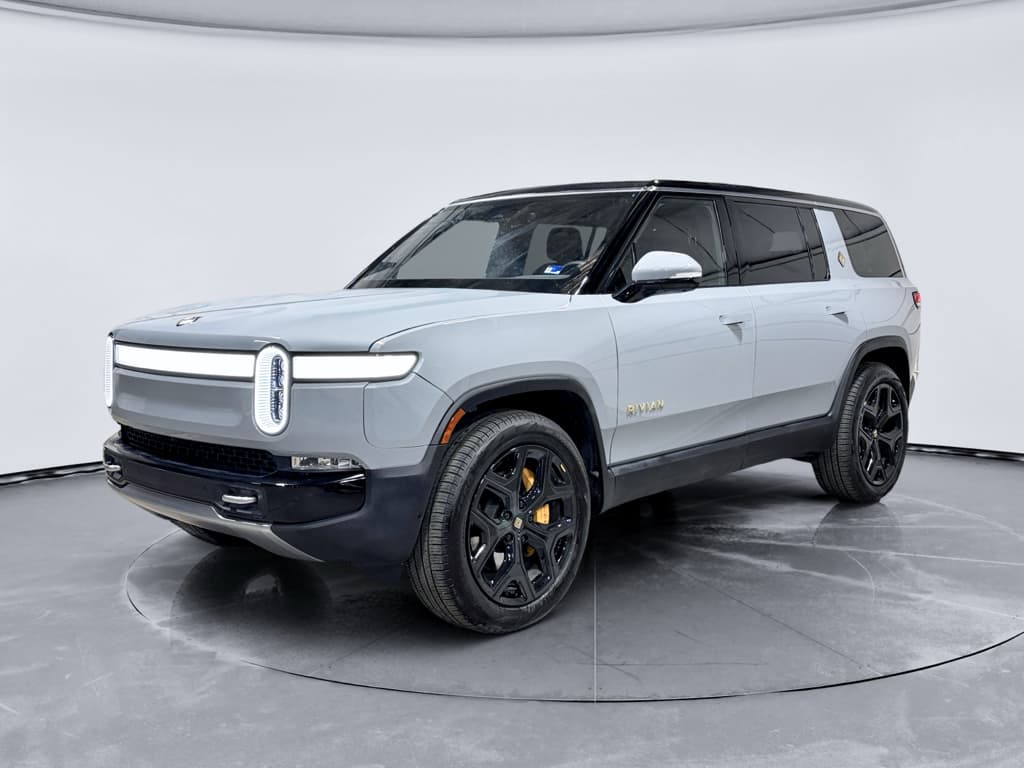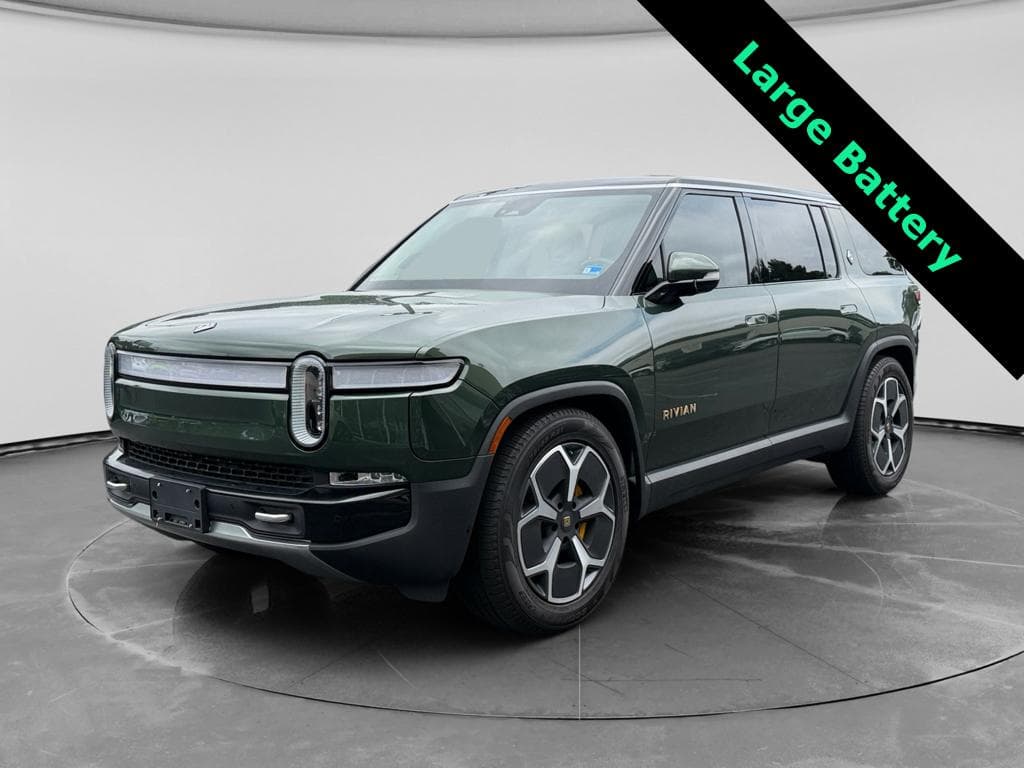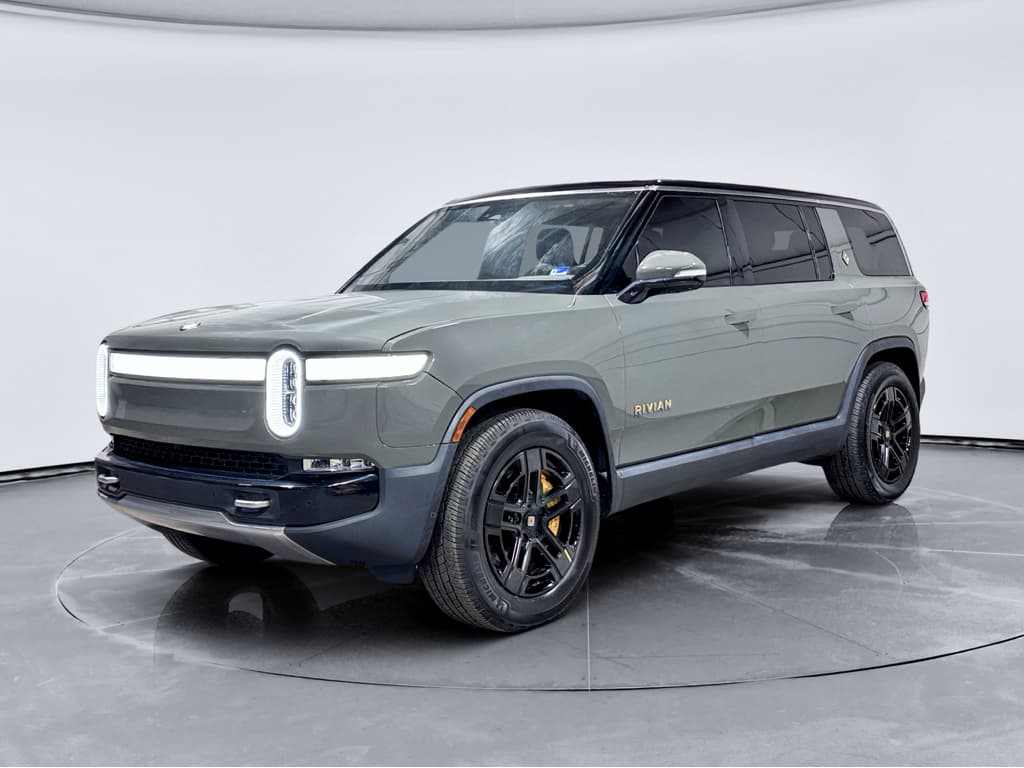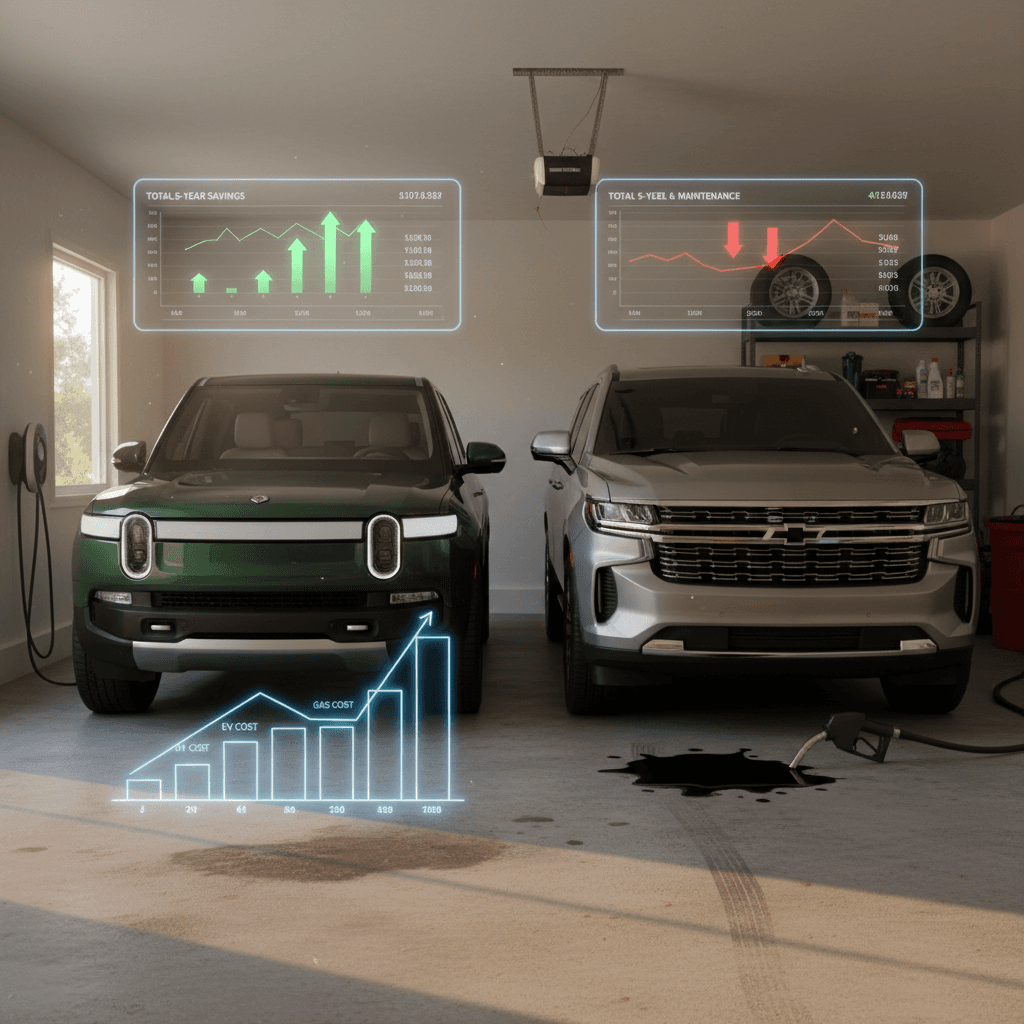
If you’re cross‑shopping a Rivian R1S against a three‑row gas SUV, sticker price alone can make the EV look more expensive. But once you factor in fuel, maintenance, and resale, the picture changes fast. This guide walks through the Rivian R1S total cost vs a gas car equivalent over five years so you can decide with real numbers, not guesses.
Quick takeaway
Why Rivian R1S total cost vs gas SUV matters
The R1S competes with well‑equipped three‑row SUVs like the BMW X5, Audi Q7, Jeep Grand Cherokee L, and higher‑trim mainstream models. Those buyers don’t just care about tech and off‑road chops; they care about what it really costs to own a vehicle that may sit in the driveway for 8–10 years. With EV prices still in flux and gas prices unpredictable, having a grounded total‑cost view is key.
Common questions shoppers ask
Most R1S shoppers are trying to answer these before signing a contract
“Will the fuel savings really offset the price?”
Electricity is usually cheaper per mile than gasoline, but how much you drive and what you pay per kWh matter.
“Are EV repairs more expensive?”
EVs skip oil changes and many wear items, but collision repairs and tires can be pricey on a heavy SUV.
“What happens to resale value?”
Early EVs took big depreciation hits. Rivian is still new, so buyers want clues before jumping in.
How we compared Rivian R1S vs a gas SUV
Total cost of ownership (TCO) depends heavily on assumptions. To keep things realistic but simple, we’ll use the following baseline for a U.S. buyer running the numbers today.
Key assumptions for 5‑year cost comparison
These are ballpark averages for a typical U.S. owner. Your actual numbers will differ by state, energy prices, and how hard you drive.
| Factor | Rivian R1S | Gas SUV Equivalent | Notes |
|---|---|---|---|
| Purchase type | New, financed | New, financed | Used buyers can lop off much of early depreciation |
| Purchase price (MSRP‑like) | $90,000 | $70,000 | Think loaded Jeep Grand Cherokee L / BMW X5 / Audi Q7 |
| Ownership period | 5 years / 60,000 miles | 5 years / 60,000 miles | 12,000 miles per year |
| Electricity price | $0.15 per kWh blended | – | Mix of home and some DC fast charging |
| Gasoline price | – | $3.75 per gallon | National‑style average over several years |
| Charging efficiency / MPG | 2.4 mi per kWh (real‑world) | 20 mpg combined | Assumes mixed city/highway driving |
| Financing | 5 years @ 5% APR | 5 years @ 5% APR | Good‑credit buyer with typical loan |
| Insurance & fees | Slightly higher | Baseline | We’ll treat them as roughly similar and discuss nuance below |
Use this as a framework, then plug in your own data to personalize it.
A note on estimates
Purchase price, incentives, and financing
On pure sticker, the R1S is usually the pricier proposition. A well‑equipped R1S easily runs around $85,000–$95,000 new, while a comparably premium gas SUV might land closer to $65,000–$75,000. That $15,000–$20,000 gap is what scares a lot of shoppers off, until they look at monthly cost instead of MSRP.
Financed cost comparison (simplified)
Assuming you finance the full amount for 5 years at 5% APR:
- Rivian R1S: About $90,000 financed ≈ higher monthly payment.
- Gas SUV: About $70,000 financed ≈ noticeably lower monthly payment.
The R1S starts behind, so the question becomes: do lower running costs and potential incentives make up the difference over time?
Incentives and tax credits
Federal and state incentives can materially change the picture for EVs, but eligibility depends on where you live, how you file taxes, and whether you buy new or used.
Shopping used can narrow the price gap dramatically, especially on vehicles like the R1S that have already taken early depreciation.
Working with an EV‑focused retailer like Recharged means you’ll see pricing, projected depreciation, and financing options side by side instead of guessing what your monthly cost will look like.
Energy costs: electricity vs gasoline
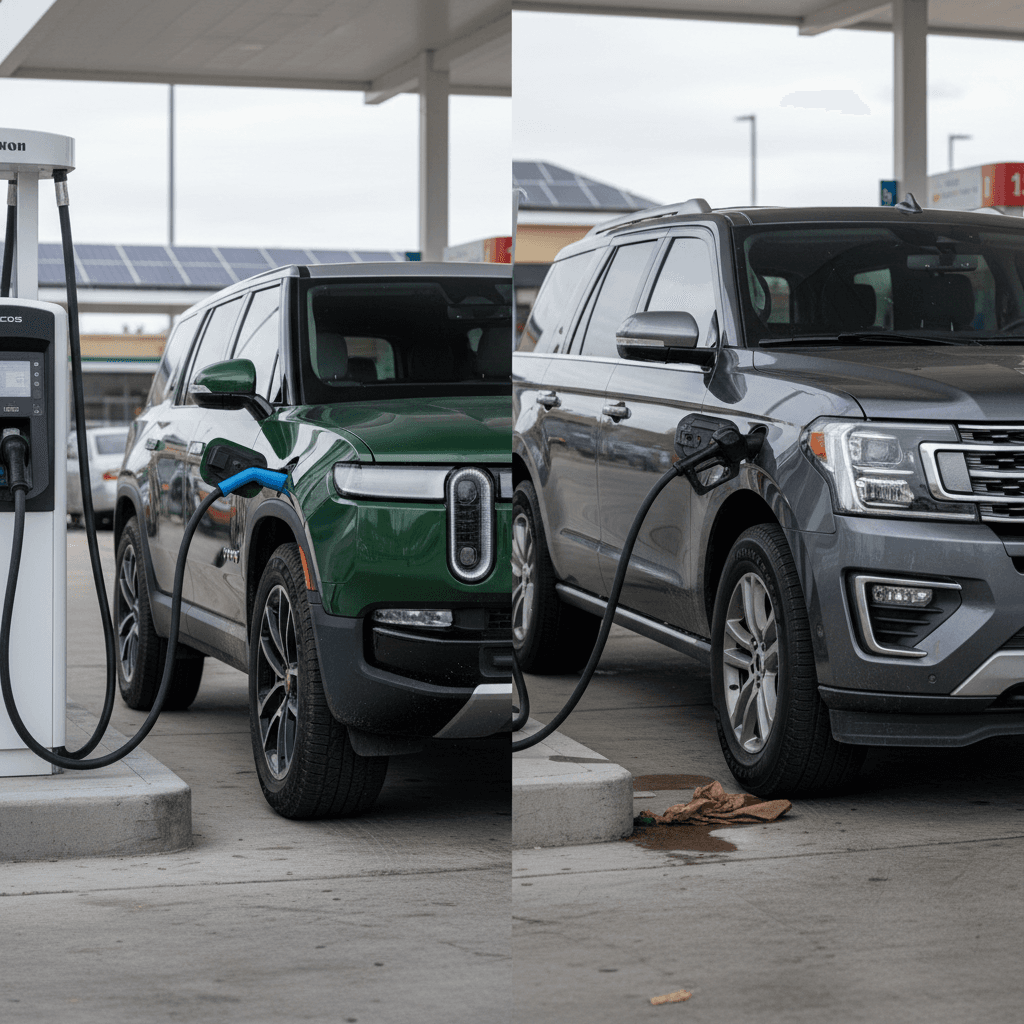
Energy is where an electric SUV like the R1S earns its keep. You’re swapping gasoline at the pump for kilowatt‑hours from the grid. The per‑mile savings aren’t theoretical, you’ll see them every month on your utility and fuel receipts.
5‑year energy cost snapshot (60,000 miles)
A few nuances matter here. If you road‑trip often and rely heavily on DC fast charging at higher prices, your electricity cost could rise. If you mostly charge overnight on a time‑of‑use plan, your cost per mile can drop dramatically. Conversely, if gas falls and stays cheap in your area, the savings gap narrows.
Dial this in for your home
Maintenance and repairs: where EVs really win
With no engine, no multi‑speed transmission, and far fewer moving parts, the R1S simply has less to service than a comparable gas SUV. You’ll still need to budget for tires, brakes, cabin filters, and alignment, but the long list of combustion‑engine service items shrinks.
Typical 5‑year maintenance picture
Exact numbers vary by shop rates and how hard you drive, but the pattern is consistent.
Rivian R1S (EV)
- No oil changes, spark plugs, fuel filters, or exhaust work.
- Fewer fluids to replace, though you’ll still see coolant and brake service.
- Heavier curb weight can mean faster tire wear, especially if you use the performance the R1S offers.
- Regenerative braking usually extends brake pad life vs a gas SUV.
Ballpark 5‑year maintenance: many EV owners land in the low‑to‑mid four figures, depending on tires.
Gas three‑row SUV
- Regular oil changes (3–4 per year for many owners).
- Engine air filters, spark plugs, timing components over time.
- Transmission service, exhaust system repairs on older vehicles.
- Similar tire and brake needs, plus more wearable parts overall.
Ballpark 5‑year maintenance: often higher than a comparable EV once vehicles age past warranty.
How Recharged reduces maintenance surprises
Ready to find your next EV?
Browse VehiclesInsurance, taxes, and fees
Insurance is one area where EVs don’t automatically win. The R1S is a premium, heavy, high‑performance SUV. Parts and qualified body shops can be more expensive than mainstream gas rivals, and that can nudge premiums up. At the same time, many carriers offer discounts for advanced safety tech and strong crash performance, which the R1S brings to the table.
- In many markets, insurance for an R1S will be slightly higher than for a similarly priced gas SUV, but the difference is typically measured in hundreds per year, not thousands.
- Registration fees and property taxes (where applicable) usually track vehicle value, not fuel type. A higher‑priced R1S may cost more to register than a $70,000 gas SUV, but not dramatically so.
- Some states add small annual EV fees to replace gas‑tax revenue. Factor these in, but they rarely offset fuel savings on their own.
Always get real quotes
Depreciation and resale value
Depreciation is the wild card in any total‑cost story, and EVs have seen some of the biggest swings in the last few years. The R1S is still young, and the used market is evolving. But we can sketch a reasonable, conservative picture based on how premium SUVs and early Rivians are behaving.
Estimated 5‑year depreciation
These are directional examples meant to show relative behavior, not guarantees. Real‑world resale values will move with interest rates, new‑car pricing, and EV demand.
| Vehicle | Purchase Price | Estimated Value After 5 Years | Estimated Depreciation |
|---|---|---|---|
| Rivian R1S (new) | $90,000 | $45,000 | $45,000 |
| Gas SUV equivalent (new) | $70,000 | $35,000 | $35,000 |
| Rivian R1S (bought used at $65k) | $65,000 | $40,000 | $25,000 |
Used EV shoppers can capture a lot of this depreciation upfront instead of paying for it themselves.
Two things jump out. First, the more expensive vehicle typically sheds more dollars even if it holds a similar percentage of value. Second, a used R1S buyer skips a big slice of early depreciation. That’s where the total‑cost story gets very compelling, especially through a marketplace that specializes in used EVs.
5‑year cost summary: Rivian R1S vs gas SUV
Let’s put the main pieces together. These are simplified, directional numbers for a 5‑year, 60,000‑mile ownership period using the assumptions above.
Approximate 5‑year cost of ownership
Fuel, basic maintenance, and depreciation dominate most households’ long‑term cost picture.
| Category (5 years) | Rivian R1S (New) | Gas SUV (New) | Rivian R1S (Used) |
|---|---|---|---|
| Purchase price (starting point) | $90,000 | $70,000 | $65,000 |
| Energy (fuel/electricity) | $3,750 | $11,250 | $3,750 |
| Maintenance (routine items) | $4,000 | $6,000 | $4,000 |
| Insurance, taxes & fees | Similar range | Similar range | Similar range |
| Depreciation (value lost) | $45,000 | $35,000 | $25,000 |
| Net 5‑year out‑of‑pocket (very rough) | Higher upfront, but big fuel savings | Lower upfront, higher fuel + maintenance | Often the strongest value if you buy smart |
Numbers rounded for clarity; you should rerun them with your own quotes and prices.
What this really means
Who actually saves money with a Rivian R1S?
Not every driver will see the same payoff. Some households will come out slightly ahead with an R1S, others will land near break‑even compared with a gas SUV, and a few will pay a premium for the EV experience, and be fine with that. It comes down to how (and where) you use the truck.
You’re most likely to save with an R1S if…
1. You drive at least 12,000 miles a year
The more you drive, the more often you trade $3.75 gasoline for much cheaper electricity. High‑mileage commuters and frequent road‑trippers see the biggest fuel‑cost delta.
2. You can mostly charge at home
Home charging at reasonable kWh rates is where EV economics shine. If most of your charging happens at public DC fast chargers with higher pricing, the advantage shrinks.
3. You keep vehicles 5+ years
If you typically swap vehicles every 24–36 months, depreciation dominates and fuel savings have less time to catch up. Long‑term keepers benefit most from EV running‑cost advantages.
4. You’re open to buying used
A used R1S that’s already taken its first depreciation hit lets you enjoy EV fuel and maintenance savings without swallowing new‑car pricing.
5. You value torque and tech anyway
If you’d be shopping high‑trim gas SUVs with similar luxury and performance, the R1S doesn’t feel like a splurge, it’s the electric version of what you already want.
Model your own numbers in 15 minutes
Buying a used Rivian R1S: cutting total cost further
From a total‑cost standpoint, a well‑vetted used R1S is often the sweet spot. You skip the steepest chunk of depreciation but still benefit from modern battery tech, software updates, and long remaining life.
Why used EVs behave differently
- EV powertrains often age more gracefully mechanically than engines and transmissions, as long as the battery is healthy.
- Battery health is the big variable, packs that have been abused, fast‑charged constantly, or overheated can lose range and value.
- Software updates can materially change the day‑to‑day experience, even on older builds.
How Recharged helps on the used side
When you shop a used Rivian R1S through Recharged, every vehicle includes a Recharged Score Report with:
- Verified battery health and charging history indicators.
- Fair‑market pricing and depreciation view.
- Expert EV‑specialist support who can walk you through how those numbers affect your total cost.
Add in nationwide delivery, trade‑in options, and financing, and you can treat the whole transaction like a modern, fully digital purchase instead of hunting through listings on your own.
FAQ: Rivian R1S vs gas SUV costs
Frequently asked questions
Bottom line: should you pick an R1S over a gas SUV?
If you only look at MSRP, the Rivian R1S is the splurgy choice. But once you fold in fuel, maintenance, and depreciation, the story gets a lot more nuanced. For higher‑mileage drivers who can charge at home, an R1S can come within striking distance, or even beat, the 5‑year total cost of a similarly premium gas SUV, especially if you buy used and avoid the steepest early depreciation.
The right move is to run the math with your own numbers, then shop where EV data is front and center instead of buried. A marketplace like Recharged can show you verified battery health, fair market pricing, financing options, and estimated total cost on each used R1S you’re considering. That way, you’re not guessing whether the electric adventure SUV in your driveway is also the smart financial play, you’ll already know.