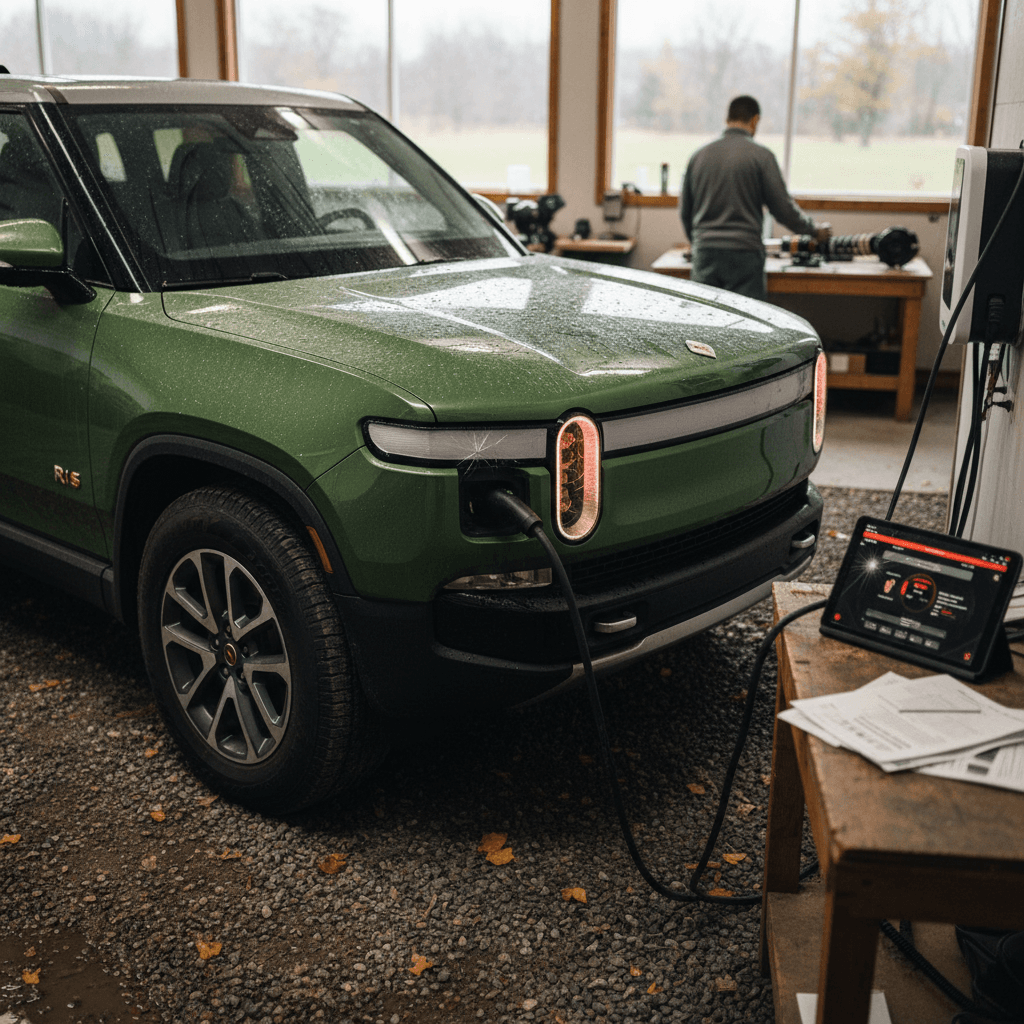
If you’re eyeing a Rivian R1S in 2026, whether new or used, you’ve probably heard two things: owners adore how it drives, and early reliability has been rough. That tension is exactly what makes Rivian R1S reliability in 2026 such an important topic, especially if you’re about to put real money down on a three-row electric SUV.
Where the R1S stands today
Rivian R1S reliability in 2026: the short version
- Overall reliability in 2026 is still worse than the average new vehicle, mainly because of build-quality issues, electronics glitches and multiple recalls on 2022–2025 models.
- The R1S tends to have more issues than most established luxury SUVs, but far fewer horror stories about failed battery packs or motors than you might expect.
- Most problems are frustrating, not fatal: rattles, alignment and suspension noises, trim, water leaks, HVAC quirks, door handles, buggy infotainment or driver-assist features.
- Rivian has leaned heavily on over-the-air (OTA) software updates and mobile service to clean up issues, with mixed success, some owners see big improvements, others see new bugs.
- For shoppers in 2026, the right way to approach an R1S is as a highly capable, early-generation luxury EV: do your homework, vet the specific vehicle’s history, and lean on warranty coverage and strong diagnostics, like a Recharged Score Report, before you buy.
Reality check for 2026 shoppers
How reliable is the Rivian R1S compared with other SUVs?
Let’s put the Rivian R1S reliability story in context. Traditional ratings from groups like Consumer Reports and J.D. Power have consistently placed Rivian near the bottom of the pack for reliability through 2024 and into the 2025 model year. The R1S stacks up poorly against the broad market of new vehicles, and it also trails direct competitors like the Kia EV9 and premium three-row gas SUVs from BMW, Mercedes-Benz and Lexus.
Rivian R1S reliability snapshot for 2026 shoppers
The clearer pattern emerging by 2026 is this: Rivian builds a fantastic-driving SUV with spotty consistency. Some owners pass 20,000–30,000 miles with little more than a door-handle swap and a software reset. Others juggle repeat visits for suspension knocks, alignment, HVAC, leaks or warning lights.
Common Rivian R1S issues by model year
Because the R1S is still relatively young, its reliability story is evolving by model year. If you’re shopping used in 2026, pay close attention to when the vehicle was built, not just what year is on the window sticker.
Typical Rivian R1S issues, 2022–2025
Patterns we see across owner reports, complaints and recall actions
2022–early 2023 builds (first wave)
What we see most often:
- Suspension clunks, alignment issues and uneven tire wear.
- Wind noise, trim misalignment, rattles and hatch/door adjustments.
- HVAC glitches and, in a few cases, water leaks from clogged drains or seals.
- Early software bugs: random warnings, rebooting screens, flaky driver-assist.
On these early trucks and SUVs, a clean service and recall history is absolutely critical.
Late 2023–2024 builds (refinements, still noisy)
What improves, what doesn’t:
- Ride, alignment and trim generally better, but not flawless.
- Fewer major assembly defects, more day-to-day software annoyances.
- Occasional HVAC or moisture issues, plus door-handle and window trim fixes.
- Service capacity still catching up, so appointments can require planning.
Think of these as second-year smartphones: better than v1.0, but updates are still coming fast.
2025 R1S: new electronics, new wrinkles
For 2025 Rivian rolled out a lighter, more centralized electrical architecture across the R1 line. The goal: fewer control modules and cleaner software, which should improve long-term reliability and make future OTA updates more powerful.
In practice, 2025 R1S owners report fewer old-school squeaks-and-rattles complaints, but the vehicle also picked up some new-software teething pains, especially around driver-assistance features and occasional infotainment freezes.
2026 builds: incremental, not magical
By early 2026, the Rivian R1S hasn’t been overhauled again; instead, it’s quietly benefiting from running production changes, updated parts and software. That typically means a 2026-build R1S should be less trouble-prone than a 2022 one, but it’s still an early-generation EV from a young automaker, not a Camry.
If you’re buying in 2026, focus less on the badge year and more on build date, service history and recall completion.
Model-year vs. build-date
Rivian R1S recalls through early 2026
One reason reliability scores look ugly on paper is the sheer number of Rivian R1S recalls since launch. The good news: many of these were handled with quick OTA software updates or straightforward hardware checks. The bad news: even "easy" recalls can mean downtime and hassle, especially if your local service center is far away.
Rivian R1S recall themes you should know about
Not an exhaustive NHTSA list, focus on the types of problems that matter most to shoppers and owners in 2026.
| Recall theme | Model years mostly affected | Type of fix | Why it matters |
|---|---|---|---|
| Suspension & steering components | 2022–2024 | Inspection and replacement of suspect parts; alignment correction | Can cause clunks, uneven tire wear, or in rare cases affect control if ignored. |
| Body hardware & latches | 2022–2024 | Door, hood or hatch hardware replacements or adjustments | Improperly latched panels can open unexpectedly or allow water intrusion. |
| HVAC and water leaks | 2022–2024 | Drain cleaning, new seals, carpet replacement in severe cases | Leaks can damage electronics, cause odors and accelerate interior wear. |
| Highway Assist / ADAS software | Primarily 2025 builds | Over-the-air software update plus, in some cases, service verification | Incorrect tracking of lead vehicles could contribute to low-speed rear-end collisions. |
| Airbag / safety system alerts | Select 2022–2025 VINs | Sensor inspections, wiring repairs, module reprogramming | Critical to ensure airbags and restraints deploy as designed. |
Always run the VIN through NHTSA’s online tool and Rivian’s site to confirm recall status on any R1S you’re considering.
Non-negotiable for used shoppers
Software, OTA updates and how much they really fix
Over-the-air (OTA) updates are the beating heart of the R1S reliability story. Rivian pushes new software frequently, improving range estimates, refining ride quality, adding features and, yes, fixing bugs and some recall items. That’s a huge advantage over legacy SUVs that need a dealer visit for simple updates.
- Upside: Many nagging issues, false warning lights, camera glitches, driver-assist quirks, really do improve or disappear after an update.
- Downside: Some updates introduce new bugs: frozen infotainment screens, odd Bluetooth behavior, stubborn charging handshakes, or ADAS systems that feel less confident than before.
- Owner reality: R1S drivers often talk about a “good software build” vs. a “bad one.” Reliability can swing noticeably after a major update, even if nothing mechanical has changed.
- Service impact: Rivian can often diagnose your SUV remotely and, when needed, dispatch mobile service with parts already on the truck. That reduces some of the pain of extra issues, but it doesn’t erase it.
How to use OTA updates to your advantage
Battery, motors and chassis: the good news
Here’s the part of the Rivian R1S reliability 2026 story that rarely makes headlines: the high-voltage hardware has been performing better than the body and software. While there have been isolated pack and drive-unit issues, we haven’t seen a flood of catastrophic battery failures the way some shoppers fear when they hear “new EV startup.”
Where the R1S is proving robust so far
Patterns emerging from owner reports and early used examples
Battery health
Early R1S packs with reasonable mileage generally show modest degradation so far. Range loss is more often tied to wheel/tire packages, driving style and weather than a dying battery.
Motors & performance
The quad- and dual-motor setups deliver ferocious power with surprisingly few hard failures reported relative to the number of nuisance issues elsewhere in the vehicle.
Off-road hardware
Air suspension, adjustable ride height and off-road hardware take a beating on some trucks. While there are real suspension complaints, many are fixed under warranty and the underlying hardware is capable.
What this means for long-term ownership
Ready to find your next EV?
Browse VehiclesOwnership experience: service, downtime and loaners
Reliability isn’t just about what breaks; it’s about how painful life gets when something does. On that front, Rivian is a mixed bag in 2026.
- Service coverage: Rivian is expanding its service-center network and mobile service, but many owners still live 100+ miles away from the nearest facility.
- Loaners and rentals: When a vehicle needs to stay overnight, Rivian often provides a loaner or helps with a rental, but availability varies, and some owners report delays or miscommunication.
- Visit frequency: Among early adopters, multiple visits in the first 12–24 months are common, even if each fix is minor on its own.
- Communication: Some owners praise Rivian’s proactive communication and app-based updates, while others describe slow responses when issues fall in the gray area between software and hardware.
Plan for extra time in your life
2026 buying advice: new vs. used R1S
So with all of that in mind, how should a 2026 shopper approach the Rivian R1S? Think like a journalist and a mechanic at the same time: ask sharp questions, demand documentation, and be honest about your own tolerance for risk.
New vs. used Rivian R1S in 2026
Which path makes sense for you?
Buying new in 2026
- Pros: Latest hardware and software; full warranty clock; you know the vehicle’s entire history.
- Recall and service campaigns are easier to track because you’re the first owner.
- Best match for buyers who want specific colors, options and the newest tech.
- Cons: Higher price, and you’re still an early adopter if big hardware changes arrive later this decade.
Buying used in 2026
- Pros: Significant savings vs. new; you can cherry-pick examples with clean histories and updated parts.
- Many early-production gremlins may already be ironed out.
- Cons: More variability, some used R1S SUVs are gems, others are problem children traded in by frustrated owners.
- Warranty time and mileage are already ticking down.
How Recharged can help
Inspection checklist for a used Rivian R1S
Whether you’re shopping through a marketplace like Recharged or from a private seller, the smartest R1S buyers in 2026 use a structured checklist. Here’s where to focus your attention.
Used Rivian R1S reliability checklist
1. Run the VIN for recalls and service history
Use NHTSA’s recall lookup and ask for Rivian service records. You want written proof that all open campaigns are completed and that prior issues were resolved, not just “could not duplicate.”
2. Confirm software version and update status
From the center screen, verify the current software version and ask when it was last updated. If the vehicle is several versions behind, plan to update soon and test-drive again afterward.
3. Inspect suspension, alignment and tires
Drive at highway speeds on a smooth road. Listen for knocks or clunks over bumps. Lightly loosen your grip on the wheel and see if the R1S tracks straight. Uneven tire wear is a red flag for alignment or suspension issues.
4. Check for leaks and HVAC quirks
Run the climate system on hot and cold, with A/C and defrost. Look under floor mats and in cargo wells for signs of past water intrusion, odors or staining that suggest leak repairs, or leaks that haven’t been addressed.
5. Test every door, hatch and window
Open and close every door, hood and hatch multiple times. Watch and listen for misalignment, binding or failure to latch. Make sure child locks, window switches and the powered tailgate behave consistently.
6. Stress-test electronics and driver aids
Pair a phone, stream audio, use navigation, switch profiles, and test cruise control and driver-assist on a known route. You’re looking for random reboots, dropped connections or systems that won’t engage reliably.
7. Review battery health and DC fast-charging history
Ask for a recent battery-health report. At Recharged, this is built into the Recharged Score, so you can see degradation, balance and any signs of abuse, like excessive high-power DC fast charging.
8. Ask bluntly about repeat issues
A seller who’s had the same component fixed three times is telling you something, even if it’s technically “repaired.” Patterns matter more than any one visit to the service center.
Warranty coverage and costs to keep in mind
Rivian’s warranty coverage in 2026 roughly tracks other premium EVs, but the details matter a lot more when reliability is below average. You want to know exactly what’s still covered, and for how long, before you bank on a discounted used R1S.
Typical Rivian R1S warranty coverage (U.S.)
Always verify coverage by VIN and in the official warranty booklet, terms can change, and some items vary by state.
| Coverage type | Typical term* | What it usually covers | Why it matters on an R1S |
|---|---|---|---|
| New-vehicle limited warranty | 4 years / 50,000 miles* | Most non-wear components: electronics, interior, many suspension and body hardware items | Covers a lot of the annoying but common issues like rattles, latches, sensors and certain leaks. |
| Battery & electric drive components | 8 years / 175,000 miles* (varies by pack/market) | High-voltage battery pack, drive units and some related components | Critical peace of mind that big-ticket EV hardware isn’t your out-of-pocket problem early on. |
| Corrosion / rust perforation | Typically 8–12 years* | Rust-through on body panels | Less of a hot topic on a young EV, but still useful for long-term owners. |
| Roadside assistance | Matches basic warranty term in many cases | Towing to Rivian service or approved facilities | Handy when your nearest service center is hours away, towing isn’t cheap out of warranty. |
For a used R1S in 2026, check in-service date and mileage to see how much protection remains.
Read the fine print
FAQ: Rivian R1S reliability in 2026
Frequently asked questions about Rivian R1S reliability
Bottom line: is the Rivian R1S worth the reliability risk?
The 2026 Rivian R1S is one of those rare vehicles that can steal your heart on a ten-minute drive and then test your patience over ten months of ownership. Reliability is measurably worse than average, driven by recalls, electronics quirks and the realities of buying from a still-young automaker. At the same time, the core EV hardware is robust, the driving experience is special, and Rivian is steadily learning from its missteps.
If you’re willing to live with a few extra service appointments, and you protect yourself with strong documentation, battery-health verification and remaining warranty coverage, the R1S can absolutely be worth the risk. If you want your SUV to disappear into the background of your life, it probably isn’t. Either way, going in with clear eyes and solid data is the smartest move, and that’s exactly what tools like the Recharged Score Report and expert EV guidance are designed to provide.