If you’re considering a Rivian R1S, you’re probably wondering what it’s *really* like to live with after the honeymoon period. This long-term Rivian R1S owner review after 2 years pulls together owner reports, reliability data, and real-world range numbers so you can decide whether a new or used R1S fits your life, and your risk tolerance.
Who this review is for
Two years with a Rivian R1S: what this review covers
Six angles that matter after 2 years
What real R1S owners care about once the new-car smell fades
Daily usability
Performance & comfort
Battery & range
Charging experience
Reliability & recalls
Costs & resale
Unlike a short test drive, two years of ownership expose everything: the clever touches you grow to love, the software quirks that won’t go away, and whether you still feel good about the payment every month. Think of this as the distilled experience of thousands of owner miles, translated into clear buying advice.
How the R1S is actually being used after 2 years
Typical R1S owner use cases
In owner forums, a “typical” R1S is a family shuttle during the week and an adventure rig on weekends. Two years in, many owners report that the generous cargo space, flat floor, and large frunk have turned it into the default do‑everything vehicle, even in households that also own trucks or luxury sedans.
Comfort, interior, and family life
What owners love after 2 years
- Seat comfort holds up well. Front seats remain supportive on long drives, and the high driving position gives excellent visibility.
- Cabin still feels special. The minimalist design, wood trim, and enormous glass roof don’t feel dated yet. Many owners say it still feels like a premium lounge, not a truck‑based SUV.
- Quiet and refined. At highway speeds the R1S is generally quiet, especially on 21‑inch or 22‑inch road tires. Wind noise around the mirrors and roof is a recurring but minor complaint.
Annoyances that show up over time
- 3rd row and cargo access. With all three rows in use, cargo space is tight. Folding the third row is quick, but if you routinely carry six or seven people and luggage, you’ll feel the squeeze.
- Small physical controls. Almost everything runs through the center screen. Two years in, some owners still wish for more knobs and buttons, particularly for climate.
- Occasional squeaks/rattles. A portion of owners report dash or trim noises developing over time, usually fixed, but not always, by service visits.
Row and cargo layout tip
Performance, ride, and off-road ability
Even after two years, performance is one area where the R1S still feels shockingly fresh. The dual‑motor versions are quick; the quad‑motor trucks are downright brutal. Instant torque, precise control off‑road, and an adjustable air suspension make it feel like a mash‑up of luxury SUV and sports sedan.
How the R1S drives day to day
Strengths and tradeoffs that stand out with miles
Instant shove
Ride comfort
Legit off‑road
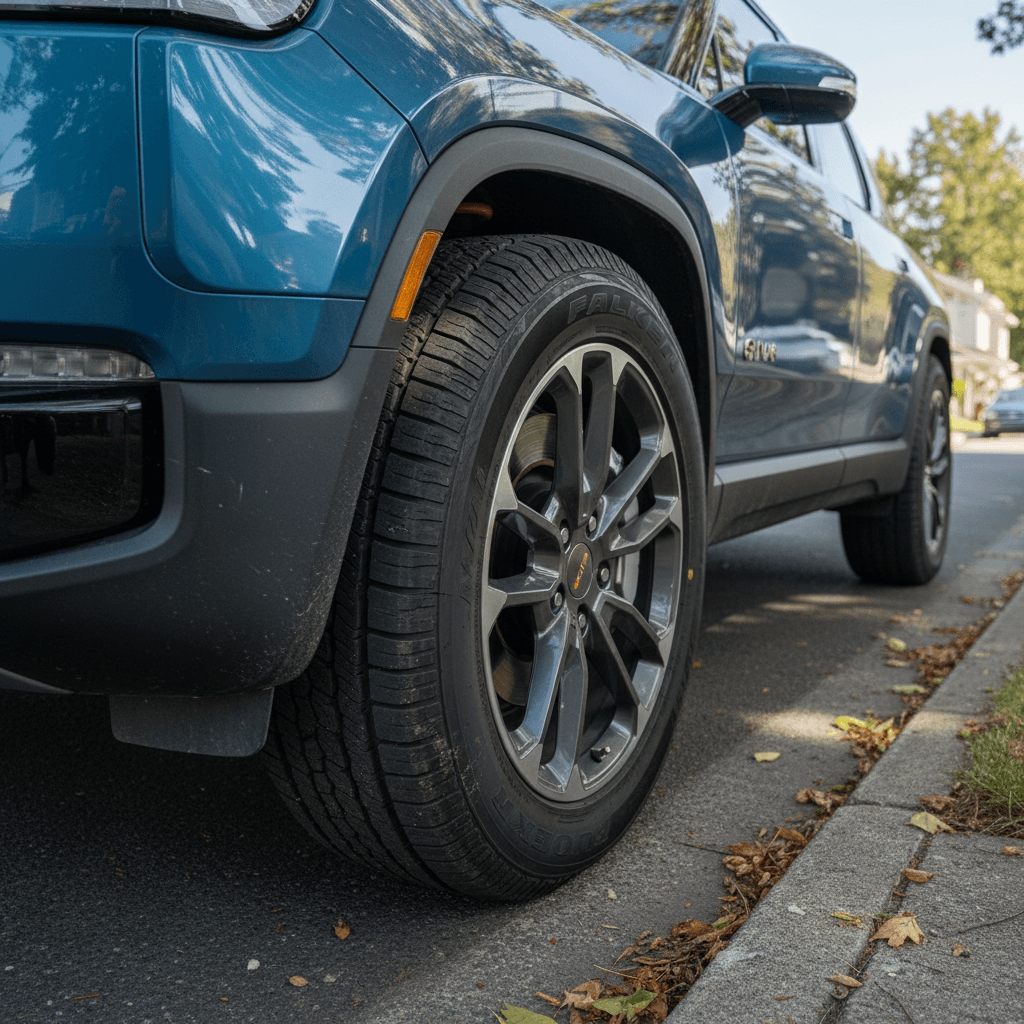
Watch the weight and wheels
Battery, range, and real-world efficiency
On paper, the R1S offers impressive range, especially with the Large or Max pack. In the real world, two years of owner data show that range is highly sensitive to speed, weather, tire choice, and load, but generally in line with other large EV SUVs.
Typical real‑world R1S range (owner reported)
Approximate real‑world numbers from mixed owner reports for Large and Max packs. Your results will vary by climate, tires, and driving style.
| Scenario | Battery pack | Expected highway range (65–75 mph) | Notes |
|---|---|---|---|
| Mild weather, light load | Large | 260–290 miles | Closer to EPA at lower speeds; expect less at 75 mph. |
| Mild weather, light load | Max | 330–350 miles | Owners report ~1.8–2.0 mi/kWh on longer trips. |
| Winter around freezing | Large | 190–220 miles | Cabin heat and denser air cut range 20–30%. |
| Heavy load / roof box | Large or Max | ‑10–20% vs. above | Passengers, gear, and racks all add drag and weight. |
| Towing a midsize trailer | Large or Max | ‑45–55% vs. solo | Plan roughly half your normal range when towing. |
Think in terms of planning buffers instead of chasing the EPA number.
Cold‑weather reality check
Two‑year owners generally report that battery degradation has been modest so far, often in the single‑digit percent range. That’s in line with other modern EVs. The bigger story isn’t degradation, it’s how honest you are with yourself about speed and climate. Drive 80 mph in January with a roof box, and any EV’s range will disappoint you.
Charging experience, road trips, and networks
Home charging after 2 years
- Set it and forget it. Most owners install a 48‑amp Level 2 charger at home and rarely think about public charging day‑to‑day.
- Charge habits settle in. A common pattern is charging to 70–80% nightly, with occasional 100% charges before long trips.
- Costs are predictable. Off‑peak home electricity often makes per‑mile energy costs far lower than a comparable gasoline SUV.
DC fast charging and road trips
- Peak rates are competitive. Owners with the larger packs see roughly 200–220 kW peaks on capable chargers, with 10–80% often in the 30–40 minute range when the battery is warm.
- Network matters. Experiences vary widely by network and location. Reliable stations (and backups) are crucial for stress‑free trips.
- Planning tools help. Rivian’s built‑in routing continues to improve via software, but seasoned owners still cross‑check with apps like PlugShare and A Better Routeplanner.
Trip‑planning practice
Reliability, recalls, and service reality
This is where any honest Rivian R1S owner review after 2 years has to slow down and choose its words carefully. The R1S is beloved by many of its owners, but the brand’s reliability record is mixed at best.
What’s actually going wrong?
Patterns from owner reports and recall history
Hardware gremlins
Software & electronics
Recalls and campaigns
“It’s the best vehicle I’ve ever owned when it’s working perfectly, and the most frustrating when it’s not.”
Brand‑new automaker reality
Service experiences are all over the map. Some owners rave about responsive mobile techs, excellent communication, and free loaners. Others describe weeks‑long waits for parts, repeated visits for the same concern, and difficulty getting clear answers. Location matters, a lot. If you’re far from a Rivian service center, factor that into your risk calculation.
Ownership costs, depreciation, and insurance
Where the R1S saves you money
- Fuel vs. gasoline. Even with higher electricity prices in some regions, per‑mile costs are usually significantly lower than a comparable V8 or turbo V6 three‑row SUV.
- Less routine maintenance. No oil changes, fewer fluids, and fewer moving parts than a traditional drivetrain. Brake wear is often low thanks to strong regenerative braking.
- Incentives. Depending on model year and your tax situation, federal or state incentives may have lowered the original owner’s cost, and help explain used pricing you see today.
Where it can cost more
- Insurance premiums. Many owners report higher premiums than for a similarly priced gasoline SUV, reflecting expensive collision repairs and parts costs.
- Depreciation. Like most EVs, the R1S has seen meaningful price swings as Rivian adjusts MSRPs and as the EV market cools. That can sting first owners, but it can also make a used R1S a compelling value.
- Out‑of‑warranty repairs. It’s still early days, but big‑ticket items like air suspension components or drive units could be costly if they fail outside warranty. Extended coverage is worth pricing carefully.
How Recharged can help on costs
Ready to find your next EV?
Browse VehiclesIs a used Rivian R1S a smart buy?
For the right buyer, yes, but it’s not a one‑size‑fits‑all answer. After two years in the wild, a clear pattern has emerged: owners either absolutely love their R1S and plan to keep it long‑term, or they get tired of chasing issues and move on. Your job as a shopper is to tilt the odds toward landing one of the good ones.
Who the R1S fits, and who it doesn’t
Use this as a quick gut‑check before you fall in love with the design
The R1S is a great fit if…
- You want a three‑row EV that can genuinely handle outdoor adventures and poor weather.
- You’re comfortable being an early adopter and can tolerate the occasional software quirk or service visit.
- You have access to reliable Level 2 home charging and are willing to learn public charging basics for road trips.
- You’re shopping used and see value in getting flagship performance and capability at a discount from new MSRP.
You should probably look elsewhere if…
- You live far from a Rivian service center and can’t afford downtime.
- You prioritize bulletproof reliability over performance and tech.
- Your family truly needs full‑time three‑row seating plus lots of cargo; a longer SUV or minivan may simply package people and stuff more easily.
- You’re not interested in managing charging, software updates, or app‑based features, yet.
Lean on third‑party inspections and data
Checklist: what to look for on a used R1S
Essential checks before you buy a used Rivian R1S
1. Confirm battery health and software status
Ask for a <strong>battery health report</strong> or capacity estimate and verify the truck is on current software. On a Recharged vehicle, this is summarized in the Recharged Score so you’re not guessing.
2. Inspect suspension and steering components
During a test drive, listen for clunks, pops, or clicking when turning or going over bumps. Review service records for repeated half‑shaft, damper, or alignment work, frequent replacements can be a red flag.
3. Check for water leaks and trim issues
Lift floor mats (especially in the driver’s footwell and cargo area) to feel for dampness. Inspect door seals, roof rails, and tailgate for signs of past leaks or water stains.
4. Test all doors, locks, and key functions
Walk up with the phone key and fob to see how quickly the truck unlocks. Test every door and hatch. Intermittent proximity lock or hard‑to‑close doors are common owner complaints that should be addressed before you sign.
5. Run through cameras, driver aids, and infotainment
Cycle the surround‑view cameras, adaptive cruise, lane‑keeping, and any hands‑free features if equipped. A quick drive with these systems on will often reveal glitches you won’t catch in a parking lot.
6. Review recall and service history
Ask the seller (or your Recharged specialist) for a printout showing completed recalls and campaigns. You want evidence that seatbelt, lighting, and driver‑assistance recalls have been properly addressed.
7. Validate charging performance
If possible, do a brief fast‑charge session. Confirm the truck can initiate a DC fast‑charge session without errors and that it ramps up to a healthy rate once the battery is warm.
FAQ: Rivian R1S long-term ownership
Frequently asked questions about 2‑year R1S ownership
Bottom line after 2 years
After two years on the road, the Rivian R1S has proven that it’s more than a flashy startup experiment. As a product, it’s a deeply capable, genuinely enjoyable electric SUV with performance and versatility that few competitors can match. As a long‑term ownership proposition, it asks you to accept more risk and variability than a mainstream three‑row from an established brand.
If you value cutting‑edge tech, off‑road ability, and a distinctive design enough to live with some uncertainty, the R1S can be immensely satisfying. If your top priorities are low drama and high predictability, you may want to wait for Rivian’s next generation, or focus on more conservative alternatives.
Either way, the smartest path is to shop with as much transparency as possible. A used R1S with clear service records, a clean battery health report, and fair market pricing can be a terrific buy. At Recharged, we wrap that information into every vehicle’s Recharged Score Report and back it with EV‑specialist support, financing, trade‑in options, and nationwide delivery, so your decision is driven by data, not guesswork.