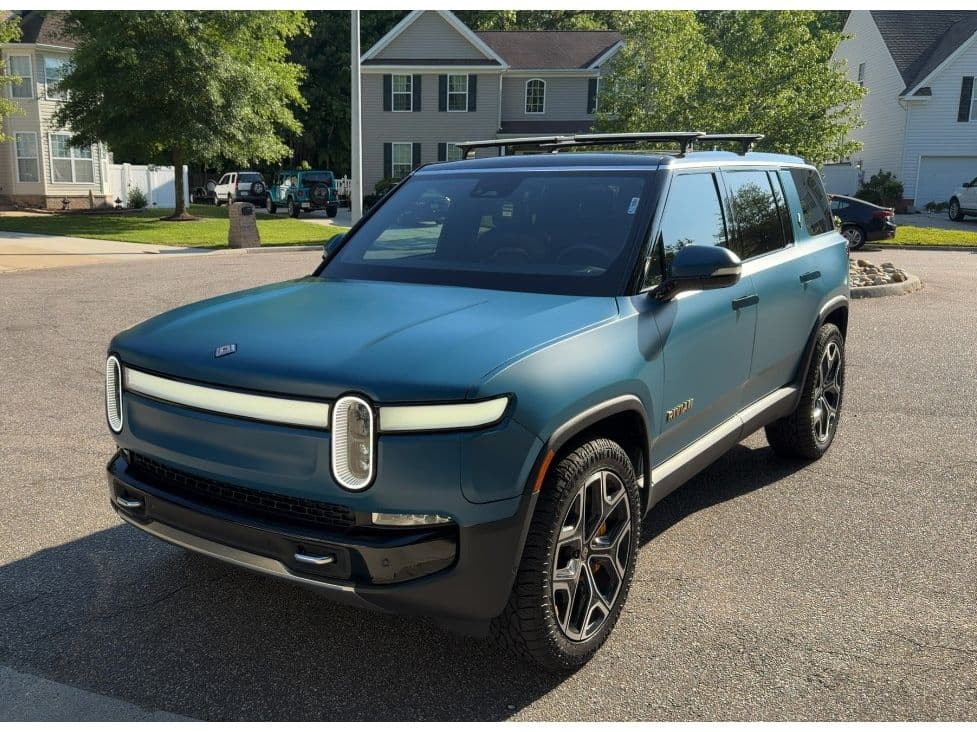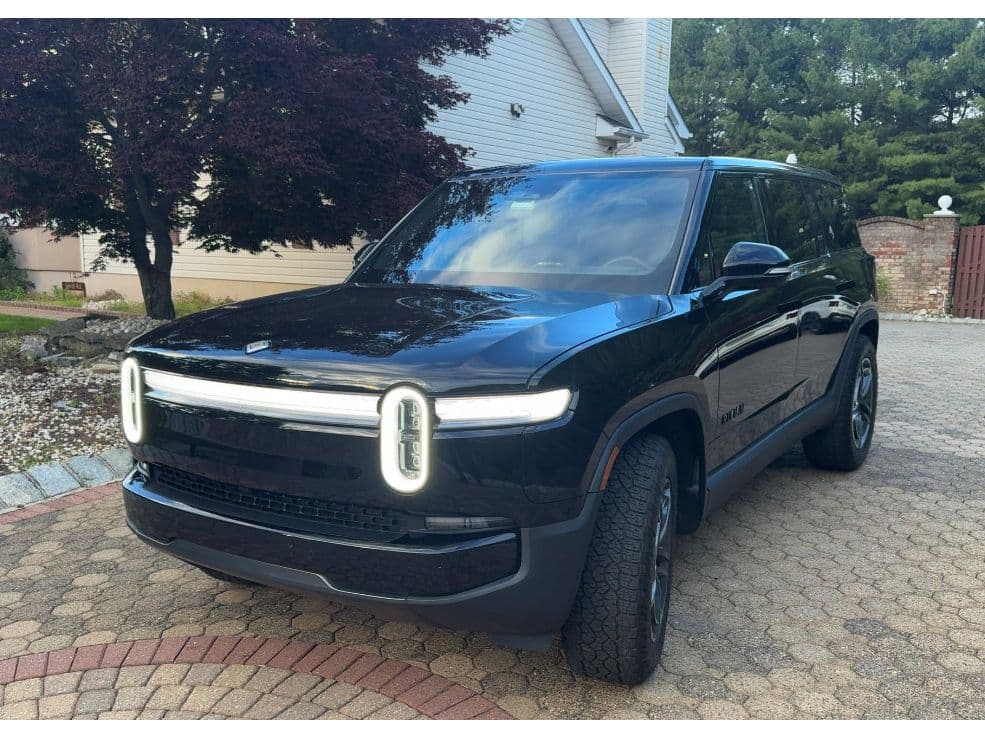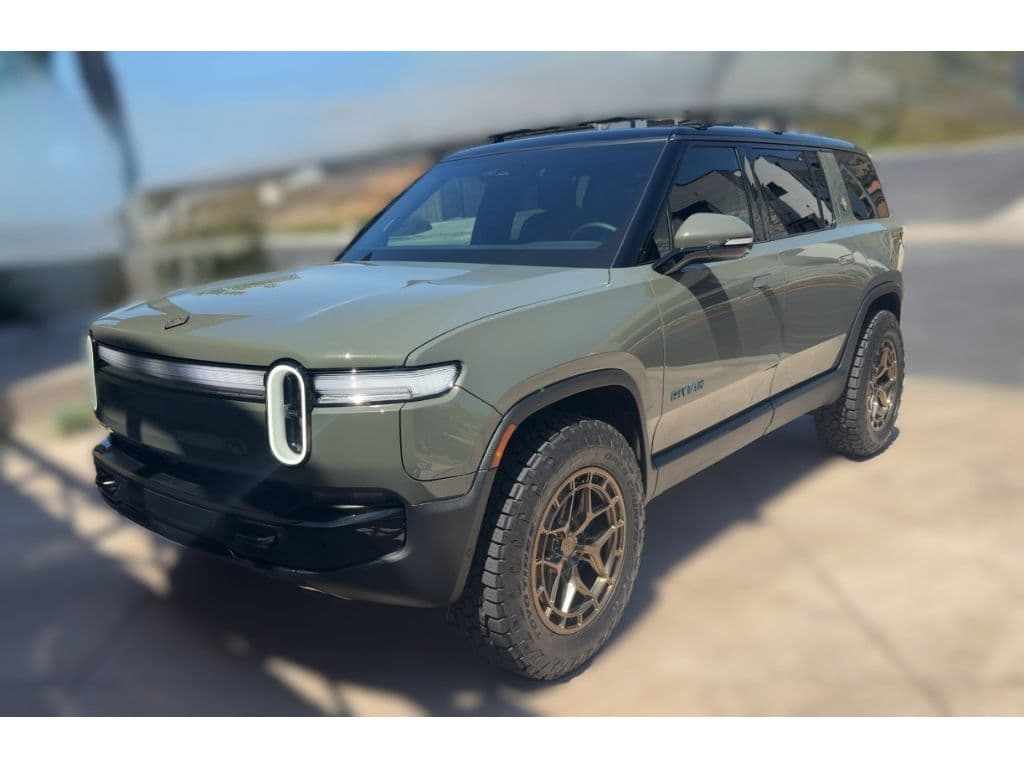
You’re eyeing a used Rivian R1S and every listing seems to be playing a different game of Monopoly money. $58,000 here, $74,000 there, all for what look like nearly identical green bricks on 22s. If you’re wondering how much to offer for a used Rivian R1S without overpaying, you’re not alone.
Short on time?
Why used Rivian R1S prices feel all over the map
The R1S is a relatively young product with real‑world values still settling. New pricing changed multiple times, Rivian added and removed trims, and in 2024 it launched new Standard and Standard+ battery packs that dropped the base MSRP into the mid‑$70,000s before incentives. That means a 2022 Launch Edition and a 2025 Dual Motor Standard+ might both show up used around $70k, but they didn’t cost the same new, and they don’t offer the same hardware.
Layer on top of that: steep early‑EV depreciation, evolving federal tax credits, and a market that has cooled a bit for expensive luxury EVs. The result is a used R1S market where you can find genuine deals, but only if you understand battery packs, powertrains, and depreciation well enough to price them correctly.
Rivian R1S market snapshot (big picture)
Quick answer: how much to offer for a used R1S
Let’s put numbers to it. These are typical U.S. private‑party / marketplace ranges for clean‑title, no‑accident R1S models with reasonable mileage. Your local market may sit a few thousand above or below these figures, but they’re a solid starting point for deciding how much to offer.
Target offer ranges for used Rivian R1S
Approximate ranges for well‑kept, clean‑title R1S models in early 2026 U.S. market conditions.
| Model year & spec | Typical asking | Fair deal target offer | Comments |
|---|---|---|---|
| 2022 R1S Launch / Adventure, Quad Motor, Large pack, 20–35k miles | $67,000–$78,000 | $64,000–$74,000 | Iconic early builds; Quad Motor and off‑road options command a premium. |
| 2023 R1S Adventure, Dual or Quad Motor, Large pack, 15–35k miles | $70,000–$80,000 | $66,000–$76,000 | Slightly higher asks for newer VINs and fresh‑looking interiors. |
| 2024 R1S Dual Motor Standard or Standard+, 10–25k miles | $62,000–$74,000 | $59,000–$70,000 | Standard pack cars price lower; Standard+ and 21" wheels push the top end. |
| 2024–2025 R1S Dual Motor Large or Max pack, low miles (<15k) | $76,000–$90,000 | $72,000–$85,000 | Max pack and loaded Ascend or off‑road packages still behave like near‑new vehicles. |
| High‑mile (40–60k) any year, clean battery report | $55,000–$68,000 | $52,000–$64,000 | Heavy mileage drags values down; verify battery health and service history. |
Use this as a starting point, then refine based on battery pack, mileage, condition, and region.
Reality check
Key factors that move used R1S prices
What actually drives used R1S value
Think beyond year and mileage, this is what smart buyers price in.
Battery pack & range
Motor count & wheels
Mileage & usage
Accident & repair history
Because the R1S is aluminum‑intensive with a lot of proprietary parts, structural damage or airbag deployment can really spook the next buyer. A discounted crash repair today can become a resale anchor tomorrow.
Software, warranty & support
Rivian is still iterating rapidly via OTA updates. A used R1S that’s within original warranty, on recent software, and has documented service visits will almost always command more than an orphaned early build with an uncertain paper trail.
Battery packs, range and how they affect value
Battery pack choice is one of the biggest levers on used R1S pricing. Buyers are paying up for range, and for good reason: on a family‑road‑trip SUV, 270 miles vs 400 miles feels like the difference between a stretch break and a mini‑vacation at the charger.
Rivian R1S battery options and value impact
Approximate EPA range estimates for R1S configurations and what they mean in the used market.
| Pack | Approx. usable size | Est. max range (R1S) | Used‑market impact |
|---|---|---|---|
| Standard | ~106 kWh | ~270 mi | Entry ticket. Cheapest used; great if you mostly commute and charge at home. |
| Standard+ | ~121 kWh | ~315 mi | Sweet spot for many buyers; better range without full Large‑pack premium. |
| Large | ~131–135 kWh | ~340–352 mi (earlier builds); ~330 mi (refresh) | Goldilocks pack; very desirable if paired with 20" or 21" wheels. |
| Max | ~141–149 kWh | ~400 mi+ | Top‑dog range. Expect a notable premium; don’t overpay unless you’ll really use the extra miles. |
Exact specs vary by wheels and powertrain, but this is the mental model you need when you’re pricing a used R1S.
How to price battery packs quickly
Trims, years and option packages to know
Underneath the whimsical color names and the minimalist cabin, the R1S lineup is actually pretty simple: think in terms of generation (early vs refreshed), motor layout, and battery pack. But trim history matters for used prices too.
- 2022: Launch Edition and Adventure with Large pack were common; Quad Motor dominated early builds and still carries a premium.
- 2023: Adventure became the de facto trim; Explore was killed off, and Quad Motor remained the hot ticket for enthusiasts and off‑roaders.
- 2024 onward: Rivian introduced Standard and Standard+ packs and broadened Dual Motor and Performance Dual Motor configurations, including some that qualify for federal credits when new.
- Refresh years: Later R1S models received subtle hardware and software updates, including revised battery capacities and range estimates. They tend to hold value better, especially with the latest packs.
Don’t get hypnotized by “Launch Edition” badges
How to run the numbers on a fair offer
The smartest way to decide how much to offer on a used Rivian R1S is to treat it like a small spreadsheet in motion: start with today’s equivalent new price, subtract realistic depreciation, then adjust for battery, mileage, options, and condition. Here’s a simple framework you can follow in 10–15 minutes.
Step‑by‑step: building your target offer
1. Anchor to a comparable new R1S
Go to Rivian’s configurator and build the closest new R1S you can to the used one you’re considering. Note the <strong>out‑the‑door MSRP with similar pack, motors, wheels and interior</strong>.
2. Apply age‑and‑miles depreciation
As a rough rule of thumb in early 2026, a clean 2–3‑year‑old R1S with average miles might reasonably sit <strong>25–35% under its original MSRP</strong>. High‑mile or heavily used examples should sell for less.
3. Adjust for battery pack and powertrain
Add value for Large or Max packs and Quad/Performance motors, subtract for Standard packs or if the spec is less desirable in your climate (for example, no heated seats in a cold region).
4. Price in tax credit history
If the truck qualified for a federal credit when new, some of that benefit is already ‘baked into’ what the original buyer paid. On the used side, focus on the <strong>actual market</strong>, not the original paper discount.
5. Inspect condition like a hawk
Every curb‑rashed 22" wheel, scuffed vegan leather, and dinged lower tailgate is a negotiation lever. Add up reconditioning costs as if you’ll pay a body shop or detailer.
6. Decide on your walk‑away number
Set a <strong>max price</strong> you’re comfortable with before you text the seller or step onto a lot. Your first offer should usually start <strong>3–8% under</strong> what you’re prepared to pay, so you have room to move.
Price bands: what you’ll actually see on the market
Let’s turn that framework into something you can use on your phone in a parking lot. When you scroll listings on Recharged or any marketplace, most used R1S SUVs will cluster in a few recognizable bands.
Common used R1S scenarios and smart offers
Match the listing you’re looking at to one of these archetypes.
The “lightly used demo” (near‑new, low miles)
Typical asks: High‑$70k to around $90k.
Smart offer: 3–5% under asking if it’s truly mint and uniquely optioned; more if there are plenty of similar trucks sitting unsold.
The “weekend warrior” (Adventure / Quad Motor)
Typical asks: Mid‑$60k to mid‑$70k.
Smart offer: Start in the low‑$60k range unless condition is exceptional; price out tire and wheel replacement if efficiency matters to you.
The “family hauler” (Standard / Standard+)
Typical asks: Low‑$60k to low‑$70k.
Smart offer: High‑$50k to mid‑$60k depending on mileage and interior wear; range‑sensitive buyers should favor Standard+ or Large.
The “project truck” (miles, stories, or both)
Typical asks: High‑$50k to mid‑$60k.
Smart offer: Price strictly off condition, battery health, and your real reconditioning costs; don’t be shy about coming in 10%+ under ask if the vehicle needs work.
Negotiation strategy for a used R1S
The R1S is an emotional purchase. Sellers know it. Some still think they’re sitting on a collector piece; others just want out of a big payment as the EV market softens. Your job is to be the calm adult in the room with numbers, not vibes.
- Always show your homework. Bring comparable listings on your phone: same year, similar mileage, similar pack. It’s easier to justify a lower offer when you can point at three other trucks.
- Negotiate the vehicle, not the monthly payment. Whether you’re buying with cash or financing, keep the discussion anchored on out‑the‑door price.
- Use condition as leverage, politely. “I love this spec, but the wheel rash and cargo scuffs are going to cost me around $1,200 to fix. If we can reflect that in the price, I’m ready to move today.”
- Be ready to walk. Rivian buyers skew affluent; some sellers would rather wait for someone to pay their dream number. That’s fine, there are more R1S SUVs out there than you think.
- If you’re on Recharged, use the pricing context. Our listings include a Recharged Score and pricing transparency, so you can see whether a vehicle is fairly priced before you ever make an offer.
Where Recharged fits in
Ready to find your next EV?
Browse VehiclesWhy battery health reporting matters

On an EV like the R1S, the battery pack is the single most expensive component. You’d never buy a used gas SUV with a mystery engine tick; buying a used R1S without any battery health insight is the same kind of gamble, just quieter.
- Ask for a recent battery health or range test if the seller has one. Many owners track this via trip logs or third‑party tools.
- Pay attention to cold‑weather range and DC fast‑charge behavior if you live on the highway or in a northern state.
- Look for vehicles that have been charged mostly on Level 2 at home rather than hammered daily on DC fast chargers; it’s easier on the pack over time.
- On Recharged, review the Recharged Score battery diagnostics. We use specialist testing to estimate remaining capacity and flag any anomalies, so you can price the vehicle accordingly.
Avoid the “cheap, unknown history” trap
Should you buy now or wait?
Rivian is still in its adolescence as an automaker. New models and updates will keep nudging used values around, and wider EV market jitters can create both sudden discounts and moments of seller denial. So should you jump on a used R1S now or sit on the sidelines?
Reasons to buy now
- You’ve found a spec unicorn: Max pack, your color, right wheels, and clean history.
- There’s clear evidence of a soft local market, multiple similar trucks sitting unsold with recent price cuts.
- You can stack a fair used price with favorable financing and maybe a strong trade‑in via a platform like Recharged.
Reasons to wait
- Your market is still thin, with only a handful of overpriced R1S listings.
- You don’t actually need three rows or Rivian’s off‑road party tricks, and a cheaper used EV SUV would meet your needs.
- You’re betting on further EV price normalization over the next 6–12 months and you’re not in a hurry.
Checklist before you make an offer
Pre‑offer Rivian R1S buyer checklist
Confirm battery pack & motor configuration
Write down exactly which pack (Standard, Standard+, Large, Max) and which motor layout (Dual, Performance Dual, Quad) the truck has. Don’t assume, verify from Rivian account, window sticker, or VIN decode.
Pull history & inspect in daylight
Run a history report and walk the vehicle in good light. Look for panel repairs, mismatched paint, wheel damage, and underbody scrapes, especially near the battery tunnel.
Test charging and key features
Check that home charging, DC fast charging, driver‑assist systems, air suspension, HVAC, and infotainment all behave. Fixing post‑warranty electronics on a premium EV can be expensive.
Estimate total reconditioning
Price out what it would cost to make the truck ‘perfect’ in your eyes: detail, wheels, paintless dent repair, tires, mats. Take that number into your negotiation.
Review pricing tools & Recharged Score
Check multiple pricing guides and recent listings. If you’re shopping on Recharged, use the <strong>Recharged Score Report</strong> for objective battery health and pricing context.
Set offer, stretch, and walk‑away numbers
Decide your opening offer, your stretch number, and the point where you politely walk. Write them down before you start talking money.
Rivian R1S used buying FAQs
Frequently asked questions about used Rivian R1S pricing
The used Rivian R1S market looks chaotic from a distance, but once you break it down by pack, motors, miles and condition, clear patterns emerge, and so do the good deals. Decide what matters most to you (range, off‑road prowess, price, or all of the above), run the numbers like a grown‑up, and stick to your walk‑away point. If you’d rather skip the detective work, start with R1S listings on Recharged, where every vehicle comes pre‑scored for battery health, pricing fairness and overall condition, so you can focus on enjoying one of the most interesting electric SUVs on the road instead of guessing what it’s really worth.