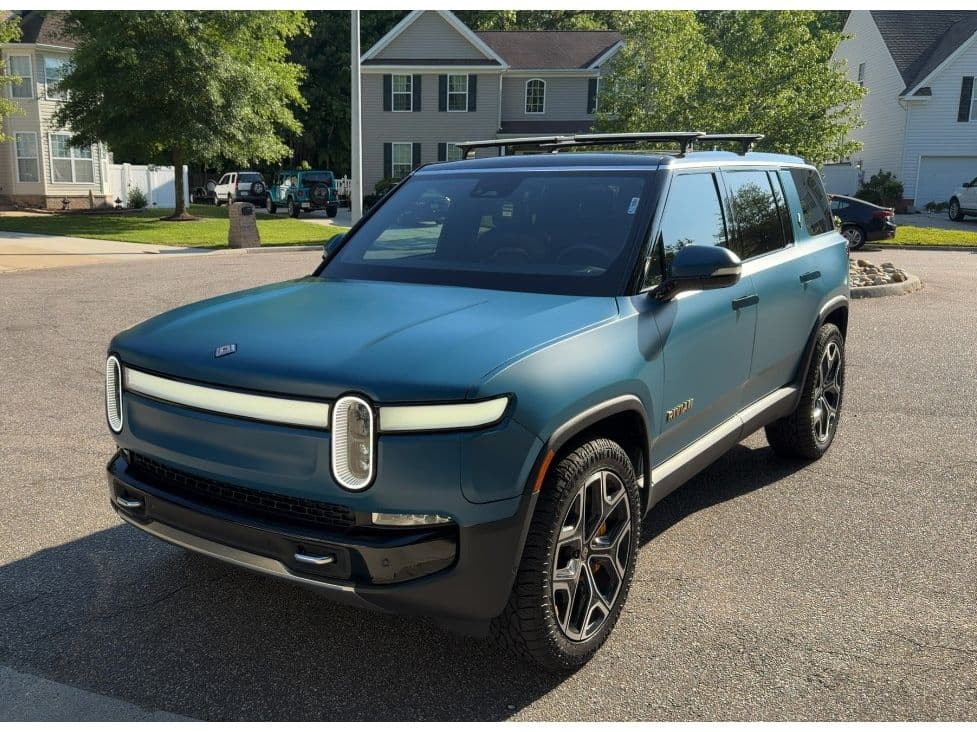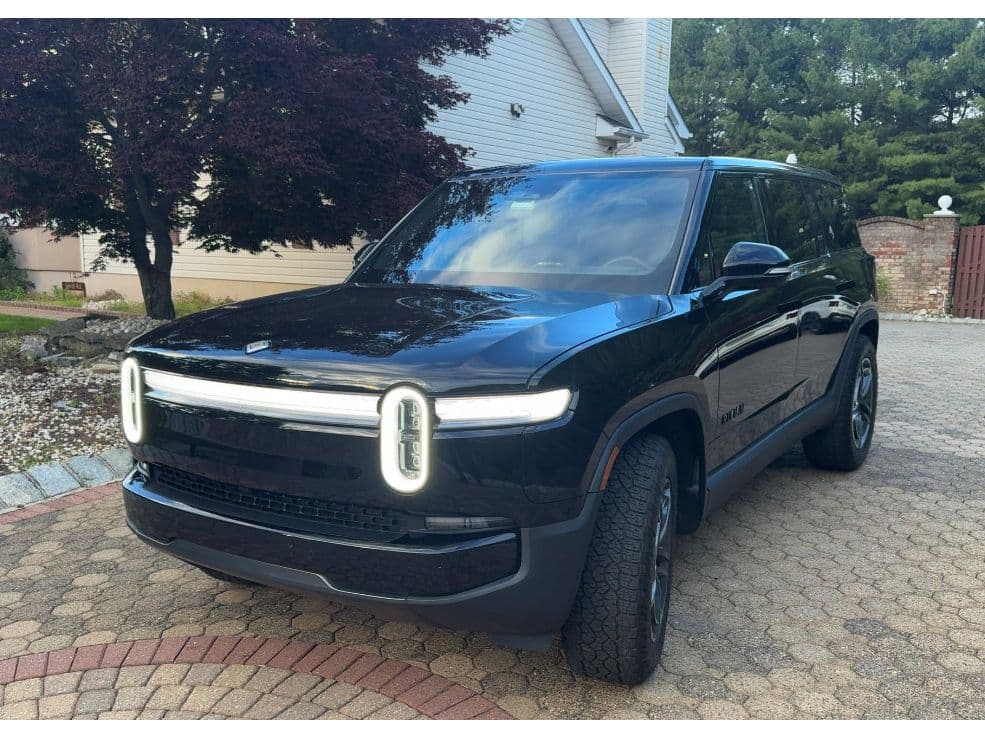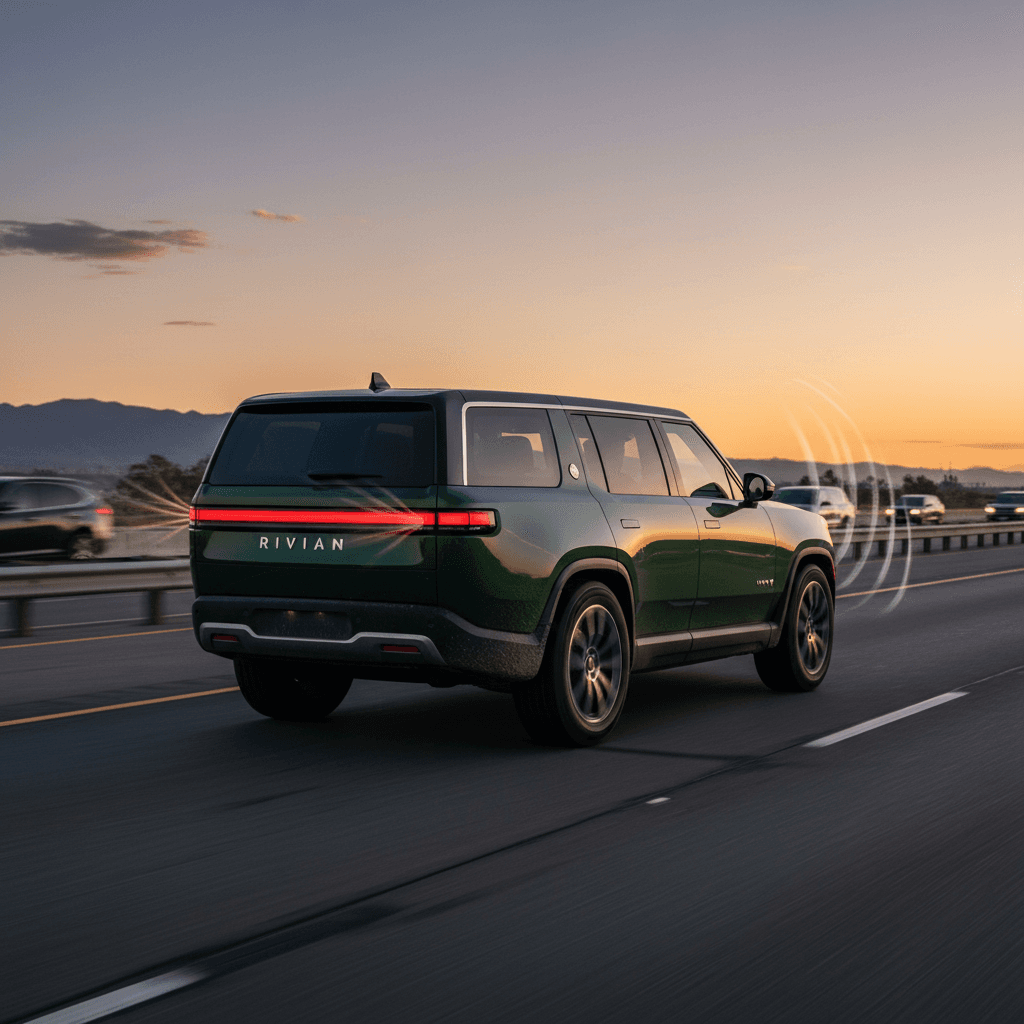
If you’re cross‑shopping the Rivian R1S against a Tesla Model X, Mercedes EQS SUV, or a gas luxury SUV, you’re probably wondering about one thing: Rivian R1S highway noise level. An electric SUV removes engine sound, so any wind leak or coarse tire instantly stands out. The good news is that a healthy R1S can be impressively quiet at speed, but build variations, tires, and small sealing issues mean not every example sounds the same.
Quick takeaway
Rivian R1S highway noise at a glance
How the R1S sounds in the real world
Automakers rarely publish cabin sound figures, so we’re reliant on owner measurements and magazine impressions. Across dozens of owner reports, a well‑sealed R1S typically lives in the low‑60s dB range around 70 mph, which is firmly in the “luxury‑SUV quiet” zone. Outliers into the low‑70s usually indicate a specific issue, often a window or door seal, rather than the baseline design.
Is the Rivian R1S quiet on the highway?
Short answer: yes, when it’s set up correctly. The R1S rides on an air‑suspension chassis with a rigid skateboard battery pack and a lot of under‑floor mass, ingredients that typically help noise, vibration, and harshness (NVH). When owners step out of a Model Y or a body‑on‑frame SUV and into an R1S on 21" or 22" road tires, the most common reaction is how calm the cabin feels at 70–80 mph.
- Many owners report being able to speak in normal voices with passengers in the third row at 70 mph.
- Compared to Model 3/Y, the R1S is often described as “much quieter,” particularly for road noise through the floor.
- Versus traditional off‑roaders (Land Cruiser, Wrangler, Defender), even an R1S on all‑terrain tires is usually a step up in refinement.
But impressions vary
What actually makes noise in an R1S at speed?
With no engine or transmission, almost everything you hear in a Rivian R1S above 50 mph comes from three sources: road noise, wind noise, and occasional motor whine. Understanding each helps you pinpoint what you’re hearing on a test drive.
Main R1S highway noise sources
What you’ll actually notice from the driver seat
Road & tire noise
This is the low‑frequency rumble and “hiss” that rises with speed.
- Strongly affected by tire type (all‑terrain vs touring)
- Worse on coarse concrete than on fresh asphalt
- Enters through the floor, wheel wells, and suspension mounts
Wind & sealing noise
High‑frequency “whoosh” or whistling near your ear.
- Often localized to A‑pillars or small triangle windows
- Can sound like a window is cracked open slightly
- Very sensitive to door, window, and glass seals
Motor & drivetrain sounds
Occasional higher‑pitch whine or faint ringing.
- More noticeable in certain drive modes or at specific speeds
- Can be confused with wind noise
- Usually subtle in healthy vehicles
Simple way to tell them apart
Common Rivian R1S wind noise complaints
If you spend time in Rivian owner forums, you’ll see a pattern: a subset of R1S drivers report pronounced wind noise starting around 50–65 mph, often from one area of the cabin rather than a general roar. The most frequent culprits are surprisingly small pieces of glass and rubber.
Typical R1S wind noise hotspots
1. Front fixed (triangle) windows
Early R1S builds in particular saw wind noise traced to the tiny fixed glass triangles ahead of the front doors. Updated parts and new seals have largely solved this, but used examples may still have the older pieces.
2. Door and body seals
Slight misalignment of the door or compressed weatherstripping can leave a narrow air gap. Owners often describe this as “sounding like the window is cracked” near the driver’s ear around 30–70 mph.
3. Window calibration
Because the glass drops slightly when you open the door, mis‑calibrated window stops can leave the glass a fraction of an inch too low. A simple recalibration can dramatically reduce noise.
4. Roof racks and crossbars
Factory or aftermarket crossbars add their own turbulence. Several owners report that removing them transforms the cabin at highway speeds, especially around 40–60 mph.
5. Isolated high‑pitch tones
A few R1S and R1T owners describe a faint ringing tone in a narrow speed band (often 60–70 mph). Sometimes this is aerodynamics (roof gear, mirrors); sometimes it’s motor‑related and needs a Rivian service ticket.
The upside: most of this is fixable
Tire and road noise: R1S wheel and tire choices
The R1S is a heavy, dual‑ or quad‑motor SUV that can run everything from efficient road tires to aggressive all‑terrains. That flexibility is great for capability, but it has real consequences for highway noise level.
How R1S wheel and tire setups affect highway noise
General patterns owners report when switching wheels/tires on the same roads.
| Wheel & tire setup | Highway character at 70 mph | Best for |
|---|---|---|
| 20" all‑terrain (AT) | Noticeable tread hum; more rumble on rough concrete; still acceptable for many, but some find it tiring on long trips. | Off‑road focus, snow, mixed surfaces |
| 21" road‑biased | Balanced comfort and grip; generally the quietest real‑world setup reported by owners. | Daily driving, long highway trips |
| 22" performance / touring | Very composed at speed; minimal tread pattern noise but slightly sharper impact noise over potholes. | On‑road performance and luxury feel |
Exact noise levels vary by brand, pavement, and pressure, but the trend is clear: more aggressive tires are louder.
Easy owner experiment
If you’re considering a used R1S on Recharged, the tire choice is part of the equation. A vehicle that seems a bit loud on worn ATs may become an excellent long‑distance cruiser once you move to quieter touring tires, something you can factor into your total cost of ownership.
How the R1S compares to other luxury EV SUVs
Versus Tesla Model Y & Model 3
- Owners who switch from Model Y/3 consistently describe the R1S as noticeably quieter at highway speeds.
- The R1S’s extra mass, air suspension, and more substantial sound insulation help filter out road roar.
- Wind noise in a healthy R1S is more of a soft whoosh than the harsher buffeting some Teslas exhibit.
Versus Model X and German luxury SUVs
- Compared to a well‑sorted Model X or Mercedes EQS SUV, the R1S lands in a similar overall band, quiet enough that music and conversation feel effortless at 75 mph.
- Where it can fall short is consistency: panel and seal variation mean some units are near‑EQS quiet, others closer to a premium gas SUV until fixed.
- Against high‑riding gas off‑roaders (Land Cruiser, Defender), the R1S generally wins on both wind and tire noise, especially on road‑biased rubber.
The R1S platform itself is capable of genuinely luxury‑grade refinement. When you find an example with good sealing and the right tires, it’s as relaxing at 75 mph as anything in its price class.
Test‑driving a used R1S: how to evaluate highway noise
Highway noise is one of those things you can’t see in photos, and it’s rarely obvious in a quick city loop. If you’re shopping used, especially online, you want a structured way to judge Rivian R1S highway noise level before you commit.
Highway noise checklist for your R1S test drive
1. Include at least 10–15 minutes of highway
Ask to take the R1S on a nearby freeway and hold a steady 65–75 mph. Short access‑road sprints won’t reveal steady‑state wind and tire noise.
2. Drive on both asphalt and concrete
If possible, include a stretch of older, coarse concrete. Expect some extra rumble, but a good R1S shouldn’t suddenly become shout‑y.
3. Vary speed in 5 mph steps
Listen carefully at 55, 65, 75, and 80 mph. Wind leaks often appear or disappear in narrow speed bands; note anything that sounds like whistling or a partially open window.
4. Do a “conversation test”
With climate and audio on low, talk to a passenger in the third row at 70 mph. You should be able to speak at normal volume without raising your voice.
5. Try a quick phone dB check
Use a sound level meter app on your phone placed near your ear. You’re not chasing lab accuracy, just looking for obvious outliers versus other vehicles you know.
6. Listen with the stereo off
Many owners unconsciously mask issues with music or podcasts. Do at least a few minutes with everything off to hear the raw cabin.
How Recharged helps here
Easy fixes, and when to call Rivian service
If you already own an R1S and it feels louder than it should, you don’t have to just live with it. Many of the most annoying issues have straightforward fixes, and even subtle improvements can make long trips much less tiring.
Practical steps to tame R1S highway noise
Start with simple checks before chasing more exotic causes
Owner‑level checks
- Inspect door and window seals for gaps, kinks, or sections that aren’t fully seated.
- Temporarily apply painter’s tape over suspect seams (A‑pillar trim, triangle glass, leading door edges) and re‑drive the same route. If the noise drops, you’ve found your area.
- Re‑calibrate windows (Rivian outlines the process in the owner’s manual/app) to ensure the glass seats fully in the frame.
- Remove roof racks or crossbars and compare the same stretch of highway, this alone can transform the cabin.
Service‑level fixes
- Ask Rivian to inspect and, if necessary, replace updated front fixed glass and seals if your vehicle predates the running change.
- Have them re‑align doors so they compress seals correctly, especially if you also see water intrusion.
- Document any narrow‑band high‑pitch tones with video and speed readouts; this helps service isolate potential motor or drivetrain‑related NVH.
- Discuss tire options if you’re on aggressive all‑terrains but primarily drive highway miles.
When noise can hint at a real problem
Should R1S highway noise stop you from buying?
From an analyst’s perspective, the R1S’s underlying NVH hardware is solid. The platform is capable of genuinely premium highway refinement; the challenge is ensuring the specific example you buy actually delivers it. That’s especially true in the used market, where you’ll see a mix of early builds, updated parts, and wildly different tire setups.
- A well‑sorted R1S on road‑biased tires is easily quiet enough for 500‑mile days.
- Most wind‑noise horror stories trace back to fixable sealing and alignment issues.
- Tires are a huge lever; budgeting for a quieter set is often smarter than overpaying for an otherwise similar truck with the “right” rubber.
- If you prioritize silence above all else, treat highway noise like you’d treat battery health, evaluate it deliberately, not casually.
If you’re buying through Recharged, you get more than photos and a spec sheet. Our EV‑specialist team actually lives with these vehicles, and we back every one with a Recharged Score Report covering battery health, pricing fairness, and condition. Pair that with your own focused highway test drive, and you can land on an R1S that’s not just quick and capable, but also the kind of quiet, calm highway companion you expect from a modern electric flagship SUV.