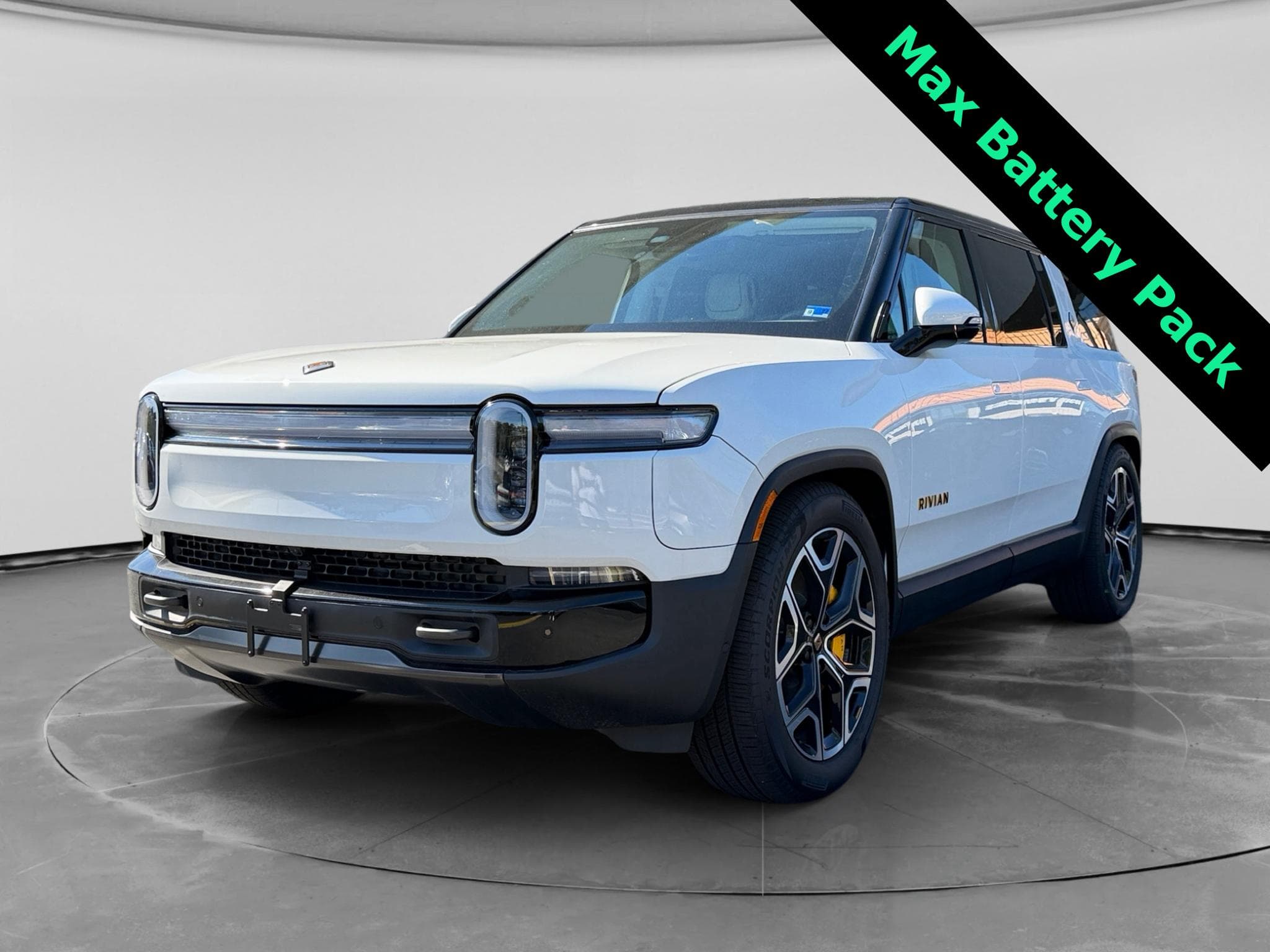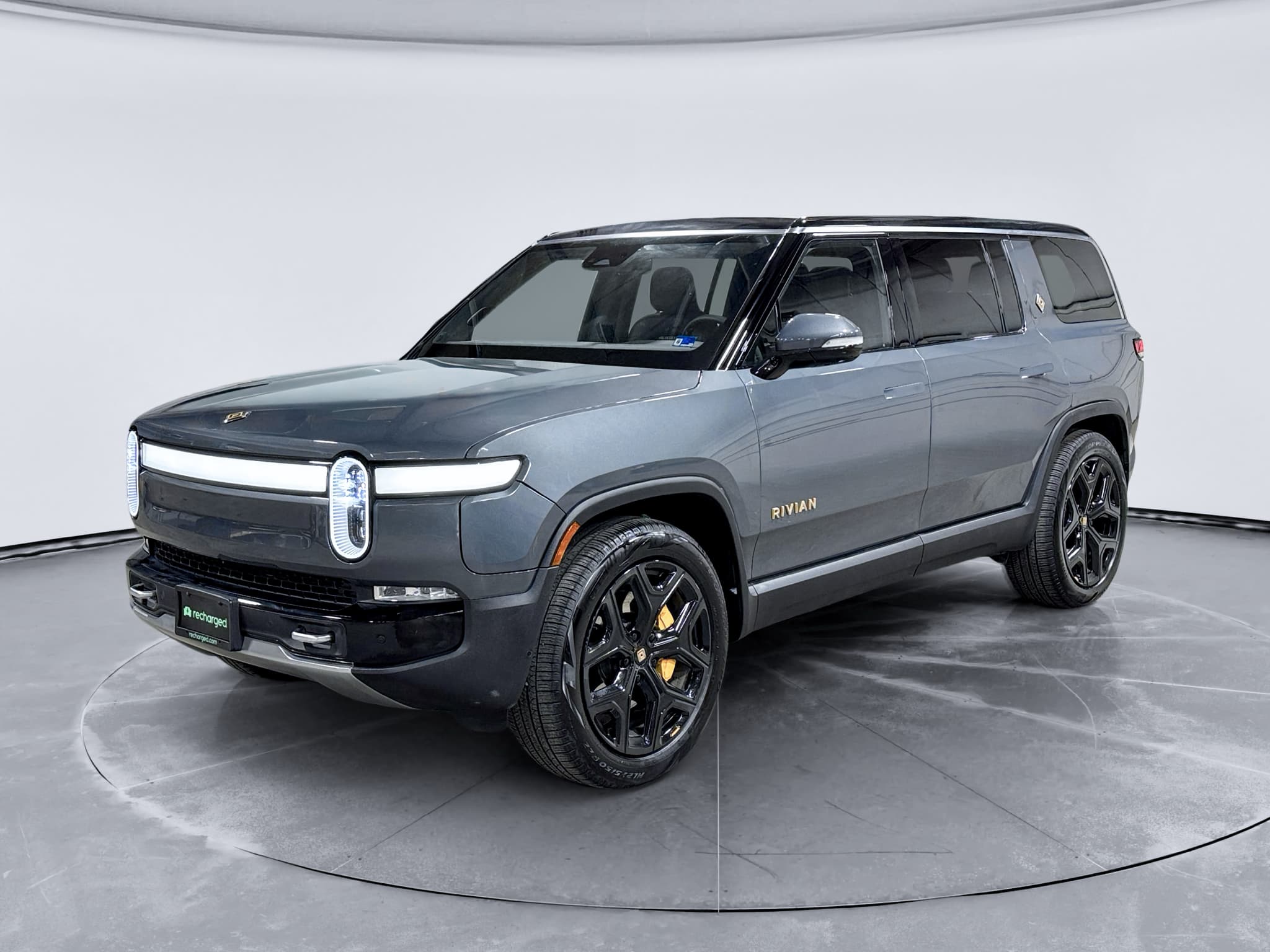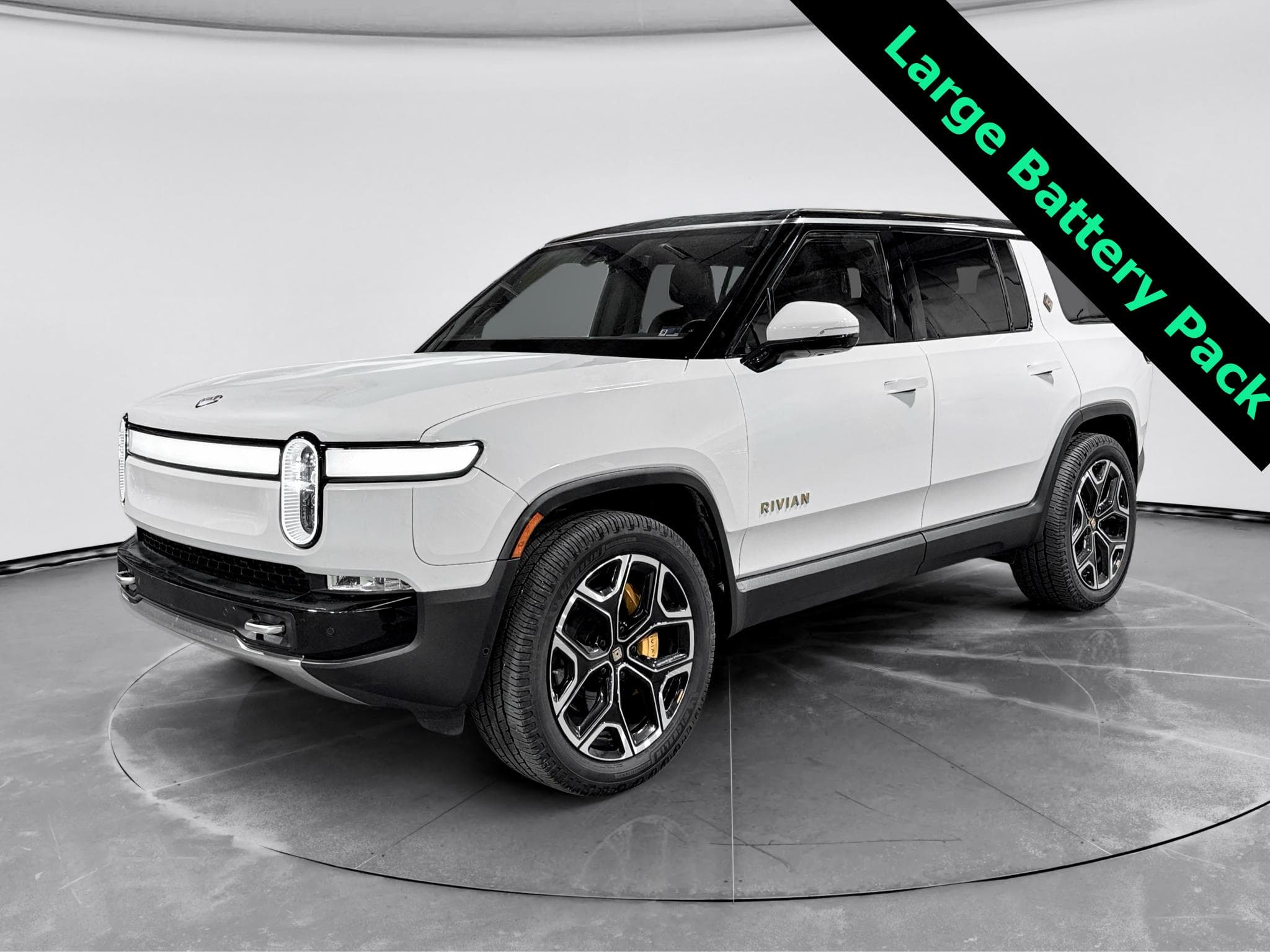
Treat the market median as a starting point rather than a universal value for every 2025 R1S. Battery configuration, motors, wheels, off-road hardware, premium equipment, condition, and mileage can produce materially different asking prices within the same model year. If you’re new to the process, start with this used-EV buying guide so you can compare the full vehicle rather than focusing on age alone.
What Recharged’s current listings say
Recharged’s current data puts the broad R1S market around a $61,998 median asking price. The matching snapshot covers 15 live listings, with an average asking price of $68,464 and a range from $55,997 to $98,998; a separate Recharged inventory feed contains 12 R1S vehicles priced from $55,997 to $67,998. These are asking prices across matching R1S listings, not completed sale prices and not a 2025-model-only valuation, so they establish the market’s boundaries without proving what one vehicle is worth.
Asking price is not transaction price
Recharged data
Used EV battery health
94%
avg remaining capacity
From Recharged battery inspections, not manufacturer estimates.
- Lowest
- 63%
- Median
- 95%
- Highest
- 100%
- Est. range
- 266 mi avg
- Cell balance pass
- 100%
- Quick charges
- 18 avg
- Slow charges
- 65 avg
Average cell imbalance: 7.3 mV
Based on vehicles Recharged tested
Recharged data
Used Rivian R1s prices at Recharged
$61,998
median list price
Current list prices for matching inventory at Recharged.
- Lowest
- $55,997
- Average
- $68,464
- Highest
- $98,998
Based on available listings
Every EV is battery-tested with a Recharged Score. Nationwide delivery.
Equipment creates major price differences
The exact R1S configuration can justify a different price even when two vehicles share the same model year. Recharged’s vehicle walkarounds show how Max-battery, All-Terrain, dual-motor, tri-motor, audio, and roof equipment can substantially change the ownership proposition. Ask for the original window sticker or a complete equipment record before comparing one R1S with another.
R1S equipment signals to check
Use these configuration details to make an apples-to-apples price comparison. Range figures and trade-offs can vary by complete build.
| Configuration signal | What it changes | Range effect | What to verify |
|---|---|---|---|
| Max battery | Largest offered pack | Wheel-dependent | Tested range |
| All-Terrain package | Off-road hardware | Can reduce range | Wheels and tires |
| Tri-motor setup | Three-motor build | Build-specific | Window sticker |
| Dynamic glass roof | Switchable privacy | Not stated | Full operation |
Equipment observed in 2025 R1S vehicles featured by the Recharged team.
Configuration matters because one featured 2025 dual-motor, Max-battery, All-Terrain R1S was described by the Recharged team as offering more than 400 miles of range. A different featured 2025 tri-motor California Dune vehicle with the Max battery and All-Terrain package was described as having just under 330 miles, with the off-road package reducing that build’s stated range by about 42 miles. Those are examples from specific vehicles, not universal R1S range estimates, but they demonstrate why a model-year comparison alone is incomplete.
R1S buyers ask us about the battery, motor setup, all-terrain hardware, premium audio, and dynamic glass roof. Confirm the exact build before deciding whether its asking price makes sense.
How should battery health affect the price?
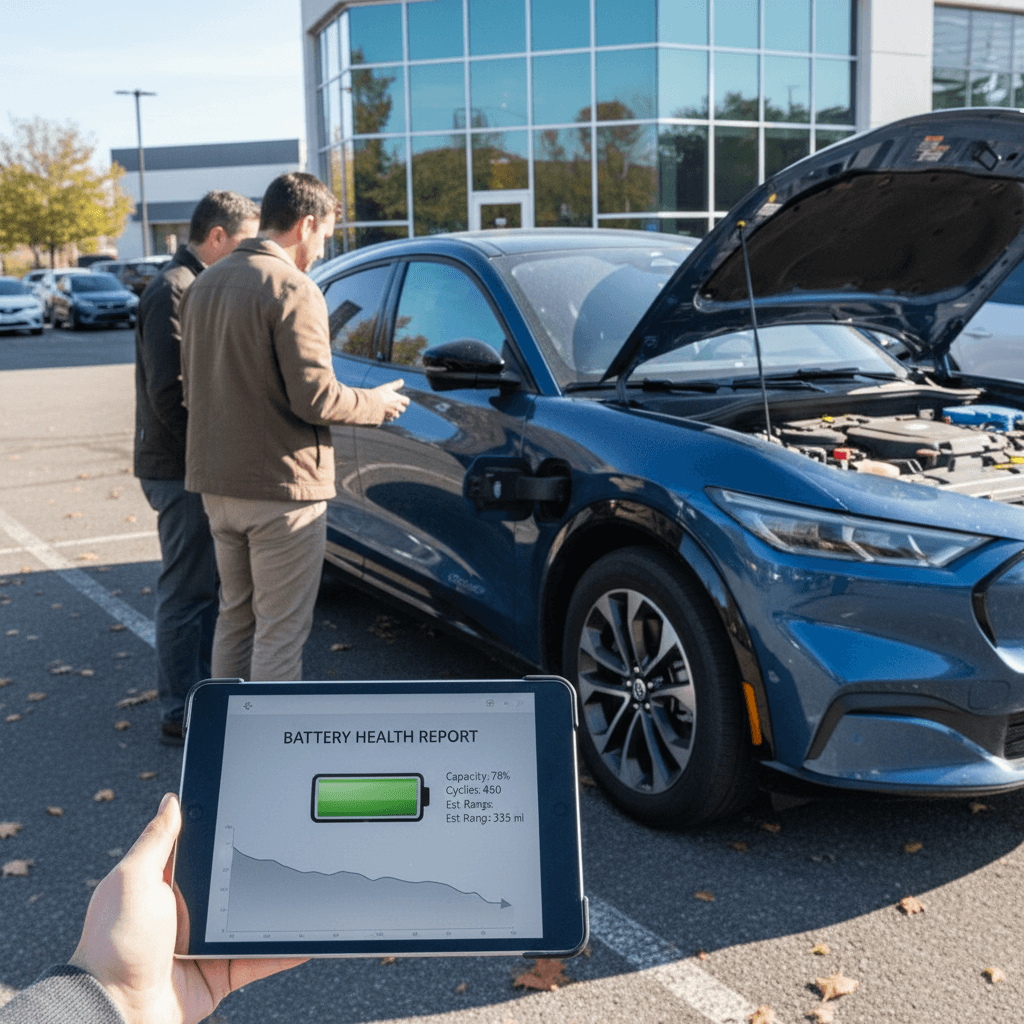
Verified battery health should support the price of a used R1S, while weak or missing diagnostics should give you a reason to investigate further. Across 2,242 EV battery diagnostics completed for Recharged Score inspections, tested remaining capacity averaged 93.9% of original capacity and the median was 94.9%. That is a broad EV-fleet benchmark rather than R1S-only data, so it must not be used to infer the condition of a particular Rivian.
For the vehicle you’re considering, look for tested remaining capacity and tested real-world range from that specific battery. Mileage can provide context, but it doesn’t measure the pack’s present condition by itself. Read more about how used-EV battery health is measured and compare the result with the price being requested.
What should you verify before agreeing to the price?
A fair offer should follow an inspection of the battery, equipment, condition, and ownership costs. The R1S’s complicated configuration mix makes documentation especially valuable because wheels, tires, battery size, motors, and option packages can alter both desirability and everyday range. Use this checklist alongside a complete used-EV inspection checklist.
Used Rivian R1S price checklist
Confirm the exact build
Match the motors, battery, wheels, interior, packages, and premium features against the window sticker or equipment record.
Review verified battery health
Use tested remaining capacity and tested real-world range from the specific vehicle, not a fleet average or dashboard estimate alone.
Inspect wheels and tires
Check tread, damage, tire type, and whether all-terrain equipment explains a range difference or future replacement cost.
Test premium equipment
Operate the glass roof, audio system, displays, seats, charging equipment, and other options included in the asking price.
Compare like with like
Benchmark the vehicle against R1S listings with similar age, mileage, battery, motors, wheels, equipment, and condition.
Check charging accessories
Confirm which adapters, cables, crossbars, spare tire equipment, compressor, or recovery accessories are included.
Negotiate the vehicle, not the median
Your negotiation should begin with comparable R1S vehicles and then adjust for the specific vehicle’s strengths and shortcomings. A price near $61,998 may be reasonable for one build and poor value for another because Recharged’s median combines different model years, configurations, mileages, and conditions. Use missing battery diagnostics, worn tires, cosmetic damage, incomplete accessories, or absent equipment documentation as reasons to pause or request a price adjustment, not as proof of an arbitrary discount.
A higher asking price needs a clear explanation, such as a more desirable configuration, lower mileage, exceptional condition, or valuable equipment. Recharged’s current top asking price of $98,998 shows how far premium listings can sit above the median, but an asking price by itself doesn’t prove the premium is justified. If you need financing, compare the full amount financed and monthly obligation rather than evaluating the sticker price in isolation.
Don’t include an expired federal credit
Instant offer, trade-in, or consignment. Pickup available.
Frequently asked questions
The bottom line on a fair R1S price
A fair price for a used 2025 R1S is one supported by comparable listings, the exact configuration, verified battery health, and the vehicle’s actual condition. Recharged’s $61,998 median asking price gives you a defensible market anchor, while the $55,997-to-$98,998 listing range shows why one number cannot value every R1S. Compare equivalent builds, insist on battery diagnostics and equipment documentation, and be prepared to walk away when a premium asking price lacks evidence.