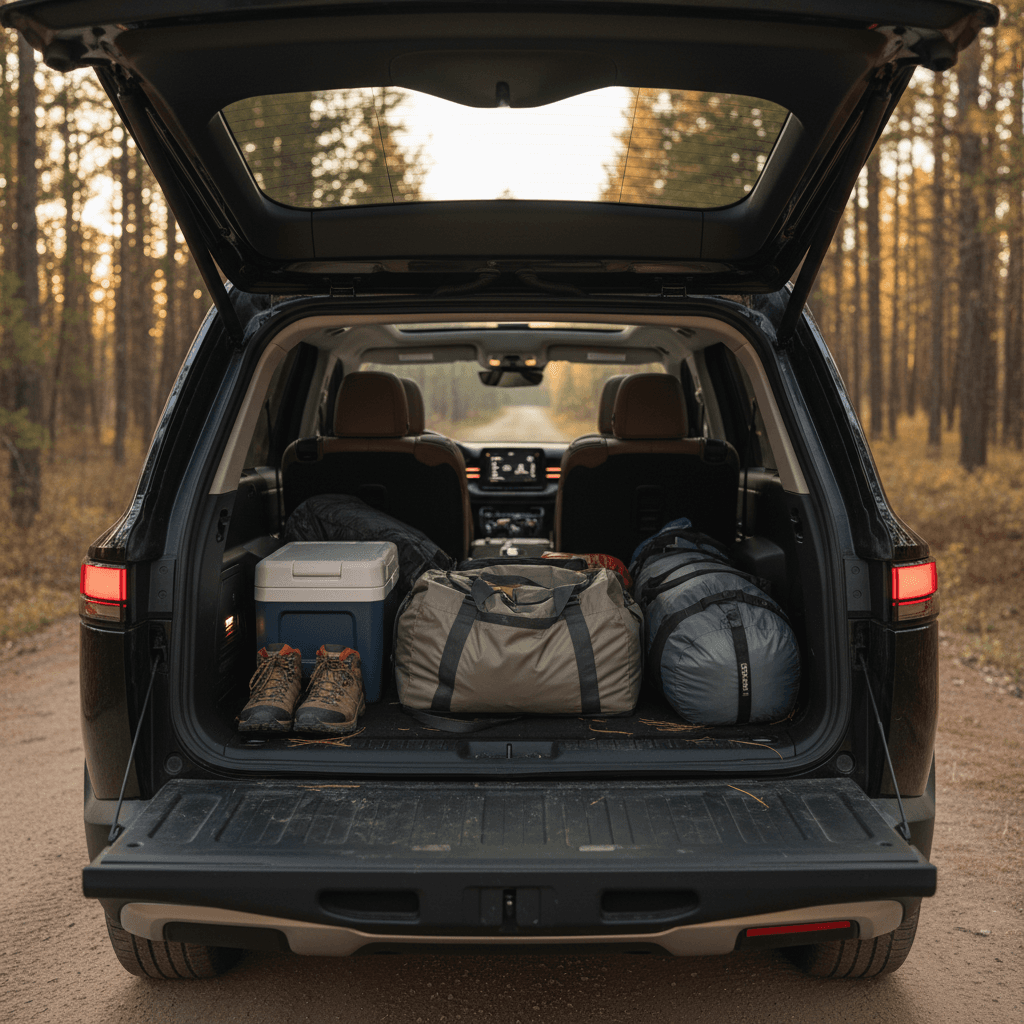
If you’re eyeing a Rivian R1S, you’re probably wondering how much you can actually haul once you fold everything flat. On paper the Rivian R1S cargo space with seats down looks generous, but the real question is whether it can handle your strollers, dogs, skis, Costco runs, or camping gear. Let’s break down the numbers and translate them into real-world use.
Why cargo space matters more in EVs
Rivian R1S cargo space at a glance
Key Rivian R1S cargo numbers
The R1S doesn’t publish cargo specs as loudly as some mainstream brands, and early numbers have bounced around depending on how space is measured. What matters more than a single cubic-foot figure is how the flat load floor, underfloor bin, and tall roofline work together once the second and third rows are dropped.
Exact Rivian R1S cargo space with seats down
Cargo specs can vary slightly by source and how they measure (to the ceiling vs. window line), but owners and testing have converged on some realistic numbers for the Rivian R1S cargo space with seats down. Think of these as working figures, not lab-perfect specs:
Rivian R1S cargo space by seating position
Approximate cargo volumes for common R1S configurations. Actual usable volume depends on how high you stack items and whether you use the underfloor bin.
| Configuration | Rows in Use | Approx. Cargo Volume | What This Setup Suits Best |
|---|---|---|---|
| All seats up | 1st, 2nd, 3rd | 17–18 ft³ | School runs, grocery trips, airport drop-offs with 6–7 passengers. |
| 3rd row folded | 1st, 2nd | 45–50 ft³ | Family road trips for 4–5, big shopping hauls, bulky gear. |
| 2nd & 3rd rows folded | 1st only | 90–104 ft³ | Camping builds, bikes, skis, flat-pack furniture, moving larger items. |
Cargo figures rounded to whole cubic feet for easier comparison.
Specs vs. reality
What actually fits in an R1S with seats folded
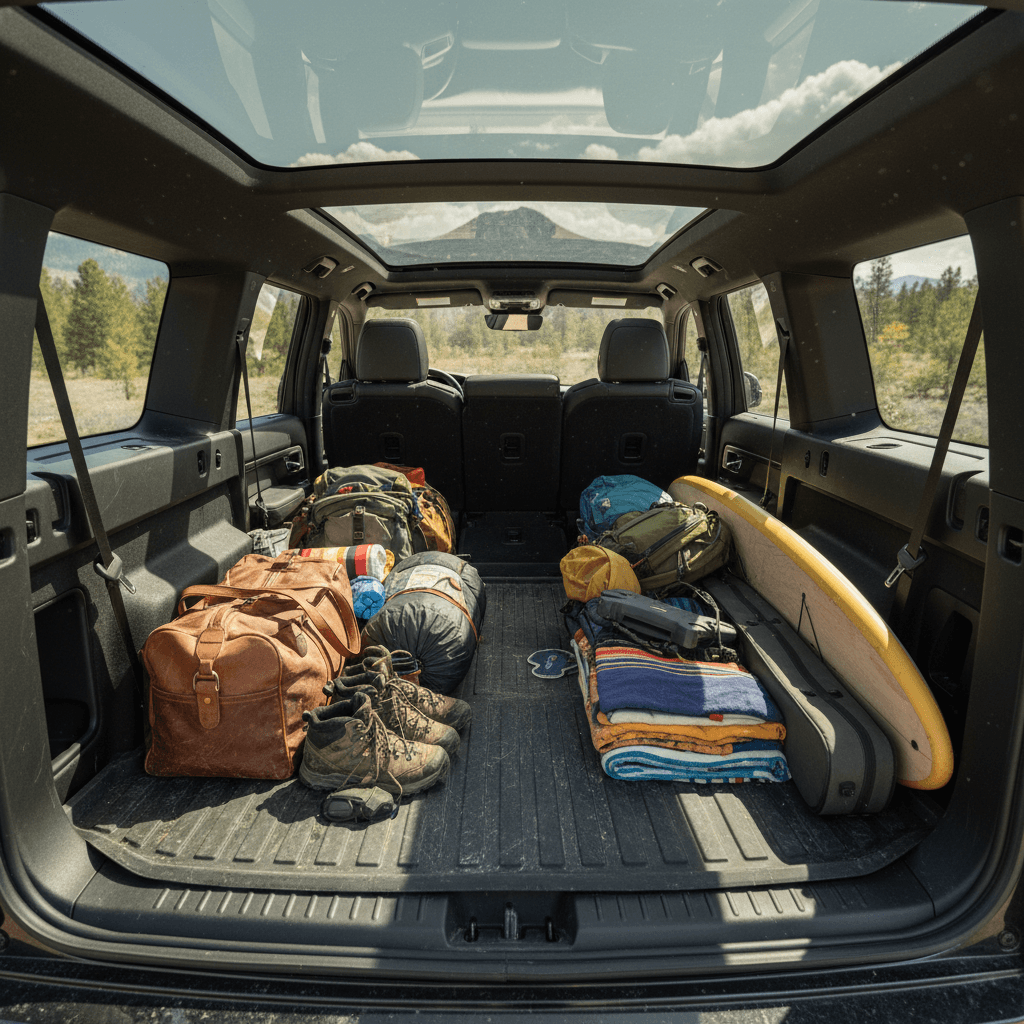
Numbers are helpful, but you shop with gear, not cubic feet. Here’s what owners typically fit when they drop both rear rows in the R1S.
Real-world use cases: R1S with seats down
How the space translates into daily life
Weekend camping setup
- 2–3 full-size camping bins
- 2 coolers plus camp kitchen tote
- 2 inflatable mattresses or a platform bed
- Still room left for duffels and a dog bed
Bikes and sports gear
- 2 adult bikes with front wheels off (inside)
- Or 1 large bike plus multiple kids’ bikes
- Skis/snowboards up to ~190 cm diagonally
- Hockey bags, golf clubs, and ball sports gear
DIY and moving days
- Flat-pack furniture boxes from IKEA-style runs
- Standard 6-foot folding tables
- Multiple 27-gallon storage totes stacked
- Small dressers or chairs with careful loading
Measure your non-negotiables
Cargo room in every R1S seating configuration
The R1S shines because you can treat it as a seven-seat people mover one day and a cargo van the next. Understanding the trade-offs between each seating configuration will tell you which layout you’ll use most.
All three rows up
With all seats raised, the R1S offers a compact cargo bay behind the third row, enough for:
- 2–3 medium suitcases or carry-ons stacked
- Groceries for a family week
- A compact stroller or foldable wagon (on its side)
This is its most limited configuration, similar to many three-row SUVs. If you regularly carry six or seven people plus large luggage, you’ll want a roof box or hitch rack.
Third row down, second row up
This is the sweet spot for many families. You get:
- Plenty of space for a large stroller or two
- Luggage for four or five adults
- Bulk Costco or Home Depot runs
You still seat five, but the R1S feels more like a traditional two-row SUV inside with a big cargo hold.
One side of the third row down
If you regularly haul skis or long items, drop just one third-row seat. You’ll:
- Keep six-seat capacity
- Gain a long load-through channel for skis or boards
- Still have room for duffels and backpacks alongside
Second and third rows down
This is where the R1S becomes a cargo hauler:
- Flat, long load floor for sleeping platforms or bike storage
- Easier loading than many body-on-frame SUVs
- Extra security with the cargo hidden in a tall, enclosed cabin
If you’re coming from a pickup, know that you lose vertical height versus an open bed, but gain weather protection and security.
Packing tips to make the most of R1S cargo space
Even with a generous footprint, smart packing can make the Rivian R1S feel bigger than its raw numbers suggest. These tips come from EV owners who road-trip and camp regularly.
Smart R1S cargo strategies
1. Use stackable bins, not soft bags
Hard-sided bins maximize the flat load floor and let you stack to the roofline without crushing gear. Label them by function, kitchen, clothes, tools, to speed up loading and unloading.
2. Reserve underfloor space for dense items
The deep underfloor compartment is ideal for heavy or rarely used gear: tools, leveling blocks, tow straps, charging adapters, and emergency kits. It keeps weight low and the cabin uncluttered.
3. Protect the seatbacks
If you’re often sliding boxes or sports gear in with the second and third rows folded, invest in a cargo liner that covers the seatbacks. It prevents scuffs and helps resale value if you ever sell or trade in.
4. Think vertical, not just horizontal
The R1S has a tall cabin, so don’t be afraid to stack within reason. Use compression straps or cargo nets to keep tall loads from shifting under hard braking.
5. Balance payload with range
Remember that extra weight cuts into range. Before a long trip, remove anything you don’t truly need, old gear, unused bins, or seasonal items that just live in the back by habit.
6. Combine cargo space with roof or hitch options
For max flexibility, pair the folded interior with a roof box for lighter, bulky items or a hitch rack for bikes. That way, you preserve interior comfort and keep messy gear outside.
Where Recharged fits in
Ready to find your next EV?
Browse VehiclesRivian R1S cargo space vs other 3-row EVs
On paper, some rivals may quote slightly larger numbers, but the R1S counters with a tall, squared-off rear opening and a genuinely flat load floor. Here’s how its cargo story compares to typical three-row EVs and plug-in SUVs you may also be cross-shopping.
How the R1S stacks up
Cargo trade-offs in the current EV SUV market
Versus Tesla Model X
The Model X often posts competitive or slightly higher cargo volumes, especially behind the second row. But:
- Its sloping roofline can limit tall boxes and camping bins.
- Falcon Wing doors are great for passengers, not for roof boxes.
If you haul tall or boxy cargo often, the R1S shape may work better.
Versus Kia EV9
The EV9 is one of the most practical family EVs on sale, with:
- Excellent third-row access
- Strong cargo volume behind rows 2 and 3
However, the R1S offers more off-road focus and a more rugged cabin feel, which can matter if your cargo is more camping gear than car seats.
Versus plug-in SUVs
Versus plug-in hybrids like the Volvo XC90 Recharge or Jeep Grand Cherokee 4xe, the R1S:
- Usually matches or beats total cargo volume
- Adds a front trunk (frunk) for extra storage
- Eliminates exhaust and fuel smells from shared cargo areas
Don’t forget the frunk
What to check on a used Rivian R1S
If you’re considering a used R1S, where the value equation can get especially interesting, cargo space isn’t just about dimensions. It’s also about condition and functionality.
- Check that all seatbacks fold and latch smoothly, without binding or uneven gaps.
- Inspect the cargo floor, plastics, and trim for heavy gouges that might suggest commercial-style use.
- Verify that the underfloor compartment opens and closes properly and isn’t cracked or water-stained.
- Look for lingering odors (smoke, pets, mildew) that can be amplified in a sealed EV cabin.
- Confirm the power tailgate operates correctly and seals tightly to avoid water intrusion around cargo.
Why this matters on an EV
Every EV listed on Recharged includes a Recharged Score Report with verified battery health, fair market pricing, and a clear condition overview. That way, you’re not just guessing whether the R1S looks good in photos, you’re seeing how it’s actually been used and how much useful life is left in the pack.
Rivian R1S cargo space FAQ
Frequently asked questions about R1S cargo space
Bottom line: Is R1S cargo space enough for you?
If you want a three-row electric SUV that can haul real-world gear, not just look good in photos, the Rivian R1S makes a strong case. With both rear rows folded, the Rivian R1S cargo space with seats down turns the cabin into a flexible, flat-floored cargo bay that’s ready for camping, DIY projects, or kid-hauling duty. Behind the second row it behaves like a capable two-row SUV, and even with all seats up it still handles everyday errands.
The key is to be honest about how often you’ll use each configuration and what your must-carry items are. Measure your biggest gear, compare it to the R1S’s space, and factor in the frunk, roof, or hitch options. If you’re looking at a used R1S, Recharged can help you pair those practicality questions with hard data on battery health, pricing, and overall condition, so you end up with an EV that fits both your lifestyle and your budget.