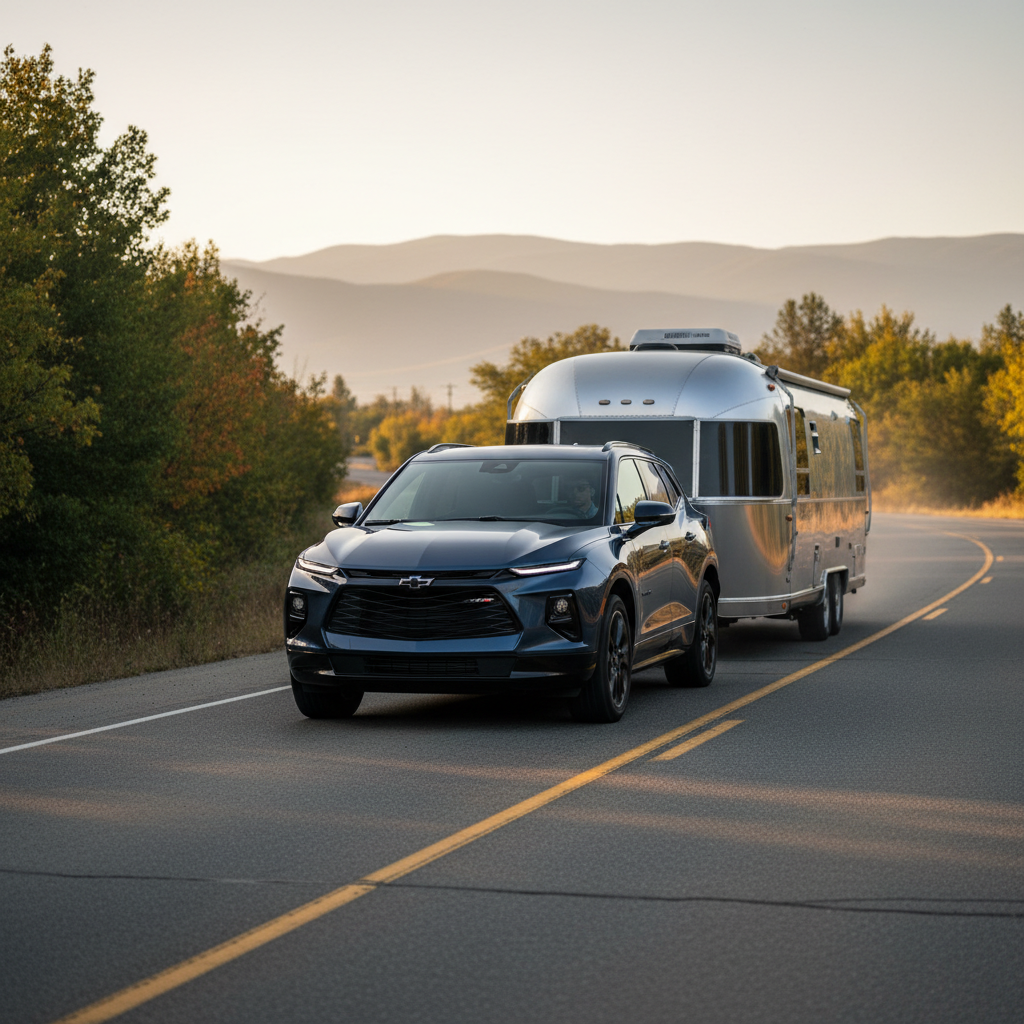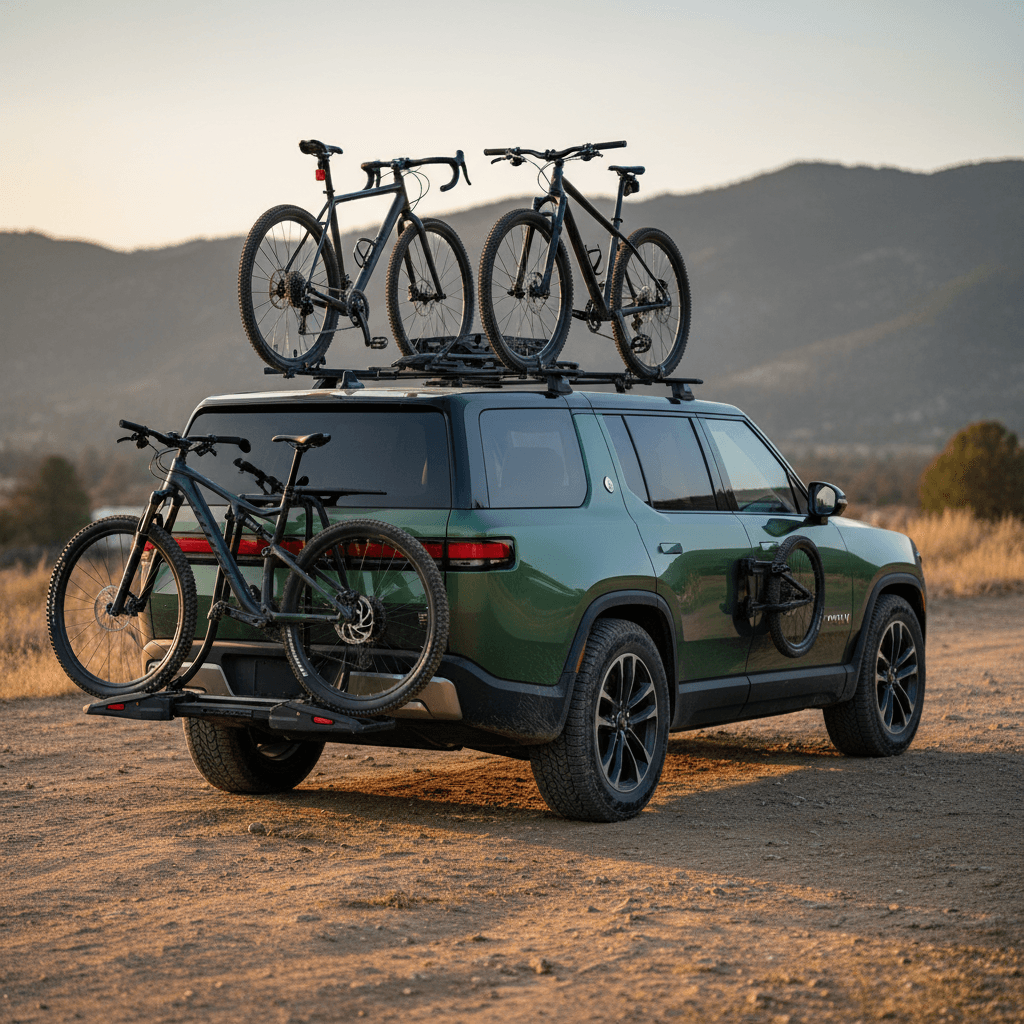
If you bought a Rivian R1S to haul bikes to trailheads, you’re in good company. With a factory 2-inch Class IV hitch, stout roof structure and plenty of aftermarket support, there are now more Rivian R1S bike rack options than most owners expect. The catch: the R1S has some unique quirks, like a recessed hitch and tall roof, that make fitment and usability a little different from a conventional SUV.
Quick take
Rivian R1S bike rack basics
Before you start shopping specific racks, it helps to understand the hardware Rivian builds into every R1S and how that affects your choices.
- Hitch receiver: All modern R1S models ship with an integrated 2-inch Class IV receiver tucked behind a panel in the rear bumper. That means you can run almost any 2-inch hitch bike rack intended for full-size SUVs and trucks.
- Roof structure: The R1S roof is designed for adventure gear. With appropriate crossbars or a platform rack, you can safely mount multiple fork- or wheel-mount bike trays on top.
- High ride height: Ground clearance is generous, which is great off-road but puts the hitch higher than on many crossovers. That can affect loading angles and swing-away clearance for some racks.
- Weight and battery considerations: Extra bikes and racks add weight and aerodynamic drag, which can trim range. Planning for that upfront avoids surprises on longer trips.
Watch the recessed hitch
Hitch bike racks for the Rivian R1S
For most owners, a hitch rack is the simplest way to carry bikes on a Rivian R1S. You keep muddy frames away from the cabin, loading is easy, and you preserve most of your roof for cargo boxes or kayaks.
Common hitch rack styles for R1S owners
Each style has strengths and tradeoffs depending on your bikes and how often you haul them.
Platform (tray) racks
Best overall for the R1S. Bikes sit in wheel trays and are secured by arms at the tires or downtube.
- Easy loading, especially with heavy e‑MTBs.
- Stable at highway speeds and on rough roads.
- Many offer add-on trays to grow from 2 to 4 bikes.
Hanging (mast) racks
Traditional “hanging” style where bikes dangle from the top tube.
- Lighter and often cheaper.
- Can carry 3–5 bikes, but frames contact each other.
- Not ideal for carbon frames or mixed frame shapes.
Swing-away & tilt racks
Subcategory of platform or hanging racks with extra articulation.
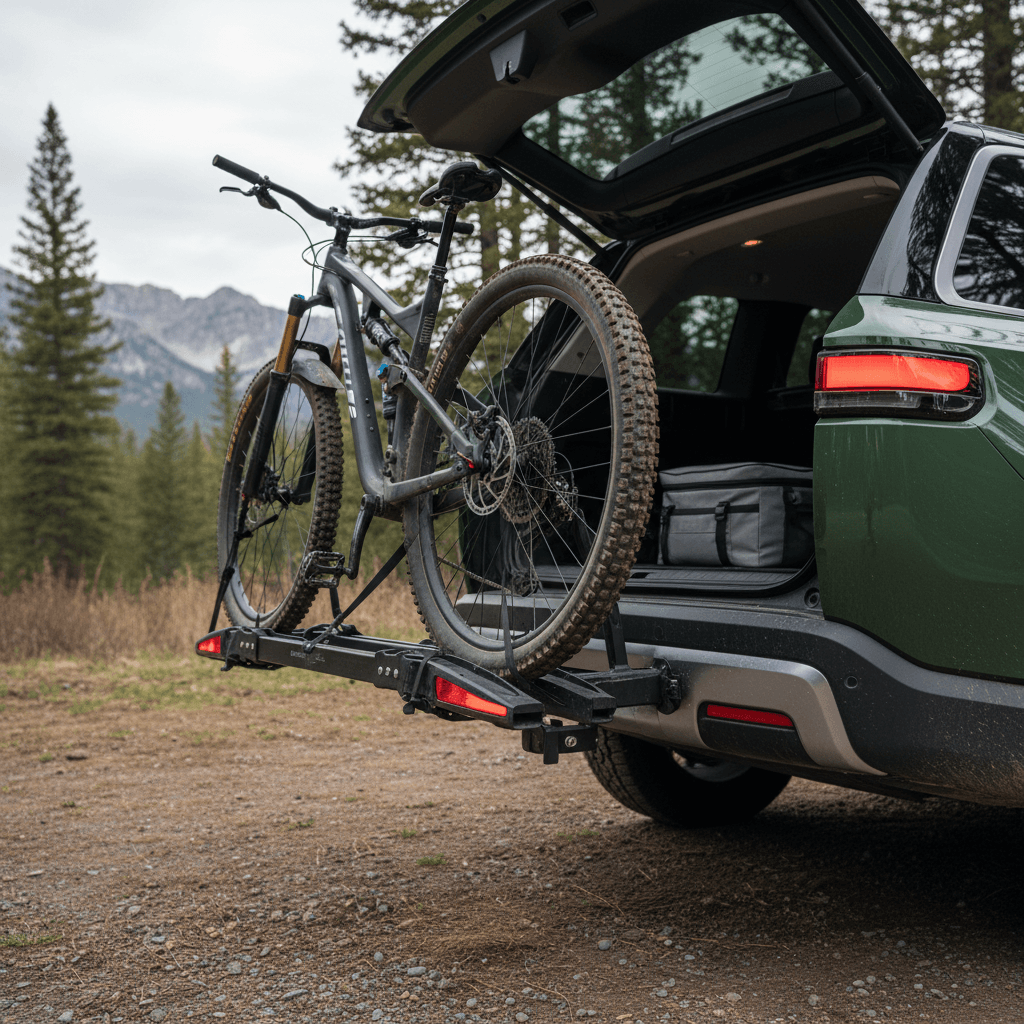
- Tilting lets you open the split tailgate on the R1S.
- Swing-away arms move the whole rack clear of the rear hatch.
- Perfect if you’re in and out of the cargo area constantly.
Because the R1S hitch is integrated and strong, you don’t need a special “EV” bike rack. You’re mainly looking for a 2-inch rack that clears the bumper, tilts or swings enough for the split tailgate, and matches the weight of your bikes.
Typical hitch rack fitment considerations on an R1S
What to check when evaluating a hitch-mounted bike rack for your Rivian.
| Factor | Why it matters on R1S | What to look for |
|---|---|---|
| Shank length | Short shanks may hit the recessed bumper trim before fully inserting. | Prefer racks with a longer straight section before the first bend, or use a quality hitch extender if needed. |
| Clearance to bumper | Some racks sit close enough to brush the plastic under load or over bumps. | With bikes loaded, bounce the rack and confirm there’s space between rack structure and bumper. |
| Tilt / swing mechanism | You’ll want access to the split tailgate and cargo area. | Look for tilt or swing features rated for the full rack + bike weight. |
| E‑bike rating | Many Rivian owners haul heavy e‑MTBs. | Check per‑bike weight rating; 60–80 lb per slot is common for e‑bike–ready racks. |
| Hitch size | The R1S uses a 2" Class IV receiver. | Avoid racks that are 1.25" only; 1.25"–to–2" adapters add flex. |
Always confirm exact measurements with the rack manufacturer; R1S dimensions and hitch height can vary slightly by model year and suspension setting.
Tip for minimizing bumper contact
Roof bike racks and crossbar options
If you already tow a trailer, want your rear camera unobstructed, or simply prefer a clean tailgate, a roof system can turn the R1S into a serious bike hauler. The key is starting with the right crossbars or platform rack.
Roof bike rack paths for Rivian R1S owners
You’ll choose crossbars or a full platform, then add fork- or wheel-mount trays.
Factory-style cargo crossbars
Rivian sells lockable cargo crossbars that drop into the four roof mounting points on the R1S. Several third-party companies offer similar crossbars sized specifically for Rivian.
- Clean look and relatively quiet if you leave them on.
- Work with most Thule, Yakima and 1Up bike trays using T-slot or clamp mounts.
- Good choice if you only haul 1–3 bikes a few times per month.
Full platform racks
Aftermarket platforms, such as expedition-style racks designed for the R1S, spread load across more crossbars and offer abundant mounting points.
- Great if you mix bikes with roof tents, boxes or recovery gear.
- Often rated for higher dynamic loads than simple crossbars.
- Typically a bit heavier and may add more wind noise.
Once you have bars or a platform, you can bolt on roof-mount bike trays. Wheel-hold designs that clamp only the tires are friendly to carbon frames, while fork-mount trays keep overall height down, helpful on an already-tall R1S.
Mind the overall height
OEM vs. aftermarket racks on the R1S
Rivian-branded (OEM) solutions
Rivian’s own accessories, like cargo crossbars and the branded rooftop bike mounts sold through the Gear Shop, are engineered specifically for the R1S roof and mounting points.
- Fit and finish match the vehicle perfectly.
- Weight ratings are validated with Rivian’s roof structure.
- Instructions assume you’re working with Rivian’s mounting system, which keeps install straightforward.
If you prefer a factory look and primarily carry 1–2 bikes, OEM-style crossbars plus compatible trays are a hassle-free route.
Aftermarket racks and crossbars
The R1S has quickly attracted attention from rack makers, and there are now multiple third-party crossbars, roof platforms and hitch racks that owners are successfully running.
- More price points and configurations, from minimalist bars to full expedition racks.
- Ability to tailor tray count, e‑bike capacity, swing-away arms and integrated locks.
- Some brands now offer Rivian‑specific fit kits that drop right into the factory mounting points.
The tradeoff is that you’re responsible for confirming load ratings and clearances for your exact configuration.
Compatibility rule of thumb
How many bikes can an R1S safely carry?
Typical real-world bike capacity on a Rivian R1S
On paper, the R1S chassis, hitch and roof structure can support significant loads. In practice, your safe number of bikes is limited by the rack’s rating and how you distribute weight.
- Hitch racks: Many heavy-duty platform racks are rated for two 60–80 lb bikes (e‑MTBs) or up to four lighter analog bikes. If you’re mixing e‑bikes and kids’ bikes, put the heaviest bikes closest to the vehicle.
- Roof systems: The limiting factor is usually the dynamic roof load rating for your crossbars or platform, combined with rack + bike weight. Two modern mountain bikes on quality trays are straightforward; three is usually fine if you use lighter trays and bikes.
- Inside the R1S: For solo trips or bad weather, you can fold the third row and slide a bike or two inside with the front wheels removed. It’s not a rack, but it’s another tool in your kit.
Don’t exceed the weakest link
Installation and fitment tips specific to the R1S
Pre-trip checklist when mounting a bike rack on your R1S
1. Test-fit with suspension at "Standard" height
Because the R1S suspension is adjustable, a rack that clears in one ride mode might be closer to the ground or bumper in another. Test-fit your rack with the vehicle in a typical driving mode and again in its lowest setting to confirm bumper and ground clearance.
2. Confirm hatch and tailgate access
Load bikes, then practice opening the split tailgate, glass hatch and lower door. On tilting racks, be sure you can still tilt the loaded rack far enough to access the cargo area without hitting pedals or handlebars on the ground.
3. Protect the bumper plastics
If any part of the rack comes close to the glossy lower bumper trim, consider adding a thin protective film or clear tape. It’s cheap insurance against rub marks over rough roads.
4. Tighten hitch and crossbar hardware correctly
The R1S is quiet enough that you’ll hear and feel rattles. Use anti-rattle devices on hitch racks and follow torque specs on roof crossbars so nothing loosens over time.
5. Watch camera and sensor blockage
Hitch racks with tall center masts and roof bikes hanging off the back can partially block the rear camera or some parking sensors. Know what’s obscured and rely more on mirrors when needed.
6. Re-check after the first drive
After 10–20 miles, stop and re-check all straps, clamps and bolts. New racks often settle slightly into the hitch or crossbar channels on the first trip.
Store crossbars when you’re not using them
How to choose the right Rivian R1S bike rack
Choosing among the many Rivian R1S bike rack options comes down to how often you ride, how heavy your bikes are, and how much you value rear access versus roof clearance. Use the grid below as a shortcut.
Match your rack to how you use your R1S
Start with your primary use case, then narrow down models and brands.
Trail riders & e‑MTB owners
- 2" platform hitch rack rated for at least 60 lb per tray.
- Tilt or swing-away feature to keep the split tailgate usable.
- Consider add-on trays if you regularly carry 3–4 bikes.
This setup keeps loading easy and weight low, which matters on rough fire roads.
Family road-trippers
- Hitch rack that fits 4 lighter bikes or a mix of kids’ and adult bikes.
- Optionally, 1–2 lighter bikes on the roof to free up rear visibility.
- Built-in locks and cable routing to secure everything at hotel stops.
Balance convenience with the reality that you’ll be loading and unloading often.
Urban & occasional riders
- Single or 2-bike platform or hanging rack that’s easy to remove.
- Factory or aftermarket crossbars with one low-profile tray if garage clearance allows.
- Focus on lighter racks that are simple to store in a small space.
You’re optimizing for low hassle and minimal daily impact on range and parking.
A simple decision rule
Frequently asked questions about R1S bike racks
Rivian R1S bike rack FAQs
Where a used R1S, and Recharged, fit into your adventure setup
If you’re still shopping for an R1S, it’s worth thinking about your bike-carry plan before you buy. A clean hitch receiver, undamaged bumper plastics and a straight, rust-free roof mounting system are small details that matter once you start bolting racks and trays on.
Every used electric SUV listed on Recharged comes with a Recharged Score Report, including verified battery health and fair-market pricing, plus EV‑specialist support that understands how you actually use a vehicle, whether that’s commuting or loading four enduro bikes for a weekend away. If you’re eyeing a used Rivian, our team can help you evaluate how a specific R1S will pair with the hitch or roof accessory setup you have in mind.
The bottom line: the Rivian R1S is an exceptionally capable bike hauler, but its recessed hitch, tall roof and split tailgate reward a bit of planning. Decide whether hitch or roof works better for your riding style, confirm clearances and weight ratings, and treat range as another dimension of trip planning. Do that, and your R1S stops being “just” an EV SUV and becomes the backbone of a purpose-built adventure system, one that can carry your bikes, your crew and your gear to just about any trailhead you care to reach.