If you own, or are eyeing, a Rivian R1S, you’ve probably heard scattered stories about Rivian R1S battery degradation: a few percent gone in the first months, vanishing rated miles after a software update, “vampire” drain while the truck sleeps. For a $70,000‑plus electric SUV, this stuff gets under your skin fast.
The short version
Rivian R1S battery degradation at a glance
R1S battery degradation: quick context
What Rivian promises: R1S battery warranty basics
Before you get lost in Reddit horror stories, anchor yourself to the one thing that actually has legal teeth: Rivian’s battery warranty. For the R1S, Rivian covers the high‑voltage battery pack for 8 years or 175,000 miles, whichever comes first, and guarantees at least 70% of original capacity during that window. If the pack falls below that threshold under normal use, Rivian is obligated to repair or replace it under warranty.
- Coverage follows the vehicle, not just the first owner, crucial if you’re buying used.
- The warranty includes the pack enclosure and internal components; high‑voltage cabling is generally covered under the comprehensive warranty window.
- Rivian defines the 70% threshold in terms of usable energy, not just the miles shown on your dash, so service uses deeper diagnostics than you can see in the app.
Don’t confuse range with warranty coverage
Real‑world Rivian R1S degradation: what owners are seeing
Because the R1S has only been on the road since late 2021, we’re still in the early years of its degradation story. But by now there are tens of thousands of trucks in the wild and patterns are starting to emerge in forums and owner reports.
Common R1S battery‑health stories from owners
Anecdotes aren’t data, but they rhyme
“Lost 3% in a few months”
Threads from 2025–2026 R1S owners describe about 3% apparent capacity drop in 3–4 months, for example, a dual‑motor Standard going from 270 miles at 100% to ~262.
That annualizes to ~9%, but battery aging isn’t linear. The first few percent are usually the fastest.
“Year‑old truck, ~5–7% down”
Several drivers report a 2025 R1S Dual Standard showing 233–250 miles at 100% after about a year, versus the original 270‑mile EPA rating.
Some of this is true degradation; some of it is the algorithm getting more honest about your driving and climate.
“Older packs, still near new”
Early‑build 2022–2023 R1T/R1S owners with 30k+ miles sometimes report little noticeable loss in usable range, especially if they mostly charge to 70–80% and avoid frequent DC fast charging.
That’s in line with broader EV data: well‑treated packs age slowly after the initial drop.
Anecdote vs. trend
Range loss vs true degradation: what’s actually happening?
1. The battery’s chemistry is aging
Real battery degradation is permanent loss of usable capacity in the lithium‑ion cells. You can’t get it back with a software update or a “good” drive. It shows up as:
- Lower kWh available from 100% to low SOC in a controlled test
- Consistently fewer miles driven per full charge under similar conditions
- Service‑level diagnostics showing reduced state of health (SoH)
2. The software is changing its mind about you
Your R1S doesn’t actually know the future, it guesses. The range number on the dash is a blend of:
- Recent driving style (75–80 mph vs 60 mph)
- Temperature and climate control use
- Tire type and wheel size
- Software updates and Rivian’s changing assumptions
That’s why you can see range drop 10–15% overnight with a firmware update, or gain some back, without any real change in the battery.
A simple home sanity check
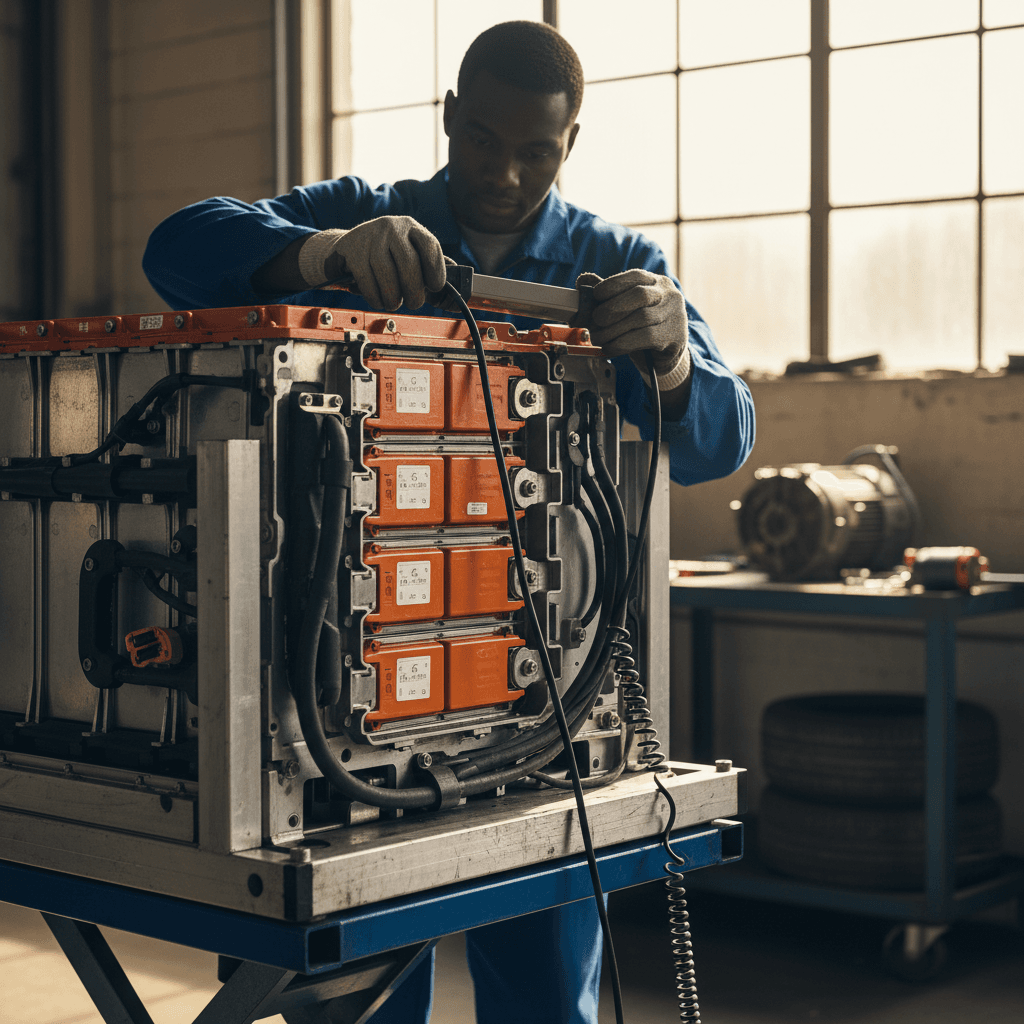
What actually causes R1S battery degradation?
The R1S uses large, liquid‑cooled lithium‑ion packs similar to Tesla, Hyundai, and others. The physics are the same, which is good news: we have a decade of data on what hurts and what doesn’t. The Rivian twist is how heavy the truck is, how fast it tends to be driven, and how often owners lean on DC fast charging for road trips.
Major drivers of Rivian R1S battery degradation
What actually moves the needle on long‑term battery health.
| Factor | Impact on degradation | Examples in R1S life |
|---|---|---|
| High state of charge (SoC) | High | Parking at 90–100% every night, leaving it full for days, topping off to 100% “just in case” and not driving. |
| Deep discharges | Medium–High | Frequently running down below ~5–10% before charging, especially in hot weather. |
| DC fast charging | Medium | Weekly 200–350 kW fast‑charge sessions on road‑trip corridors; arriving hot and near‑empty, then charging to very high SoC. |
| Heat | Medium–High | Parking outside in summer sun at high SoC; long, heavy‑towing pulls in 100°F heat. |
| Cold | Low–Medium | Cold slows chemistry and hurts range in the moment; long‑term degradation impact is smaller but not zero. |
| Time | Inevitable | Even a pampered pack will slowly lose capacity simply because calendar aging never fully stops. |
Think of these as volume knobs, not light switches, each one can push your pack toward or away from Rivian’s 70% warranty floor.
How to slow battery degradation in your Rivian R1S
Everyday habits that keep your R1S pack healthy
1. Live between ~20% and 80% most days
Use the charge limit slider so your R1S stops around 70–80% for daily driving. Think of 100% as a road‑trip or mountain‑day tool, not Tuesday.
2. Save 100% charges for departure time
If you need the full pack, schedule charging so it finishes near the moment you leave. Staying at 100% for 10 minutes is fine; staying there all weekend isn’t.
3. Don’t fear DC fast charging, just be smart
Occasional fast charging won’t wreck the pack. Try to arrive with 10–30% remaining, charge to what you need plus a buffer (often 70–85%), and then roll.
4. Watch heat, especially at high SoC
On very hot days, avoid parking at 90–100% in direct sun for hours. If you can’t, dropping the limit to 60–70% ahead of time helps more than you’d think.
5. Let the truck sleep
Disable always‑on features you don’t need, avoid constantly checking the app, and give the truck long, uninterrupted sleep windows so thermal management can work normally.
6. Keep software, and tires, sensible
Stay current on Rivian updates, but go easy on oversized off‑road tires unless you truly need them. Extra rolling resistance makes every kWh work harder.
The boring secret to long battery life
Phantom drain and storage: the silent battery killer
Rivian owners talk a lot about vampire drain, the slow, sometimes surprisingly fast, loss of charge while the truck sits parked. It doesn’t directly damage the pack, but it can push you into the risky low‑SoC zone or force unnecessary charging, which adds heat and wear.
How bad is R1S phantom drain, really?
Real stories, and what they mean for you
Mild drain: 1% over three weeks
One Gen‑1 R1S owner documented just 1% loss over 21 days by hooking a 12V battery maintainer to the truck and turning off most connected features. That’s about as good as it gets for a modern EV with frequent OTA updates.
Annoying drain: 1–2% per day
Plenty of owners see ~2% per 24 hours in normal “parked in the garage” scenarios, often 7–10% over a week at the airport with Guardian/gear‑guard features left on.
It’s not a sign of a dying pack. It’s software, telematics and thermal management nibbling away in the background.
Set up a low‑stress storage mode
Cold weather, highway speeds and why your range suddenly shrinks
Some of the loudest “my Rivian battery is terrible” posts come from new owners doing a fast winter highway run and watching the state of charge plunge like a stock chart. That’s brutal, but it’s not the same as long‑term degradation.
Cold weather reality
- Cold slows the chemistry, so you can’t pull as much energy out of the pack.
- Cabin heat is expensive at low speeds; the less waste heat the motors generate, the more you spend on comfort.
- Your R1S will often show lower rated miles at 100% in deep winter simply because it knows the coming drive is costly.
Highway + boxy SUV = physics
- The R1S is tall, heavy and not remotely shaped like a Prius.
- Above ~65 mph, aero drag skyrockets; 75–80 mph can easily cost you 20–30% more energy than 60 mph.
- So a 25‑mile 70‑mph airport run that eats 20+% battery isn’t “degradation”, it’s the truck telling you what highway air resistance costs.
When cold‑weather behavior is worth a service visit
Buying a used Rivian R1S? Battery‑health checklist
If you’re shopping used, Rivian R1S battery degradation isn’t just a nerdy curiosity, it’s the single biggest swing factor in how the truck will feel to live with five years from now. The catch: the dash gives you only a rough guess, and private‑party listings rarely mention state of health at all.
Used R1S battery‑health checks you should always do
1. Verify how much warranty is left
Confirm in writing the in‑service date and current mileage. You want to know exactly how many years and miles remain on that 8‑year/175,000‑mile battery coverage window.
2. Compare displayed range with original spec
Look at the 100% range estimate and compare it to the original EPA rating for that pack and wheel combo. A 2025 Dual Standard that now shows 233 miles at 100% has lost about 14% on paper, but remember, software and winter can easily account for half of that.
3. Ask about charging and use patterns
A highway‑commuter truck that lived between 30–70% on home Level 2 is likely in better shape than an otherwise‑identical R1S that spent life at 95% in Phoenix, living on DC fast charging and constant long‑distance towing.
4. Look for warning lights and charge quirks
During a pre‑purchase test, note any “battery” or “drive system” alerts, slow or failed DC fast‑charging attempts, or the truck refusing to charge to the requested limit. Those can be early signs of pack or BMS issues.
5. Get a real battery‑health report, not just vibes
Whenever you can, insist on third‑party or platform‑provided battery diagnostics instead of trusting a screenshot of the dash. That’s exactly why <strong>Recharged</strong> includes a full Recharged Score with verified battery health on every R1S we list.
How Recharged de‑risks used R1S shopping
How Recharged measures R1S battery health differently from the dash
A Rivian’s on‑screen range estimate is like a weather forecast: useful, but not how a serious buyer evaluates the climate. When we inspect an R1S, we’re less interested in the number next to the battery icon and more interested in the underlying pack behavior.
Deeper battery diagnostics
Where possible, we pull data that approximates state of health (SoH), how much usable energy the pack still holds relative to new, rather than just the EPA‑adjusted miles shown on the cluster.
Charging & temperature history
We look at how the truck has lived: fast‑charge vs home charging mix, climate, long‑term storage habits. A 5%‑down pack from a cold‑weather commuter life can be far healthier than a similar‑looking pack from a desert fast‑charge workhorse.
Range reality, not brochure math
Our specialists translate battery health into realistic range expectations at highway speeds and in different seasons, so you know whether the R1S you’re buying can comfortably handle your commute or road‑trip pattern.
You don’t need to become a battery engineer
FAQ: Rivian R1S battery degradation
Frequently asked questions about R1S battery degradation
Bottom line: should you worry about R1S battery degradation?
If you zoom out from the scariest forum threads, the Rivian R1S story looks a lot like the rest of the modern EV world: a noticeable early drop as the software calibrates and the chemistry “settles in,” followed by a long, slow fade that most owners will never drive far enough to truly notice, especially under an 8‑year/175,000‑mile, 70%‑capacity warranty umbrella.
Where things go sideways is less about some fatal flaw in Rivian’s pack and more about how the truck is used: constant 100% charges, desert heat, endless fast charging, and short‑hop urban driving that never lets the system stretch its legs. The good news is that almost all of that is under your control, and the habits that protect the battery also make the R1S easier to live with day to day.
If you’re buying used, you don’t have to guess. A platform like Recharged exists precisely because the battery is now the single biggest variable in a used EV’s value. Every R1S we list comes with a Recharged Score Report, verified battery health, pricing grounded in data, and EV‑specialist guidance from first click to delivery, so when you finally hit “buy,” you’re thinking about trailheads and ski trips, not state‑of‑health graphs.