You don’t buy a Rivian so you can sit at a charging station, watching electrons trickle in like dial‑up internet. You buy it to get into the woods, over the mountain pass, or at least across three zip codes without drama. That’s why Rivian charging speeds, and how easily you can find charging stations for electric cars near me, matter far more than the glossy brochure numbers.
The short version
Why Rivian charging speeds matter in the real world
On paper, every modern EV looks like a superhero: huge kilowatt numbers, 0–60 times that embarrass supercars, "up to" range claims. In practice, what you feel is how long you’re stuck charging and whether you can easily find a working station when you search for "EV charging near me" on a Tuesday night in November.
Time is the real currency
For most Rivian owners, the key question isn’t "what’s the peak kW?" It’s "how many minutes do I spend waiting?" A consistent 150 kW session can feel better than a 220 kW "spike" that falls off a cliff after three minutes.
Where you live changes everything
If you have a driveway and a 240V outlet, your Rivian life is mostly plug‑in‑and‑forget. If you’re in an apartment, your experience depends on the quality of the public chargers you can actually find nearby and whether they’re working when you show up.
Peak kW is not the full story
Rivian charging basics: packs, ports, and power
Before we talk speeds, it helps to know what’s under the floor. Rivian’s R1T and R1S use large battery packs and support both AC (home/public Level 2) and DC fast charging. Details vary by generation and pack, but the pattern is consistent: big battery, serious DC capability, and an 11.5 kW onboard charger for AC.
R1T / R1S battery packs & headline charging specs
Approximate specs for recent R1T/R1S models. Exact numbers vary slightly by model year and software version.
| Pack | Usable capacity (kWh)* | EPA range (mi, approx) | Max DC fast charge (kW, rated) | Max AC Level 2 (kW) |
|---|---|---|---|---|
| Standard Pack (Gen 2) | ~105 | 270–300 | up to ~215 | 11.5 |
| Large Pack (Gen 1/2) | ~135 | 300–320 | up to ~210–215 | 11.5 |
| Max Pack (Gen 1/2) | ~149 | 350–400+ | up to ~210–215 | 11.5 |
Think of these as ballpark figures to frame the rest of the guide, not lab‑grade measurements.
About those asterisks
Home charging your Rivian: Level 1 vs Level 2 speeds
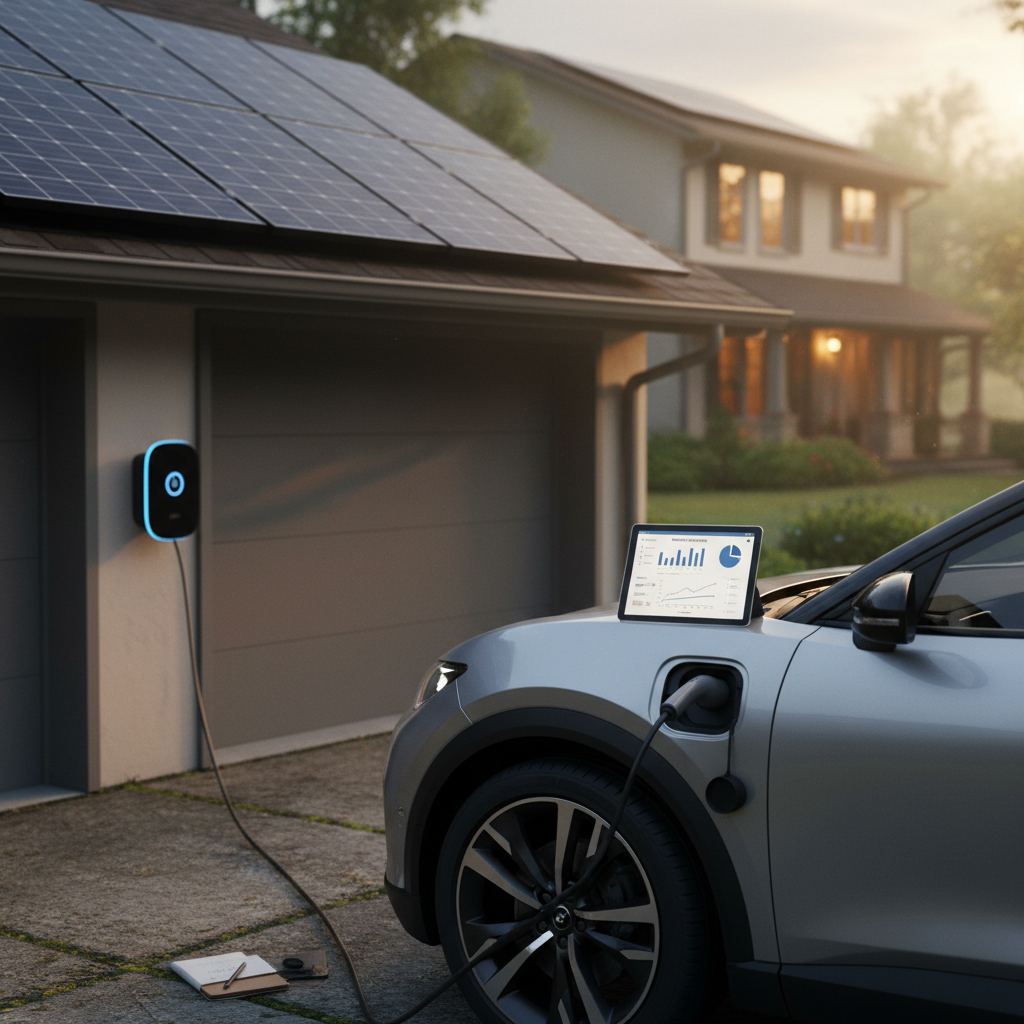
Most of your Rivian charging life should be boring, invisible, and happening while you sleep. That’s home charging. The question is whether you limp by on a household outlet (Level 1) or install proper Level 2 hardware.
Level 1 vs Level 2 for Rivian owners
How different charging levels actually feel day to day
Level 1 (120V) – emergency only
- Power: ~1.3–1.8 kW from a standard wall outlet
- Speed: roughly 3–4 miles of range per hour
- Use it for: topping off a few miles overnight, not refilling a big pack
- Reality: 0–100% on a Rivian pack can take days. Treat this as a backup.
Level 2 (240V) – the real solution
- Power: up to 11.5 kW on an adequately sized circuit
- Speed: often 20–25 miles of range per hour of charging
- Use it for: full overnight charges, daily commuting, pre‑conditioning in winter
- Reality: A mostly empty pack to full typically takes 9–12 hours, quietly, while you sleep.
What a typical Rivian owner sees at home
Installing Level 2 the smart way
Rivian DC fast charging speeds: what you actually get
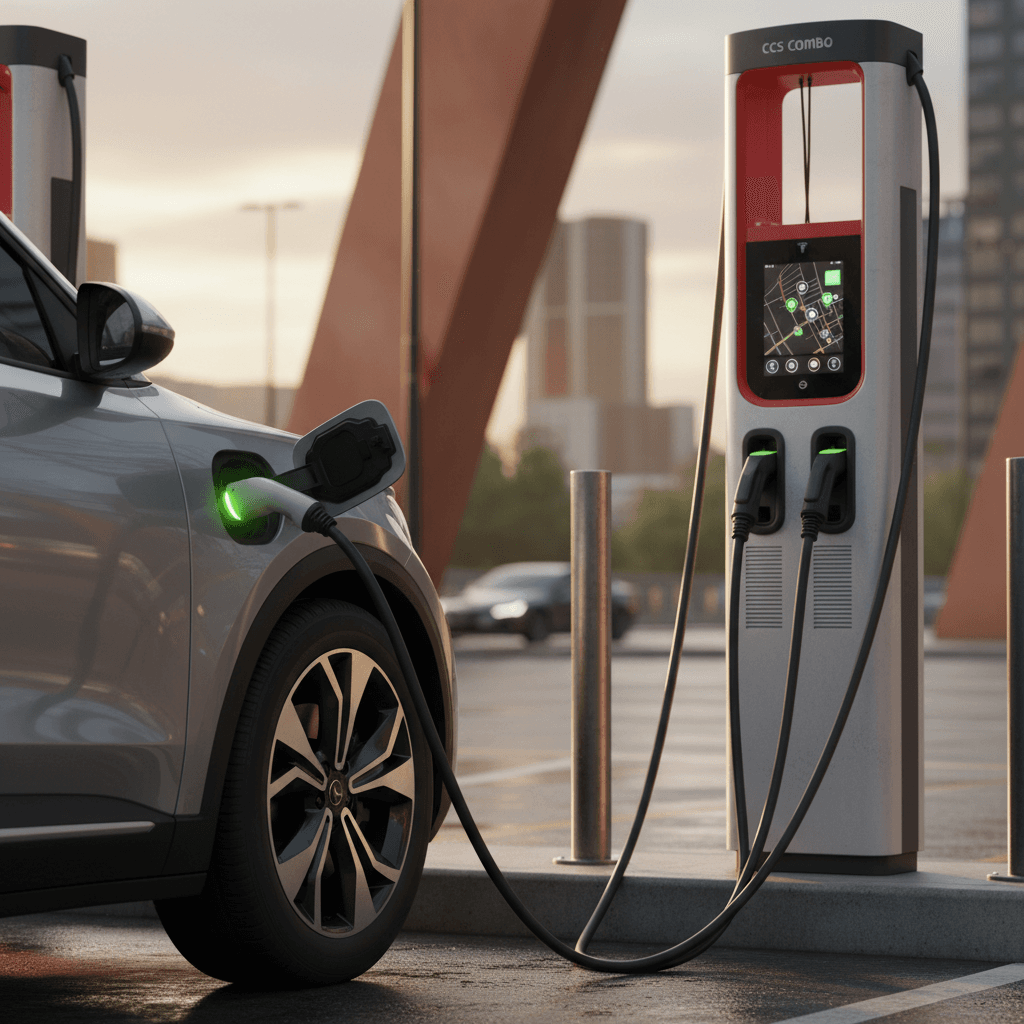
Out on the highway, it’s all about DC fast charging. Rivian advertises roughly "up to 140 miles in 20 minutes" on a strong fast charger, with peak power around 200–215 kW depending on pack and software. Recent over‑the‑air updates in 2025 improved charging curves for newer packs, especially from 10–80% state of charge.
Realistic Rivian DC fast charging expectations
Approximate times on a healthy, warm battery, arriving around 10% on a capable station.
| Pack & gen | Rated peak DC (kW) | 10–80% time (approx) | Miles added in 15–20 min (approx) |
|---|---|---|---|
| Gen 2 Standard Pack | ~215 | ~27–30 min | ~130 miles in 15 min |
| Gen 2 Large Pack | ~215 | ~35–36 min | ~135–140 miles in 15 min |
| Gen 1/2 Max Pack | ~215 | ~38–40 min | ~130–135 miles in 15 min |
Assumes you’re on a 150–350 kW charger with good site power and minimal sharing.
Software keeps getting faster
- Your best speeds come when the battery is warm (after some driving or preconditioning).
- Arrive around 10–20% state of charge for the fastest ramp‑up.
- Charging slows dramatically above 80–85%, so it’s often quicker to unplug and drive.
- Not all "350 kW" sites deliver full power to every stall, some share power between vehicles.
Rivian Adventure Network vs other fast chargers
Rivian’s Adventure Network is the brand’s private club: DC fast chargers placed along key routes to trailheads, ski towns, and big‑empty Western highways. Beyond that, your Rivian uses the same public networks as everyone else, Electrify America, EVgo, ChargePoint DC, and, increasingly, open Tesla Superchargers with adapters.
Rivian Adventure Network
- Designed specifically around R1T/R1S road‑trip routes.
- Simple plug‑and‑charge, integrated in the Rivian app and nav.
- Stations are still rolling out, coverage is terrific in some corridors, thin in others.
Non‑Rivian DC networks
- Electrify America, EVgo, ChargePoint, regional utilities.
- Power ratings 50–350 kW, reliability varies by location.
- Some apps now show real‑time availability and pricing.
Tesla Superchargers (with adapter)
- In many U.S. locations, select Superchargers are open to non‑Tesla EVs.
- You’ll use an adapter and the Tesla or third‑party app to activate the session.
- Great infill in rural areas where other DC options are scarce.
Watch the fine print
How to find electric car charging stations near you
"Charging stations for electric cars near me" is one of the most‑searched phrases in the EV universe, and for good reason: chargers are not yet as idiot‑proof as gas stations. The good news is that in 2025, your phone and your Rivian’s built‑in navigation are better at this than ever.
Best ways to find EV charging stations near you
Use more than one tool, the redundancy is worth it.
Rivian in‑car navigation
- Shows compatible chargers along your route, including the Adventure Network.
- Can precondition the battery automatically before DC fast stops.
- Ideal starting point: it knows your state of charge and consumption.
Dedicated charging apps
- PlugShare, Chargeway, ChargeHub, EVgo, EA apps and others.
- Filter by plug type, power level, price, and amenities.
- User reviews help you avoid broken or ICEd stations.
Map apps on your phone
- Google Maps and Apple Maps now show many public chargers.
- Helpful for quick "near me" searches in unfamiliar cities.
- Great backup, but not always as complete as dedicated apps.
How to search smarter
Step‑by‑step: finding a good charger near you
1. Start in the Rivian nav
Enter your destination and let the truck or SUV suggest DC fast stops. This gives you a conservative baseline route based on your current state of charge, weather, and driving style.
2. Cross‑check with a charging app
Open PlugShare, Chargeway, or another trusted app and look at chargers slightly ahead of Rivian’s suggested stops. Check user reviews, recent check‑ins, and photos.
3. Filter aggressively
Filter out anything under 100 kW if you’re looking for a quick top‑up. If you’re just grabbing lunch, 50 kW can be fine, but don’t let the app waste your time on 24 kW relics.
4. Consider amenities and safety
A well‑lit site near a coffee shop or grocery store is worth an extra minute or two of driving, especially at night. User photos and recent reviews are your friend here.
5. Save your favorites
When you find a rock‑solid station, favorite it in your app and note it mentally for future trips. Build your own private network of "known-good" chargers over time.
Choosing the right charger on the road
Standing in front of a bank of chargers, your Rivian humming softly, you’re making a quiet little economic decision: how much power, how much time, how much money. All DC stations are not created equal, and neither are your use cases.
Which charger should you pick?
Match the site to your situation, not just your battery level.
High‑power DC (150–350 kW)
- Best for long highway legs and towing.
- Ideal when you’re low (10–20%) and want a quick 10–80% boost.
- Often more expensive per kWh but cheaper than wasting an hour at a slow site.
Mid‑power DC (~50–100 kW)
- Good when you’re stopping for a meal or errands.
- Fine for topping from 40–80% while you’re off doing something else.
- Can be a sweet spot in rural areas where 150 kW sites simply don’t exist.
Level 2 in public
- Think 6–11 kW at hotels, offices, parking garages.
- Perfect if you’ll be parked for several hours or overnight.
- Slow as a "road trip" solution, brilliant as a "my car was just parked anyway" solution.
Don’t chase 100% on DC
Planning road trips in a Rivian without range anxiety
Road‑tripping in a Rivian is like backpacking with a very fancy watch: the tech is there to help, but you still need a sense of the terrain. The saving grace is that your Rivian and modern charging apps can build a plan that’s far less stressful than the horror stories you might have heard from early EV adopters.
Two road‑trip planning strategies that actually work
Daily driver with occasional weekend trips
Rely on home Level 2 and treat DC fast charging as rare, pre‑planned events.
Use Rivian nav to build a route, but always cross‑check first stops in a charging app.
Aim for one DC stop per 3–4 hours of driving, arriving around 15–20% state of charge.
Book hotels with Level 2 if you can, waking up full is better than any fast charger.
Cross‑country or towing a trailer
Shorten your legs: plan to stop every 120–150 miles when towing or in winter.
Use high‑power DC sites where possible; those extra kW matter with a trailer drag penalty.
Avoid rolling into a station under 5% unless you know it and trust it; leave yourself an escape.
Save backup sites slightly ahead or behind each planned stop in PlugShare or Chargeway.
Let the truck precondition for you
Buying a used Rivian? What to ask about charging
If you’re eyeing a used R1T or R1S, charging performance is right up there with tire condition and paint. Big batteries age gracefully when they’ve been treated well, and less gracefully when they’ve lived life at 100% in Phoenix.
Charging questions to ask before you buy a used Rivian
1. What’s the current software version?
Recent Rivian updates improved DC fast charging speeds and curves. Make sure the vehicle is on current software before you judge its road‑trip friendliness.
2. How was it charged most of the time?
A Rivian that lived on home Level 2, usually between 20–80%, is ideal. A life of constant DC fast charging at 100% is less ideal, especially in very hot climates.
3. Any documented DC fast charging issues?
Ask about repeated faults, reduced DC speeds, or frequent charging‑station dramas. These can be network issues, but they can also hint at a car that’s had a tough life.
4. Does the seller have charging history?
Screenshots from the app, trip logs, or even just a clear, consistent story help. On a platform like <strong>Recharged</strong>, a <strong>Recharged Score</strong> report and battery‑health diagnostics take the guesswork out of this.
5. Is your home ready for Level 2?
Before you sign, verify where the car will park, how far the cable needs to reach, and whether your panel can support a 40–60 amp circuit. It’s easier to plan this before delivery, not after your first Level 1 weekend.
How Recharged can help
Ready to find your next EV?
Browse VehiclesRivian charging & ‘near me’ station FAQ
Frequently asked questions
Bottom line: Make your Rivian charging life boring, in a good way
The happy Rivian owner isn’t the one memorizing kW curves on internet forums; it’s the one who plugs in at home, hits a few well‑chosen DC fast chargers on road trips, and never has to type "charging stations for electric cars near me" in a panic with the battery at 2%.
Treat the spec sheet numbers as what they are, upper bounds, and build your habits around what works in real life: Level 2 at home, smart use of 150 kW+ DC fast chargers on the road, and a couple of well‑chosen apps to steer you away from dead stations. Do that, and your Rivian’s charging speeds stop being a question mark and become just another reason an electric truck or SUV fits into your life.