If you’ve looked at used EV prices lately, you’ve probably noticed two things: they’re cheaper than they used to be, and everyone seems to have an opinion about the **risks of buying a used electric car**. Some of those concerns are valid. Others are leftovers from early EV days that don’t match 2025 data. This guide separates real risk from rumor, and shows you how to protect yourself.
Used EVs are cheap for a reason
Why used EVs feel risky right now
The headlines haven’t been kind to electric vehicles. You’ll see stories about plunging used prices, expensive battery replacements, and confusion around tax credits. At the same time, more EVs are coming off lease, so there’s suddenly a lot more supply. Put it all together and it’s natural to worry that buying a used electric car might be a gamble.
Four forces driving perceived risk in used EVs
Understanding these helps you spot value instead of just volatility.
Battery anxiety
Shoppers worry about battery degradation and horror stories about $15,000+ replacements, even though only a small share of EVs ever need an out‑of‑warranty pack.
Fast depreciation
Used EVs have been depreciating faster than gas cars, in part because new EV prices have dropped and incentives changed, pulling used values down.
Confusing warranties
Electric cars layer new‑vehicle, battery, and sometimes extended warranties. On a used EV it’s easy to misread what’s still covered, and what’s not.
Charging & connector changes
Network coverage varies by region, and the industry’s shift toward the NACS (Tesla‑style) plug has buyers wondering how future‑proof older models are.
The risk is uneven, not universal
Risk #1: Battery health and degradation
For most shoppers, the number‑one fear is simple: “What if the battery is bad?” The high‑voltage pack is the most expensive part of an EV, and early models like first‑generation Nissan Leafs gave batteries a reputation for wearing out quickly. But modern packs are performing better than many people expect.
What recent data says about used EV batteries
So where’s the risk? It’s concentrated in specific situations: very early EVs with weak cooling systems, high‑mileage rides that fast‑charge constantly, cars from hot climates, or vehicles with incomplete charging/maintenance history. Without real diagnostic data, you’re left guessing which bucket a particular used electric car falls into.
How to check EV battery health before you buy
- Ask for a recent, **quantitative battery health report**, not just “it seems fine.” State‑of‑health (SoH) in percent is far more useful than a generic comment.
- Review how the car was used: lots of DC fast charging, frequent 0–100% cycles, and very hot climates all add risk.
- Compare **rated range vs. actual displayed range** at a full charge; a big gap can signal notable degradation.
- Favor models known for strong battery management (for example, many Teslas, Hyundai/Kia e‑GMP cars, and later‑generation Leafs) over first‑wave experiments.
- On marketplace listings, be wary of vague language like “great battery” with no supporting data or paperwork.
Where Recharged fits in
Ready to find your next EV?
Browse VehiclesRisk #2: Warranty gaps and fine print
EVs layer multiple warranties: basic bumper‑to‑bumper coverage, separate battery and drive unit coverage, corrosion, and sometimes extended plans from the first owner. When you buy used, you’re stepping into that stack partway through, and you may assume more is covered than actually is.
Typical new EV warranty structure (U.S.)
These are common patterns; always confirm terms for the exact year and model you’re considering.
| Component | Typical duration | What it usually covers | Key risk when buying used |
|---|---|---|---|
| Basic bumper‑to‑bumper | 3–4 years / 36k–50k miles | Electronics, interior, many mechanical issues | Often expired on 3–4 year‑old used EVs. |
| Powertrain (if separate) | 5–6 years / 60k+ miles | Motor, gearbox, related components | Definitions vary by brand; some EVs roll this into basic warranty. |
| High‑voltage battery & drive unit | 8 years / 100k–150k miles, with ~70% capacity guarantee | Battery failure below a capacity threshold | Age or miles can put you just outside coverage, especially on older models. |
| Corrosion / rust‑through | 5–12 years | Body rust that perforates panels | Less of an EV‑specific issue, but still matters in snow‑belt regions. |
On a used EV, ask the seller to calculate what’s left on each coverage line item.
The risk isn’t just that something fails, it’s that it fails six months after coverage ends, or that your problem doesn’t meet the fine‑print definition of “defect.” Some brands count gradual battery degradation as normal wear unless capacity drops below a specific threshold. Others negotiate goodwill adjustments on a case‑by‑case basis.
Watch for these warranty red flags
Risk #3: Depreciation and future resale value
Used EV prices have fallen faster than many owners expected. That’s painful if you bought new, but it’s a mixed blessing if you’re coming in as a second or third owner. The good news: **you’re buying after the steepest drop**. The bad news: the market is still finding its footing, and values could keep moving as tech and incentives change.
Why depreciation is a risk
- Rapid tech change: Newer EVs bring longer range, faster charging, and better driver‑assist tech at similar price points, which can make older models feel outdated sooner.
- Incentive whiplash: Shifts in federal and state EV credits change the math overnight, pushing new‑car shoppers away from or toward certain models and dragging used values with them.
- Brand stability: If a newer EV brand stumbles, its used values can drop quickly due to service and parts concerns.
Ways to blunt depreciation risk
- Buy at the right point on the curve: A 2–4‑year‑old EV that’s already taken its big first‑owner hit often offers the best value.
- Prioritize battery health & documentation: Clean history and strong battery SoH will matter more to the next buyer than trim or color.
- Look for mainstream, supported models: Vehicles from brands with strong dealer and parts networks tend to hold value better over time.
How Recharged thinks about value
Risk #4: Charging compatibility and access
Charging is less of a mystery than it used to be, but for used EVs there are two main questions: **“Can I charge easily where I live?”** and **“Will this car work with the networks and connectors that are winning in North America?”** Get those wrong and even a great deal can turn into a headache.
Charging risks to check before you sign
Most are manageable, if you know to look for them.
Home charging limitations
If you rent or don’t have access to a 240V outlet or Level 2 charger, you’ll rely heavily on public stations. That’s less convenient and can be more expensive.
Connector confusion
North America is shifting toward the NACS (Tesla‑style) plug. Some older CCS or CHAdeMO‑only cars may need adapters or have fewer DC fast‑charge options over time.
Patchy public networks
Coverage is strong in many metro and highway corridors, but rural or cold‑weather regions can still be under‑served. Map your real routes, not just your home ZIP code.
Practical pre‑purchase homework
Risk #5: Repairs, service access, and hidden damage
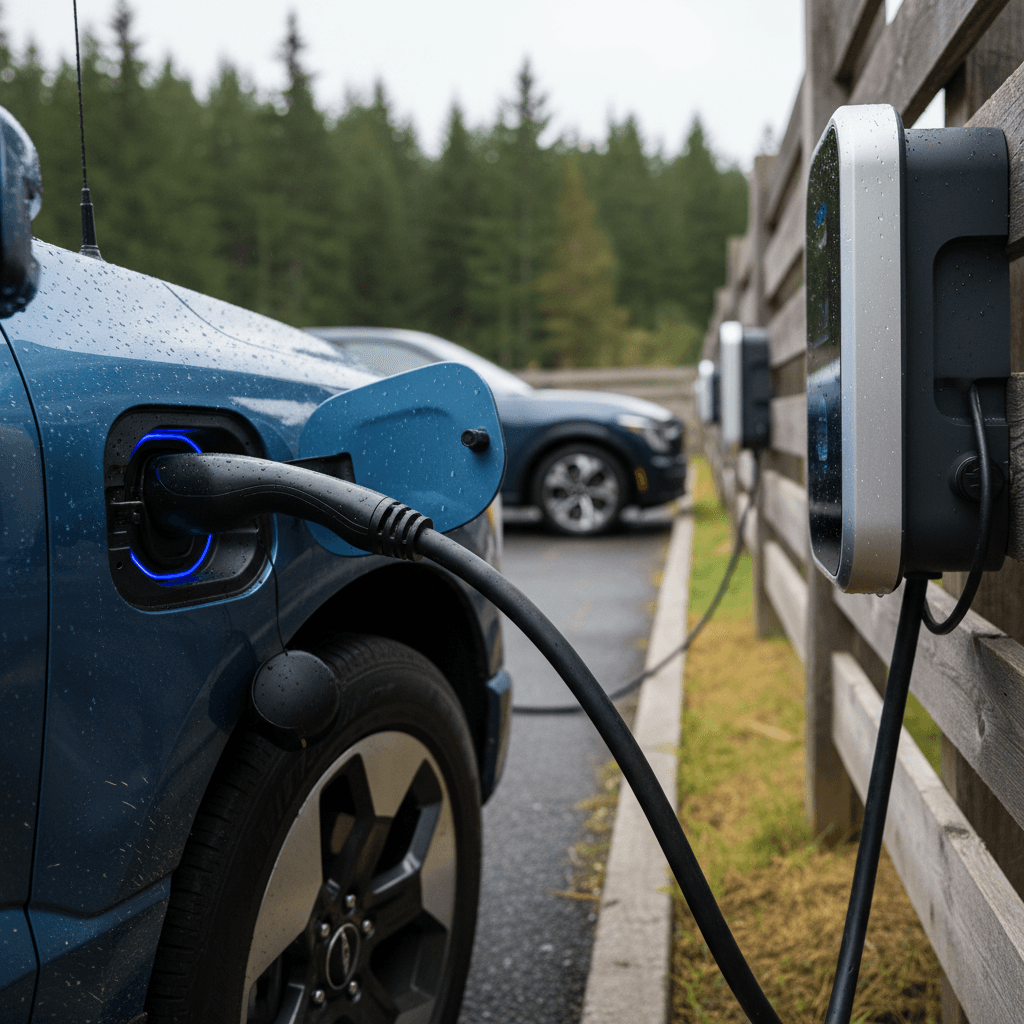
Mechanically, EVs have fewer moving parts than gas cars, no oil changes, no timing belt, no exhaust system. But when something does go wrong, it’s often more specialized. That can mean longer waits for parts, fewer qualified shops, and higher labor rates in some markets.
- Limited repair networks: Some brands rely heavily on factory service centers, which may be far from where you live.
- High‑voltage safety: Not every independent shop is trained or insured to work on EV packs and inverters, especially outside major cities.
- Structural battery designs: On a few models, the battery is integrated into the vehicle structure, making collision repairs more complex and sometimes uneconomical.
- Salvage or flood history: Water damage and poorly repaired crash damage are especially risky in EVs, where hidden corrosion can affect high‑voltage components.
Do not skip the EV‑savvy inspection
Checklist: How to de‑risk buying a used electric car
10 steps to make a used EV a smart buy, not a gamble
1. Start with your real use case
List your daily miles, parking situation, access to outlets, and typical trips. An EV that’s perfect for a 30‑mile commute might be wrong for 200‑mile weekend drives with no fast charging nearby.
2. Shortlist the right models first
Research reliability, battery chemistry, and charging performance on a few candidate models. Focus on mainstream, well‑supported vehicles before chasing a bargain on an obscure one.
3. Demand hard battery data
Ask for a recent battery health report, not just a full‑charge range screenshot. Tools like the <strong>Recharged Score battery diagnostics</strong> give you a clear SoH percentage and thermal history.
4. Verify remaining warranties
Confirm in‑service date, mileage, and what carries over to you: basic, battery/drive unit, and any extended or CPO coverage. Get it in writing, not just verbally from a salesperson.
5. Pull a full history report
Look for accidents, flood or hail damage, title issues, and high‑mileage usage (delivery, rideshare, rental). EVs can handle miles, but extreme duty cycles warrant a closer look.
6. Inspect with an EV‑trained tech
Schedule a pre‑purchase inspection with someone who works on EVs regularly. They should scan for fault codes, check high‑voltage connectors, and visually inspect underbody and cooling loops.
7. Test‑drive like you’ll live with it
Drive at highway speeds, up hills, and in stop‑and‑go traffic. Listen for drivetrain noise, test one‑pedal driving, and note how quickly the state of charge drops in real use.
8. Map your charging life
Verify home charging options, then map public stations around home, work, and regular routes. Make sure your connector type and charging speeds match what’s actually available.
9. Model 5‑year ownership costs
Estimate payments, insurance, electricity, and realistic maintenance. Include a conservative depreciation assumption so you’re not shocked by future resale value.
10. Prefer transparent marketplaces
Buying from a platform that specializes in EVs, like Recharged, means you get battery health reports, curated inventory, EV‑savvy support, and options for financing, trade‑in, and nationwide delivery built in.
When a used EV is high‑risk vs. low‑risk
Higher‑risk used EV profile
- First‑generation model with limited thermal management and short original range.
- High mileage (150,000+), heavy DC fast‑charging history, or use in very hot climate.
- No recent battery health report; seller says “range seems fine.”
- Salvage, flood, or major accident history with unclear high‑voltage repairs.
- Little or no remaining battery warranty; brand has sparse service coverage in your area.
Lower‑risk used EV profile
- Well‑regarded mainstream model with robust battery management system.
- Moderate mileage, primarily home or workplace Level 2 charging, documented service.
- Verified battery SoH with strong remaining capacity and transparent report.
- Clean title, no structural accident history, and complete maintenance records.
- Substantial battery warranty remaining and strong dealer or specialist network nearby.
What this looks like at Recharged
FAQ: Risks of buying a used electric car
Common questions about used EV risks
Bottom line: Yes, used EVs have risks, but you can manage them
Buying any used vehicle involves trade‑offs. With electric cars, the risks just look different: battery health instead of head gaskets, charging access instead of gas stations, over‑the‑air updates instead of timing belts. If you go in blind, those differences can be expensive. But if you combine hard battery data, careful model selection, realistic charging plans, and EV‑savvy inspections, a used EV can deliver low running costs and modern tech for a fraction of new‑car money.
Platforms like Recharged are built around that idea. By pairing verified battery diagnostics, transparent pricing, financing and trade‑in support, and nationwide delivery with EV‑specialist guidance, they turn a fuzzy risk into a knowable one. Do your homework, use the right tools, and a used electric car doesn’t have to be a gamble, it can be the smartest way to go electric on your terms.