In an electric car, the regenerating braking system is the quiet genius working every time you lift off the accelerator. Instead of turning your speed into useless heat, it turns it back into electricity. That’s free energy, within limits. To understand EVs, range claims, and what to look for in a used electric vehicle, you need to understand how regenerative braking actually works, not just the brochure version.
Quick definition
What is a regenerating braking system?
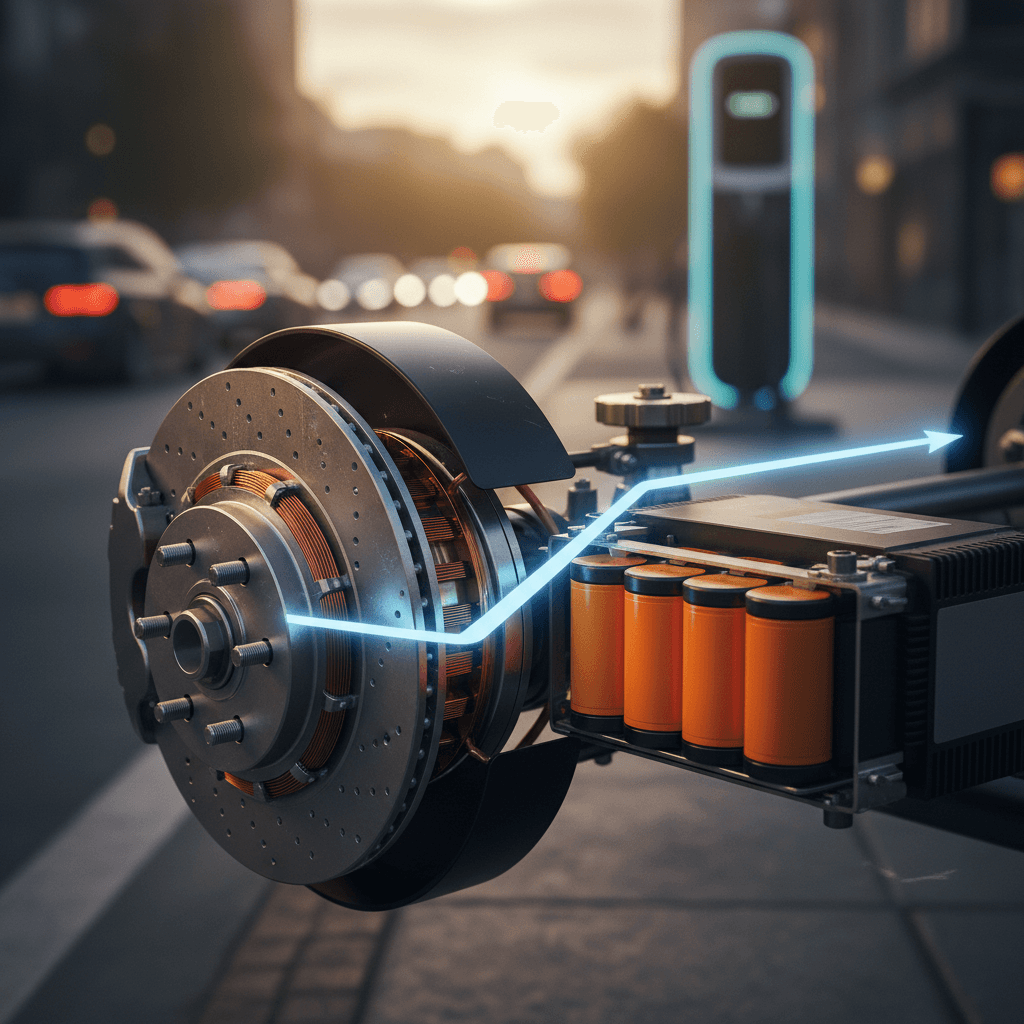
On a conventional car, every time you hit the brakes you are literally setting money on fire. The friction brakes clamp a disc, convert your kinetic energy into heat, and vent it to the atmosphere. An EV’s regenerating braking system is an energy-recycling scheme: it uses the same electric motor that drives the wheels to act as a generator during deceleration. The recovered electrical energy goes back into the high-voltage battery for later use.
You’ll still find normal hydraulic brakes on every road-legal EV, regenerative braking doesn’t replace them. Instead, modern cars use brake blending: the car’s control software decides, millisecond by millisecond, how much stopping force comes from the motor (regen) and how much comes from the friction brakes. That’s why, when it’s done well, regen braking just feels like a well-tuned brake pedal or a strong engine-braking effect when you lift off the accelerator.
City driving is regen’s home turf
How regenerative braking works, step by step
Strip away the software and marketing, and a regenerating braking system is just a reversible electric machine plus smart control logic. Here’s the basic physics in plain language:
- You’re cruising at speed. The electric motor is in drive mode, taking electrical energy from the battery and turning it into torque at the wheels.
- You lift off the accelerator or press the brake. The car’s computer reads your request for deceleration and checks battery temperature, state of charge, traction, and speed.
- The inverter flips roles. Instead of feeding AC power to the motor, it lets the spinning wheels drive the motor shaft, turning the motor into a generator.
- The generator creates electrical energy. That current is routed through the inverter and into the battery (or sometimes a small buffer like a supercapacitor), within safe current limits.
- At the wheels, you feel resistance. That resistance is the ‘braking’ you experience. If you need more braking than the motor can supply, say, in an emergency stop, the friction brakes seamlessly join in.
Motor mode
- Battery → inverter → motor → wheels
- Consumes energy
- Delivers torque to accelerate
Generator mode (regen)
- Wheels → motor → inverter → battery
- Recovers energy
- Provides resistance to slow the car
Regen has hard limits
Efficiency: how much energy regenerative braking recovers
Regenerating braking system by the numbers
You’ll see two numbers thrown around with any regenerating braking system: efficiency and effectiveness. They sound similar; they’re not.
- Efficiency is how much of the kinetic energy lost during braking the system can turn back into electricity. Modern EVs often sit in the 60–70% range, sometimes higher in ideal conditions.
- Effectiveness is how much that reclaimed energy actually extends your range. That depends on where you drive, how often you brake, vehicle weight, battery state of charge, and even weather. In city driving you might see a 10–30% real range boost from regen; on the highway, almost none.
Don’t fall for the ‘70% more range’ myth
Driving feel and modes: from coasting to one-pedal
A regenerating braking system isn’t just a physics trick; it changes how the car feels under your right foot. Automakers tune this feel aggressively because it’s now part of the brand identity, just like steering feel used to be in the age of hydraulic racks.
Common regenerative braking modes in modern EVs
Most cars let you choose how aggressive regen should be.
Low / coasting
Feels closest to a gas car in neutral. Lift off the accelerator and the car mostly coasts, with mild regen when you press the brake pedal.
Good for highway cruising and drivers transitioning from ICE vehicles.
Standard / medium
Noticeable deceleration as soon as you lift off. You still use the brake pedal in normal driving, but less often.
This is the default tuning on many mass‑market EVs.
High / one-pedal
Strong deceleration the moment you come off the accelerator. With practice, you can drive mostly using one pedal, only touching the brakes to come to a complete stop or in emergencies.
Popular on sporty EVs and in dense city traffic.
Some brands give you steering‑wheel paddles to adjust regen on the fly; others bury the setting in a touchscreen menu. Increasingly, EVs let you tie regen strength to drive modes, Eco, Normal, Sport, so the car feels appropriately eager or relaxed.
One-pedal driving, done right
Regen vs friction brakes: safety and limitations
No matter how sophisticated the regenerating braking system, the laws of physics, and regulations, require a full mechanical braking system as backup. Regen is the clever assistant; friction brakes are still the ultimate authority.
Regenerative braking vs. friction brakes
How the two systems compare in everyday driving.
| Feature | Regenerative braking | Friction brakes |
|---|---|---|
| Primary purpose | Recover energy while slowing | Provide maximum, predictable stopping power |
| Best at | Moderate deceleration, higher speeds | Emergency stops, very low speeds, ABS interventions |
| Energy use | Recovers 60–70% of braking energy | Turns 100% of braking energy into heat |
| Wear and maintenance | Very low mechanical wear | Brake pads and rotors wear over time |
| Limitations | Battery limits, traction, speed, temperature | Can fade if overheated, creates brake dust |
| Feel in cabin | Can feel like strong engine braking | Traditional brake-pedal feel |
In practice, you rarely think about which system is working; the car’s software blends them constantly.
Safety first: friction brakes always stand by
Modern EVs integrate regenerative braking with ABS and stability control systems. If a wheel is about to lock on ice or gravel, the control unit can instantly reduce motor regen torque and rely more on friction brakes to maintain grip. All of this happens far faster than any human could modulate a pedal.
Impact on battery life and EV health
There’s a persistent anxiety among some shoppers that all this rapid, high‑current charging during braking must be terrible for the battery. The picture is more nuanced, and mostly positive.
- In many lab and real‑world studies, higher levels of regenerative braking have actually reduced long‑term battery ageing, because they lower the average depth of discharge. You’re topping up little and often instead of running the pack down and doing long, heavy charges later.
- Regen events are short bursts, not long 30–60 minute DC fast‑charging sessions. That means less time spent at high current, which is when lithium plating and heat build‑up become serious issues.
- Modern battery management systems constantly watch temperature and state of charge. If the pack is cold or nearly full, they simply limit regen current to protect the cells.
- Some advanced designs pair the main battery with a supercapacitor or small buffer pack, which can swallow high power spikes from regen even more gently.
Why regen drops on cold mornings
From a used‑car perspective, a healthy regenerating braking system is generally a good sign. It means the vehicle has been operating as designed: recovering energy, reducing brake wear, and avoiding unnecessarily deep battery cycles. Tools like the Recharged Score report give you a snapshot of actual battery health, so you’re not guessing how all those miles of regen and charging have affected the pack.
What regen means for real-world range and charging
On paper, a regenerating braking system looks like a magic trick, free energy from slowing down. On the road, it’s more like recovering dropped change than finding hundred‑dollar bills. Useful, but bounded.
How regen changes your day-to-day EV experience
You plug in less often in the city
If most of your driving is urban, stop signs, lights, traffic, regen can give you a meaningful 10–30% range bump compared with the same car with friction‑only brakes.
Highway range barely changes
At steady freeway speeds you rarely brake, so regen has little to do. That’s why EPA range ratings (which mix city and highway) can differ from your real experience.
Downhills become useful, not scary
On long descents, regen can harvest a surprising amount of energy while sparing your friction brakes from overheating, especially important for heavier SUVs and trucks.
Driving style still matters
Smooth, anticipatory driving lets regen do more work. If you’re constantly sprinting between stoplights and slamming the brakes, you’ll still waste energy, just a bit less.
Think of regen as efficiency insurance
Used EV shopping: what to look for in regenerative braking
If you’re considering a used EV, the regenerating braking system is one of those hidden‑in‑plain‑sight technologies that separates a great daily driver from a merely adequate one. Here’s what’s worth checking, ideally on a test drive.
Regenerative braking checklist for a used EV test drive
Simple ways to feel out the system before you buy.
1. Lift-off feel
At 30–40 mph, lift off the accelerator gently. Does the car slow in a smooth, predictable way? Any odd surges or grabby behavior may indicate calibration or hardware issues.
2. Adjustable modes
Look in the drive settings for regen or ‘one‑pedal driving’ options. Multiple levels let you tailor the feel to your preference and driving environment.
3. Dash indicators
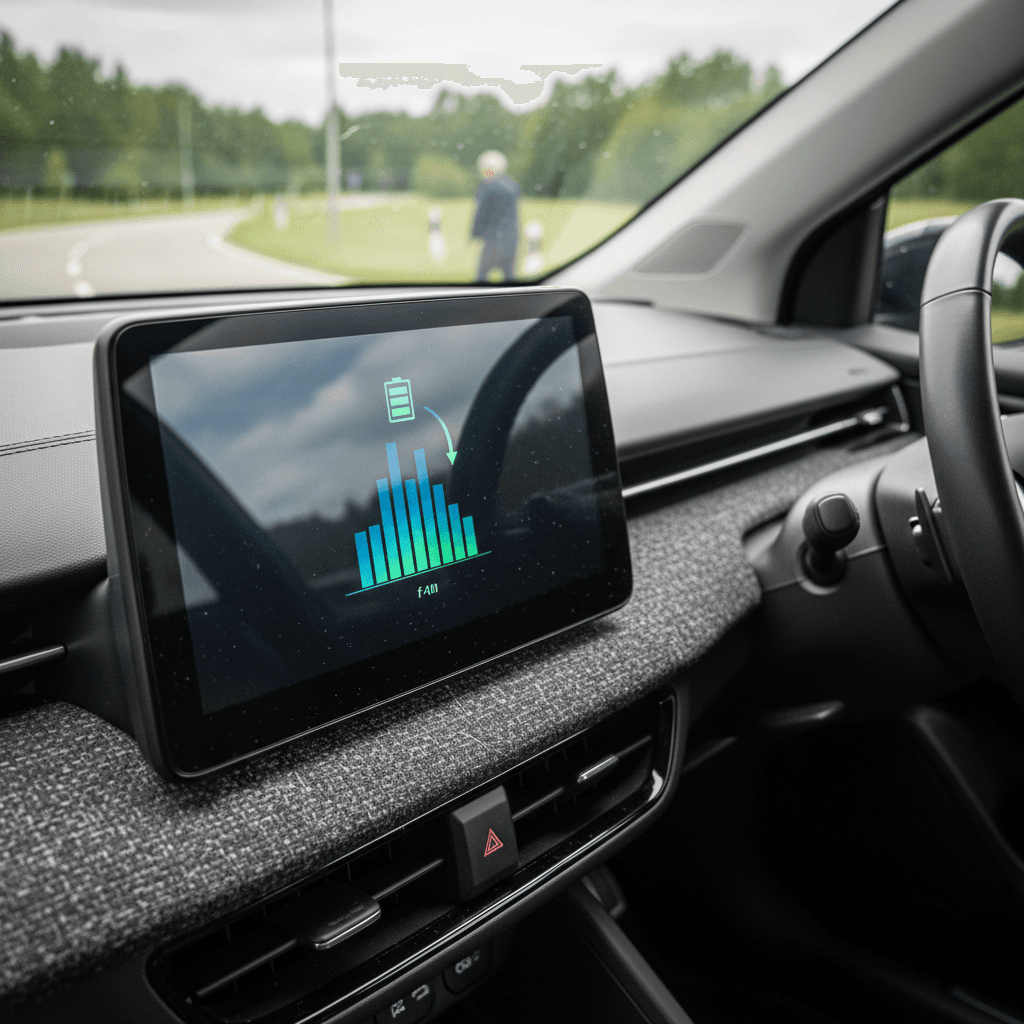
Most EVs show regen as a power bar dipping into the negative. Confirm that the indicator moves into the regen zone when you slow, and that it changes when you adjust modes.
4. Brake feel and wear
The pedal should feel consistent whether you brake gently or hard. Uneven feel, noises, or deeply grooved rotors may mean the mechanical brakes haven’t been working properly or have corrosion from under‑use.
When you shop with Recharged, every vehicle comes with a Recharged Score Report that includes verified battery health and expert notes from EV specialists. That context matters: a car with healthy regen and strong battery metrics is a safer long‑term bet than one with vague history, even if the odometer number looks similar.
How regen helps total cost of ownership
FAQ: regenerating braking systems
Frequently asked questions about regenerative braking
Bottom line: why regen braking matters
A modern regenerating braking system is one of the defining technologies of electric vehicles. It’s why EVs feel so different when you lift off the accelerator, why brake pads last so long, and why city range often beats the official sticker. The hardware is elegant; the software is where the magic lives, blending motor and friction braking so seamlessly that you barely notice the choreography.
If you’re moving into your first EV, or your first used EV, pay attention to how regen feels on a test drive, how adjustable it is, and how healthy the battery looks on a proper diagnostic report. At Recharged, every vehicle includes a detailed Recharged Score, expert EV guidance, and flexible financing and trade‑in options, so you can focus on finding the car with the driving feel and range that suit your life, confident the underlying tech is working in your favor.