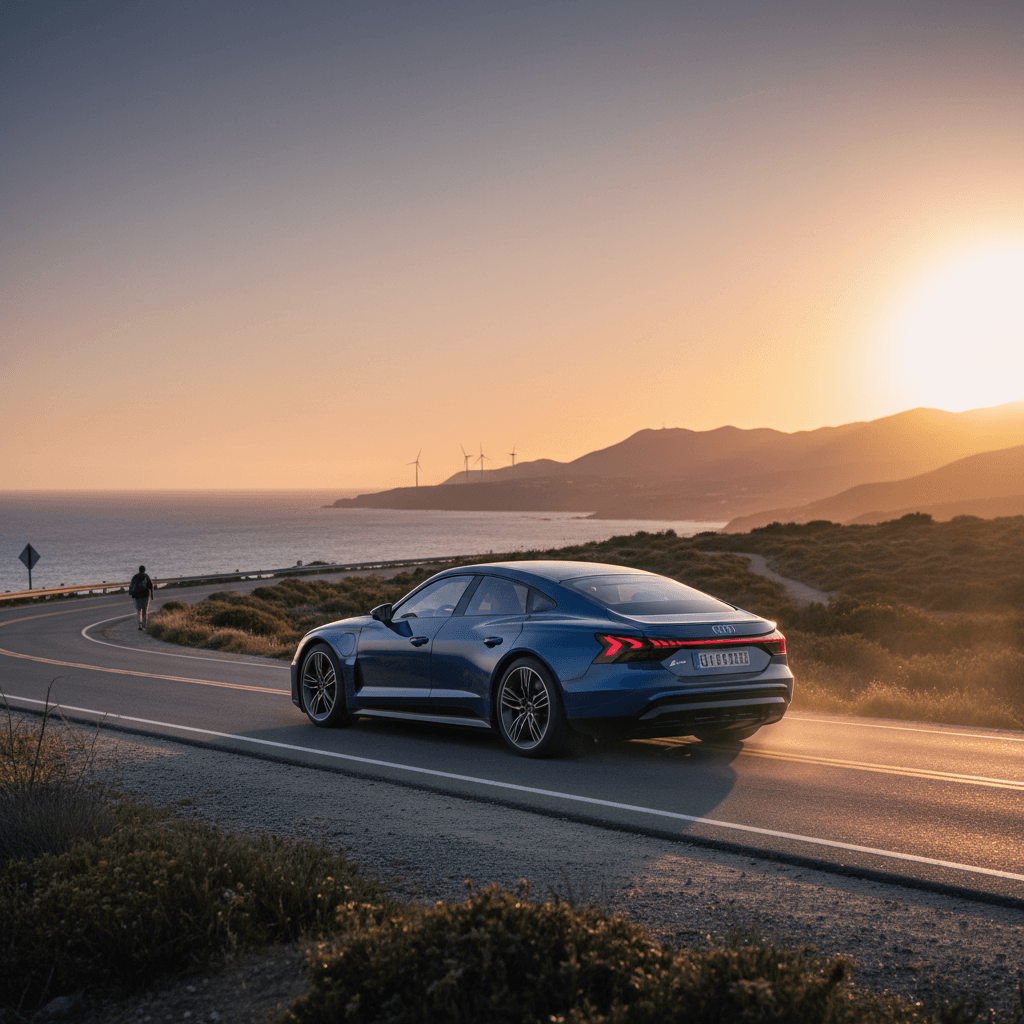
The Porsche Taycan was engineered for the autobahn, not the grocery run. As EVs go, it’s less a family appliance and more a high-speed rail car with a steering wheel. The question this Porsche Taycan road trip review tries to answer is simple: when you stretch it out over 500–1,000 miles, does the magic hold, or does the charging reality catch up with the fantasy?
Which Taycan are we talking about?
Why the Porsche Taycan invites road trips
It feels born for the left lane
The Taycan is one of the few EVs that still feels
On a long day of interstate driving, that stability matters more than 0–60 numbers. The car just relaxes into the lane and silently axes state lines.
Fast travel, not just fast charging
Porsche’s own engineers talk about “fast travel” rather than just fast charging: short, predictable DC fast‑charge stops paired with honest real‑world range. In 2024–2025 testing, updated Taycans have run up to roughly 360 miles of highway range on a charge in the most efficient spec, and around 330 miles for a Taycan 4S at 75 mph, which is a huge improvement over early cars.
The result: you spend more time driving and less time watching electrons trickle into the pack.
Porsche Taycan long‑distance numbers at a glance
Taycan range on the highway: what you really get
Range is where internet discourse about the Taycan used to go to die. Early U.S. EPA numbers were conservative, some trims under 210 miles on paper. In practice, owners and testers routinely beat those estimates at highway speeds, especially with the larger Performance Battery Plus. The 2025 refresh changed the conversation entirely, with some models now delivering roughly 330–360 miles in 75‑mph testing when spec’d with the big pack and efficient wheels.
- Older Taycan (2020–2022, big battery): Think ~240–280 miles at 70–75 mph if you’re not driving like a maniac and temperatures are mild.
- Mid‑cycle cars (2023–2024): Incremental efficiency upgrades; realistic highway range sits in the high‑200s to low‑300s depending on trim and wheels.
- Updated Taycan (2025+): With the 97 kWh usable battery and aero‑friendly wheels, independent 75‑mph tests have landed around 330–360 miles in the most efficient variants.
Wheels, weather, and speed matter
For road‑trip planning, the smart move is to ignore the headline number and work backward from energy use. On a Taycan 4/4S with the big battery, budgeting around 2.4–2.8 mi/kWh at 70–75 mph is realistic in decent weather. That makes a comfortable planning range around 260–300 miles per full charge, with charge stops spaced roughly every 180–220 miles so you arrive with a buffer.
Charging stops: the Taycan’s secret weapon
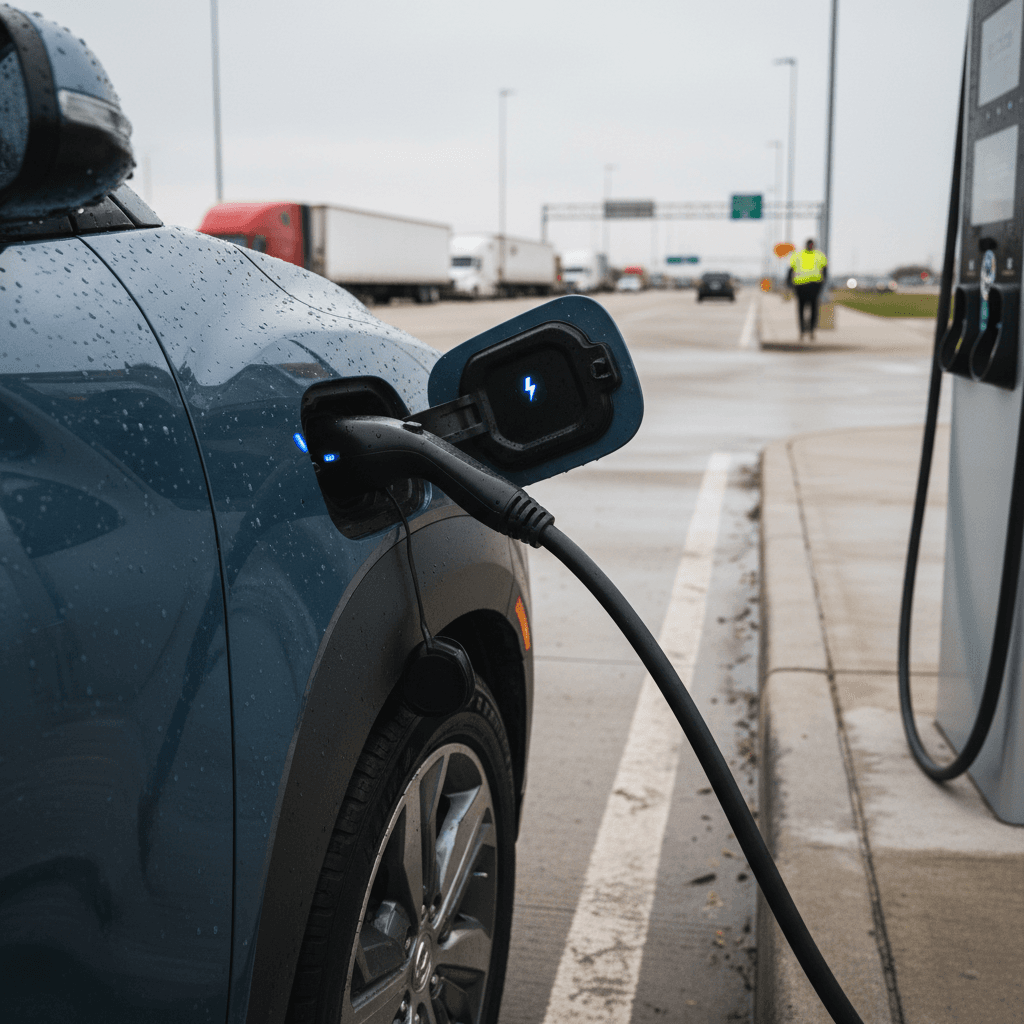
If range is the headline, the charging curve is the fine print, and this is where the Taycan justifies its ticket. Thanks to its 800‑volt system and clever battery thermal management, a Taycan on a proper 800‑V DC fast charger can sit above 200 kW for a surprisingly large chunk of the session, instead of spiking and falling off a cliff.
Typical Taycan DC fast‑charging behavior (big battery, good conditions)
Real‑world averages on a modern 350 kW CCS charger with a warmed battery.
| State of charge | Time needed | Average power | Real‑world range added* |
|---|---|---|---|
| 10% → 80% | ~18–22 min | 200–210 kW | ≈180–220 miles |
| 10% → 90% | ~28–31 min | 145–150 kW | ≈210–250 miles |
| 5% → 80% | ~19–21 min | 200+ kW | ≈190–230 miles |
| 0% → 100% | ~45–55 min | 100–110 kW | Full usable pack |
You travel fastest by charging in the fat middle of the battery, not by stretching to 100%.
The 10–80% rule actually works here
There is a catch: to see those hero numbers, you need modern 800‑V DC chargers that can deliver well over 250 kW and are wired to play nice with the Taycan’s communication. On many legacy 400‑V stations in the U.S., you’ll cap out closer to 150 kW even on a Taycan, and if you don’t have the optional high‑power DC hardware on older model years, you may be limited to roughly 50 kW. That’s a different road‑trip reality.
Check your Taycan’s DC hardware before you buy used
Comfort, noise and practicality on a long day
Ride quality and fatigue
The Taycan’s party trick isn’t acceleration; it’s poise. With adaptive air suspension and, on many trims, sophisticated active ride hardware, it manages the rare feat of feeling both tightly controlled and uncannily smooth at speed. Body motions are so well checked that long sweepers feel like they’ve been digitally ironed flat.
Noise levels are low but not sensory‑deprivation‑tank silent. You get a muted hum from the tires and, in sportier trims, a bit of synthesized drivetrain sound. After 600 miles, you step out less frazzled than you would from a traditional sports sedan that equates “sporty” with “busy.”
Cabin, seats and luggage
Up front, the Taycan is archetypal Porsche: low driving position, thick‑rimmed wheel, serious seats. For road trips, the 18‑way adjustable sport seats with massage are worth hunting for on the used market; lesser chairs are fine for a few hours but not transcendent.
Rear space is adequate rather than generous, especially in the sleek sedan. The Cross Turismo and Sport Turismo wagons alleviate this with better rear headroom and a much more usable cargo area. Two adults up front and two kids in back? Perfect. Four adults and luggage for a week? Consider a roof box and a group text about soft‑sided bags.
Best Taycan body style for road trips
Software, planning, and the charging network
The Taycan’s hardware is deeply impressive; its software is merely good. The built‑in route planner can automatically add charging stops, prioritize high‑power stations, and pre‑condition the battery on approach. It works, but it’s not omniscient, and the U.S. public charging network, Electrify America, EVgo, independent sites, remains a patchwork quilt stitched by optimists.
Three tools you should use before every Taycan road trip
Stacking apps is the difference between a seamless tour and a charging scavenger hunt.
1. In‑car route planner
Start with Porsche’s own planner so the car can pre‑condition the battery before DC stops. That alone can save you several minutes per session.
2. Third‑party planning apps
Apps like A Better Routeplanner or PlugShare can surface stations the car doesn’t know about, crowd‑sourced reliability, and realistic arrival SOC estimates tailored to the Taycan.
3. Network apps & memberships
Install apps for Electrify America, ChargePoint, EVgo and any regional networks along your route. Create accounts and add payment before you’re sitting in front of a dead scanner at 2 a.m.
Plan for the second‑best charger
Cost of a Taycan road trip vs. gas
Here’s where the Taycan quietly stops being an indulgence and starts looking like a spreadsheet darling. Even at today’s often‑painful DC fast‑charging prices, you’re usually spending meaningfully less per mile than a comparable gas‑burning Porsche.
Example 1,000‑mile road trip: Taycan vs. gas sports sedan
Approximate U.S. costs assuming mixed DC fast‑charging and some overnight Level 2.
| Vehicle | Energy use | Energy price | Total energy | Approx. cost |
|---|---|---|---|---|
| Porsche Taycan 4S (big battery) | ~2.5 mi/kWh | $0.35/kWh DC avg. | ~400 kWh | ≈$140 |
| Gas sports sedan (~24 mpg) | 24 mpg | $3.75/gal gas | ~42 gal | ≈$158 |
| Gas performance SUV (~20 mpg) | 20 mpg | $3.75/gal gas | 50 gal | ≈$188 |
Exact numbers will vary by your electricity rates, charging mix, and right‑foot discipline.
If you can anchor your nights at hotels with Level 2 charging, many now include it as an amenity, your average cost per kWh plummets. Blend that with a few well‑chosen DC sessions and a Taycan road trip becomes substantially cheaper than a comparable gas vacation, with the added pleasure of never seeing a pump.
Is a used Porsche Taycan a good road-trip car?
This is where things get interesting for Recharged shoppers. Early Taycans are now filtering into the used market at prices that would have seemed like typos in 2020. As a used EV, a Taycan can be a phenomenal long‑distance car, but only if you buy with your eyes open.
Used Taycan as a road‑trip car: pros and cons
The bargain of the decade, or a very fast headache?
Why a used Taycan makes sense
- Depreciation is your friend: You’re getting six‑figure engineering for luxury‑SUV money.
- Hardware ages well: The 800‑V architecture and chassis tuning are still state‑of‑the‑art.
- Comfort & speed: As a cross‑country tool, an air‑suspended Taycan is deeply, almost absurdly, competent.
What to watch carefully
- Battery health: High‑mileage or heavily DC‑charged cars may have more degradation.
- Charging hardware spec: Some early U.S. cars lack the faster DC option.
- Warranty and software: You want a car with current software, documented service, and preferably remaining battery warranty.
How Recharged de‑risks a used Taycan
Checklist: planning a Taycan road trip
Eight steps to a smooth Taycan road trip
1. Verify your real planning range
Based on your Taycan’s model year, battery, and wheels, choose a conservative highway range (often 240–300 miles). Plan legs at 60–70% of that so you’re never sweating the last 10 miles.
2. Confirm DC fast‑charge capability
Check whether your car has the higher‑power DC option and, if it’s an older model, what your peak charge rate realistically is. This determines how long your stops will take.
3. Pre‑load charging apps and RFID cards
Sign up for major networks (Electrify America, ChargePoint, EVgo, regional players) and add payment methods before leaving. Keep RFID cards in the car in case app log‑ins fail.
4. Build a primary route and a backup layer
Use the in‑car planner plus a third‑party app to identify not just where you’ll charge, but the next‑best alternative if a site is busy or broken.
5. Aim to arrive with 10–20% SOC
This maximizes charging power and gives you wiggle room if a station is busy. Avoid regularly running down to the single digits on unfamiliar routes.
6. Warm the battery before DC stops
Enable battery pre‑conditioning when a fast charger is set as your destination. If your route planner doesn’t support this, add the station as a waypoint in the Taycan’s own nav.
7. Pack cables, adapters, and Plan B
Bring your portable Level 1/2 cable, extension options where legal and safe, and a list of slower Level 2 sites near your overnight stops in case DC doesn’t cooperate.
8. Use your stops like pit strategy
Instead of ‘topping off,’ time meals, coffee, and bathroom breaks around 15–25‑minute high‑power sessions. Your average speed over the day will be faster than chasing 100%.
Porsche Taycan road trip FAQ
Frequently asked questions about Taycan road trips
Verdict: should you road trip a Taycan?
The Taycan is not the range king of the EV world, nor the cheapest to buy, nor the simplest to fuel. What it does better than almost anything else is turn a long day on the road into something you actually look forward to. It combines brutally effective fast‑charging with the sort of composure and feel that reminds you why people cared about cars in the first place.
If your idea of a road trip is blasting across three states in air‑conditioned serenity, with 20‑minute espresso breaks instead of 45‑minute forced marches at broken chargers, the Porsche Taycan belongs high on your list, especially as a sorted used example with its battery and charging performance independently verified. That’s where Recharged comes in: with transparent battery health data, fair pricing, and EV‑specialist guidance, you can find a Taycan that’s not just fast in a straight line, but fast between states.