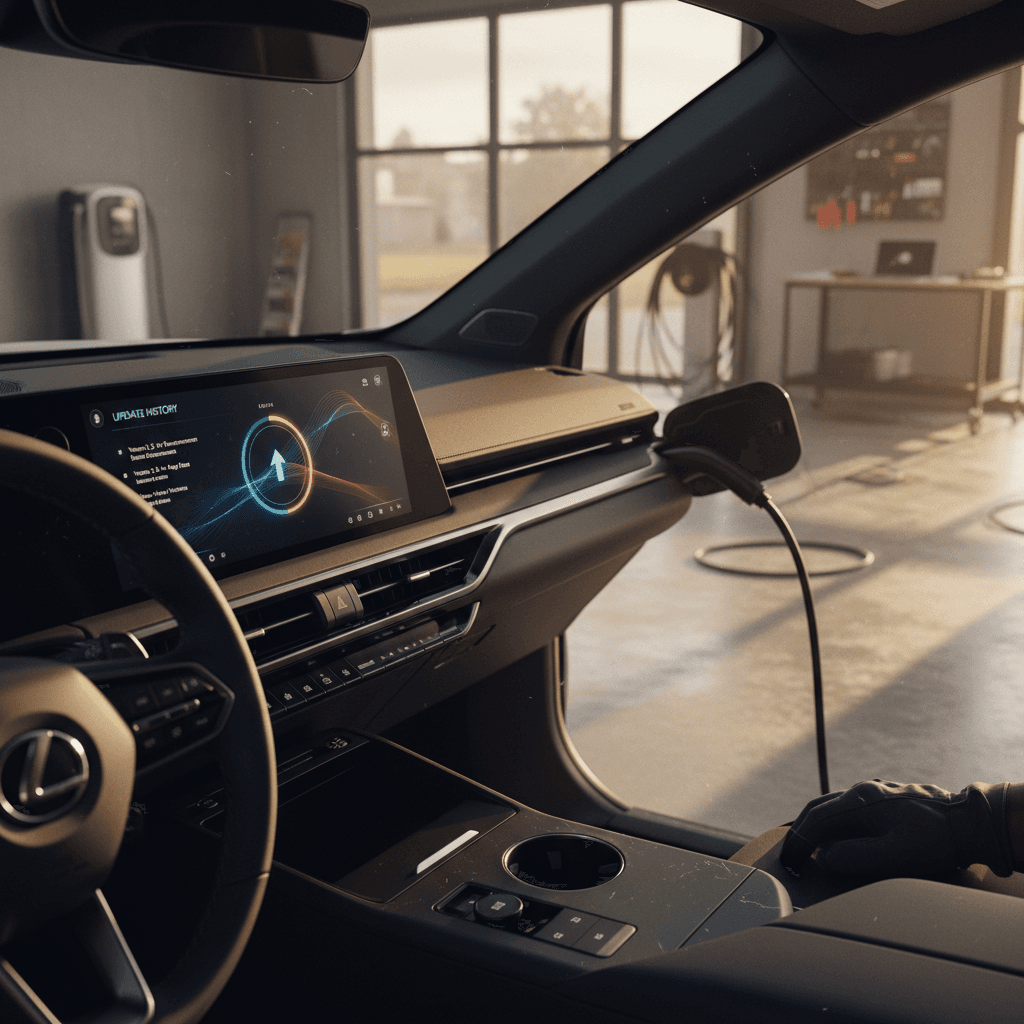
If you own, or are shopping for, a Lexus RZ, understanding the RZ’s software update history is just as important as knowing its battery size or EPA range. From launch in 2023 through the upgraded 2026 model, Lexus has used software to fix HVAC issues, expand charging access, and layer in new tech. This guide walks through the Lexus RZ software update history, what changed by model year, and what you should verify before you buy a used RZ.
Why software history matters on an RZ
Lexus RZ software update overview (2023–2026)
Lexus RZ at a glance: software + hardware changes
Lexus doesn’t market its software the way Tesla does, but under the skin the RZ has seen a steady evolution. The 2023 launch software focused on Lexus Safety System+ 3.0, DIRECT4 all‑wheel drive, and a new Lexus Interface infotainment stack. Subsequent updates have: - Corrected HVAC behavior that could disable defrost in cold conditions - Refined battery and charging management for the 2026 mid‑cycle refresh - Added support for the North American Charging Standard (NACS) ecosystem and Plug & Charge starting with the 2026 RZ and adapter support for 2023–2025 cars - Prepared higher‑performance trims such as the RZ 550e F SPORT with virtual “manual” shifting and steer‑by‑wire controls
Lexus RZ software update timeline by model year
Major Lexus RZ software eras
What changed from the 2023 launch through the 2026 refresh
2023 RZ 450e (launch)
First‑generation software with Lexus Safety System+ 3.0, DIRECT4 AWD control, and the Lexus Interface infotainment platform. Early HVAC control logic later became the focus of a recall fix.
2024–2025 RZ 450e
Incremental refinements, bug fixes, and recall‑driven software improvements. Under the skin, Lexus was preparing for a mid‑cycle refresh with revised battery and chassis control software.
2026 RZ lineup
Comprehensive update with a larger 77 kWh battery, revised battery‑management software, Plug & Charge support, standard NACS port, and in some markets new driving tech like virtual manual shifting and steer‑by‑wire.
Here’s how the RZ’s software experience breaks down by model year in North America: 2023 RZ 450e - Launch version of Lexus Interface infotainment with 14‑inch touchscreen - Lexus Safety System+ 3.0 driver‑assist suite - Early HVAC software later implicated in the defroster/defogger recall - No NACS port; DC fast charging via CCS only 2024–early 2025 RZ 450e - Same basic feature set as 2023 with rolling calibration and bug‑fix updates - Vehicles built into 2025 still use the original HVAC control software that can trigger failsafe mode and cut defrost performance under specific compressor faults 2026 RZ lineup (including RZ 550e F SPORT) - Updated battery pack (77 kWh) with new battery‑management software for more range and faster DC fast charging - Added Plug & Charge capability and access to a wider DC fast‑charging ecosystem, including the Tesla Supercharger network via the NACS standard - Expanded lineup and new driving tech (such as virtual manual M‑Mode and steer‑by‑wire on select trims) rely heavily on more advanced vehicle‑control software
Tip for shoppers
Safety and recall‑related software updates
The single biggest software event in the Lexus RZ’s history so far is a multi‑brand HVAC/defroster recall that also affects the Toyota bZ4X and Subaru Solterra. The common platform means all three share similar HVAC control logic, and a software defect in that logic triggered a federal safety recall covering roughly 94,000 vehicles built between 2023 and 2025.
HVAC / defroster recall coverage for the Lexus RZ
Production window and core fix details for the RZ portion of the joint Toyota–Subaru–Lexus HVAC recall.
| Item | Details |
|---|---|
| Issue | Software in the HVAC control ECU can trigger a failsafe mode after a specific compressor fault, suspending heater operation and degrading windshield defrost/defog performance. |
| Safety risk | Reduced ability to clear frost, ice, or fog from the windshield in low temperatures, increasing crash risk. |
| Affected RZ builds | 2023–2025 Lexus RZ built from January 23, 2023 through roughly mid‑June 2025. |
| Remedy | Dealer‑installed software update to the HVAC control ECU; in some cases, HVAC compressor replacement for customer satisfaction. |
| Cost to owner | Repairs and software updates are performed free of charge as part of the recall. |
| Owner notices | Lexus and Toyota notified owners mainly in late 2025; unsold units at dealers are reworked before sale. |
Always confirm recall completion by VIN with a Lexus dealer or the NHTSA website.
Don’t ignore the HVAC recall
Beyond the HVAC fix, Lexus has not publicized multiple named software campaigns the way some EV‑only brands do, but it’s typical for dealers to apply smaller service bulletins during visits. These might address: - Calibration of driver‑assistance sensors (lane‑keeping, adaptive cruise) - Minor infotainment bugs or Bluetooth stability - Charge‑port door logic or charge‑session handshakes with third‑party DC fast chargers For a used‑vehicle buyer, the key is less about memorizing bulletin numbers and more about verifying that **all open campaigns and recalls are closed out** on your specific VIN.
Charging, NACS, and EV routing software upgrades
The RZ launched in 2023 with conventional CCS fast‑charging hardware and software that could handshake with major DC fast‑charging networks. The big shift happens around the 2026 model year, when Lexus brings the RZ in line with the broader Toyota/Lexus BEV strategy: a NACS (SAE J3400) charging port on new RZs, software support for Plug & Charge, and official access to the Tesla Supercharger network for all Lexus BEV owners.
2023–2025 Lexus RZ
- DC fast charging via CCS port only.
- Standard authentication through charging‑network apps, RFIDs, or credit cards.
- No native Plug & Charge support at launch; charging sessions must be started manually.
- Owners gain access to a broader charging ecosystem over time through app integrations, but hardware remains CCS‑centric.
2026+ Lexus RZ
- Standard NACS (SAE J3400) port on the vehicle, aligning with the North American Charging Standard.
- Access to more than 25,000 Tesla Supercharger plugs in the U.S. and Canada, along with networks like IONNA, ChargePoint, and EVgo.
- Plug & Charge functionality that starts billing automatically as soon as you plug in, after a one‑time app enrollment.
- Improved EV routing, including intelligent Apple Maps EV routing support through the Lexus software stack.
What about 2023–2025 RZ owners?
Underneath those feature headlines are meaningful software changes: - **Battery preconditioning logic** for DC fast chargers: newer software can better prepare the pack for high‑power sessions, cutting charge times. - **Charging‑network integrations**: updated RZ software improves station discovery, price visibility, and in some cases automatic authentication. - **EV routing**: for many owners, the most visible change is smarter in‑car and smartphone routing that understands your current battery state and preferred charging networks when planning trips.
Infotainment and driver‑assistance software changes
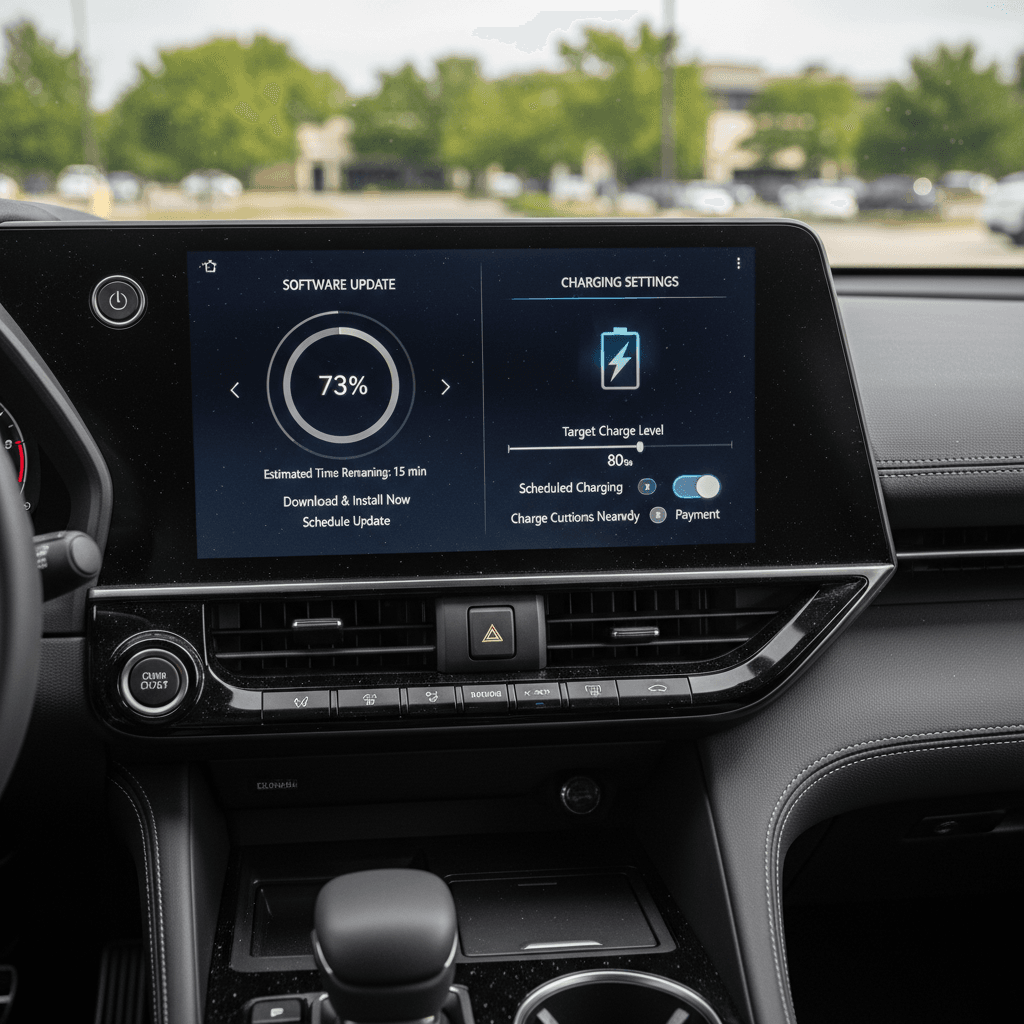
From day one, the RZ has leaned heavily on software for its cabin and safety experience. The Lexus Interface system powers the 14‑inch touchscreen, voice assistant, and connected‑services features, while **Lexus Safety System+ 3.0** coordinates cameras, radar, and steering/braking assist functions.
- Voice assistant (“Hey Lexus”) performance and natural‑language understanding
- Wireless Apple CarPlay and Android Auto stability
- Cloud‑based navigation and EV routing options
- Digital Key behavior and smartphone‑as‑key reliability
- User‑interface refinements to climate controls and camera views
Lexus doesn’t publish every interface tweak, but owners have reported occasional OTA infotainment updates that quietly add small features, such as new layout options when using Apple CarPlay, or address bugs. Major feature additions, however, tend to ride along with model‑year changes or require dealer‑installed updates tied to campaigns.
Looking ahead: steer‑by‑wire and virtual shifting
How Lexus delivers RZ software updates (OTA vs dealer)
Unlike Tesla, which pushes most changes over‑the‑air on a regular cadence, Lexus still leans heavily on its dealer network. The RZ supports certain over‑the‑air (OTA) updates for infotainment and connected‑services features, but core vehicle‑control and safety‑critical changes generally require a dealer visit.
How Lexus RZ software updates typically arrive
Understanding what really updates itself and what needs a service bay
Over‑the‑air (OTA) updates
- Focused on infotainment, navigation data, and connected‑services features.
- May add minor UI tweaks, streaming‑audio options, or smartphone‑integration improvements.
- Usually install while the vehicle is parked; you may see a prompt on the center screen.
- Happen infrequently compared with EV‑only brands, don’t expect monthly change logs.
Dealer‑installed updates
- Used for safety‑critical and regulatory items such as the HVAC/defroster recall.
- Also cover complex control modules (battery management, steering, braking, airbag logic).
- Applied during recall appointments, scheduled maintenance, or pre‑delivery inspection.
- Show up in your service history, crucial documentation when you buy or sell a used RZ.
Ask for a printed software campaign list
Software checklist for used Lexus RZ buyers
Smart software checks before you buy a used RZ
1. Run the VIN for recalls and campaigns
Use official tools or a Lexus dealer to confirm that the HVAC/defroster recall and any other open campaigns have been completed. A clean recall record is non‑negotiable.
2. Confirm model year and battery/software package
A 2026 RZ has a different battery and charging‑software profile than a 2023–2024 example. Ask the seller for documentation or a window sticker that clearly states model year and trim.
3. Ask about NACS adapter eligibility
If you’re shopping a 2023–2025 RZ, verify whether the complimentary NACS adapter has been requested or delivered, and whether the vehicle’s software has been updated to support it in the Lexus app.
4. Test HVAC and defroster performance
On a test drive, run the climate system in cold or rainy conditions. Make sure windshield defrost is strong and consistent, and listen for odd HVAC cycling that might hint at unresolved issues.
5. Inspect infotainment and connected services
Check that the 14‑inch touchscreen responds quickly, Bluetooth and wireless CarPlay/Android Auto connect reliably, and navigation displays charging stations as expected.
6. Review charging behavior in the real world
If possible, plug into a Level 2 charger and, for 2026+ RZs, a DC fast charger. Confirm that charge sessions start smoothly, Plug & Charge (where supported) works, and charge speeds match expectations.
How Recharged can help with software history
FAQ: Lexus RZ software updates and recalls
Frequently asked questions about Lexus RZ software updates
Should you worry about RZ software? Key takeaways
The Lexus RZ hasn’t had the high‑drama, weekly‑update software story of some rival EVs, but that’s not necessarily a bad thing. Its most serious software issue, the HVAC/defroster defect, has a clear recall remedy, and later‑model RZs benefit from more sophisticated battery‑management, charging, and driving‑dynamics software. If you’re shopping used, focus on recall completion, charging features, and how the car behaves on a real‑world test drive. With those boxes checked, and with a clear Recharged Score Report in hand, the Lexus RZ’s software history becomes a strength rather than a question mark.