If you’re looking at a Porsche Taycan in 2026, especially on the used market, the phrase “battery replacement cost” is probably sitting in the back of your mind. Taycan packs are huge, complex, and expensive, and you’ve heard horror stories about five‑figure EV battery bills. This guide breaks down real‑world Porsche Taycan battery replacement costs in 2026, how the factory warranty changes the picture, and what you can do today to avoid a painful surprise.
Quick snapshot for 2026
Why Taycan battery costs matter in 2026
The Taycan launched globally for the 2020 model year, which means the oldest cars in the U.S. are only about six years old as of 2026. That’s right before the steep part of the curve when depreciation, warranty expiration, and long‑term durability all collide. For many buyers, the car itself might be worth $55,000–$80,000, but the battery pack under the floor accounts for a massive chunk of that value. Understanding the cost of replacing that pack is central to calculating true long‑term ownership costs.
Key Taycan battery numbers for 2026
Sticker shock is real
How much is a Porsche Taycan battery in 2026?
Let’s get to the number everyone cares about: a full, out‑of‑warranty Porsche Taycan high‑voltage battery replacement at a U.S. Porsche dealer in 2026 is generally expected to land in the $25,000–$45,000 range. That’s for a complete pack swap, including parts, labor, and ancillary hardware. Larger‑capacity Performance Battery Plus cars will sit toward the top of that range; base‑pack cars toward the bottom.
Estimated Taycan battery repair costs at U.S. dealers (2026)
These are broad 2026 estimates for U.S. Porsche dealer work, assuming no warranty contribution. Actual quotes vary by dealer, model year, pack size, and whether Porsche participates in “goodwill” coverage.
| Repair type | What it is | Typical parts cost | Typical labor & fees | Estimated total |
|---|---|---|---|---|
| Full pack replacement, base battery | Complete HV pack swap on standard‑capacity Taycan | $18,000–$28,000 | $7,000–$12,000 | $25,000–$40,000 |
| Full pack replacement, Performance Battery Plus | Complete HV pack swap on larger‑capacity cars | $22,000–$33,000 | $8,000–$12,000 | $30,000–$45,000 |
| Module‑level repair (minor) | 1–2 modules replaced, rest of pack retained | $2,000–$6,000 | $1,000–$3,000 | $3,000–$9,000 |
| Module‑level repair (major) | 3–4 modules plus hardware replaced | $5,000–$10,000 | $3,000–$8,000 | $8,000–$18,000 |
Think of these numbers as planning tools, not guaranteed quotes. Always get a written estimate from a Porsche Center for your specific VIN.
How this compares to the car’s value
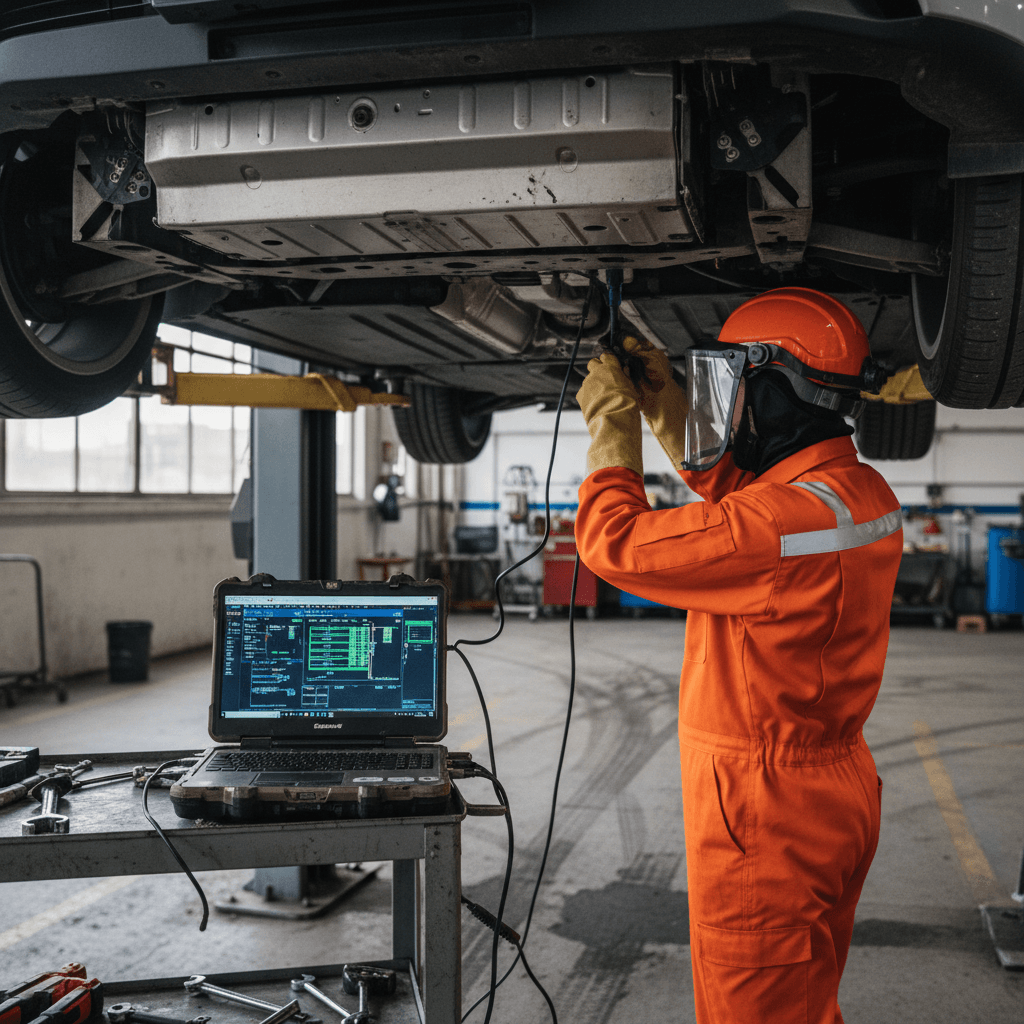
What the Taycan battery warranty covers, and when it ends
Every new Taycan sold by an authorized U.S. Porsche dealer gets two key layers of factory coverage: a 4‑year/50,000‑mile New Vehicle Limited Warranty and a separate 8‑year/100,000‑mile high‑voltage battery warranty. The battery warranty is the one that really matters for replacement‑cost anxiety, because it extends long after the basic bumper‑to‑bumper coverage expires.
- Time: 8 years from the original in‑service date (when the car was first sold or put into demo/service use).
- Mileage: 100,000 miles, whichever comes first.
- Defects: Failures in materials or workmanship in the high‑voltage battery and related components.
- Capacity: A minimum usable‑capacity guarantee, typically around 80% in the early years and 70% by year eight, depending on the specific model‑year documentation.
Map your warranty to the calendar
Certified Pre‑Owned (CPO) Taycans and Porsche Approved extended warranties can add extra peace of mind, but they typically sit on top of that factory 8‑year/100,000‑mile foundation rather than replacing it. For the 2020–2024 model years, Porsche has also issued software updates and recalls related to the high‑voltage battery, including temporary recommendations to limit charge level while updated parts are rolled in. In those cases, replacement of affected modules or packs is typically handled as a no‑cost warranty repair.
Full pack vs. module repair: which you’re likely to see
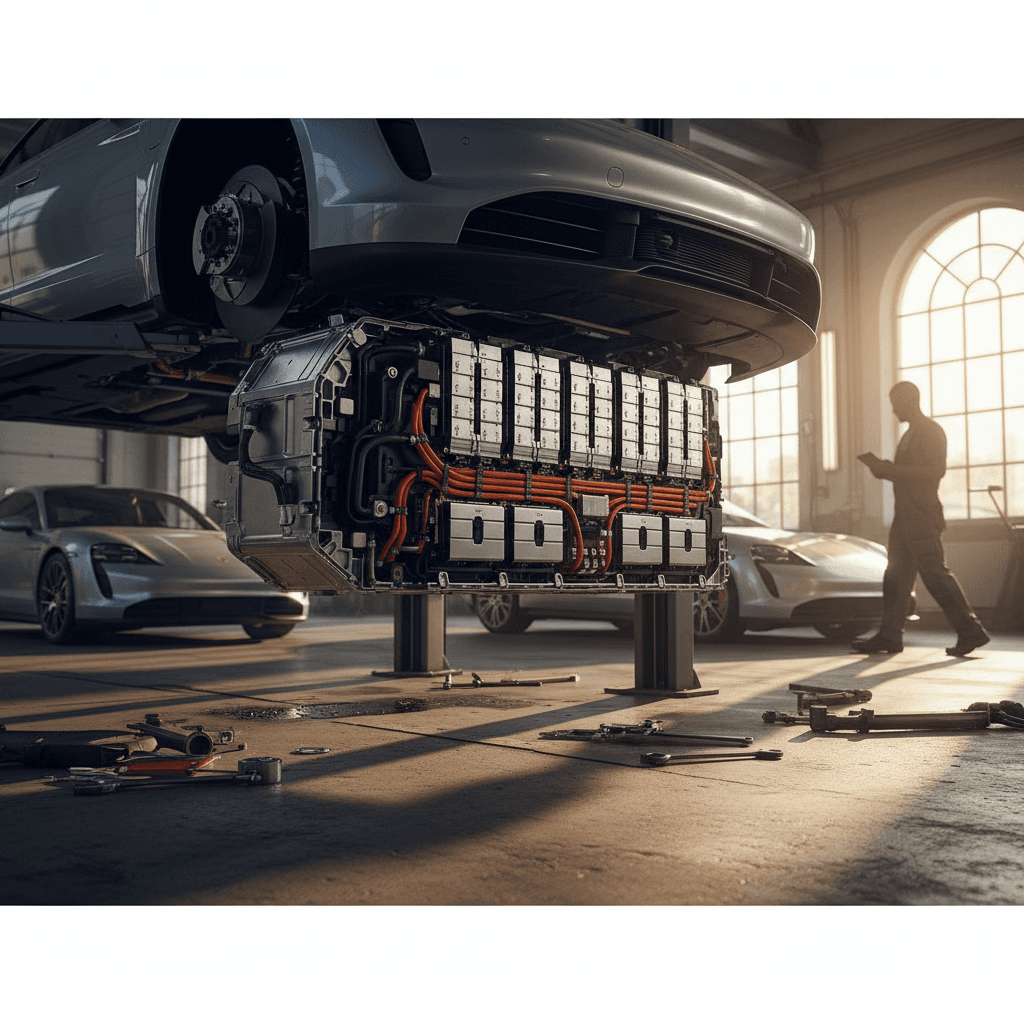
When people talk about “Taycan battery replacement,” they often picture the entire 79–93 kWh pack being pulled and replaced with a brand‑new unit. Porsche dealers absolutely can do that, and in catastrophic cases they will. But Porsche has also invested heavily in module‑level diagnostics and repair, so that many issues can be fixed by replacing a small portion of the pack rather than the whole thing.
Two main repair paths for Taycan batteries
The difference between a mid‑four‑figure job and a mid‑five‑figure one often comes down to whether your car needs modules or a full pack.
Module‑level repair
What it is: Porsche technicians diagnose individual modules and replace only the ones that are out of spec or damaged.
- Lower parts cost
- Less labor than a full pack swap
- Preserves most of the original pack
- Typical out‑of‑pocket: low to high four figures
Full pack replacement
What it is: The entire high‑voltage battery pack is removed and replaced with a new or factory‑refurbished unit.
- Highest possible parts bill
- Significant labor and safety overhead
- Usually reserved for severe failures or damage
- Typical out‑of‑pocket: mid five figures if out of warranty
Most failures don’t total the pack
5 factors that change your Taycan battery replacement cost
Even within the same model line, no two Taycan battery jobs are exactly alike. If you’re trying to budget for worst‑case scenarios, or just understand the risk profile, these are the levers that move the number up or down.
Key cost drivers to watch
1. Pack size and trim level
A Taycan with the larger Performance Battery Plus pack has more cells, more modules, and higher parts cost than a base‑battery car. Turbo, Turbo S, and Cross Turismo models often use the big pack, which nudges full‑replacement quotes toward the top of the range.
2. Warranty status and goodwill
If you’re inside 8 years/100,000 miles, Porsche usually covers defects and qualifying capacity loss. Even just outside that window, some owners see partial “goodwill” help from Porsche, especially with excellent service history, meaning you might not pay the full retail cost of a pack.
3. Extent of the damage
A handful of bad modules is a very different story from contamination or thermal events that affect the whole pack. Flood damage, collision damage, or severe abuse tends to push repairs toward total‑pack replacement and higher totals.
4. Labor rates and dealer policy
High‑voltage work requires specialized tools and certification, and Porsche dealer labor rates vary widely by region. A big‑city store with a $250/hour effective rate will naturally quote more than a smaller‑market dealer.
5. Software and campaign history
Some issues that look like “battery problems” are actually software, contactor, or charger‑side faults. Before you panic about a $30,000 pack, make sure your Taycan has all current updates and recall work completed.
Why third‑party packs aren’t a thing (yet)
2026 outlook: why most Taycan owners still won’t pay out of pocket
There’s a disconnect between the anxiety people feel about Taycan battery replacement and the reality on the ground in 2026. The reality is simple: the first big wave of battery‑warranty expirations doesn’t hit until roughly 2028 onward, when early 2020 cars age out of their 8‑year coverage. Until then, Porsche is still on the hook for most serious defects and premature capacity loss.
Taycan batteries are proving robust
Real‑world owners with high mileage, well into the six‑figure range, are reporting usable‑capacity numbers that still sit within Porsche’s warranty expectations. That doesn’t mean degradation is nonexistent, but it does mean catastrophic failures are rare so far.
The warranty clock is still ticking
Even a 2021 Taycan delivered in late 2020 is only about five to six years into its 8‑year high‑voltage battery warranty by early 2026. That leaves a substantial buffer before the risk of full, out‑of‑pocket battery replacement really spikes.
Think in terms of risk window, not just cost
Used Taycan shopping: how to avoid a battery-cost surprise
If you’re buying a Taycan used in 2026, you have a golden opportunity: depreciation has taken a bite out of MSRP, but most cars still have years of high‑voltage battery warranty remaining. The key is separating the strong cars from the risky ones before you sign anything.
Battery-focused checklist for used Taycan buyers
You don’t need to be a high‑voltage engineer, you just need the right questions and data.
1. Verify in‑service date
Ask for documentation (or a printout from a Porsche dealer) showing the original in‑service date. Subtract that from the current calendar year to see how much of the 8‑year battery warranty is left.
2. Review battery health data
Use a recent diagnostic report or a third‑party health check to see current usable capacity and any logged HV battery faults. This gives you a clearer picture than just “it feels fine.”
3. Look at mileage patterns
Extremely low‑mileage garage queens and ultra high‑milers both deserve extra scrutiny. Healthy, consistent use is often better for battery longevity than long periods of sitting.
4. Confirm recall and campaign history
Make sure all high‑voltage battery‑related campaigns and recalls have been performed, especially if the seller mentions any prior “only charges to 80%” advice from Porsche.
5. Understand CPO and extended coverage
Certified Pre‑Owned Taycans can add extra warranty layers, and some Porsche Approved extended warranties explicitly include high‑voltage components. Know exactly what you’re getting.
6. Compare similar cars
Line up a few similar Taycans (year, trim, mileage) and compare prices. If one car is significantly cheaper, ask yourself if you’re just buying someone else’s battery anxiety.
Where Recharged fits in
How Recharged helps you price and protect Taycan batteries
Taycan ownership blends supercar‑level performance with luxury‑car complexity. If you’re buying used, having a structured way to evaluate battery risk is non‑negotiable. That’s exactly the gap Recharged is designed to fill.
Recharged Score battery diagnostics
Every Taycan we list gets a Recharged Score Report, which pulls in battery health data, charging history indicators where available, and warranty information. Instead of vague assurances from a seller, you see quantified battery condition that you can compare across vehicles.
If you’re selling a Taycan, that transparency can support pricing and give buyers confidence that your car’s pack has been well cared for.
Financing, trade‑in, and protection of your downside
Because Recharged is a fully digital EV retailer and marketplace, you can finance a used Taycan, get a trade‑in or instant offer on your current vehicle, and arrange nationwide delivery without leaving your couch. Our EV‑specialist support team can walk you through the implications of battery warranty timelines on term length, down payment, and resale value.
Looking at a Taycan that’s close to the end of its 8‑year battery warranty? We’ll help you factor that into pricing and overall cost of ownership so you know whether the deal makes sense.
Frequently asked questions: Porsche Taycan battery costs
Porsche Taycan battery replacement cost FAQs for 2026
Bottom line on Porsche Taycan battery replacement cost in 2026
The looming specter of a $30,000 battery pack keeps a lot of people from enjoying what the Taycan does best: delivering repeatable, addicting performance with the refinement you expect from Porsche. In 2026, the more accurate way to think about Porsche Taycan battery replacement cost is as a long‑term risk you can actually quantify and manage, not an inevitability waiting to blow up your budget.
If you’re inside the 8‑year/100,000‑mile high‑voltage battery warranty window, catastrophic failures are largely Porsche’s problem. If you’re shopping used, you can tilt the odds in your favor by choosing cars with healthy batteries, clean campaign history, and plenty of warranty runway left, and by paying a price that reflects the real risk once that coverage ends.
At Recharged, we build that thinking directly into how we evaluate, price, and sell used EVs. Whether you’re buying or selling a Taycan in 2026, transparent battery health data and a clear understanding of replacement costs let you enjoy the car for what it is: one of the most compelling electric performance cars on the road, not just a rolling question mark about its battery.