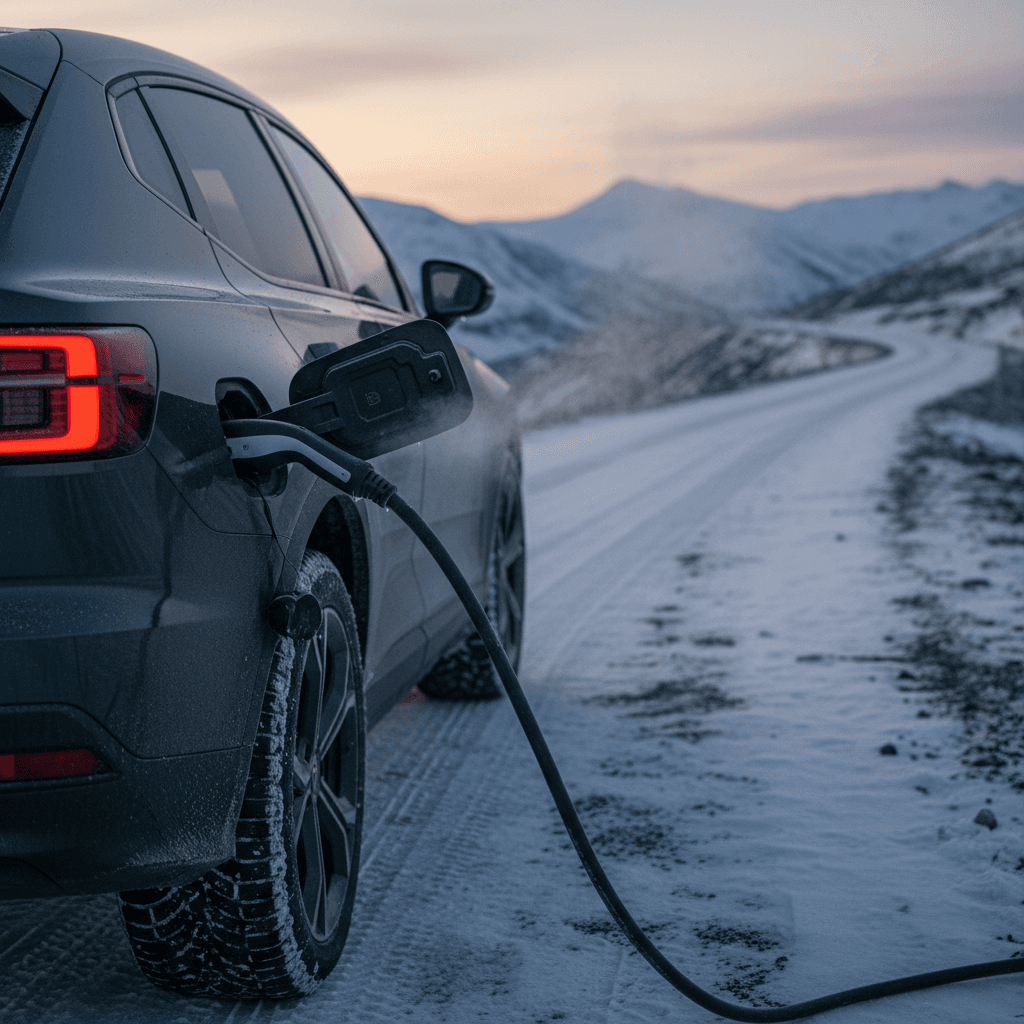
If you live where winter actually means snow, slush, and sub-freezing mornings, you’re right to wonder about Polestar 3 winter range loss. The good news: early cold-weather testing shows the Polestar 3 is one of the strongest performers in winter, but you will still see a noticeable drop in range if you’re driving in real cold.
Key takeaway
Polestar 3 winter range loss at a glance
Polestar 3 winter range snapshot
In other words, the Polestar 3 is starting from a very healthy efficiency baseline. If you’re used to hearing horror stories about EVs losing half their range in winter, the Polestar 3’s performance in independent testing should be reassuring. Still, if you routinely see single‑digit temperatures, heavy snow, or lots of high‑speed driving, planning for some winter range loss is smart.
How much range do EVs lose in winter?
Before we zero in on the Polestar 3, it helps to understand how EV winter range loss looks across the industry. Multiple large real‑world studies and cold‑weather tests on recent EVs point to a fairly consistent pattern:
- Across thousands of vehicles and models, EVs typically retain around 80% of their rated range in freezing conditions, meaning roughly a 20% loss is common in everyday winter driving.
- Some models do much better, losing as little as 10–15% in moderate cold, while others lose 30–40% or more, especially in severe cold or at sustained highway speeds.
- Heat‑pump‑equipped EVs tend to perform noticeably better in the cold than those relying on older, resistance‑type cabin heaters.
- The biggest culprits behind range loss aren’t just cold batteries – it’s the energy you spend keeping the cabin warm, defrosting glass, and pushing through snow and slush.
So if your previous EV dropped 25–30% in range every time the temperature hit freezing, that’s not unusual. The question is: where does the Polestar 3 land on that spectrum, and what can you realistically expect in your climate?
What real-world tests show about Polestar 3 in the cold
Official range ratings only tell part of the story. To understand Polestar 3 winter range loss, you want to look at real‑world cold‑weather tests.
Polestar 3 winter test vs. rating
How the Polestar 3 stacked up in a multi‑EV winter range test that started at 100% state of charge and ran vehicles down near empty in Norwegian winter conditions.
| Model | Battery (net) | Official WLTP range | Measured winter range | Difference |
|---|---|---|---|---|
| Polestar 3 | 107 kWh | 348 miles | 330 miles | ‑18 miles (~5%) |
| Sample competitor SUV A | ~80 kWh | 339 miles | 271 miles | ‑68 miles (~20%) |
| Sample competitor sedan B | ~95 kWh | 343 miles | 267 miles | ‑76 miles (~22%) |
| Sample competitor sedan C | , | 436 miles | 330 miles | ‑106 miles (~24%) |
Polestar 3 stood out in a group of 20+ modern EVs for its small gap between rated and measured winter range.
Why this matters
Keep in mind that the test above used European WLTP ratings and Norwegian conditions – not U.S. EPA figures and not your specific driving style. But even with those caveats, it’s an encouraging datapoint: the Polestar 3 appears to lose less range in winter than many rivals, and significantly less than you might expect if you’re coming from an earlier‑generation EV.
Why the Polestar 3 handles winter better than many EVs
1. Big, modern battery pack
The Polestar 3 uses a large 107 kWh (net) battery in its long‑range configurations. That gives you a healthy cushion: even if you lose 15–20% of your rated range in the cold, you still have real‑world distance that rivals or beats many midsize luxury SUVs.
In U.S. EPA terms, Polestar estimates up to about 350 miles of range for the rear‑drive Long Range model, around 315 miles for the Dual Motor, and roughly 279 miles for the Performance Pack – all before winter penalties or aggressive driving.
2. Efficient thermal management and heat pump
The Polestar 3 is built on a modern platform shared with Volvo, with a focus on cold‑climate performance. It uses a sophisticated thermal management system and heat‑pump‑based climate control (depending on trim and market) to shuffle heat where it’s most useful.
Compared with older EVs that warm the cabin with simple resistance heaters, a heat pump typically cuts winter range loss significantly by using far less energy per degree of cabin heat.
3. Preconditioning that actually works
Polestar’s software allows you to preheat the cabin and battery while plugged in, either on a schedule or via the app. That means the heavy lifting of warming up happens while you’re still on shore power – not while you’re counting on the battery to cover every mile.
For longer trips, routing to a DC fast charger in the built‑in navigation lets the car automatically pre‑condition the pack, improving charging speed even on cold days.
4. Honest, conservative range estimates
One quiet advantage of Polestar and Volvo products is that their in‑car range estimates tend to be more realistic than some of the most optimistic competitors. In winter, that helps you plan conservatively and avoid the kind of last‑20‑miles anxiety that can sour a road trip.
Combine that with strong winter test results, and the Polestar 3 shapes up as a very confidence‑inspiring cold‑climate EV.
Estimating your own Polestar 3 winter range
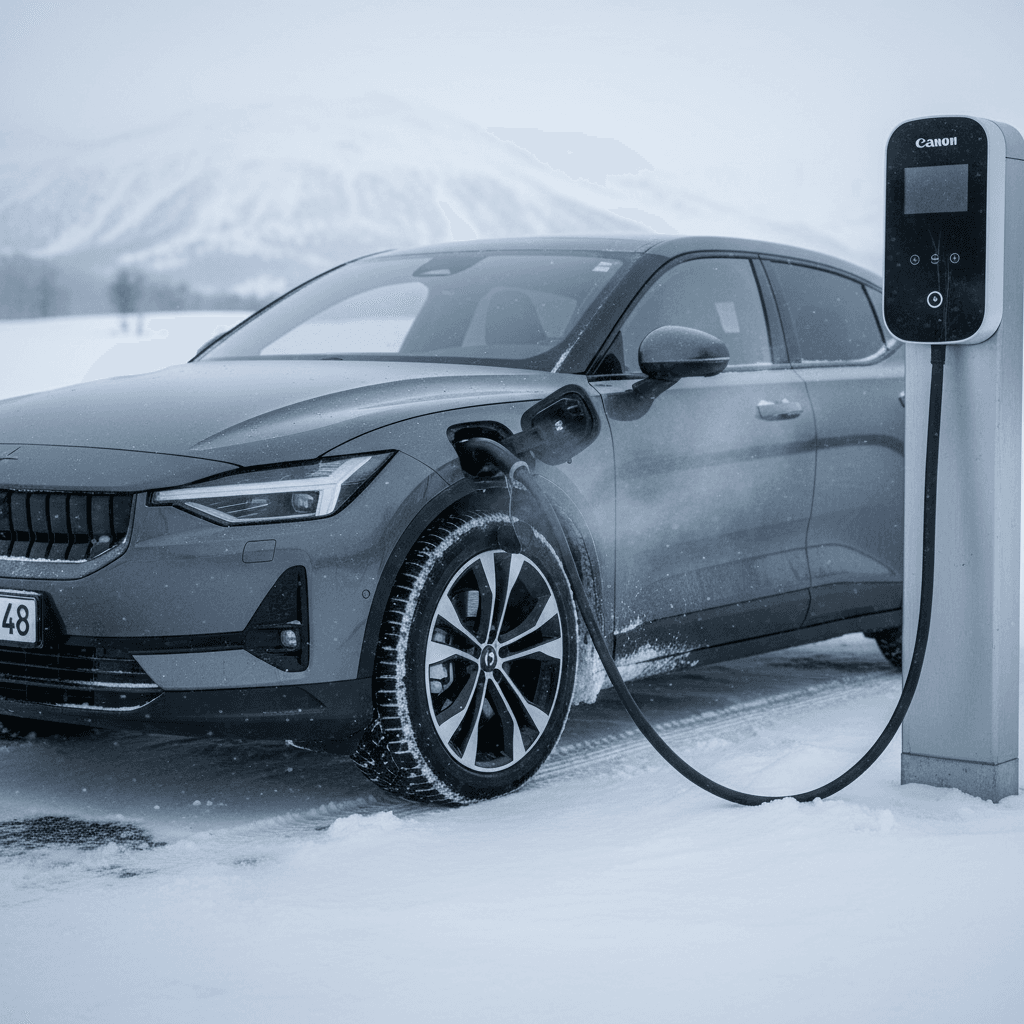
Range is personal. Your climate, speed, terrain, and heating habits all matter. But you can still build a sensible working estimate for Polestar 3 winter range using a few simple rules of thumb.
Example Polestar 3 winter range scenarios
Use these as ballpark starting points, then adjust based on your own driving and climate.
Mild winter, mixed driving
Conditions: 25–40°F, mostly city/suburban, moderate speeds, heater set to comfortable but not tropical.
What to expect: ~10–15% range loss. A Dual Motor rated around 315 miles might deliver roughly 260–285 miles per charge.
Typical U.S. freeway winter
Conditions: 15–32°F, sustained 70–75 mph, heater running, occasional wind.
What to expect: 15–25% range loss. That same Dual Motor could see closer to 235–265 miles between charges.
Deep cold & harsh conditions
Conditions: Single‑digits or below, strong wind, snow/slush, frequent defrost, roof box or heavy load.
What to expect: 25–35% (or more) range loss. Plan for 200–235 miles and charge more often.
Remember the hidden energy drains
10 ways to cut Polestar 3 winter range loss
You can’t change the laws of physics, but you have a lot of influence over how much winter range you actually give up. Here are practical, Polestar‑specific strategies that make a real difference.
Polestar 3 winter range playbook
1. Precondition while plugged in
Use the Polestar app or in‑car scheduler to warm the cabin and battery while the car is still connected to your home charger. That way, you start with a warm pack and a cozy interior without burning through driving range.
2. Use seat and wheel heaters first
Heated seats and steering wheel use far less energy than cranking the cabin temperature. Set the climate a few degrees lower and lean on the seat and wheel heaters to stay comfortable.
3. Avoid lots of short, cold starts
Back‑to‑back five‑minute trips with hours of cooling in between are brutal for winter efficiency because the car has to re‑heat itself every time. Bundle errands into longer drives when you can.
4. Dial back your speed
Aerodynamic drag rises quickly with speed. Dropping from 75 mph to 65 mph can save a surprising amount of winter range in any EV, including the Polestar 3.
5. Choose ECO climate when appropriate
Use your Polestar’s ECO climate or efficiency‑oriented drive mode in steady cruising. It tempers peak climate demand and optimizes power delivery, often preserving noticeable miles of range over a full pack.
6. Keep tires properly inflated
Cold air drops tire pressure, which increases rolling resistance and hurts range. Check your Polestar 3’s tire pressures regularly in winter and keep them at the recommended levels.
7. Minimize roof boxes and extra drag
Roof racks, boxes, and big ski carriers can knock range down further, especially at highway speeds. Remove them when you’re not actively using them or factor in extra charging stops.
8. Use navigation to fast chargers
When you add a DC fast charger as a destination, the Polestar 3 can pre‑condition the battery for faster charging. That saves time and reduces the temptation to arrive at chargers with a very low state of charge in the cold.
9. Don’t run the battery to empty
In deep cold, give yourself more buffer. Instead of arriving with 5%–10% remaining, aim for 15%–20%, especially in rural areas. That margin helps if a charger is offline or slower than advertised.
10. Store the car indoors when possible
If you have a garage, use it. Even an unheated garage is usually warmer than the outside air, so the battery and cabin start closer to their happy zone.
Pro tip for used Polestar 3 shoppers
Winter driving, fast charging and long-term battery health
Cold weather does more than shorten range for the day – it also changes how fast your Polestar 3 will accept charge and, over the long term, how the battery ages. The Polestar 3’s battery management system is designed to protect the pack, but how you use it still matters.
Charging in the cold
- Fast charging a cold battery is limited: If you arrive at a DC fast charger with a cold pack, the car will restrict charging rates to protect the cells. Pre‑conditioning via navigation helps, but you’ll still see lower peak speeds in deep winter than in July.
- Home Level 2 is your winter friend: Overnight Level 2 charging keeps the battery in a gentle temperature window and often finishes close to your departure time. That combination is good for both range and long‑term health.
State of charge habits
- For day‑to‑day use, it’s healthy to charge to around 80–90% rather than 100%, unless you need the full pack for a long winter trip.
- Try to avoid repeatedly running down close to 0% in severe cold. That’s stressful for both you and the cells, and it leaves less margin if a charger is busy or out of service.
- Polestar’s software helps manage these extremes, but thoughtful charging habits will preserve your usable winter range for years to come.
Don’t ignore reduced performance warnings
Quick winter range checklist for Polestar 3 owners
On a busy weekday morning or before a long winter road trip, you don’t have time to overthink every setting. Use this short checklist as your go‑to routine.
Day‑of‑trip Polestar 3 winter checklist
Set departure preconditioning
The night before, schedule climate preconditioning for 15–30 minutes before you leave, while plugged in.
Confirm charge level
Aim to start winter trips at 80–90% state of charge unless you truly need more. For routine commuting, 60–80% is usually plenty.
Check tire pressures
Verify that pressures are at the recommended levels for your tire type and load. Adjust for cold weather if your owner’s manual suggests it.
Plan chargers into navigation
Add one or two DC fast chargers as waypoints so the car can pre‑condition the battery and you’re never relying on a single station.
Pack a simple winter kit
Carry gloves, an ice scraper, charging cards/apps you’ll need, and a backup plan for another charger along your route.
Review range vs. distance
Double‑check that your estimated remaining winter range comfortably exceeds the day’s mileage, then add a buffer for weather surprises.
Polestar 3 winter range loss: FAQ
Common questions about Polestar 3 winter range
Is the Polestar 3 a good winter EV to buy used?
If winter performance is high on your priority list, the Polestar 3 belongs on your short list. Independent testing suggests smaller winter range losses than many peers, and the combination of a large battery, modern thermal controls, and honest range estimates makes it a confidence‑inspiring choice for snowy commutes and long‑distance ski trips alike.
When you’re comparing used EVs, remember that every car’s winter behavior is shaped by its past. That’s where a data‑driven approach helps. At Recharged, every vehicle comes with a Recharged Score Report that includes verified battery health, fair‑market pricing, and expert guidance tailored to how and where you drive. If you’re weighing a used Polestar 3 – or cross‑shopping it against other long‑range SUVs – that kind of clarity can make all the difference between guessing and knowing how it will perform when the temperature drops.