If you’re eyeing a Polestar 3 as a luxury electric SUV that can handle serious highway miles, the spec sheet looks promising. But EPA numbers rarely tell the whole story. What drivers really want to know is: what is the Polestar 3’s real-world highway range at typical American interstate speeds, with passengers, luggage, and real weather in the mix?
Quick takeaway
Polestar 3 highway range at a glance
Polestar 3 range and consumption snapshot
On paper, the Polestar 3 looks strong for a mid-size luxury EV SUV. The 2025 models use a 111 kWh battery (about 107 kWh usable) and are EPA-rated up to 350 miles for the Long Range Single Motor and 315 miles for the Long Range Dual Motor, with the Performance Pack dropping to 279 miles. That’s competitive with Mercedes EQE SUV, BMW iX, and even some Tesla Model X configurations.
EPA numbers vs. your reality
EPA range vs real-world highway results
To understand Polestar 3 real-world range on the highway, it helps to separate what’s printed on the window sticker from what reviewers and owners are seeing in the wild.
EPA range vs. tested real-world range
How different Polestar 3 trims perform when driven in real conditions.
| Trim (2025) | EPA rated range | Highway-biased test result | Notes |
|---|---|---|---|
| Long Range Single Motor | up to 350 mi | High 200s–low 300s mi | Mixed driving reviews have seen ~280–330 mi before recharging. |
| Long Range Dual Motor | up to 315 mi | Mid/high 200s mi | Energy use rises vs. single motor; still solid for a heavy SUV. |
| Dual Motor w/ Performance Pack | 279 mi | ~300 mi in one independent test | Edmunds saw ~303 mi in their EV Range Test, despite this being the least efficient trim. |
| Australian long-distance drive (RWD) | Claimed ~438 mi (706 km) WLTP | Sub-250 mi (~400 km) in harsh, remote conditions | Challenging heat, speeds, and sparse charging pulled range well below lab ratings. |
Real-world range depends heavily on speed, climate, elevation, and wheel size, but patterns are already emerging from early tests.
In U.S.-style driving, the most telling data point so far comes from an instrumented test of a Polestar 3 Dual Motor with Performance Pack. Despite having the shortest EPA range in the lineup at 279 miles, it managed about 303 miles in a mixed real-world test. That’s encouraging, but keep in mind that was not a pure 75–80 mph highway loop; it mixed in slower segments where EVs shine on efficiency.
From multiple early tests and the Polestar 3’s published consumption (as high as 44 kWh/100 miles for the Performance trim), a reasonable rule of thumb is this:
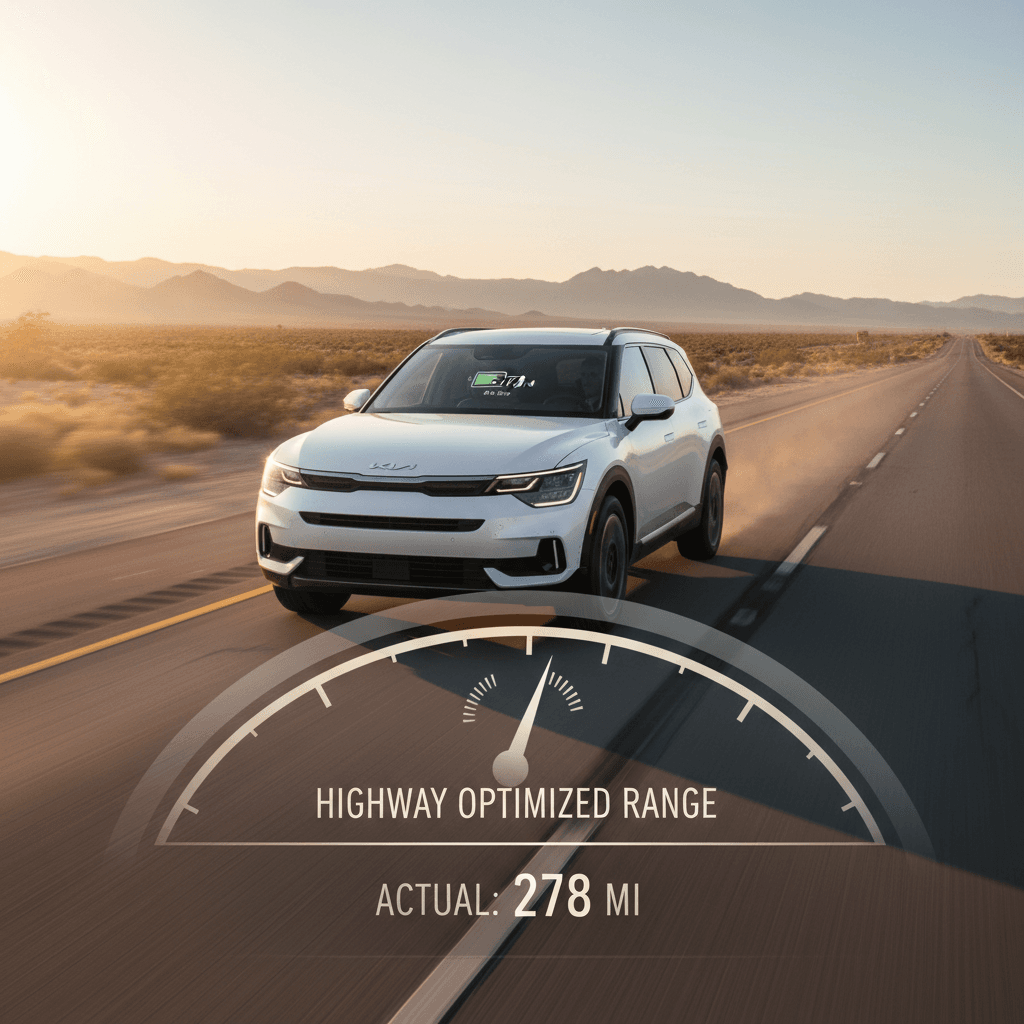
- At a steady 65 mph on relatively flat ground in mild weather, expect 80–90% of EPA range.
- At a steady 70–75 mph, expect more like 70–80% of EPA range.
- At 80 mph or in strong headwinds, think in terms of 60–70% of EPA range, especially on the dual-motor Performance model with big wheels.
A simple planning shortcut
How fast highway driving actually cuts your range
Aerodynamic drag climbs exponentially with speed, so fast highway cruising is the enemy of range in any EV, especially a tall, heavy SUV like the Polestar 3. Its big frontal area and performance-oriented tires mean you pay a penalty when you sit in the left lane at 80 mph.
Realistic range at common U.S. speeds
- 65 mph, 70°F, light load: A Long Range Single Motor Polestar 3 can often come respectably close to its EPA number. Think high 200s to low 300s miles.
- 70–75 mph: Expect 15–25% more energy use than at 65 mph. A 315-mile rated dual-motor may feel like a 230–250 mile SUV.
- 80 mph: You’re in the efficiency penalty box. It’s easy to see consumption jump enough that a "279-mile" Performance trim behaves more like a 190–210 mile highway machine.
Why the Polestar 3 feels thirsty at speed
- Weight: Around 5,400–5,700 pounds depending on trim and options.
- Wide performance tires: Pirelli P Zero Elect rubber is great for grip, not for low rolling resistance.
- Big frontal area: This is a tall, boxy SUV with generous ground clearance and a relatively upright stance.
- Dual-motor tuning: AWD and Performance models trade some efficiency for acceleration and traction.
Cold and heat make things worse
2025 vs 2026 Polestar 3: Range and charging updates
If you’re comparison-shopping a used 2025 Polestar 3 against a newer 2026 model, there are some important differences in architecture, range, and charging that will affect your real-world highway experience.
Key differences: 2025 vs 2026 Polestar 3
Both are strong long-distance EVs, but the 2026 refresh tilts even more toward fast-charging road-trip use.
2025 Polestar 3
- Battery: 111 kWh (about 107 kWh usable)
- Architecture: 400V
- DC fast charge: Up to 250 kW; 10–80% in about 30 minutes under ideal conditions.
- Range: EPA 279–350 miles depending on trim.
- Connector: CCS1 (many U.S. cars will include a NACS adapter as networks transition).
2026 Polestar 3 (announced updates)
- Battery options: 92–106 kWh class packs, slightly smaller but more efficient cells.
- Architecture: 800V, supporting faster and more consistent fast charging.
- DC fast charge: Up to ~310–350 kW with 10–80% in the low 20‑minute range in some trims.
- Range: Similar or slightly improved EPA range (roughly mid‑270s to mid‑340s), but better highway efficiency and faster charging.
- Connector: Native NACS for North America, simplifying Tesla Supercharger access as the network opens more broadly.
From a highway perspective, that means 2025 models give you a bigger gross battery and respectable fast charging, while 2026 models trade a bit of pack size for quicker charge stops and a more efficient powertrain. If you road‑trip a lot, the faster 800‑volt, NACS‑equipped models will feel more convenient even if their rated range isn’t dramatically higher.
7 big factors that shrink Polestar 3 highway range
Whether you’re driving a new or used Polestar 3, the same core factors determine how far you’ll actually go between charging stops. Understanding them makes the difference between white‑knuckle range anxiety and relaxed, predictable trips.
Factors that matter most on the highway
1. Speed above 70 mph
Every 5 mph above about 65 mph has an outsized impact. In a Polestar 3, cruising at 80 instead of 70 can cost you 15–25% of your potential range.
2. Wheel size and tire choice
The Polestar 3 looks great on big 21- or 22‑inch wheels, but they increase rolling resistance and aerodynamic drag. Smaller wheels and touring‑oriented tires can add meaningful extra miles.
3. Temperature and climate control
Battery chemistry prefers mild temperatures. Cabin heating and cooling are power‑hungry at highway speeds. Expect shorter range in harsh winters and very hot summers, especially on short first legs after a cold or hot soak.
4. Elevation changes and headwinds
Climbing long grades or driving into strong headwinds can temporarily push energy use into the mid‑40s kWh/100 miles, especially in dual‑motor trims. Plan extra buffer in mountainous or windy regions.
5. Vehicle load and roof accessories
Passengers, luggage, bikes on a hitch rack, or a roof box all add drag or weight. A loaded vacation run can easily cut 10–15% off the quiet solo commute range you see back home.
6. Driving style
Smooth throttle inputs, leaving gaps instead of constant braking and re‑accelerating through traffic, and using adaptive cruise all help. Aggressive passing and late‑braking driving styles magnify range loss.
7. Preconditioning and charging strategy
On DC fast‑charge‑heavy trips, using the nav to precondition the battery before a stop not only shortens charge time, it can improve average efficiency by letting you run a bit deeper into the pack with confidence.
Why this still works for road trips
Planning road trips in a Polestar 3
The Polestar 3’s real‑world highway range is only half the story. The other half is how often, and how quickly, you can recharge. The good news is that Polestar pairs its big pack with competitive DC fast‑charging performance, especially in the 2026+ models with 800‑volt architecture.
Example highway planning scenarios
How far you can reasonably plan between stops in different trims and conditions.
| Trim & conditions | Comfortable max distance between DC fast charges | Charge stop time (10–80%) | Notes |
|---|---|---|---|
| Long Range Single Motor, mild weather, 70 mph | 230–260 mi | 2025: ~30 min, 2026: low 20s | One stop covers most 400–500 mile days. |
| Dual Motor, mild weather, 70–75 mph | 210–240 mi | Same as above | Heavier and less efficient than RWD, but better traction. |
| Dual Motor Performance, 21–22" wheels, 75–80 mph | 190–220 mi | 2025: ~30 min, 2026: low 20s | Shortest range combo; plan more frequent, shorter stops. |
| Any trim, winter at 30°F with heater running | Reduce by 15–25% | Add 5–10 min of buffer | Preconditioning and seat/steering wheel heaters help reduce HVAC load. |
These are conservative guidelines, experienced EV drivers often stretch them, but they’re good starting points if you’re new to road tripping in a Polestar 3.
Use the car’s built‑in trip planner
- On long trips, think of 150–220 miles between stops as the comfortable sweet spot.
- If you’re in a hurry, arrive at fast chargers around 10–20% and unplug by 60–80%, that’s where charging is fastest.
- Consider staying in hotels with Level 2 charging. Starting each day at or near 100% makes range a non‑issue.
- If you’ll rely on Tesla Superchargers, verify support for your car (via NACS or adapter) along the route before you leave.
Buying a used Polestar 3: Range and battery health
Because the Polestar 3 is a premium, relatively new EV, many shoppers will first meet it on the used market in the coming years. Highway range isn’t just about the original spec sheet, it’s also about how the battery has aged and how the previous owner treated the car.
What to look for in a used Polestar 3
Highway range, battery health, and long‑term ownership confidence go hand in hand.
Battery health data
Real‑world range history
Charging & service history
This is where a used‑EV‑focused retailer like Recharged can help. Every vehicle includes a Recharged Score Report, which summarizes verified battery health, fair‑market pricing, and how the car’s real‑world range should hold up for your lifestyle. When you’re buying a used Polestar 3, that kind of transparency can be the difference between guessing and knowing.
Range questions to ask the seller
FAQ: Polestar 3 real-world highway range
Frequently asked questions
Bottom line on Polestar 3 highway range
The Polestar 3 is not a hyper‑efficient aero bullet, but it is a highly competent long‑distance EV SUV. In the real world, you should think of it as a 220–300 mile highway vehicle, depending on trim, speed, weather and wheels, with DC fast charging quick enough to make those 20–30‑minute coffee and restroom stops feel natural rather than forced.
If you understand how EPA numbers translate to real‑world use, and you plan routes with a bit of buffer, the Polestar 3 can cover serious ground without drama. And if you’re considering a used Polestar 3, working with a seller that provides transparent battery‑health data, like the Recharged Score Report, helps ensure that the highway range you’re counting on is what you’ll actually get when the road opens up in front of you.