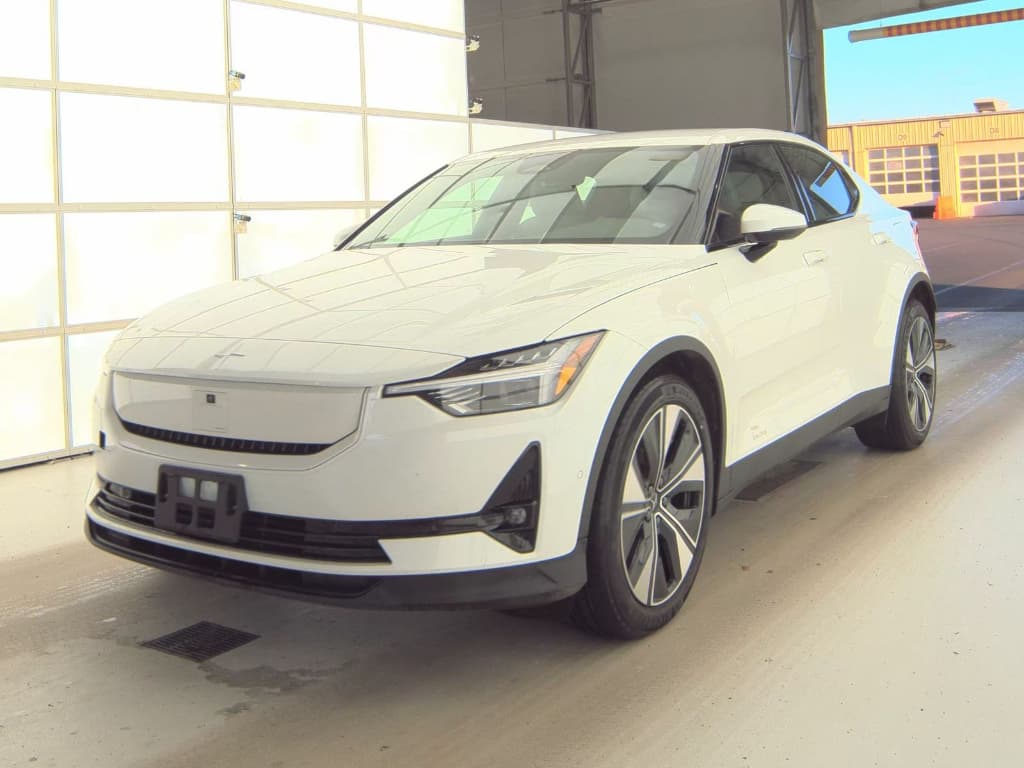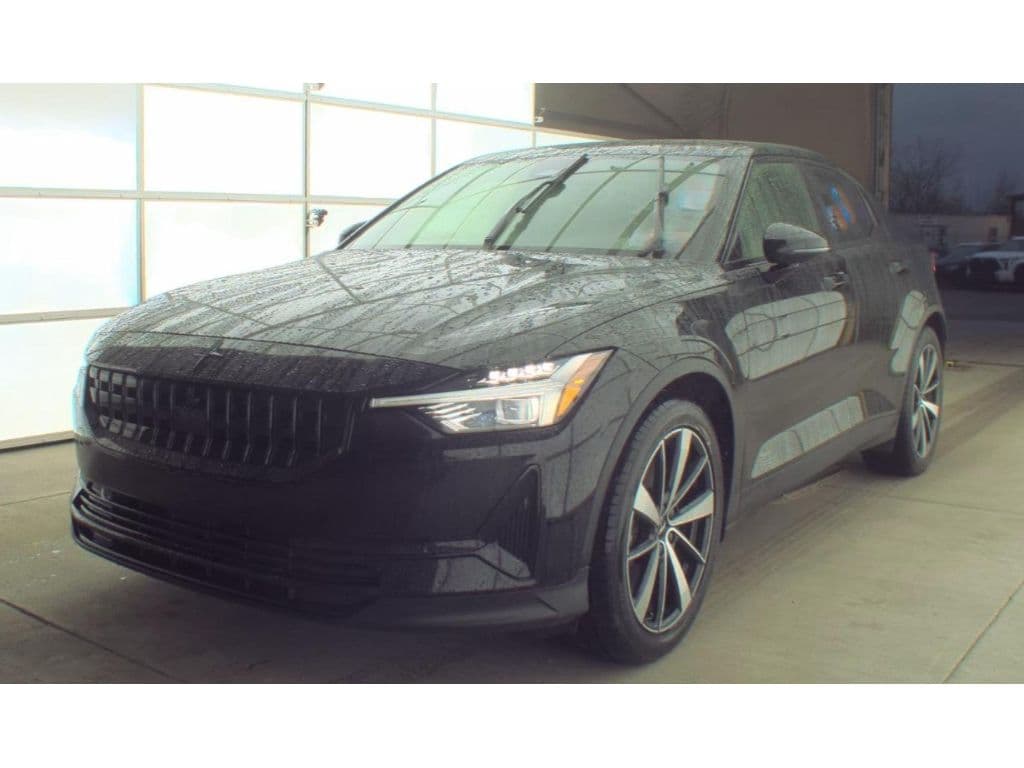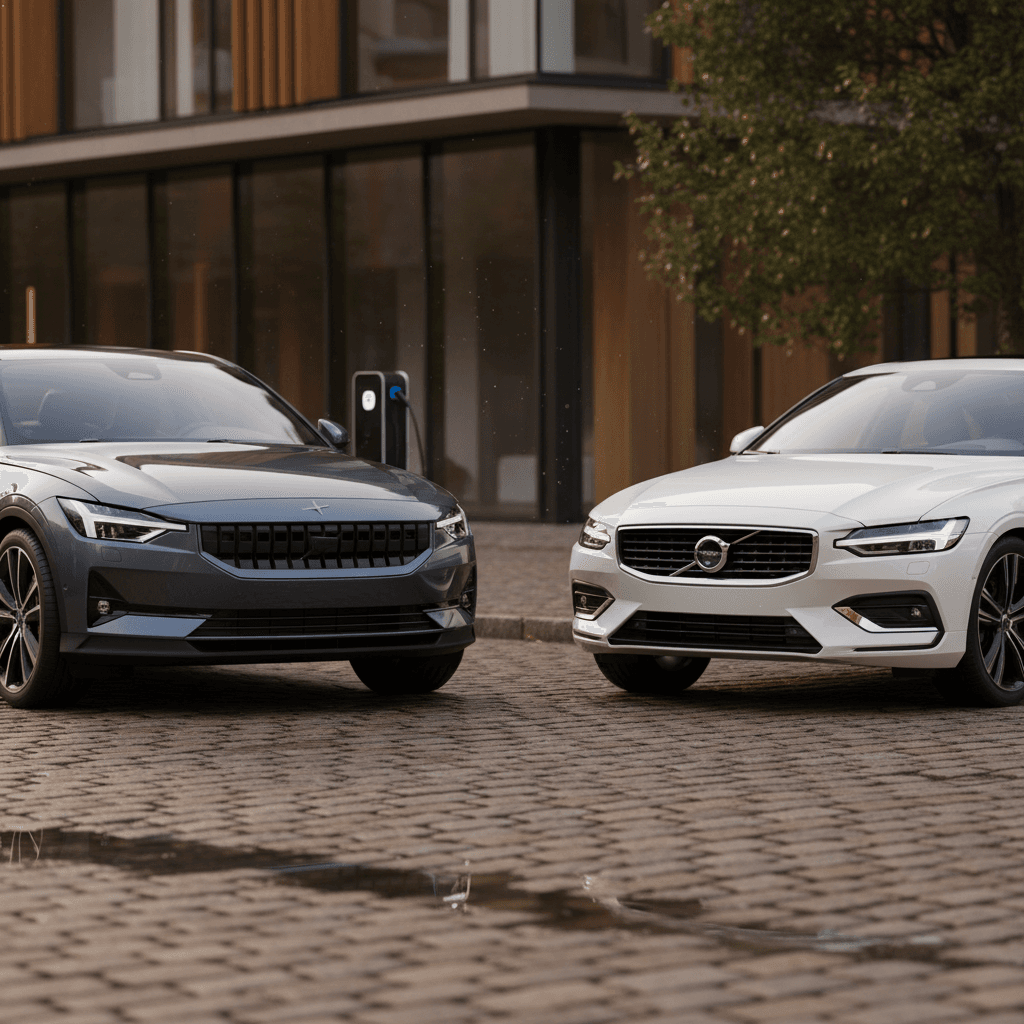
You’re cross-shopping the Polestar 2 and Volvo S60 and trying to decide which one actually makes sense to live with every day. On paper they share Swedish roots and similar size. In reality, one is a fully electric fastback, the other a traditional luxury sedan that’s mostly sold today as the S60 Recharge plug-in hybrid. This guide walks through Polestar 2 vs Volvo S60 in clear, practical terms so you can decide which you should buy based on your driving, budget and charging situation.
Same family, different philosophies
Polestar 2 vs Volvo S60: Quick Specs Snapshot
Headline Specs: Polestar 2 vs Volvo S60 (U.S. market, recent model years)
High-level comparison of typical late-model Polestar 2 and Volvo S60 / S60 Recharge specs relevant to shoppers.
| Category | Polestar 2 (Long Range Single / Dual Motor) | Volvo S60 B5 (Gas Mild Hybrid) | Volvo S60 Recharge T8 (Plug-in Hybrid) |
|---|---|---|---|
| Power (hp) | ~299–421 hp (single vs dual motor) | 247 hp combined turbo 2.0L + mild hybrid | ~455 hp combined turbo 2.0L + e-motor |
| 0–60 mph | ≈4.3–5.9 seconds (trim dependent) | ≈6.4 seconds | ≈4.1 seconds |
| Battery / Fuel | 82 kWh battery (typical long-range pack) | 15.9 gal fuel tank (approx.) | 18.8 kWh battery + gas tank |
| EPA Range / MPG-e | up to ~300 miles EPA on newer single‑motor cars | low‑30s mpg highway in real use | ~40+ miles electric + high-30s mpg combined |
| Drivetrain | RWD or AWD (depending on trim) | FWD or AWD (market/trim) | AWD |
| Energy Source | All-electric, DC fast-charge capable | Gasoline only | Plug-in hybrid: charge + gas |
Exact numbers vary by trim and model year, but these figures reflect common U.S. configurations you’ll see on dealer and used-car lots.
Check the exact trim you’re looking at
Driving Experience: Performance, Handling and Comfort
Polestar 2: EV punch and planted feel
- Instant torque: Even the single‑motor Polestar 2 delivers strong shove from a stop; dual‑motor cars feel genuinely quick.
- Lower center of gravity: The battery in the floor helps the car feel planted in corners.
- Firm, sporty ride: Especially on 19–20 inch wheels, the ride skews firmer than a typical luxury sedan. Great for drivers who like feedback, less ideal if you prioritize softness.
- One-pedal driving: Strong regenerative braking lets you drive mostly with the accelerator once you’re used to it, which many EV owners end up loving.
Volvo S60: Classic luxury sedan manners
- Quiet, refined cruising: The S60 is tuned for comfort first, with a more compliant suspension and traditional sedan driving position.
- S60 Recharge punch: The T8 plug‑in hybrid adds serious power; it’s actually quicker than many Polestar 2 trims in a straight line.
- Conventional feel: Gear selector, engine sound and braking all feel familiar if you’re coming from gas cars.
- Less instant response: You still get strong acceleration in the Recharge, but it doesn’t have the same immediate, linear push you feel in a dual‑motor EV.
Test drive them back-to-back
Efficiency, Range and Fuel Economy
Here’s where the Polestar 2 vs Volvo S60 comparison stops being theoretical and starts hitting your monthly budget and daily routine.
How far you go on a charge or a tank
Electric range vs gasoline MPG vs plug‑in hybrid flexibility.
Polestar 2 range
Late‑model long‑range single‑motor Polestar 2s can deliver around 270–300 miles of EPA‑rated range depending on year and wheel choice. Dual‑motor cars trade some range for performance, often landing in the 230–270 mile band.
Real‑world range will vary with temperature, speed and driving style, but most U.S. owners treat it as a solid 200‑plus‑mile car even in less‑than‑ideal conditions.
Volvo S60 fuel economy
A gas‑only S60 with the 2.0‑liter turbo four typically returns low‑30s mpg on the highway and mid‑20s combined. That’s respectable for a luxury sedan, but fuel costs add up fast if you have a long commute or live where gas prices are high.
S60 Recharge plug‑in hybrid
The S60 Recharge plug‑in hybrid offers roughly 40+ miles of electric-only range from its 18.8 kWh battery when new. For many commuters, that covers a full day of driving without using gas.
Once the battery is depleted, it behaves like an efficient turbo gas sedan, so long trips are simple: you just keep fueling up.
Think in terms of your weekly miles
Charging vs Fueling: How Each Fits Your Routine
The biggest "which should I buy" divider between Polestar 2 and Volvo S60 is how comfortable you are trading gas stations for charging cables.
Living with a Polestar 2
- Home charging is the unlock: With a Level 2 charger, most owners plug in overnight and wake up to a full battery. You rarely think about public charging unless you road trip.
- Public charging: DC fast charging can take a Polestar 2 from a low state of charge to 80% in roughly 30–40 minutes on a capable charger, depending on model year.
- Network access: Availability varies by region, but fast chargers along major corridors are improving rapidly, especially near metro areas.
Living with a Volvo S60 / S60 Recharge
- No charging? Go gas S60: If you have zero access to home or reliable workplace charging, a traditional S60 keeps life simple, fuel anywhere in minutes.
- Best of both worlds with Recharge: With a plug at home, you can run electric for weekday errands yet still road‑trip like any gas sedan.
- Less planning: For multi‑state drives in regions with sparse charging, the S60 Recharge is still easier to live with.
Be honest about your charging reality
Interior Space, Tech and Everyday Practicality
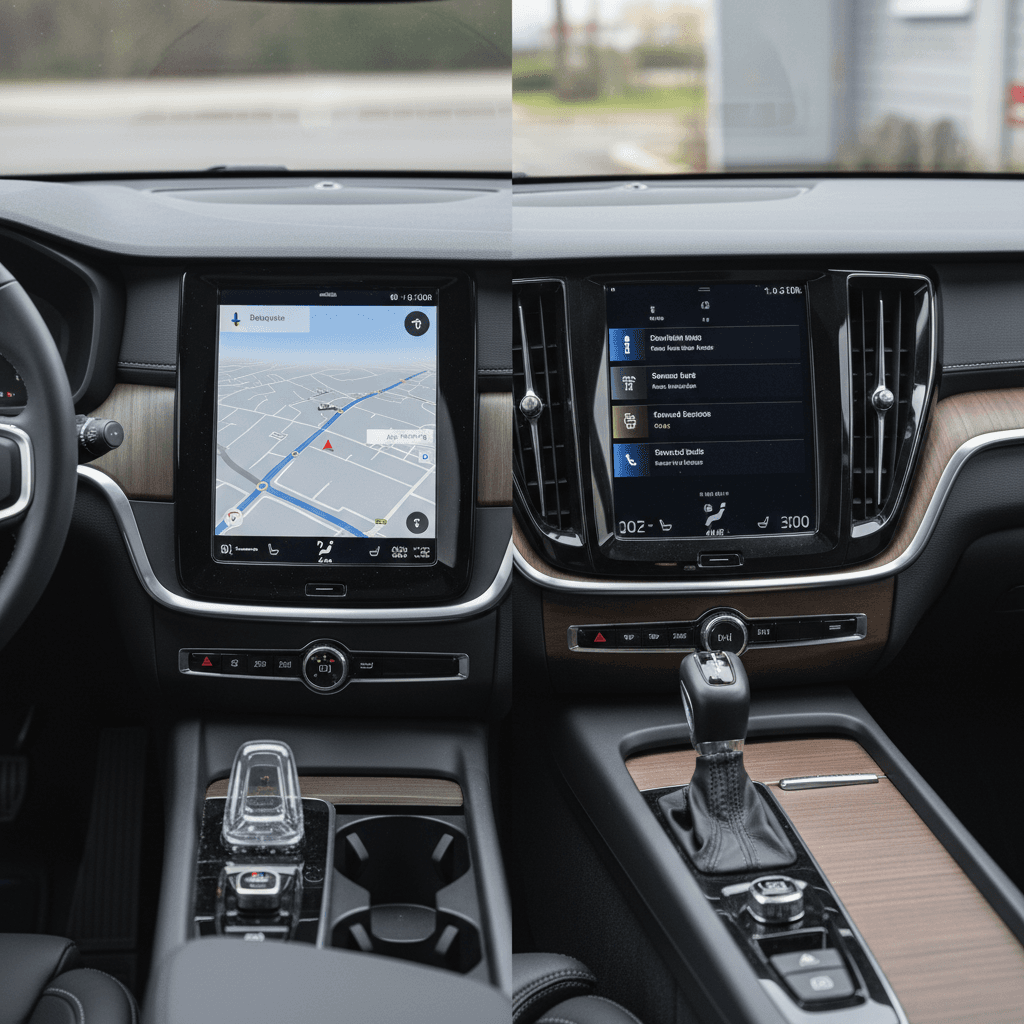
Cabin feel: minimalist EV vs classic luxury sedan
Same design DNA, different personalities.
Polestar 2 practicality
- Fastback hatch: The Polestar 2’s hatchback and folding rear seats make it easier to load bulky items than a sedan trunk.
- Rear headroom: The sloping roofline looks sharp but can rob back‑seat headroom, especially for taller adults.
- Tech-forward cockpit: Google‑based infotainment, big central screen and EV‑specific displays (range, energy, route charging) make it feel thoroughly modern.
Volvo S60 practicality
- Traditional three‑box sedan: Trunk space is usefully shaped, but you lose the big hatch opening.
- More conventional seating: Rear passengers generally get a bit more headroom and a more familiar seating position.
- Comfort focus: Volvo’s seats are excellent, and the S60 cabin tends to feel slightly more cushy and conservative compared with the Polestar.
If you haul gear, the hatch matters
Safety, Reliability and Ownership Experience
Both cars come from a brand family that has built its modern reputation on safety. The differences are more about complexity and day‑to‑day ownership than crash tests.
- Safety: Late‑model Polestar 2s and Volvo S60s offer advanced driver‑assist suites (adaptive cruise, lane‑keeping, blind‑spot monitoring, collision avoidance). Crash‑test performance for both has been strong in independent testing where available.
- Reliability: The S60 has long production history and a broad dealer network. The Polestar 2 benefits from EV simplicity (no oil changes, fewer moving parts) but relies more on software updates and has a smaller service footprint in North America.
- Warranty: Typical coverage for both includes bumper‑to‑bumper and powertrain protection, with the Polestar 2 adding separate battery warranties over eight years/100,000 miles (check your exact model’s details).
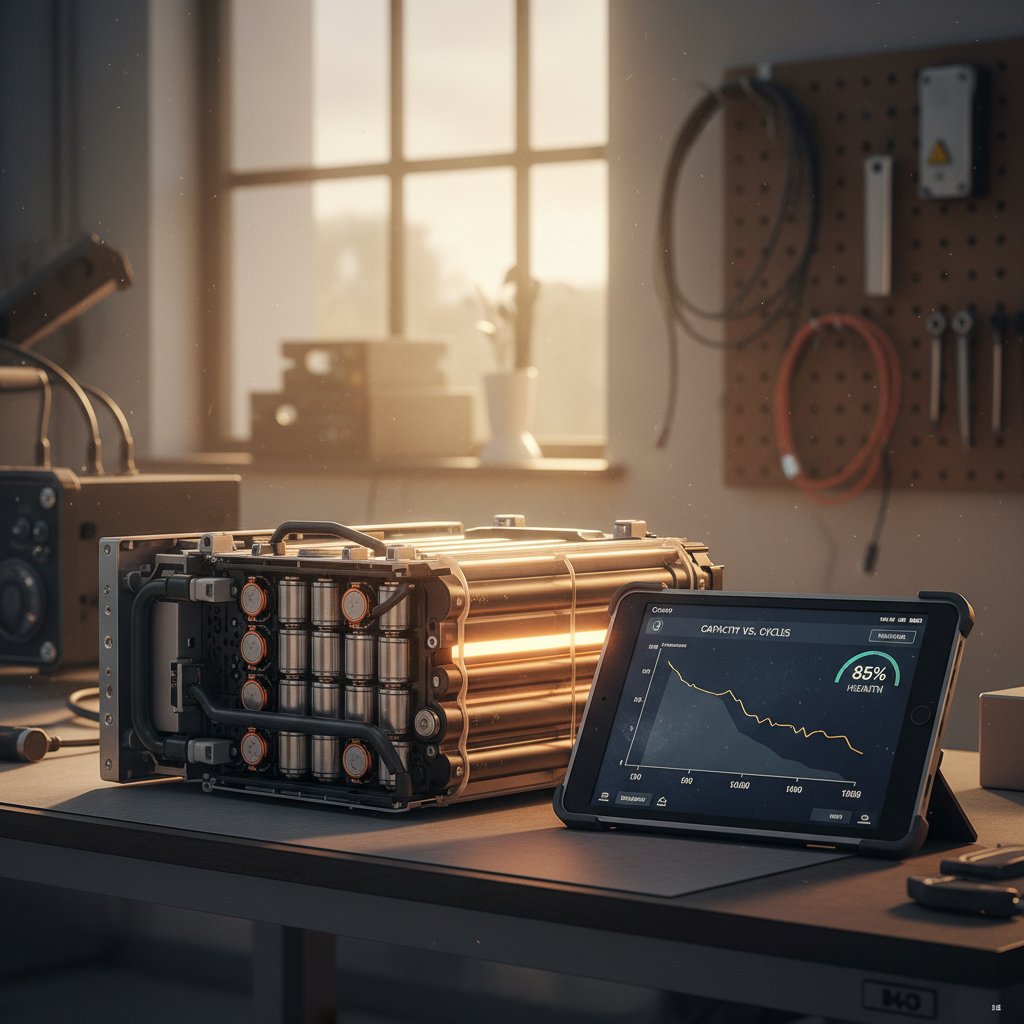
Used EV battery health is knowable now
Upfront Price, Running Costs and Used Market Value
What you’re likely to spend (used market snapshots)
In plain English: a used Polestar 2 often costs a bit more up front than a comparable‑year gas S60, but it can pay you back in much lower energy and maintenance bills. A highly optioned S60 Recharge plug‑in hybrid will typically be priced similar to, or above, a loaded used Polestar 2.
Cost checklist: what to run on your calculator
1. Your annual miles and fuel prices
If you drive 12,000–15,000 miles a year in a region with high gas prices, the Polestar 2’s lower per‑mile energy cost can easily save four figures over several years. In low‑mileage, low‑fuel‑cost scenarios, the savings are smaller.
2. Home charging vs public fast charging
Charging mostly at home on off‑peak electricity is much cheaper than relying on highway fast chargers. Public DC can still be cheaper than gas, but the gap narrows.
3. Maintenance differences
No oil changes, spark plugs or exhaust work on the Polestar 2. The S60 still carries traditional ICE service needs; the S60 Recharge adds EV components <em>and</em> a combustion engine, so plan for more complex maintenance long‑term.
4. Depreciation and resale
EV residuals are still finding their level. Polestar 2 values have corrected from early highs, while S60 depreciation is more predictable. If you expect to keep the car 5–8 years, day‑to‑day costs matter more than resale guesses.
Don’t ignore plug‑in hybrid battery health
Which Should You Buy? Recommendations by Driver Type
Who the Polestar 2 or Volvo S60 fits best
Daily commuter with home charging
Drive ~30–70 miles most days and can install (or already have) a Level 2 charger at home.
You want predictable, low operating costs and like the idea of leaving gas stations behind.
You’re okay learning EV quirks like planning fast‑charge stops on the few long trips you take each year.
<strong>Best fit:</strong> Polestar 2 (long‑range single motor for max efficiency, dual motor if you prioritize performance).
Apartment dweller or no reliable home charging
You park on the street or in a shared garage without outlets, and workplace charging isn’t a sure thing.
Relying entirely on public chargers would be stressful or inconvenient.
You still want some electrification, but not if it complicates your life.
<strong>Best fit:</strong> Volvo S60 (gas) or S60 Recharge if you at least have access to Level 2 charging a few times a week.
Frequent road‑tripper
You regularly do 300–600 mile days, often through rural areas where DC fast charging is patchy.
You value quick refueling and flexibility over the novelty of EV‑only driving.
You don’t want to think about charging networks on family vacations.
<strong>Best fit:</strong> S60 Recharge plug‑in hybrid. Run electric around town, but rely on gas for the long hauls.
Tech‑forward driver, mostly city/suburb use
You’re intrigued by over‑the‑air updates, one‑pedal driving and a minimalist EV cabin.
Most of your miles are in metro areas with growing charging infrastructure.
You want something that still feels special in five years as the market moves to EVs.
<strong>Best fit:</strong> Polestar 2, ideally with a verified battery‑health report if you’re buying used.
In one sentence
How Recharged Can Help You Shop Smart
If you’re leaning toward a Polestar 2, or comparing it against other used EVs, Recharged is built to remove the guesswork that usually comes with buying pre‑owned electric cars.
- Transparent battery health: Every EV on Recharged includes a Recharged Score with verified battery diagnostics, so you can see how a used Polestar 2’s pack is holding up before you commit.
- Fair market pricing: Our pricing tools factor in recent Polestar 2 and other EV transactions, options and mileage so you’re not overpaying just because a car looks pristine on the lot.
- Financing and trade‑in options: You can line up EV‑friendly financing, get an instant offer for your current vehicle or explore consignment if you’re selling, all in one place.
- Nationwide delivery and digital process: Browse, finance and schedule delivery online, or visit the Recharged Experience Center in Richmond, VA if you want to sit in a car before you buy.
- EV‑savvy support: Our specialists can walk you through home‑charging plans, real‑world range expectations and whether a Polestar 2, a different EV, or even a plug‑in hybrid best fits your situation.
Frequently Asked Questions: Polestar 2 vs Volvo S60
Polestar 2 vs Volvo S60: Your Top Questions Answered
If you strip away the branding and marketing, the Polestar 2 vs Volvo S60 decision comes down to one core question: are you ready to build your life around charging, or do you still want the safety net of gasoline? For most drivers with home charging and mostly predictable miles, the Polestar 2 delivers lower operating costs, sharper dynamics and a future‑proof driving experience. For those without charging or with constant long‑distance travel, the S60, especially the S60 Recharge plug‑in hybrid, remains a smart, low‑drama choice. Either way, go in with clear eyes about your habits, run the numbers, and lean on tools like battery‑health reports and fair‑market pricing so you’re choosing the car that fits your life, not just the one that looks best in the photos.