If you’re considering a Polestar 2, or already own one, it’s natural to wonder how much **Polestar 2 battery degradation** you should expect over time. EV rumor mills love horror stories, but the real data on Polestar 2 packs is far more boring, in the best possible way.
Quick take
Polestar 2 battery basics: packs, chemistry, and warranty
Understanding how the car is built makes it easier to make sense of battery degradation numbers. The Polestar 2 has used a few different packs and capacities since its 2020 launch, but the fundamentals are consistent.
Polestar 2 battery packs by model year
High-level overview of the main Polestar 2 battery configurations relevant to degradation discussions.
| Model years / trim | Usable capacity | Gross capacity | Chemistry | EPA‑class fast‑charge peak | Battery warranty |
|---|---|---|---|---|---|
| 2021–2023 SR Single Motor | 64 kWh | 69 kWh | NMC lithium‑ion | up to ~135 kW DC | 8 years / 100,000 mi, to 70% SoH |
| 2021–2023 LR Single & Dual Motor | 75 kWh | 78 kWh | NMC lithium‑ion | up to ~155 kW DC | 8 years / 100,000 mi, to 70% SoH |
| 2024–2025+ Long Range (updated pack) | 79 kWh | 82 kWh | NCM lithium‑ion | up to ~205 kW DC | 8 years / 100,000 mi, to 70% SoH |
Usable capacity matters most for range and SoH; chemistry and warranty are similar across trims.
What the warranty actually promises
In practice, that 70% figure is a **hard floor**, not an expectation. Modern liquid‑cooled packs like the Polestar 2’s are designed so that most drivers never get near that threshold within the warranty period, especially with sane charging habits.
How much Polestar 2 battery degradation is normal?
Let’s cut to the chase. Based on fleet data, owner reports, and what we know about similar NMC packs, a **healthy Polestar 2** typically shows:
- Around 94–96% SoH in the first 1–2 years of typical use
- Roughly 90–94% SoH by years 3–5, depending on mileage and charging habits
- Gradual decline after an initial drop, not a straight line to zero
Real fleet snapshot
Anecdotal data from Polestar dealers and owners lines up with this. It’s common to see 2021–2022 cars with **50,000–80,000 miles** still showing SoH in the low 90s. Reports of cars in the high‑80s exist, but they’re at the bottom end of the curve rather than the norm.
Don’t confuse range display with health
Real‑world Polestar 2 battery health data
What owners and fleets are seeing
If you spend time in Polestar owner communities, you’ll see examples like:
- 2022 Polestar 2, ~75,000 km (~46,500 mi): SoH around 92–93% with mostly home charging at 80% limit.
- 2021–2022 cars with **80,000+ miles** still showing SoH in the low‑90% range.
- Outliers at **~90% SoH** by 45,000–50,000 miles, on the low side, but still far from the 70% warranty line.
Expect an early dip, then a long plateau
What speeds up (or slows down) Polestar 2 battery degradation
Polestar did its homework on thermal management and chemistry, but how you use the car still matters. Think of the pack as a marathon runner: it can handle sprints, just not every single day.
Key factors that affect Polestar 2 battery life
You can’t control everything, but small habits add up over 8–10 years.
Heat & climate
High ambient heat is tough on any lithium‑ion pack.
- Garage parking is kinder than hot sun.
- Frequent DC fast charging in high heat accelerates wear.
- Cold mainly affects temporary range, not long‑term SoH.
Charging style
How you charge often matters more than how far you drive.
- Living at 100% daily is stressful for the pack.
- Regular DC fast charging is fine, but not as your only method.
- Slow, overnight AC charging is the gentlest option.
Depth of discharge
Staying between roughly 20–80% is the sweet spot.
- Occasional 0–100% is normal and safe.
- Living at single‑digit % or 100% for days is what hurts.
Three habits that help your Polestar 2 age gracefully
How to check Polestar 2 battery health (SoH)
Because the Polestar 2 doesn’t show State of Health in big friendly numbers on the main screen, you need to be a bit more deliberate if you want a real SoH figure, especially when buying used.
1. Official Polestar State of Health certificate
In 2025 Polestar began rolling out official battery state‑of‑health certificates for pre‑owned Polestar 2s sold through its approved channels. Service centers can generate a report that shows:
- Overall SoH as a percentage (for example, ">95%" or "92.5%").
- Basic pack diagnostics and any fault codes.
- VIN, mileage, and test date so you can tie it to the exact car.
When you’re shopping used, this is the gold standard because it reflects Polestar’s own diagnostic tools and is what they lean on for warranty decisions.
2. Independent checks & scan tools
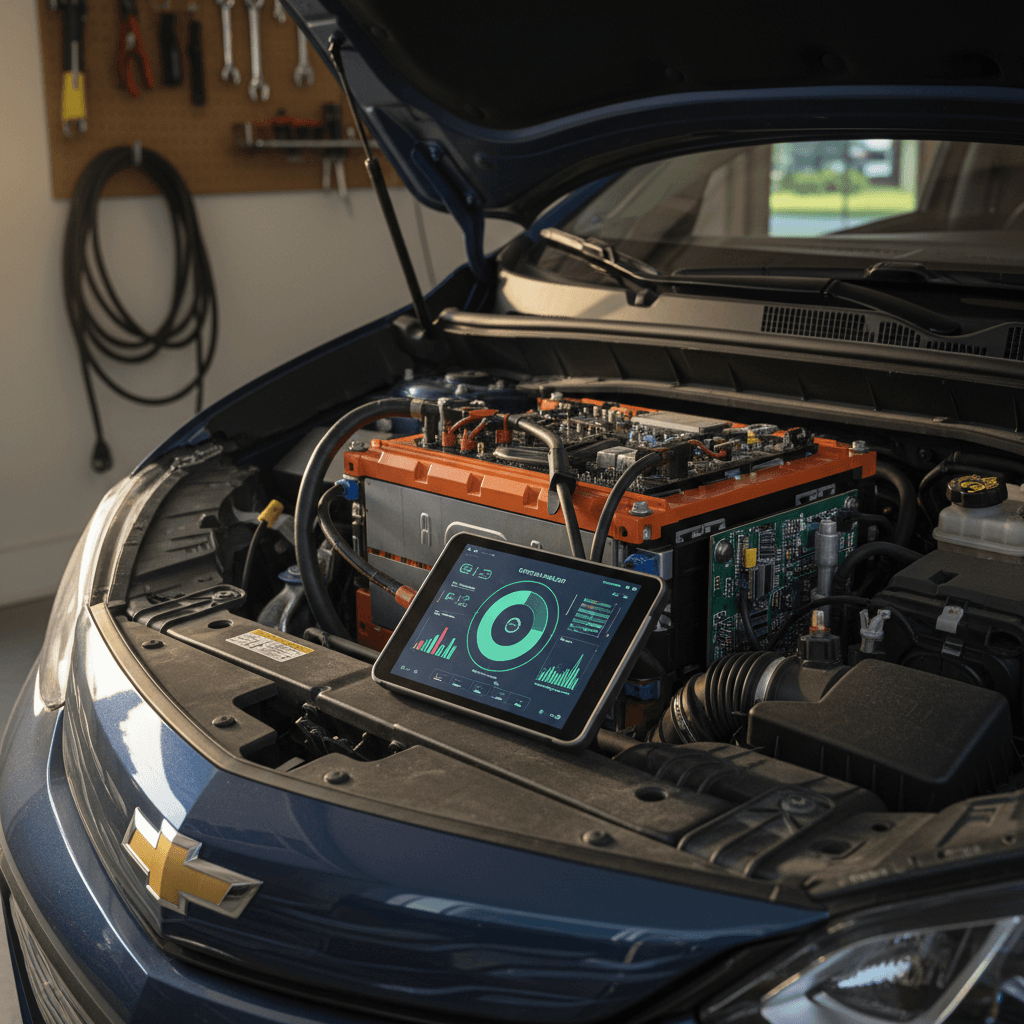
Outside the official network, some independent EV shops can pull battery data through the OBD port using Polestar‑compatible software. Results can be more technical and may not use the exact same algorithm as Polestar’s tools, but they’re better than guessing from the dash.
For a car you’re serious about, it’s reasonable to ask the seller to:
- Provide a recent SoH certificate from an authorized Polestar/Volvo service center.
- Allow an independent EV specialist to scan the car before you sign.
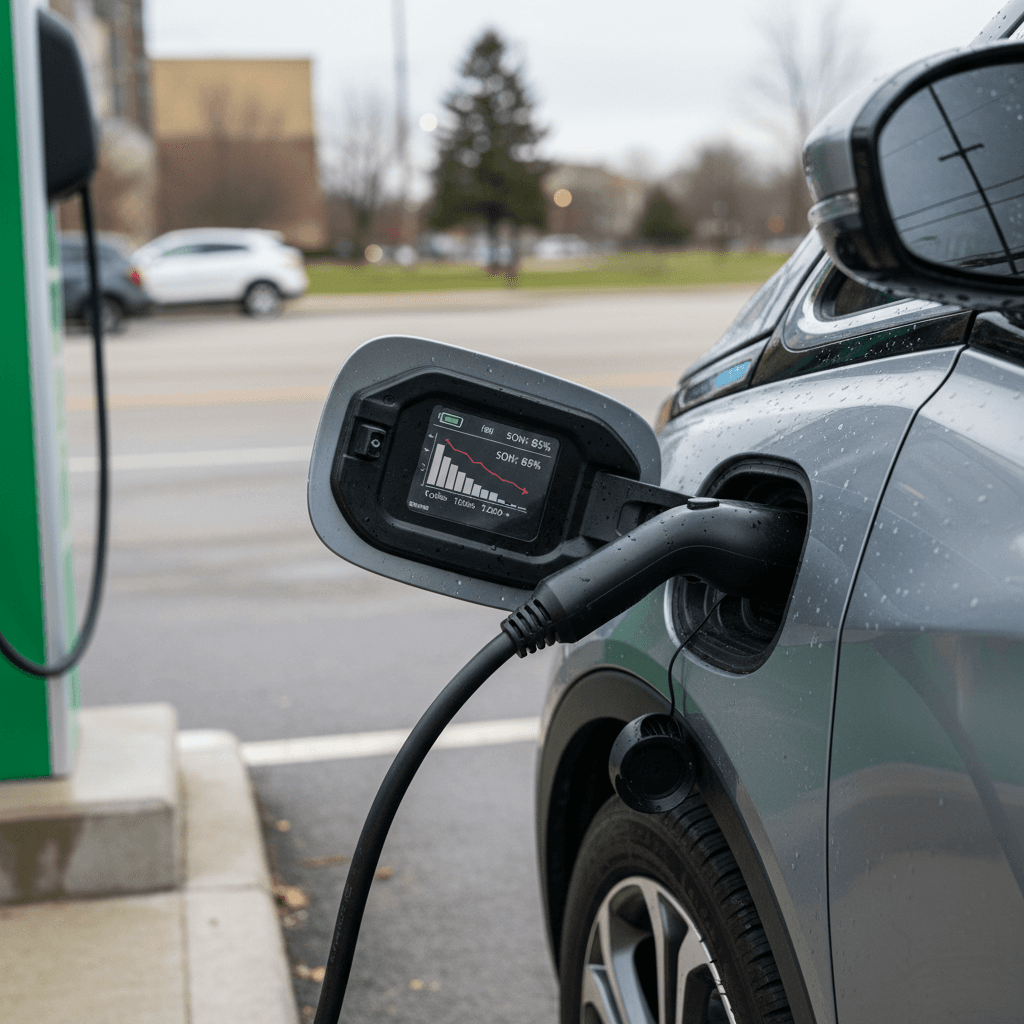
What <em>not</em> to rely on
What degradation actually does to your real‑world range
SoH is an engineer’s way of talking about how much energy the pack can store compared to new. What you feel as a driver is **range**. Let’s connect the dots for a typical Long Range Polestar 2.
Approximate impact of SoH on Polestar 2 Long Range usable range
Illustrative example using a 79 kWh usable pack and a realistic efficiency of 3.1 mi/kWh. Real‑world numbers vary with speed, weather, and driving style.
| State of Health | Usable capacity (approx.) | Estimated practical range* | What it feels like day‑to‑day |
|---|---|---|---|
| 100% (as new) | 79 kWh | ~245 mi | Baseline: what testers see on a mild‑weather mixed‑driving loop |
| 95% | 75 kWh | ~232 mi | You might not notice any change unless you A/B test it. |
| 92% | 72.7 kWh | ~225 mi | A few fewer miles on long highway trips; daily use feels the same. |
| 85% | 67.2 kWh | ~208 mi | Noticeable if you road‑trip a lot; still ample for commuting. |
| 70% (warranty limit) | 55.3 kWh | ~172 mi | Range‑constrained but still usable in many scenarios; pack qualifies for warranty attention. |
A healthy used Polestar 2 at ~92–94% SoH still delivers the majority of its original practical range.
Range loss is gradual, not a cliff
Used Polestar 2 buyer checklist: judging battery health
Shopping for a used Polestar 2 is all about separating a well‑cared‑for pack from a hard‑used one, and pricing them accordingly. Here’s a practical checklist you can work through before you fall in love with the paint color.
Battery‑focused checks for a used Polestar 2
1. Ask for a recent SoH certificate
Request an official Polestar battery State of Health report dated within the last 6–12 months. Aim for SoH in the low‑to‑mid 90s on a 2–4‑year‑old car; high‑80s isn’t an automatic deal‑breaker, but the price should reflect it.
2. Verify model year, trim, and battery pack
Confirm whether you’re looking at a Standard Range or Long Range pack, and whether it’s one of the updated 79 kWh usable batteries on later cars. More usable capacity means more range and a bigger buffer against future degradation.
3. Review mileage and use pattern
High‑mileage highway cars can be perfectly healthy if they mostly used AC charging and reasonable charge limits. A low‑mileage car that lived on DC fast chargers up and down I‑95 might actually be the more stressed pack.
4. Ask about charging habits
Questions like “Did you usually charge at home?” and “What daily charge limit did you use?” tell you a lot. A previous owner who lived at 100% and fast‑charged three times a week is very different from someone who sat at 70–80% on a Level 2 charger.
5. Check for software updates and BMS calibration
Make sure the car is up to date on Polestar’s over‑the‑air updates. If SoH seems lower than expected, a dealer can sometimes recalibrate the battery management system after a controlled charge cycle, improving accuracy.
6. Factor SoH into price, not just pass/fail
Two otherwise‑identical cars, one at 94% SoH, one at 89%, aren’t the same asset. The lower‑SoH car might still be a great buy if it’s priced appropriately and you don’t need maximum road‑trip range.
How Recharged evaluates Polestar 2 battery health
When you buy a used EV, you’re really buying the battery first and the car wrapped around it second. That’s why every Polestar 2 listed on Recharged comes with a **Recharged Score Report** that makes battery health transparent.
What Recharged looks at on a used Polestar 2
Battery first, but not battery only.
Verified battery diagnostics
We pull pack data using professional‑grade tools and, where available, obtain official Polestar battery SoH certificates. That feeds into the Recharged Score, so you can compare one Polestar 2 to another at a glance.
Fair market pricing
Battery condition, mileage, model year, and equipment all roll into our pricing model. A car with excellent SoH but higher miles might be a better deal than a lower‑mile car with an average battery.
End‑to‑end EV support
From instant offers and trade‑ins to nationwide delivery and EV‑savvy financing, our specialists walk you through what the battery numbers mean for your daily driving, not just for a spec sheet.
Ready to find your next EV?
Browse VehiclesWhy this matters for you
FAQ: Polestar 2 battery degradation & ownership
Frequently asked questions about Polestar 2 battery degradation
Bottom line: should you worry about Polestar 2 battery degradation?
If you strip away the internet myths and look at the data, the story is reassuring. The **Polestar 2 battery** generally ages predictably, with most cars still in the low‑to‑mid 90% SoH range several years in. That means a small, gradual range loss rather than a cliff, plus a generous buffer before the 70% warranty line comes into view.
Your job as an owner or shopper is to control the variables you can, sensible charge limits, avoiding extreme heat and constant fast charging, and to demand **transparent battery health information** when buying used. Tools like Polestar’s SoH certificates and the Recharged Score Report exist so you don’t have to guess.
If you’re ready to make the jump into a used Polestar 2, browsing vehicles that already have their battery health verified is the easiest way to start. With Recharged, you can line up financing, explore trade‑in options, and have a clear picture of **battery degradation and value** before the car ever reaches your driveway.