If you’re staring down a long daily drive and trying to decide between a plug-in hybrid vs electric car for your commute, you’re not alone. More Americans are traveling 30–60 miles or more each way, while EV options, and charging networks, keep evolving. The right choice can save you thousands of dollars and hours of hassle over the next few years; the wrong one just locks your stress in on auto‑pilot.
Key context for U.S. commuters
Overview: Plug-in Hybrid vs Electric for a Long Commute
What is a plug-in hybrid (PHEV)?
A plug-in hybrid has an electric motor and battery large enough for 20–50 miles of electric driving, plus a gasoline engine and fuel tank. You plug in at home or work to use the battery for part of your commute, then the gas engine takes over once the battery is depleted.
- Typical electric range: 20–45 miles
- Total range with gas: 400–600+ miles
- Best when you can charge often but still do frequent long trips
What is a fully electric vehicle (EV/BEV)?
A battery electric vehicle runs 100% on electricity from a large battery pack; there’s no gas engine at all. You recharge via home, workplace, or public charging.
- Typical range: 220–350 miles for modern models
- Lowest energy and maintenance cost per mile
- Best when you have consistent charging access and predictable routes
How to think about this decision
What Counts as a “Long Commute”, and Why It Matters
“Long commute” means different things in New Jersey than it does in Nebraska. For this guide, we’ll focus on drivers who consistently cover at least one of these patterns:
- 40–60 miles per day (20–30 miles each way)
- 60–100 miles per day (30–50 miles each way)
- 100+ miles per day, or frequent long highway trips layered on top of a normal commute
Once your daily distance climbs above 40–50 miles, you’re cycling a lot of energy through whichever powertrain you choose. That amplifies differences in fuel or electricity cost, time spent refueling or charging, and long‑term wear on batteries and engines. A commuter putting 20,000–30,000 miles a year on a car will feel those differences in their wallet much sooner than someone who drives 8,000 miles a year.
Quick Answer: When a Plug-In Hybrid Wins vs. a Full EV
At-a-glance recommendations
Use these rules of thumb, then read the deeper sections before you buy.
Choose a plug-in hybrid if…
- Your one-way commute is 40–70+ miles and fast charging is scarce or unreliable along your route.
- You can plug in at home, but not always at work, and you want no‑planning, gas‑backup flexibility.
- You live in an area with brutal winters or mountains where range can swing dramatically.
- You take frequent long road trips but still want to slash fuel use on weekdays.
Choose a full EV if…
- Your round‑trip commute fits comfortably within 50–70% of an EV’s rated range, even in bad weather.
- You have reliable overnight Level 2 charging at home, and possibly at work as well.
- You mainly drive a predictable route, with only a few long trips a year you can plan around.
- You care most about lowest operating cost and simplified maintenance (no oil, no exhaust, fewer moving parts).
A common mistake
Range, Refueling and Daily Convenience
Range vs. Typical U.S. Commutes
On a short commute, both a PHEV and an EV can feel almost identical: you plug in at home, drive quietly on electricity, and rarely touch a gas pump. As your commute stretches, the details of how you refuel or recharge start to matter a lot more.
How plug-in hybrids handle a long commute
Most newer plug‑in hybrids offer enough electric range to cover part of a long commute on battery power. For example, a 2025 Toyota Prius Plug‑in Hybrid can go around 40–45 miles on a charge in ideal conditions, then returns 45–50 mpg once the gas engine takes over. If your daily round‑trip is 80 miles, you might drive the first 40 miles on electricity and the remaining 40 on efficient hybrid power.
- Pros: No range anxiety. If traffic is awful or the weather is terrible, you just keep driving on gas.
- Pros: Works even if your home charging is only a standard 120V outlet (you can refill the battery overnight).
- Cons: Once past its EV range, a PHEV’s efficiency drops back toward regular hybrid levels, much higher running cost per mile than a full EV on cheap electricity.
- Cons: You still need oil changes, exhaust maintenance, and engine services.
How EVs handle a long commute
A modern EV with 250–300 miles of rated range can swallow a 60–100‑mile daily commute without breaking a sweat, particularly if you can charge at home overnight. Even accounting for winter penalties, high speeds, and battery degradation, most commuters can comfortably operate within the top 60–70% of the pack, where charging is fastest and battery health is happiest.
- Pros: Lowest energy cost per mile, especially if you charge off‑peak at home.
- Pros: The daily routine is simple: park, plug in, and leave with a full ‘tank’ every morning.
- Pros: No engine noise, no gas stops on normal days, and fewer mechanical systems to maintain.
- Cons: You must take charging seriously, if you routinely run close to empty before recharging, your stress level goes up.
- Cons: For very long commutes in rural areas, a single outage or broken fast charger can complicate things on bad‑weather days.
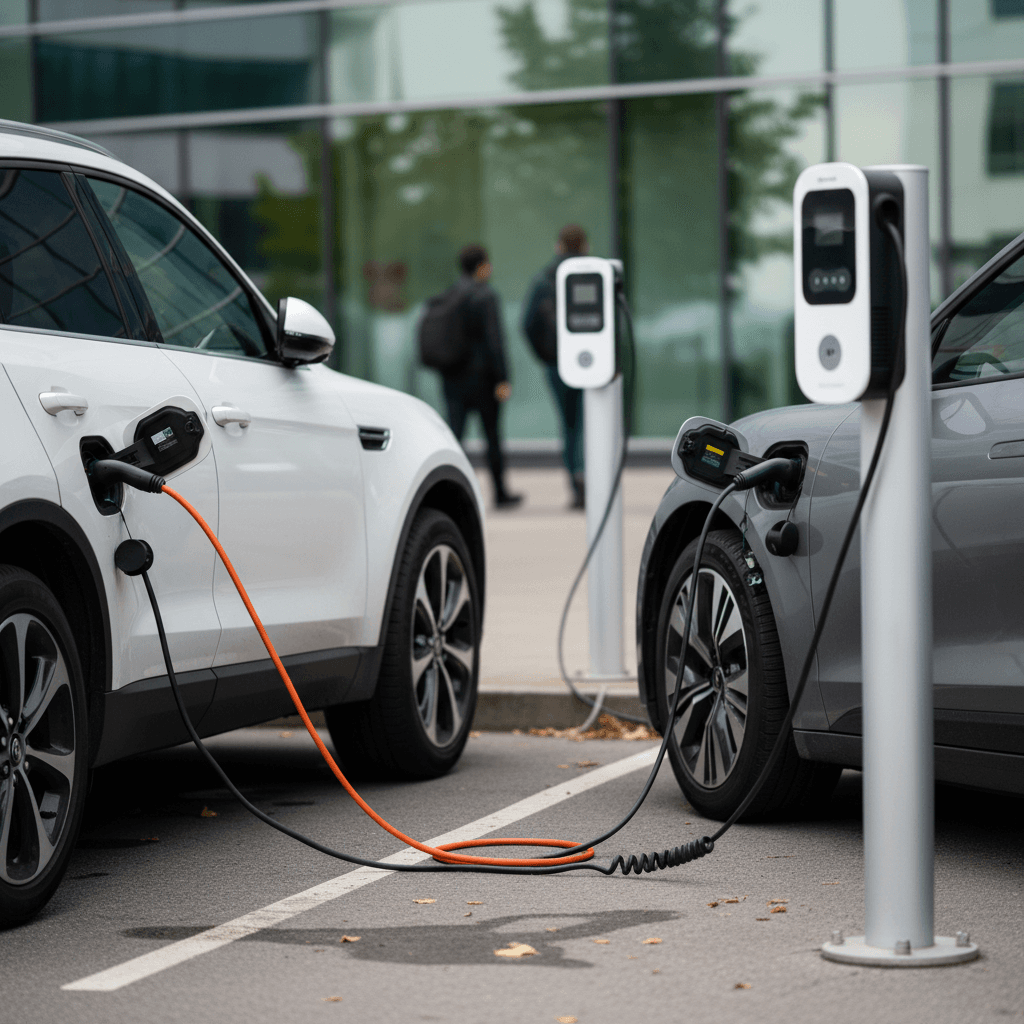
Realistic range planning
Total Cost of Ownership on a Long Commute
When you’re putting 15,000–25,000 miles a year on a vehicle, pennies per mile add up quickly. EVs are inherently more energy‑efficient than plug‑in hybrids because they avoid burning gasoline at all, but purchase price, incentives, and where you charge can narrow, or widen, that gap.
Cost factors: Plug-in hybrid vs full EV for a heavy commuter
High‑level comparison assuming a U.S. driver commuting 18,000–20,000 miles per year.
| Factor | Plug-in Hybrid (PHEV) | Full EV |
|---|---|---|
| Energy cost per mile | Medium (great if you stay in EV range; worse once on gas) | Low (best if you mainly charge at home) |
| Purchase price | Often slightly lower than comparable EV; some models qualify for tax credits | Often higher MSRP, but many qualify for strong federal/state incentives |
| Maintenance | Higher: engine+electric components (oil changes, exhaust, more fluids) | Lower: no engine or exhaust; fewer wear items over time |
| Depreciation | Traditionally closer to gas cars; can hold value if fuel prices spike | Historically higher, but stabilizing as demand for used EVs and charging improves |
| Fueling / charging time | Gas stops are quick; Level 1 or 2 charging for the battery | Mostly overnight charging; DC fast charging for trips adds time on long drives |
| Road-trip flexibility | Excellent, behaves like a gas car once battery is empty | Good where DC fast charging is mature; more planning needed in sparse regions |
Use this as a directional guide; your exact numbers will depend on local electricity and fuel prices.
Used vehicle angle
Battery Health, Degradation and High‑Mileage Commuting
A long commute means your vehicle’s battery, whether in a PHEV or EV, will see lots of cycles. The good news: real‑world studies on modern EVs show slower degradation than many people fear, with many retaining around 80–90% of capacity after 100,000+ miles when mainly charged on Level 1 or 2.
- EVs are designed for daily cycling; what hurts most is frequent DC fast charging, extreme heat, and letting the battery sit at 0% or 100% for long periods.
- PHEVs typically have smaller batteries that are cycled more aggressively from full to empty in normal commuting, but they also rely on the gas engine beyond that range, which can reduce total electric cycles per day.
- For a high‑mileage EV commuter, charging mostly at home on Level 2 and keeping the state of charge between roughly 20–80% is an easy, battery‑friendly pattern.
Battery stress scenarios to avoid
Reliability and Maintenance: PHEV vs. EV
From a mechanical standpoint, a plug‑in hybrid is the most complex option on the market: it has essentially all the parts of a gas car plus EV hardware. A full EV strips out the engine, transmission, exhaust and many fluids, trading them for a more robust battery and electric motor system.
Plug-in hybrid reliability on long commutes
- More systems can fail over time, engine, turbo (if equipped), transmission, fuel system, plus the EV components.
- Maintenance looks a lot like a regular car: oil changes, coolant, transmission services, spark plugs, etc.
- High highway mileage is good for engines but can mean more frequent oil changes and wear on emissions components.
EV reliability on long commutes
- Fewer moving parts and no exhaust system reduce common failure points.
- Brake wear is minimal thanks to regenerative braking, even in stop‑and‑go traffic.
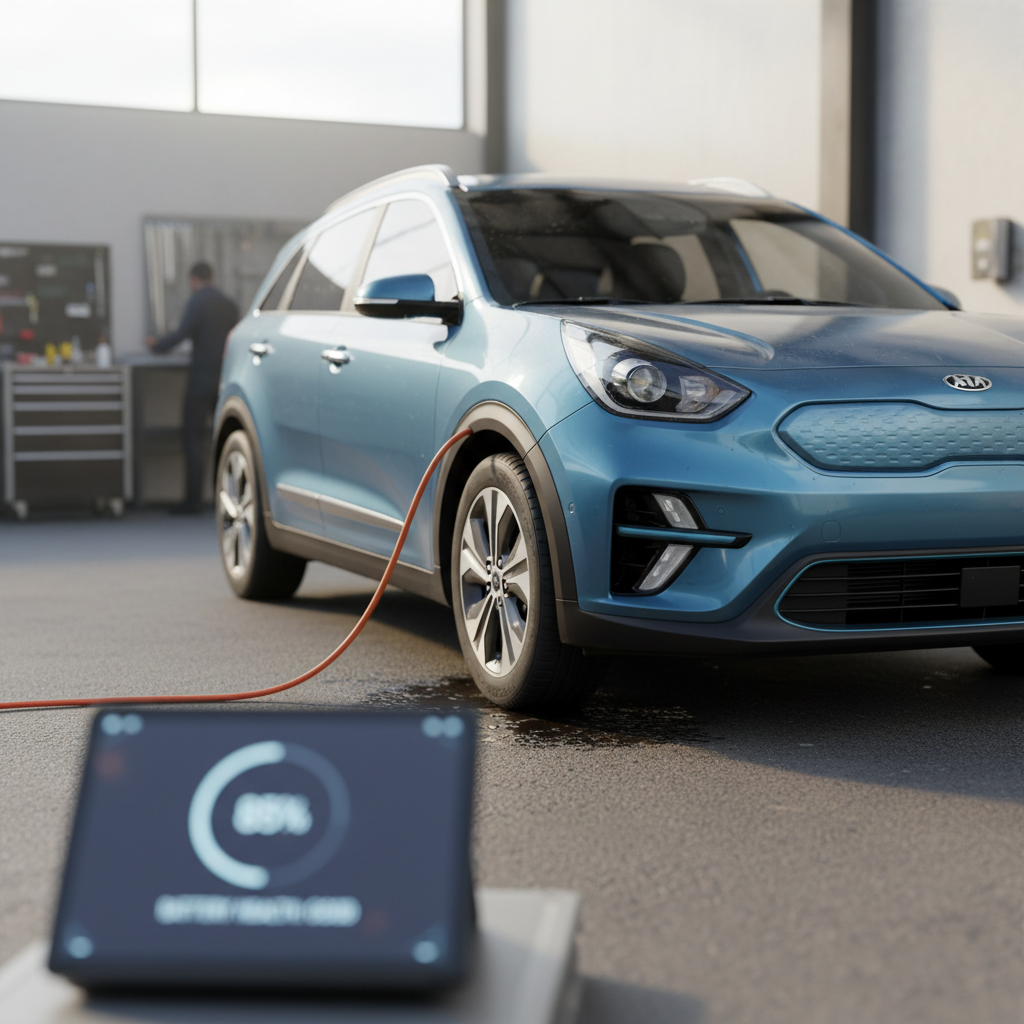
- Most concerns center on battery health and charging hardware, which you can partially de‑risk by checking battery state of health on a used EV and using reputable home charging equipment.
How Recharged helps here
Ready to find your next EV?
Browse VehiclesHome & Workplace Charging Strategies for Long Commutes
Your charging setup can flip the recommendation between plug‑in hybrid and EV. Two commuters with the same 80‑mile round‑trip can have completely different experiences depending on whether they plug in at 120V, 240V, or not at all.
Charging setups and what they favor
Match your real‑world options to the right powertrain.
Level 1 only (120V outlet)
Plugging into a standard outlet adds roughly 3–5 miles of EV range per hour of charging.
- PHEV: Often enough to refill a 20–40‑mile battery overnight.
- EV: Works for moderate commutes if you’re patient and don’t drive huge miles daily.
Level 2 at home (240V)
This is the sweet spot for long‑distance EV commuting.
- EV: Easily adds 25–40+ miles of range per hour; you’ll wake up full every day.
- PHEV: Recharges in a few hours; you may not need to plug in every night.
Workplace charging
Even a few hours on a Level 2 station at work changes the math.
- EV: Lets you run smaller‑battery EVs on very long routes comfortably.
- PHEV: Can cover nearly all weekday miles on electricity, relegating gas to rare trips.
If you can only upgrade one thing…
Used EV vs Used Plug-In Hybrid for Long Commutes
If you’re looking at the used market to keep costs in check, your long commute makes due diligence even more important. You’re buying not just a car, but a tool you’ll lean on every single weekday.
- Used EV for commuting: Great fit if you can verify healthy battery capacity and your daily miles leave plenty of range in reserve. Lower ongoing costs, but range and charging access must line up with your life.
- Used PHEV for commuting: Offers a safety net if you’re unsure about charging, but check that the battery still delivers close to its original EV range; an older PHEV that only delivers 10–15 electric miles may not move the needle much on a 70‑mile commute.
What to check on a used EV or PHEV
Checklist: Decide Between Plug-In Hybrid and Electric
Key questions before you choose
1. What’s your true daily mileage?
Add up your round‑trip commute, regular errands, and seasonal factors like winter detours or school drop‑offs. If you’re routinely below 60–70% of a modern EV’s range, a full EV is very practical.
2. Where will you actually charge?
Be honest: will you install Level 2 at home, or rely on a 120V outlet? Do you have workplace charging? PHEVs tolerate weaker charging setups better, but EVs shine with solid Level 2 access.
3. How often do you road‑trip?
If you’re doing multiple 500‑mile weekends each month through rural areas, a PHEV’s gas backup may keep life simpler. If you mainly fly or road‑trip a few times a year, an EV plus planning can work well.
4. How much complexity are you okay with?
PHEVs give you flexibility but add mechanical complexity and decisions about when to charge. EVs simplify the powertrain but require you to take charging infrastructure seriously.
5. What’s your total budget, not just sticker price?
Look at monthly payment plus expected fuel/electricity, maintenance, and insurance. A slightly higher‑priced EV can be cheaper overall if you’re driving big miles and charging cheaply at home.
6. Are you buying new or used?
On the used market, a well‑priced EV with a healthy battery can be a commuter workhorse. If you’re uneasy about public charging or live far from fast chargers, a used PHEV with good EV range is a strong hedge.
FAQ: Plug-In Hybrid vs Electric for Long Commutes
Frequently Asked Questions
Bottom Line: Match the Car to Your Commute, Not the Hype
For a long commute, there’s no one right answer, only the powertrain that best fits your miles, your charging reality, and your appetite for planning. A plug‑in hybrid shines if you lack reliable Level 2 charging or regularly drive beyond today’s charging infrastructure. A full EV is hard to beat on total cost and simplicity when you can charge at home and your route fits well within its real‑world range.
If you’re exploring the used market, this choice is even more nuanced. The spread between a well‑priced used EV with a strong battery and a plug‑in hybrid with limited electric range can add up to thousands of dollars in fuel and maintenance over the life of your commute. Recharged was built to make that decision easier, pairing battery‑health‑verified used EVs with transparent pricing, trade‑in options, and EV‑savvy guidance so you don’t have to guess whether your next car can keep up with your daily drive.