If you’re driving a 2025 Hyundai Kona Electric and thinking about your next move, trade-in value is more than just a number on a screen. It decides how much equity you roll into your next car, what your payment looks like, and whether keeping or selling your Kona Electric actually makes financial sense.
Context: 2025 is a turning point for used EV values
Why 2025 Kona Electric trade-in value matters now
The 2025 Hyundai Kona Electric sits in an unusual spot in the EV market. It’s newer and more efficient than first-generation EVs, but it’s also competing with aggressive lease deals, tax-credit-eligible new models, and rapidly improving battery tech. That mix makes trade-in timing and strategy especially important if you want to protect your equity.
- Many 2025 Kona Electrics were leased, which will start returning in 2028–2029 and add supply to the used market.
- Tax credits on new EVs can push down used values in some regions, especially when new monthly payments rival used-car payments.
- Battery health transparency is becoming a standard expectation, and cars with documented, healthy packs are separating from those without data.
Watch out for generic valuation tools
How much is a 2025 Hyundai Kona Electric worth right now?
Because the 2025 model year is still relatively new, most 2025 Hyundai Kona Electrics on the road are low-mileage vehicles with strong remaining warranty coverage. New MSRPs for the 2025 Kona Electric generally start in the low–$30,000s for SE and climb into the high–$30,000s for well-equipped SEL, Limited, and N Line trims, depending on market and incentives.
Early 2025 Kona Electric value snapshot (U.S.)
In plain terms, if your 2025 Kona Electric had an original MSRP around $34,000, a realistic early trade-in value in today’s EV market might fall in the low- to mid-$20,000s for a clean, low-mile SE, and higher for SEL, Limited, and N Line trims. Private-party sales tend to run several thousand dollars above trade-in, but require more time and effort.
Why these are ranges, not promises
4 key factors that drive 2025 Kona Electric trade-in value
The big four value drivers for your 2025 Kona Electric
Know what buyers actually care about when they price your car.
1. Battery health (SOH)
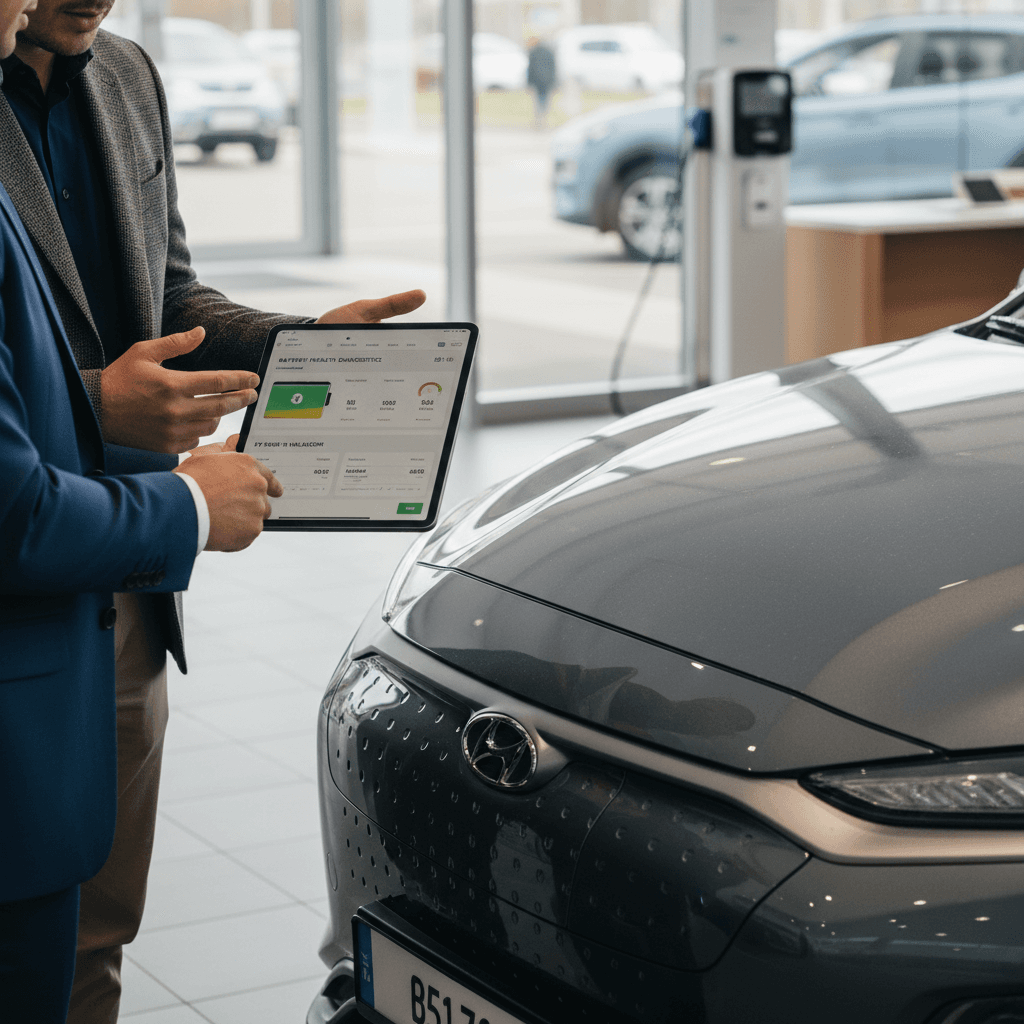
For EVs, battery health is king. A Kona Electric with a verified, healthy pack will command a premium over one without documentation.
- Capacity loss directly affects usable range.
- Buyers worry about future battery replacement costs.
- Specialists like Recharged use instrumented battery tests, not just dash range estimates.
2. Mileage & usage pattern
Mileage still matters, but less than on a gas car.
- Short, consistent commutes are ideal.
- Heavy DC fast-charging or rideshare use can be a red flag.
- Documentation of routine service (tires, brake fluid, cabin filter) reassures buyers.
3. Trim, options & condition
Higher trims like SEL, Limited, and N Line bring more equipment and typically stronger resale, especially when clean.
- Interior wear, curb rash, and accident history will pull value down.
- Winter tires, roof racks, and Level 2 home chargers can sweeten the deal for some buyers.
4. Where and how you sell
Your sales channel can move value by thousands of dollars either way.
- Traditional dealers may bid conservatively on EVs they don’t specialize in.
- EV-focused buyers (like Recharged) look deeper at battery health and options.
- Private sale brings the highest price but also the most hassle.
Leverage multiple valuations
Battery health: why your SOH matters more than mileage
Most shoppers still look at mileage first, because that’s how we were all trained on gas cars. But with a 2025 Hyundai Kona Electric, battery state of health often tells the truer story. Two Konas with the same miles can be worth noticeably different amounts if one has a stronger pack.
What buyers worry about
- Loss of real-world range: A battery that’s lost 10–15% capacity shrinks how far you can comfortably travel between charges.
- Future replacement costs: Even with warranty coverage, buyers don’t want to flirt with the threshold for a pack replacement.
- Unknown history: Consistent DC fast-charging at high states of charge, or heavy use in extreme heat, can accelerate degradation.
How to demonstrate a healthy pack
- Pull a recent OEM battery report from a Hyundai dealer if possible.
- Use a third-party EV battery health service or marketplace that can instrument your pack.
- Keep charging habits reasonable: avoid 100% every night and long stints at 0% or 100%.
- Store service records and any diagnostic reports together for buyers.
Where Recharged fits in
Ready to find your next EV?
Browse VehiclesTrim and options: how SE, SEL, Limited and N Line affect value
The 2025 Kona Electric lineup typically includes an SE entry trim plus better-equipped SEL, Limited, and, in some markets, a sportier N Line. Your trim level and options can move trade-in offers by thousands of dollars.
How 2025 Kona Electric trims typically show up in trade-in value
This is a directional look at how different trims are perceived in the used market. Actual numbers depend on mileage, condition, and options.
| Trim | Original price position | Typical buyer perception | Trade-in value tendency |
|---|---|---|---|
| SE | Lowest MSRP | Value-focused, simpler spec | Lowest trade-in, but still strong if low miles and clean |
| SEL | Mid-pack | Sweet spot of features vs. cost | Often the easiest to resell; solid trade-in support |
| Limited | Higher MSRP | Near-luxury equipment for a small EV | Can command a clear premium when condition is strong |
| N Line | Sportier, higher MSRP | More performance and style | Appeals to enthusiasts; condition-sensitive on wheels/tires |
Higher trims bring more equipment and, in many markets, stronger resale and trade-in values.
Don’t undersell your options
Where you sell: dealer vs EV specialist vs private party
You control one of the biggest value levers simply by choosing where to sell or trade. Each path has its own pros, cons, and typical price range for a 2025 Kona Electric.
Three main ways to move your 2025 Kona Electric
Convenience, price, and EV expertise rarely live in the same place, pick what matters most to you.
Hyundai or local dealer trade-in
- Pros: Fast, simple; can roll equity straight into your next purchase or lease.
- Cons: Many dealers still underprice EVs or lean on wholesale auction numbers.
- Best for: Convenience when you’re already buying something from the same store.
EV-focused buyer like Recharged
- Pros: Staff understands EVs, battery health, and options; offers based on verified data.
- Cons: Not on every street corner yet; process is usually online plus inspection.
- Best for: Getting paid for a healthy pack and good spec without private-sale hassle.
Private-party sale
- Pros: Highest possible price if you find the right buyer.
- Cons: Time-consuming, requires ads, test drives, and paperwork; some shoppers fear used EVs.
- Best for: Sellers willing to do the work to squeeze out maximum value.
Be careful with sight-unseen instant offers
Steps to maximize your 2025 Kona Electric trade-in offer
Pre-trade checklist for your 2025 Kona Electric
1. Get your battery health documented
Before you ask for quotes, obtain a recent battery state-of-health report from a Hyundai dealer or an EV-focused service. Having proof that your pack is healthy gives buyers confidence and supports stronger offers.
2. Gather maintenance and charging history
Collect receipts for tire rotations, brake checks, cabin filters, and any software updates. If you’ve mostly charged at home on Level 2 and rarely fast-charged to 100%, mention that, educated buyers understand why it matters.
3. Fix inexpensive cosmetic issues
Touch up curb rash on wheels, repair windshield chips, replace worn wiper blades, and get a good interior and exterior detail. These small steps improve first impressions and reduce reasons for a buyer to chip away at your price.
4. Remove personal items and accessories you’ll keep
Take out toll tags, garage remotes, and anything you don’t want to include in the sale. Decide whether you’re including extras like charging cables, roof racks, or floor liners, and present them cleanly if you do.
5. Capture clear, honest photos
Even for trade-in quotes, photos matter. Take well-lit shots of each exterior side, wheels, interior, infotainment screen, odometer, and any notable blemishes. Transparency builds trust and reduces lowball “just in case” adjustments.
6. Shop multiple offers in a short window
Try to collect 2–4 offers within the same week so you’re comparing the same market conditions. Include at least one local dealer, one online buyer, and, if possible, an EV specialist like Recharged.
Example trade-in scenarios for 2025 Kona Electric owners
To bring all of this down to earth, let’s look at how different 2025 Kona Electric owners might see trade-in values play out. These are illustrative, not offers, but they show how battery health, trim, and channel combine in the real world.
Scenario A: Low-mile SE commuter
Car: 2025 Kona Electric SE, 9,000 miles, clean history, mostly home Level 2 charging, documented battery SOH near new.
Channel outcomes:
- Local dealer: Conservative offer, emphasizing SE trim and current EV softness.
- Online national buyer: Slightly higher, still based largely on mileage and region.
- EV specialist: Most willing to pay for low miles plus excellent battery health.
Scenario B: SEL road-tripper
Car: 2025 Kona Electric SEL, 22,000 miles, several long road trips with frequent DC fast charging but otherwise well maintained.
Channel outcomes:
- Local dealer: May over-focus on mileage and ignore trim value.
- Online buyer: Solid mid-pack offer, especially if condition is clean.
- EV specialist: Adjusts for heavier fast-charging history, but still values SEL equipment.
Scenario C: N Line enthusiast car
Car: 2025 Kona Electric N Line, 14,000 miles, upgraded wheels, minor curb rash, enthusiast owner.
Channel outcomes:
- Local dealer: Might treat it like any Kona EV and ignore performance appeal.
- Online buyer: Numbers-based offer with modest bump for trim.
- EV specialist or enthusiast buyer: Pays more if condition and battery reports check out.
Big picture on Kona Electric depreciation
When is the best time to trade in your 2025 Kona Electric?
There’s no single perfect month or mileage, but there are patterns that can help you decide when to move your 2025 Kona Electric.
- Early in the ownership cycle: Trading in during the first 2–3 years, while your Kona Electric is still low-mileage and under full warranty, usually brings the strongest offers.
- Before a big model change or incentive wave: A major update or steep discounts on new EVs can pull down used values. If a refreshed Kona Electric or a flood of heavily incentivized competitors is on the horizon, consider moving sooner.
- Before you dramatically change how you use the car: If you’re about to start long rideshare shifts, move somewhere with extreme heat, or dramatically increase mileage, values may erode faster.
- When your next car deal is especially favorable: Sometimes strong rebates, low APR, or a compelling lease on your next vehicle can offset a slightly softer trade-in number.
Think in terms of total deal, not just trade-in
FAQs: 2025 Hyundai Kona Electric trade-in value
Frequently asked questions about 2025 Kona Electric trade-ins
Bottom line on your 2025 Kona Electric value
A 2025 Hyundai Kona Electric is one of the more rational EVs you can own, efficient, relatively affordable new, and supported by a long battery warranty. Those same strengths help support trade-in value, especially if you’ve taken care of the car and can document battery health.
Your goal now is straightforward: understand the main value drivers, control the ones you can, battery documentation, condition, timing, and then invite multiple buyers to compete for your car. That’s where EV-focused platforms like Recharged can tilt the playing field back in your favor, by valuing your 2025 Kona Electric based on real data instead of generic depreciation curves.
Whether you ultimately trade in, consign, or sell privately, taking a methodical approach will help you get every dollar your Kona Electric deserves, and step into your next EV with confidence instead of guesswork.