If you’re shopping for a used electric vehicle in 2026 and you live in Pennsylvania, the alphabet soup of programs, rebates, and new EV fees can make it hard to pin down exactly what you’ll save. The good news is that Pennsylvania used EV incentives in 2026 still include cash rebates through the state’s Alternative Fuel Vehicle (AFV) Rebate program, especially if your household income is on the lower side. The trade‑off: a new annual road‑user charge for EVs that kicks in when you register the car.
Snapshot for 2026
Overview: Pennsylvania used EV incentives in 2026
What used EV shoppers can still get
- State AFV Rebate for qualifying used battery‑electric vehicles (BEVs) and plug‑in hybrids (PHEVs), with higher amounts for lower‑income households.
- Potential utility rebates or bill credits for installing Level 2 home charging, depending on your electric provider.
- Lower ongoing fuel and maintenance costs versus a comparable gas car, which increasingly matters as used EV prices keep falling.
What’s gone or changing
- Most federal Used Clean Vehicle Credits ended for vehicles acquired after September 30, 2025, so 2026 purchases generally can’t claim that federal tax credit.
- Pennsylvania now charges an annual EV road‑user fee at registration: $200 in 2025 and $250 in 2026 for most BEVs, with smaller amounts for plug‑in hybrids.
- AFV Rebate funding is limited each program year, so timing and paperwork matter more than ever.
Key reality check
How Pennsylvania’s Alternative Fuel Vehicle Rebate works
Pennsylvania’s Alternative Fuel Vehicle (AFV) Rebate program is the backbone incentive for used EV buyers in 2026. Administered by the Department of Environmental Protection (DEP), it sends you a check after you buy and register a qualifying EV in Pennsylvania. The program covers both new and used vehicles and runs on annual funding cycles, roughly July 1 through June 30, with a fixed number of rebates available each year.
AFV Rebate snapshot for 2025–2026 program year
The AFV Rebate is tiered. Higher rebates go to lower‑income households and to vehicles that are all‑electric or plug‑in hybrid, with smaller checks for other alternative fuels or electric motorcycles. Program details and dollar amounts can change from one program year to the next, so before you sign a purchase agreement, it’s worth checking DEP’s AFV Rebate page for the latest income brackets and funding status.
Why dealers sometimes get this wrong
Used EV eligibility rules in 2026
The AFV Rebate has different requirements for new and used vehicles, but most of the core boxes are the same. For a used EV in 2026, you should expect all of the following to matter:
- You must be a Pennsylvania resident at the time of purchase and registration.
- The vehicle must be titled and registered in Pennsylvania in your name. Out‑of‑state purchases can qualify, but the title and registration must end up in PA.
- The EV must be a plug‑in vehicle (battery‑electric or plug‑in hybrid), not just a conventional hybrid.
- There’s a purchase price cap, PA’s recent AFV guidelines limit eligibility to vehicles below a set price (for example, earlier years used $50,000 caps for many EVs).
- You must buy from a licensed dealer in most cases. Private‑party purchases have historically been more complicated and may not always qualify.
- Your household must fall under specific income limits to access the highest rebate tiers, with smaller or no rebates at higher income brackets.
Income limits are strict
If you’re buying a used EV through a digital retailer or marketplace like Recharged, you’ll still go through the same state process: PA registration in your name, followed by an online or mail‑in DEP application with supporting documents. Where Recharged can help is on the documentation side, purchase agreements, odometer disclosures, and proof of payment are all handled in a clean, digital trail that’s easier to submit when you go for the rebate.
How much can you actually get for a used EV?
Exact AFV Rebate amounts move from year to year and are laid out in DEP’s official guidelines. But the general pattern for 2025–2026 looks like this: higher rebates for new or used plug‑in vehicles purchased by lower‑income households, and a smaller standard rebate (or none) as household income rises. For many used‑EV shoppers, that means you’re realistically looking at a rebate in the low four figures if you qualify, not a windfall that cuts the price in half.
Illustrative AFV rebate structure for used EVs
This table summarizes how Pennsylvania typically structures AFV Rebates for used EVs. Exact amounts and income tiers can change, always confirm current guidelines with DEP before you buy.
| Household income tier | Example situation | Likely rebate range for used BEV/PHEV | Notes |
|---|---|---|---|
| Lowest income tier | Single parent, modest income, buying a compact used EV | Highest tier, often around $2,000–$3,000+ | May also qualify for an additional low‑income bonus if program year includes it. |
| Middle income tier | Two‑earner household buying a late‑model crossover EV | Mid‑tier rebate, typically around $1,000–$2,000 | Maximum rebate may phase down as income approaches the cap. |
| Upper income tier | High‑earning household buying a premium used EV | Reduced or no rebate | Income and vehicle price caps often exclude higher‑end buyers. |
Use this as a directional guide, not a substitute for the official AFV Rebate chart.
Don’t rely on the maximum number
The new EV road‑user charge in 2026
On April 1, 2025, Pennsylvania rolled out a Road User Charge (RUC) for electric and plug‑in hybrid vehicles. The logic is straightforward: EVs use the roads but don’t pay state fuel taxes, so the state now collects a flat yearly fee when you register or renew an EV.
How Pennsylvania’s EV road‑user charge works in 2026
What your used EV will actually cost to keep on the road
Who pays
Owners of battery‑electric and plug‑in hybrid vehicles registered in Pennsylvania. The fee is added to your normal registration cost.
How much in 2026
State law set the fee at $200 for EVs in 2025 and $250 in 2026, with a lower amount for PHEVs. Future years are indexed to inflation.
When you pay
You pay the full amount when you register or renew. Starting in mid‑2026, Pennsylvania plans to offer a monthly payment option instead of a lump sum.
How this affects your total cost of ownership
When you pencil out a used EV purchase in Pennsylvania, fold this fee into your annual ownership costs alongside insurance, maintenance, and electricity. For a budget‑minded buyer, it’s often the combination of a modest AFV Rebate up front and lower running costs over several years that makes the math work.
Federal incentives: what still applies to used EVs?
By 2026, the federal landscape for used EVs is much leaner than it was a few years earlier. The original Used Clean Vehicle Credit, worth up to $4,000 for qualifying purchases from licensed dealers, largely disappeared for vehicles acquired after September 30, 2025 under changes enacted in late 2025. That means most used EV purchases in calendar‑year 2026 will not qualify for a federal income‑tax credit tied to the vehicle itself.
- Some buyers may still see tax impacts from carryover credits or prior‑year purchases, but that’s about timing, not new 2026 deals.
- Federal incentives increasingly target charging infrastructure instead, including a credit of up to 30% (capped at $1,000) for qualifying residential EV charging equipment in eligible areas.
- For current, personalized guidance, it’s smart to talk with a tax professional, especially if you bought a used EV in late 2025 and are sorting out which side of the cutoff date you landed on.
Don’t confuse state rebates with federal credits
Stacking savings: utility programs and home charging
With federal used‑EV credits fading and state rebates relatively modest, the next place to look for savings is your electric utility. In parts of Pennsylvania, utilities and regional programs offer cash rebates or bill credits when you install a Level 2 home charger, enroll in off‑peak charging plans, or buy ENERGY STAR–rated equipment.
Three ways Pennsylvania EV drivers add value beyond the AFV Rebate
Not technically “used EV incentives,” but they improve your long‑term math
Home charger rebates
Utilities like FirstEnergy’s Pennsylvania companies periodically offer rebates on Level 2 chargers installed at home, often for purchases made through mid‑2026. Amounts vary, but $50–$200 is common.
Off‑peak rate plans
Time‑of‑use or EV‑specific plans can cut your per‑kWh cost substantially if you do most of your charging overnight. Lower electricity prices directly offset the new road‑user fee.
Smart charging & load management
Some programs reward you for letting the utility throttle charging during peak hours. That’s more relevant in multi‑EV households or homes with limited panel capacity.
Home charging boosts used EV value
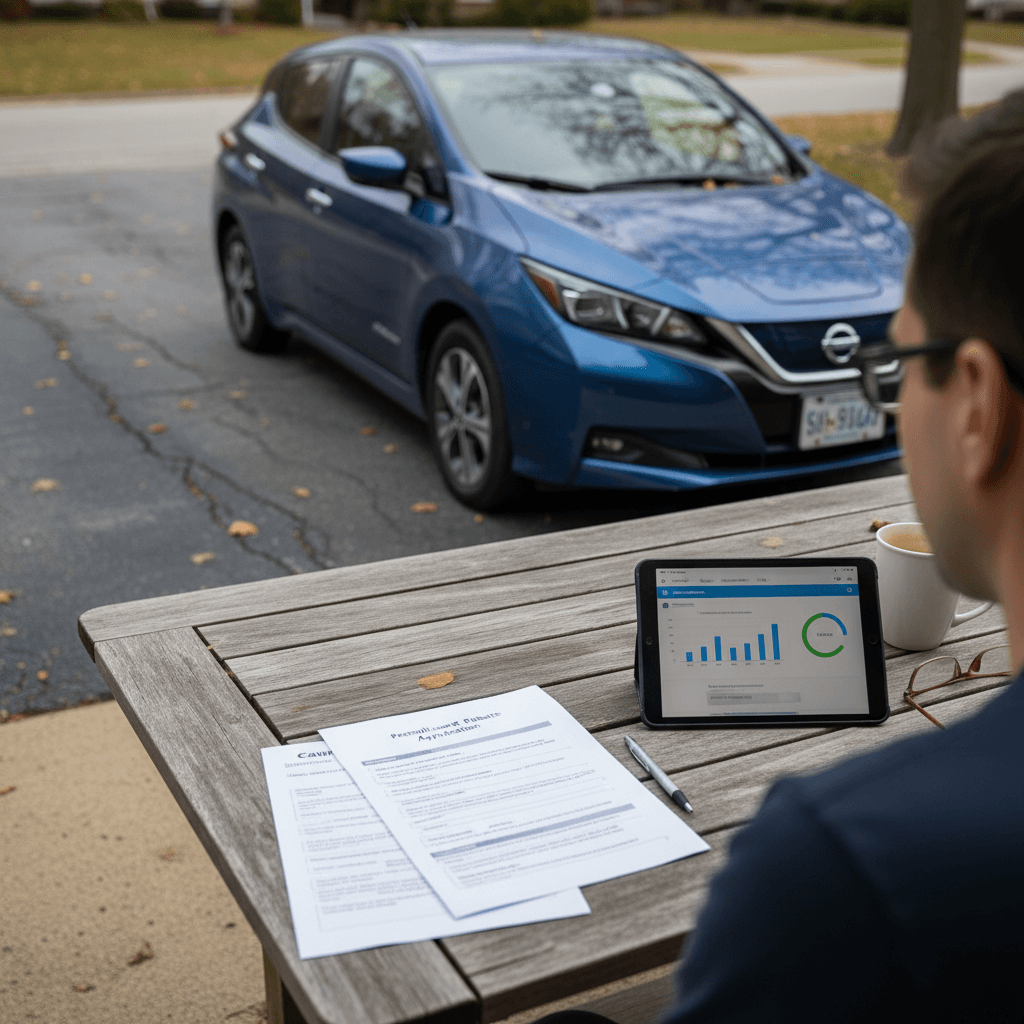
Step‑by‑step: how to claim Pennsylvania used EV rebates
Checklist: claiming the AFV Rebate on a used EV
1. Confirm the vehicle qualifies
Before you sign, verify that the used EV meets current AFV guidelines: plug‑in capable, purchase price under the program cap, and bought from a licensed dealer. If you’re browsing inventory on Recharged, filter by price and powertrain to stay within the rules.
2. Check your household income against DEP limits
Look up the latest AFV Rebate income tiers for your household size. This will tell you which rebate level you’re likely to hit, or whether you’re above the threshold altogether.
3. Close the deal and register in Pennsylvania
Complete the purchase, pay applicable sales tax, and make sure the vehicle is titled and registered in your name in Pennsylvania. Keep copies of the title application, registration card, and bill of sale or buyer’s order.
4. Gather supporting documents
You’ll typically need proof of residency, proof of purchase with the VIN clearly listed, registration documents, and possibly proof of income if you’re aiming for low‑income tiers.
5. Submit the AFV Rebate application within 6 months
Complete the DEP application online or by mail as instructed in the latest guidelines. Missing the six‑month window is an easy way to leave money on the table.
6. Track status and expect processing time
DEP can take several weeks to review applications, especially late in the funding cycle. Don’t spend the rebate before you receive a confirmation notice and, ultimately, the check.
Where Recharged fits in
Ready to find your next EV?
Browse VehiclesHow these incentives shape Pennsylvania’s used EV market
By 2026, Pennsylvania’s used EV market sits at the intersection of falling EV prices, modest state incentives, and a new road‑user charge that adds friction for some buyers. In interviews with retailers and analysts across the region, a few themes keep popping up:
- Price, not policy, is driving most used EV demand. With many three‑ to five‑year‑old EVs now priced closer to comparable gas vehicles, shoppers are less likely to anchor on incentives and more on monthly payments and battery health.
- Incentives matter most for budget‑constrained buyers. When a $2,000–$3,000 rebate is available, it can be the difference between an older gasoline sedan and an entry‑level EV, especially for households trying to keep total payments under a tight ceiling.
- The road‑user charge is changing the conversation. Dealers and marketplaces increasingly fold the extra $250 per year into total cost‑of‑ownership discussions, alongside insurance and maintenance. For high‑mileage commuters, the EV still usually wins on fuel costs; for very low‑mileage drivers, the trade‑off is closer.
What buyers should focus on
- Battery health and degradation, a clean Recharged Score or other diagnostic report tells you more about long‑term cost than any single rebate.
- Charging access, home charging, workplace chargers, and corridor coverage matter more than a one‑time incentive.
- All‑in cost, payment, insurance, electricity, and the new RUC fee over at least three to five years.
Where Recharged adds transparency
- Every vehicle on Recharged comes with a Recharged Score Report that quantifies battery health, so you’re not guessing at future range.
- Digital purchase and trade‑in options make it easier to compare used EVs against your current car on an apples‑to‑apples basis.
- Expert EV specialists can walk you through how the AFV Rebate and road‑user charge affect your personal numbers.
FAQ: Pennsylvania used EV incentives in 2026
Frequently asked questions
Bottom line: Should you buy a used EV in Pennsylvania in 2026?
In 2026, Pennsylvania used EV incentives aren’t as rich or straightforward as they were a few years ago, especially now that the federal Used Clean Vehicle Credit has largely sunset and the state has layered on a road‑user charge. But for the right buyer, and the right car, the math still works. A modest AFV Rebate, a realistic view of the new annual fee, and lower fuel and maintenance costs can add up to a compelling ownership story, particularly as used‑EV sticker prices continue to soften.
If you’re in the market, focus first on vehicle fundamentals: battery health, range that fits your routine, and the ability to charge reliably at home or work. Then layer in today’s incentives rather than chasing yesterday’s programs. A retailer like Recharged can help you navigate each step, from finding a used EV with a strong battery to lining up financing, trade‑in options, and the paperwork you’ll need to pursue Pennsylvania’s AFV Rebate. The policy landscape will keep shifting, but a well‑chosen used EV can stay a smart long‑term bet.