If you’re eyeing a BMW i5 as your daily driver and road‑trip partner, it’s natural to wonder: can you actually sleep in a BMW i5 if a long day runs late, a flight gets cancelled, or you want to try light car camping? The answer is yes, but with some important nuances between the sedan and the more versatile i5 Touring wagon, and a few EV‑specific things to manage around climate control and battery use.
Short answer
BMW i5 space basics: sedan vs Touring for sleeping
Before you start shopping for camping mattresses, you need a realistic sense of how much usable flat space the BMW i5 actually offers once the rear seats are folded. BMW publishes familiar cargo specs, but it’s the shapes and lengths that decide whether you can stretch out.
BMW i5 space at a glance (approximate)
In the i5 sedan, you’re working with a traditional trunk opening. The rear seatbacks fold in a 40/20/40 split, and the load‑through to the cabin is fairly generous, but the roofline slopes down as you get toward the rear, and there’s a step where trunk and cabin meet. That makes it usable for a nap, but it’s not an RV.
The i5 Touring (wagon, available in Europe and other markets and likely to echo many of the same dimensions) is a different story. With around 20 cubic feet of space seats‑up and roughly 60 cubic feet seats‑down, plus a big hatch opening, it gives you a much more wagon‑like, level platform. If your dream is to build a semi‑permanent car‑camping setup in an i5, you really want the Touring.
Tip for taller sleepers
Best sleeping positions in a BMW i5
There’s no built‑in “camping mode” mattress in a BMW i5, so the trick is choosing the position that works with the car’s shape and your body. Here are the three setups that actually work in the real world.
Three realistic ways to sleep in a BMW i5
From emergency naps to light car camping
1. Front seat recline
Best for: Solo naps at rest stops or charging stations.
- Slide the driver or passenger seat back and recline as far as is comfortable.
- Use a small travel pillow and thin blanket.
- Quick to set up, no cargo shuffling required.
2. Diagonal sedan layout
Best for: Single sleeper in the i5 sedan.
- Fold the wider side of the rear seat (60% section) and drop the center section.
- Move the front passenger seat forward and lower its backrest.
- Lie diagonally from rear bench into the trunk on a camping pad.
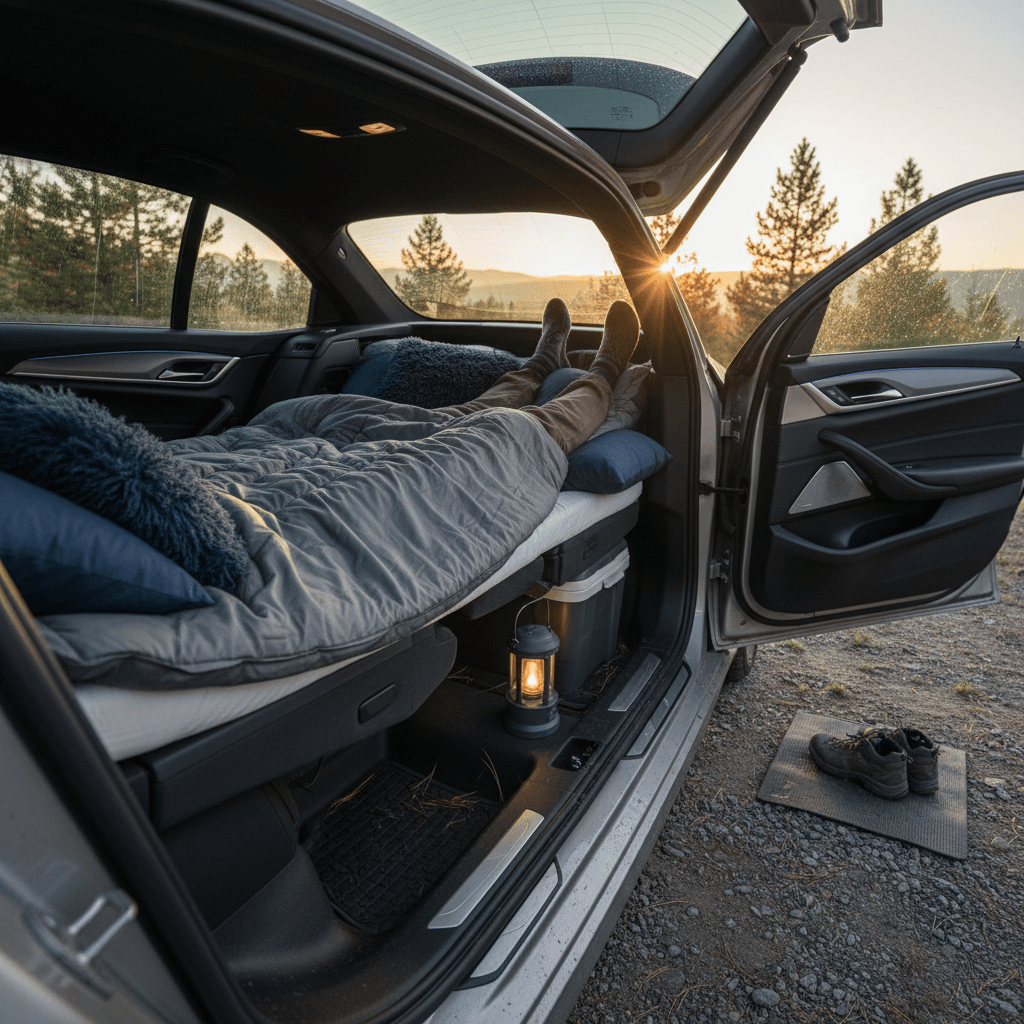
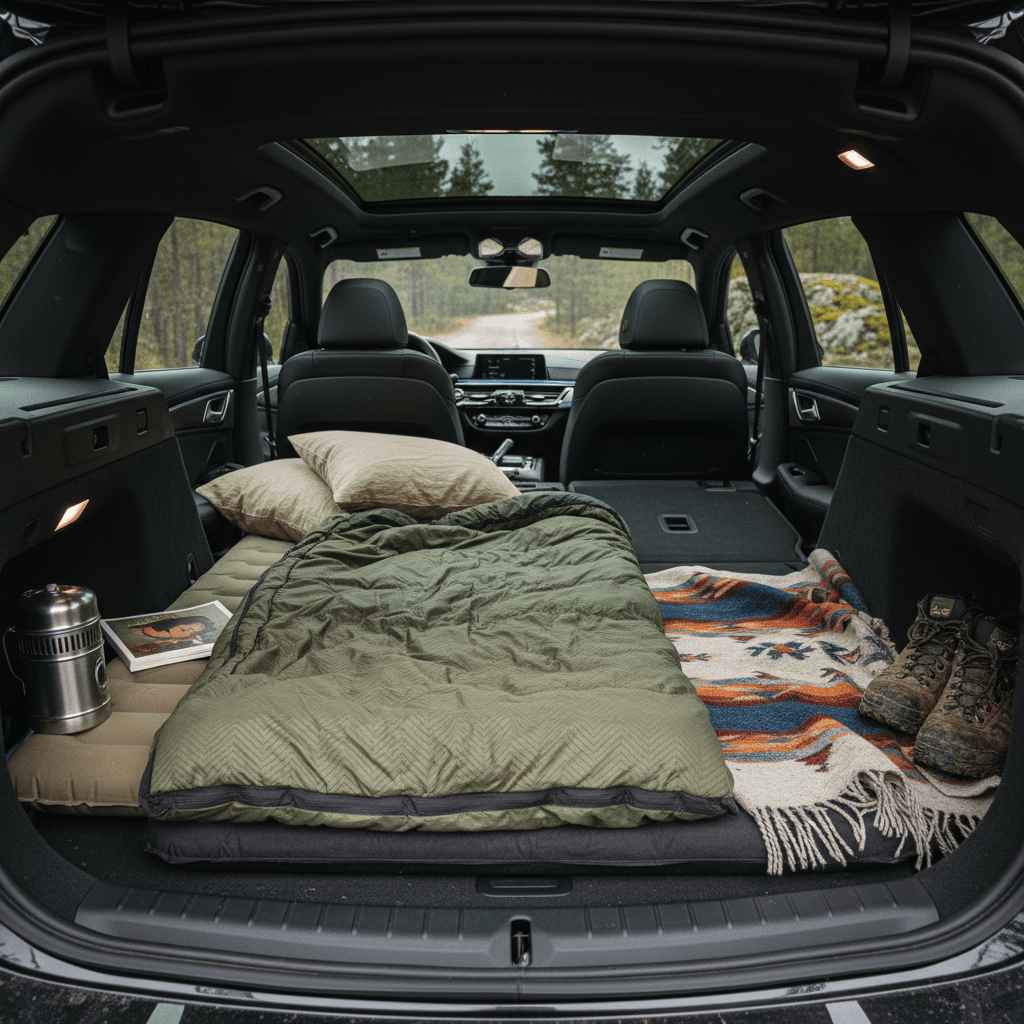
3. Flat wagon platform
Best for: Touring wagon, one or two sleepers.
- Fold all three rear sections to create a long, flat load floor.
- Add a 72–75" folding foam mattress or two single pads.
- Store gear under or alongside the sleeping area.
None of these will feel like your bedroom at home, but for an hour‑long nap while fast‑charging or an unplanned overnight on a long highway run, they’re more than workable, especially if you bring the right gear and don’t try to sleep completely stretched out like you would in a full‑size SUV.
Mind the rear‑seat hump
Comfort: how the i5 cabin feels overnight
Space is one thing; how it feels to stay in the car for hours is another. The BMW i5 rides on the latest 5 Series platform, and it’s one of the most refined cabins BMW builds right now. That helps a lot for long stints where you’re half awake, half asleep.
- Seats: Whether you choose standard sport seats or available comfort seats, the i5’s front chairs are designed for long drives, and that translates well to reclined naps. The adjustability and lumbar support are a clear step up from mainstream EVs.
- Noise levels: The i5 is quiet even at highway speed, and once you’re parked it’s essentially silent aside from soft HVAC fan noise, which most people find soothing rather than intrusive.
- Ride/structure: A stiff body shell and sophisticated suspension mean you’re not listening to creaks and groans while you’re trying to rest, even if the car rocks a bit in strong wind.
- Cabin ambience: Soft ambient lighting, clean design and high‑quality materials make it feel more like a hotel room on wheels than a science project, especially compared with some earlier EVs.
Simple comfort upgrade
Battery use, idling and climate control while you sleep
One of the quiet superpowers of sleeping in any EV, BMW i5 included, is that you can run climate control without an idling engine. The i5’s roughly mid‑80‑kWh usable battery and efficient heat pump–based HVAC can keep the cabin temperate for hours with surprisingly little energy, especially in mild weather.
Rough overnight battery impact for climate control in an i5
These are ballpark figures to help you plan. Actual usage depends heavily on temperature, wind, insulation and how often doors are opened.
| Outside temp | Cabin setting | Estimated 8‑hour battery drop | Good practice |
|---|---|---|---|
| 50–70°F (10–21°C) | Light heat or A/C, low fan | ≈5–8% | Arrive with at least ~25–30% charge before an overnight. |
| 30–50°F (-1–10°C) | Moderate heat, auto fan | ≈8–15% | Pre‑heat while plugged in, add window insulation. |
| Below 30°F (-1°C) | Higher heat, seat heaters | ≈15–25% | Use more blankets and seat/steering heat; don’t start low on charge. |
| Above 85°F (29°C) | Stronger A/C, dehumidify | ≈10–20% | Ventilate first, use shade and window covers. |
Assumes car is parked, not pre‑conditioned, with cabin set for basic comfort.
You don’t have to micromanage the system, but you do need to think ahead. Unlike a gasoline car, there’s no danger of carbon‑monoxide buildup from idling. The risk is waking up to a low battery far from a charger because you started the night at 9% and asked the car to run A/C on high all evening.
Smart climate habits while you sleep in an i5
Start with a healthy state of charge
For any planned overnight in the car, aim to park with at least <strong>30–40% battery</strong>, more if it’s very hot or cold. That leaves room for climate use and a safe buffer to reach the next charger.
Use seats and steering heat first
Heated seats and steering wheel use less energy than blasting the cabin heat. In cold weather, keep the setpoint modest and rely on <strong>direct heating where your body touches</strong>.
Pre‑condition while plugged in
If you’re at a DC fast charger or Level 2 overnight, set the cabin to a comfortable temperature <strong>before</strong> you unplug so the battery does less work while you’re sleeping.
Keep fan speed reasonable
Extreme fan speeds aren’t necessary in a parked car. A low, steady fan keeps air fresh without churning through energy or drying your throat out overnight.
Limit door and window openings
Every time you open a door, you dump the conditioned air. Once you’re settled, try to stay put so the system isn’t starting from scratch every 30 minutes.
Don’t sleep on a near‑empty battery
Safety and legal considerations
A BMW i5 makes a safer, cleaner place to sleep than a gasoline car idling in a parking lot, but there are still a few things to think through before you curl up.
- Where you park: Some cities and private lots in the U.S. restrict overnight parking or sleeping in vehicles. Rest areas often have time limits. Look for clearly posted rules and when in doubt, choose a commercial truck stop or travel plaza that’s known to tolerate overnight stays in cars and RVs.
- Security: Lock the doors, keep valuables out of sight, and consider backing into a well‑lit space near other vehicles instead of tucking away into an isolated corner.
- Ventilation: In mild weather, a cracked window plus climate set to low will be enough. Small bug screens that fit in the window opening can make summer nights much more livable.
- Privacy: Window shades or simple sunshades keep light out and help with insulation, but they also keep prying eyes from seeing you’re sleeping inside.
- Legal ID and insurance: If you’re using your i5 like a rolling hotel once in a while, make sure your registration, insurance, and driver’s license are handy. If you’re car‑camping regularly, check that your coverage is appropriate for the miles you’re doing.
Know local rules
Practical setup checklist for sleeping in an i5
If you’re serious enough about sleeping in your BMW i5 to be reading guides like this, a little preparation will make the difference between a stiff, forgettable night and a surprisingly comfortable experience.
Essential gear for sleeping in a BMW i5
Compact mattress or camping pad
For the sedan, look for a <strong>narrow, 72"–75" pad</strong> that can bend over the trunk‑to‑cabin step. For the Touring, a tri‑fold foam mattress sized to the cargo width works brilliantly.
Pillows and light bedding
Even if you usually crank the HVAC, have at least one warm blanket per person. It lets you dial back the heat or A/C and save battery overnight.
Window shades or covers
Reflective sunshades for the windshield and side windows add privacy, cut light, and help with temperature control. They also make the car feel less like a fishbowl.
Small storage bins
Use low plastic bins or soft duffels that can tuck into the footwells once you set up the bed. The more you can <strong>clear the cargo floor</strong>, the flatter and more comfortable it becomes.
Soft bag for charge cables
The i5 doesn’t have a big frunk, so keeping your Level 1/2 cables in a soft bag keeps them from becoming sharp bumps under your sleeping pad in the trunk area.
Portable light and power bank
The i5’s ambient lighting is lovely, but a small USB lantern and battery pack means you’re not cycling the car on and off just to see what’s in your bag.
One‑night‑stand strategy
How the i5 compares to other EVs for car camping
Where the BMW i5 works well
- Comfort-focused cabin: Seats, materials, and sound insulation are on par with other premium sedans, so naps at chargers or airports feel civilized.
- Long load floor: With the rear seats folded, there’s more usable length than you’d guess from the outside, especially if you’re under six feet tall.
- Efficient HVAC: Modern heat‑pump technology means climate control doesn’t punish your battery as heavily as older EVs might.
Where a different EV might be better
- Tesla Model Y / Hyundai Ioniq 5 type crossovers: Boxier shapes and tall hatch openings offer more headroom and easier mattress setups.
- Large electric SUVs and vans: Three‑row EVs and dedicated people‑movers can sleep two adults flat with room for gear, something even the i5 Touring can’t match without compromise.
- Vehicles with dedicated camp modes: Some rivals offer specific modes that manage HVAC and 12‑volt outlets overnight with one button press.
If your priority is driving enjoyment first, and the occasional overnight is just a nice‑to‑have, the i5 makes a lot of sense. If you’re dreaming up cross‑country weeks of sleeping in your EV every night, you may want to look at taller, more squared‑off shapes, or plan around the i5 Touring wagon rather than the sedan.
When sleeping in a BMW i5 makes sense (and when it doesn’t)
Is the BMW i5 a good car‑camping partner?
Pros and cons at a glance
Good use cases
- Grabbing a 45‑minute nap during a DC fast‑charge stop on a long drive.
- Occasional overnight in a rest area or travel plaza when hotels are booked or out of budget.
- Airport runs where you may get stuck waiting between late‑night flights.
- Light car‑camping weekends if you have the i5 Touring and don’t mind a minimalist setup.
When it’s the wrong tool
- Routine multi‑day camping trips where you sleep in the car every night.
- Tall sleepers who absolutely need to lie completely flat without bending their knees.
- Trips with three or four people plus gear; there’s simply not enough flat space for everyone.
- Extreme‑temperature camping unless you’re very careful about starting battery level and backup charging options.
FAQ: sleeping in a BMW i5
Frequently asked questions about sleeping in a BMW i5
Thinking about a used BMW i5 for road trips?
If you were hoping the answer to “can you sleep in a BMW i5” would be an easy yes, you’re in luck, as long as you’re realistic about how often you’ll do it and what kind of comfort you’re expecting. The i5 sedan can absolutely handle the occasional nap or emergency overnight for one person. The i5 Touring wagon is the one you want if you’re picturing more frequent car‑camping duty with a partner.
If you’re cross‑shopping cars with an eye toward both long‑distance comfort and EV running costs, a used BMW i5 can be a smart buy. At Recharged, every used EV comes with a Recharged Score battery health report, fair‑market pricing, and EV‑savvy guidance so you understand how much range you’ll have left after a long day of driving and the occasional overnight in the cabin. When you’re ready to find an i5, or another EV that suits both your commute and your adventures, you can browse digitally, get trade‑in and financing options, and have your next electric road‑trip partner delivered to your driveway.