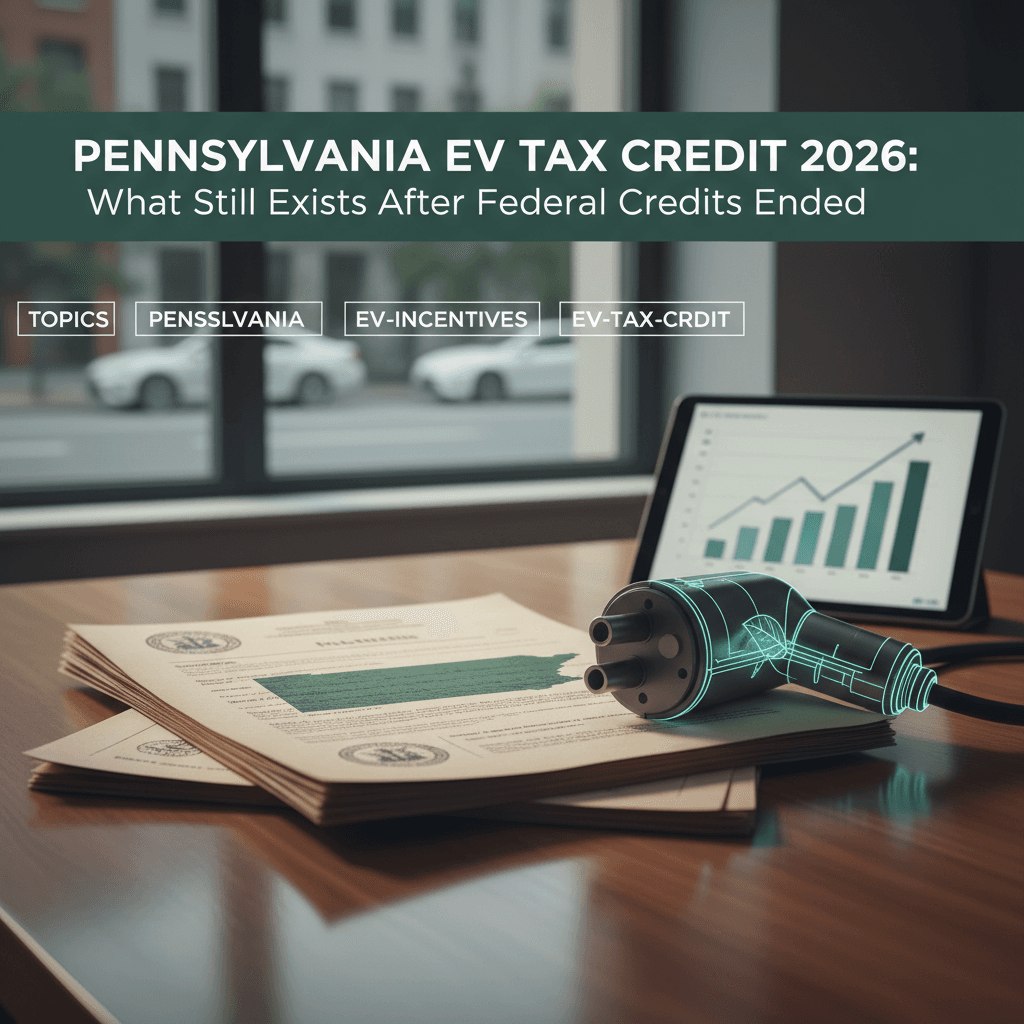
If you’re shopping for an electric car in 2026, you’ve probably heard two conflicting things: **“the EV tax credit is gone”** and **“Pennsylvania still has great incentives.”** Both are true. The big federal EV tax credits ended in late 2025, but Pennsylvania drivers can still lower the cost of going electric in 2026 with state rebates, a remaining home-charger credit, and utility programs, especially if you’re open to a used EV.
Key 2026 takeaway for Pennsylvania drivers
Overview: Pennsylvania EV tax credit landscape in 2026
- Federal **new and used EV purchase credits** (the famous $7,500 and $4,000 deals) are no longer available for vehicles acquired after **September 30, 2025**.
- Pennsylvania’s **Alternative Fuel Vehicle (AFV) Rebate Program** is funded for the program year **July 1, 2025 – June 30, 2026**, offering cash rebates on qualifying plug‑in vehicles.
- A separate **federal tax credit for home charging equipment** covers 30% of eligible costs up to $1,000 for residential installations through **June 30, 2026**.
- Pennsylvania now charges EV and PHEV owners a **Road User Charge (RUC)** each year, which partly offsets the savings from no gas tax, but the total cost of ownership can still favor EVs, especially used ones.
- Utility companies (PECO, Duquesne Light, FirstEnergy territories and others) offer **rebates, bill credits, or time‑of‑use rates** for EV drivers and home charging.
Terminology check: credit vs. rebate
Federal EV tax credit in 2026: what actually ended
The Inflation Reduction Act’s revamped federal EV credits were already complicated; the **One Big Beautiful Bill Act** simplified things in the worst possible way by mostly ending those credits early. Here’s the 2026 reality in plain English:
Federal clean vehicle credits in 2026
What Pennsylvania buyers can and can’t still use
New EVs (Section 30D)
Expired for new purchases made after September 30, 2025. In 2026 you can’t claim the old $7,500 credit on a brand‑new EV you buy this year.
Used EVs (Section 25E)
The used clean vehicle credit of up to $4,000 also ended for vehicles acquired after Sept. 30, 2025. You can still file for it on your 2025 tax return if you bought an eligible used EV before that date.
Charging equipment (Section 30C)
The **Alternative Fuel Vehicle Refueling Property Credit** (home charger credit) survives until June 30, 2026, covering 30% of qualified costs up to $1,000 for home installations.
Filing in 2026 for a 2025 EV purchase
Pennsylvania AFV rebate program for 2025–2026 purchases
Pennsylvania’s **Alternative Fuel Vehicle (AFV) Rebate Program**, run by the Department of Environmental Protection (DEP), is the main state‑level incentive if you buy or lease an EV in 2026. Instead of a tax credit, it offers a post‑purchase rebate funded on a program‑year basis.
Pennsylvania AFV rebates for the 2025–2026 program year
DEP updates the exact **dollar amounts** by program year and sometimes offers higher rebates for lower‑income buyers or certain counties. For most shoppers, that means you’ll want to check the current table right before you buy, but the broad structure stays the same year to year:
Typical structure of Pennsylvania AFV rebates
Exact dollar amounts can change by program year. This table shows the pattern you can expect for 2025–2026.
| Vehicle type | Condition | Typical rebate structure | Key fine print |
|---|---|---|---|
| Battery‑electric (BEV) | New purchase or lease | Highest rebate tier (often more than PHEVs) | MSRP cap and minimum battery size apply; must keep the vehicle registered in PA for a set period. |
| Plug‑in hybrid (PHEV) | New purchase or lease | Moderate rebate tier | Must be able to drive on electricity alone; conventional hybrids are not eligible. |
| Used / one‑time pre‑owned BEV or PHEV | First resale only | Smaller rebate than new, often with income targeting | Bought from a dealer, not a private party; vehicle age and price caps may apply. |
Check the DEP AFV Rebate page for the current year’s exact amounts and eligibility thresholds.
Pro move: Reserve your rebate mentally before you buy
Keep in mind that AFV rebates are **first‑come, first‑served** until funding runs out or the program year ends on **June 30, 2026**. If you’re buying later in the program year, submitting your application quickly becomes more important.
New EV road user charge in Pennsylvania
Starting **April 1, 2025**, Pennsylvania began phasing in an **Electric Vehicle Road User Charge (RUC)**, an annual fee on EVs and PHEVs that replaces the gas tax they’re not paying at the pump. If you’re running the numbers on an EV in 2026, you need this in the spreadsheet too.
Who pays the EV road user charge?
- Most battery‑electric vehicles and plug‑in hybrids under 14,000 pounds registered in PA.
- Exemptions include low‑speed neighborhood EVs, golf carts, motorcycles, and some vehicles registered to tax‑exempt entities.
- The fee is typically due with your annual registration renewal.
What it means for your budget
- Think of it as a **fixed yearly road bill** instead of cents per gallon at the pump.
- For many drivers, fuel savings from cheap electricity still outweigh the new fee, especially if you charge at home on off‑peak rates.
- On a used EV with a lower purchase price, the EV fee is usually a small slice of your total cost of ownership.
Don’t ignore the RUC in your math
Home charger tax credit still available through June 2026
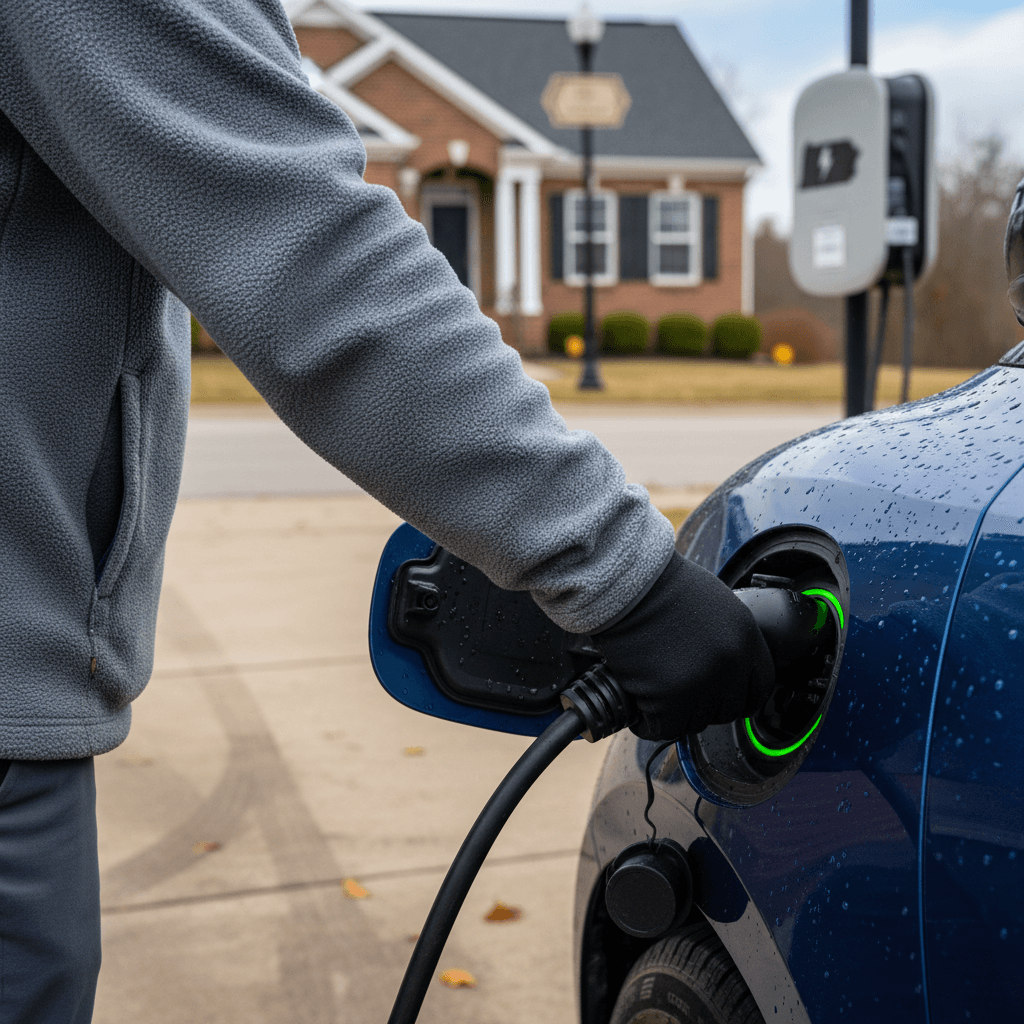
While the big ticket EV purchase credits are gone, the **Alternative Fuel Vehicle Refueling Property Credit** quietly survives, for now. If you install home charging equipment in Pennsylvania, you can still claim this federal credit on your 2026 return for qualifying work done by **June 30, 2026**.
What qualifies for the 30% home charger tax credit?
1. Eligible equipment
Level 2 EV charging hardware (typically 240‑volt) and associated wiring, panel upgrades, and installation work that meet IRS definitions of refueling property.
2. Timing
Equipment must be placed in service by June 30, 2026 to qualify under current rules. If you wait until late 2026, this particular credit may already be gone.
3. Primary residence
For most households, the charger needs to be at your primary residence in the U.S., for Pennsylvania drivers, that’s your home address where the car normally lives.
4. 30% credit, capped at $1,000
You can typically claim **30% of eligible costs up to $1,000** per tax return. That includes both hardware and professional installation, which adds up quickly.
5. Keep every receipt
Save itemized invoices from your electrician and charger manufacturer. You’ll need documentation if the IRS ever asks how you arrived at your numbers.
Utility and local EV incentives across Pennsylvania
Beyond state rebates and federal tax rules, a lot of the real‑world savings in 2026 come from **utility programs**. They aren’t technically “tax credits,” but they can move the monthly payment needle just as much.
Examples of Pennsylvania utility EV incentives
Exact offerings change frequently, always confirm with your provider before you buy.
PECO (Philadelphia region)
Historically offers a mix of rebates for home chargers, off‑peak rates, and small bill credits for EV owners. If you live in the Philly metro, a PECO EV rate can supercharge your fuel savings.
Duquesne Light (Pittsburgh area)
Has provided EV‑friendly rate plans and rebates for residential charging infrastructure. Check for **time‑of‑use** options that make overnight charging dramatically cheaper.
FirstEnergy & other utilities
Utilities serving central and northern Pennsylvania may offer **rebates, marketplace discounts, or pilot programs** for smart chargers. You won’t see these on your tax return, but you’ll feel them on your bill.
Look for “managed charging” programs
How a Pennsylvania buyer can stack savings in 2026
Let’s pull this together with a plausible 2026 scenario. Suppose you’re a Pennsylvania driver shopping for a practical electric hatchback and you’re deciding between new and used options.
Scenario A: New EV in 2026
- MSRP: $39,000 new battery‑electric vehicle.
- **No federal purchase credit** available because it’s acquired after Sept. 30, 2025.
- Potential **PA AFV rebate** (amount varies by program year; assume a mid‑range rebate in your estimates).
- Home Level 2 charger + installation cost: $1,600. Federal home‑charger credit could knock roughly **$480** off your tax bill (30% of $1,600, capped at $1,000).
- Ongoing savings from cheap electricity, partially offset by the new EV road user charge.
Scenario B: Used EV through Recharged
- Purchase price: $23,000 used EV with a **verified battery health report** via the Recharged Score.
- Federal used EV credit is gone for 2026 purchases, but the lower starting price more than compensates for many shoppers.
- Potential **PA AFV rebate** for one‑time pre‑owned vehicles, if you and the car meet the program rules.
- Same **home‑charger credit** opportunity if you install Level 2 charging.
- Recharged’s pricing tools and EV‑specialist support help you compare **total cost of ownership** against a gas car and avoid overpaying.
Why used often wins in 2026
Used EVs in Pennsylvania: smart play after federal credits
The used EV market was already where a lot of the value lived; 2026 just makes that contrast sharper. Without the federal $7,500 carrot for new vehicles, depreciation is back in the spotlight, and it’s doing you a favor if you buy used.
- Early‑life depreciation on many EVs has been steep, which means **3–5‑year‑old models often sell for a fraction of their original MSRP**.
- Battery health is the big question mark on a used EV. Recharged addresses this by providing a **Recharged Score Report** with verified battery diagnostics on every vehicle we list.
- Because Pennsylvania’s AFV program includes **one‑time pre‑owned vehicles**, you may still qualify for a state rebate on a carefully chosen used EV.
- With no federal credits left to prop up new‑car prices, sellers of new EVs face more price pressure, often making slightly older used models the sweet spot.
The end of federal EV tax credits doesn’t kill the value story; it just shifts the spotlight from the finance office to the asking price and battery health report.
If you shop through Recharged, you’ll also see **fair market pricing benchmarks**, nationwide delivery options, and EV‑specialist support who speak the language of kilowatts and kWh, not just paint colors. That combination matters more now that the tax code isn’t doing as much heavy lifting.
Checklist: how to claim your 2026 Pennsylvania EV savings
Step‑by‑step: from shopping to rebates and credits
1. Decide on new vs. used with realistic math
Price out at least one **new EV** and one **used EV** you’d genuinely drive. Include the EV road user charge, insurance, and electricity vs. gas. Tools like the Recharged Score Report make the used side of the ledger far less mysterious.
2. Check current AFV rebate rules
Right before you buy, visit Pennsylvania DEP’s AFV rebate page and confirm <strong>eligibility, amounts, income limits, and deadlines</strong> for the July 1, 2025–June 30, 2026 program year.
3. Confirm your vehicle qualifies
Make sure your chosen EV meets the AFV program’s **battery size, price cap, and model year** rules. If you’re buying used, verify it counts as a one‑time pre‑owned sale from a licensed dealer.
4. Plan your home charging
Decide whether you’ll install a **Level 2 charger** at home. If so, schedule the work before June 30, 2026 so you can capture the 30% federal home‑charger tax credit on your return.
5. Keep all documentation
Save the purchase agreement, registration, proof of Pennsylvania residency, charger invoices, and utility program confirmations. You’ll need different pieces for the AFV rebate, your tax preparer, and utility rebates.
6. Apply promptly for the AFV rebate
Once the vehicle is titled and registered in PA, submit your AFV rebate application as soon as possible, funding is limited each program year.
7. File for the home‑charger credit
When you file your 2026 federal tax return, include the IRS form for refueling property to claim the **30% home‑charger credit** for eligible costs paid in 2026.
FAQs: Pennsylvania EV tax credits and rebates in 2026
Frequently asked questions about Pennsylvania EV tax credits in 2026
Bottom line: making an EV pencil out in Pennsylvania
The EV incentive picture in 2026 is more complex, and frankly, less generous, than it was a couple of years ago. The federal purchase credits that grabbed headlines are gone for new deals, and Pennsylvania’s EV road user charge is now very real. But the story doesn’t end there. If you understand how to combine the state’s AFV rebates, the remaining home‑charger tax credit, and the right utility program, an electric car can still be a smart financial play, especially if you lean into the used market.
This is where **how** you buy matters as much as **what** you buy. A used EV with a clean bill of battery health, bought at a fair price, can survive the end of federal credits just fine. Platforms like Recharged are built for exactly this new era: transparent battery diagnostics, fair market pricing, EV‑savvy support, and nationwide delivery, so Pennsylvania drivers can make the numbers work without needing a tax code windfall. In 2026, that combination is the closest thing you’ll find to a new EV tax credit.