If you own an electric car in Pennsylvania, or you’re thinking about buying a used EV, state inspection rules can be confusing. You hear about **annual safety inspections**, **emissions testing**, 25 special counties, and exceptions for vehicles that don’t burn gasoline. This guide breaks down Pennsylvania electric car inspection requirements in 2026 so you know exactly what your EV or plug‑in hybrid needs and how to avoid surprises at renewal time.
Important for 2026
Overview: How PA Inspections Work for EVs in 2026
Pennsylvania’s vehicle inspection system has two different programs that matter to EV and plug‑in owners:
- Annual safety inspection – Required in all 67 counties for most passenger vehicles under 9,000 lbs. This includes electric vehicles, plug‑in hybrids, and conventional cars.
- Annual emissions inspection – Required only in 25 designated counties and only for vehicles that burn gasoline (including most hybrids). Fully electric vehicles are exempt from emissions testing statewide.
Think of it this way: your **Tesla, Nissan LEAF, or Bolt** still has to pass a **safety inspection** every year in Pennsylvania, but it will not be hooked up to an emissions machine. A **plug‑in hybrid** like a Toyota RAV4 Prime or Ford Escape PHEV will need both safety and emissions if it’s registered in one of the emissions‑program counties.
Quick Facts: PA Inspections for EV & Plug‑In Drivers
Do Electric Cars Need State Inspection in Pennsylvania?
Yes. **All passenger vehicles**, including electric cars, must pass a **Pennsylvania annual safety inspection** if they’re registered in the state and under the usual weight limits (9,000 lbs for most light‑duty passenger vehicles). Antique, classic, and some special‑use registrations can be treated differently, but the average daily‑driver EV is inspected just like a gasoline sedan when it comes to safety.
Don’t Skip Because It’s “Just an EV”
Practically, that means your **registration renewal** each year goes hand‑in‑hand with a trip to an inspection station. The inspector will complete the state safety checklist. If your car is a **pure battery‑electric**, they’ll apply a safety sticker only. If it’s a **hybrid or plug‑in hybrid in an emissions county**, you’ll also get an emissions sticker (or an emissions exemption noted on the paperwork if you qualify).
Emissions Requirements for Electric & Plug‑In Vehicles
Battery‑Electric Vehicles (BEVs)
- Examples: Tesla Model 3/Y/S/X, Chevrolet Bolt, Nissan LEAF, Hyundai Ioniq 5, Kia EV6, Rivian R1T/R1S.
- Emissions test: Not required. Pennsylvania treats BEVs as exempt because they have no gasoline engine and no tailpipe.
- Where it applies: EV emissions exemption applies in all 67 counties, including Philadelphia and Pittsburgh regions.
- What you still need: Full annual safety inspection, plus any local fees set by the station.
Hybrids & Plug‑In Hybrids (HEV & PHEV)
- Examples: Toyota Prius, Rav4 Prime, Ford Escape PHEV, Hyundai Ioniq Plug‑In, Kia Niro PHEV.
- Emissions test: Treated like gasoline vehicles in emissions counties; typically tested via OBD‑II plug‑in and visual check of emissions components.
- Exemptions: May qualify for model‑year, low‑mileage, or non‑emissions‑county exemptions, but not for the EV exemption because they still burn fuel.
- What you need: Annual safety inspection everywhere, and emissions inspection or documented exemption if your county is in the emissions program.
Fuel Type Matters More Than Plug Type
For plug‑in drivers, the key takeaway is that **having a charge port doesn’t automatically exempt you**. A Chevrolet Bolt is emissions‑exempt; a Chevrolet Volt (plug‑in hybrid) in an emissions county is not.
County‑by‑County: When Emissions Still Matter
Pennsylvania splits its emissions program into several regions (Philadelphia, Pittsburgh, South Central, Northern, and “Other Counties”). Emissions testing applies only in **25 of 67 counties**. If your registration address is in one of those counties and your vehicle has a gasoline engine, you’ll deal with emissions yearly unless you qualify for an exemption.
How County Rules Affect EV & Hybrid Drivers
High‑level view of how your county registration interacts with PA emissions requirements.
| Where your car is registered | Fuel/vehicle type | Emissions requirement |
|---|---|---|
| One of 25 emissions counties (e.g., Philadelphia, Allegheny, Bucks) | Battery‑electric vehicle (BEV) | No emissions test. Annual safety inspection only. |
| One of 25 emissions counties | Hybrid or plug‑in hybrid | Annual emissions inspection (or documented exemption) + annual safety inspection. |
| One of 42 non‑emissions counties | Any EV or hybrid | No emissions program requirements. Annual safety inspection only. |
| Any county | Vehicle over 9,000 lbs GVWR or certain special plates | Often exempt from light‑duty emissions program; check with the station or PennDOT. |
Remember: battery‑electric vehicles are exempt from emissions testing state‑wide. Plug‑in hybrids follow the gasoline rules below.
How to Check Your County’s Rules
What Pennsylvania Inspectors Actually Check on an EV
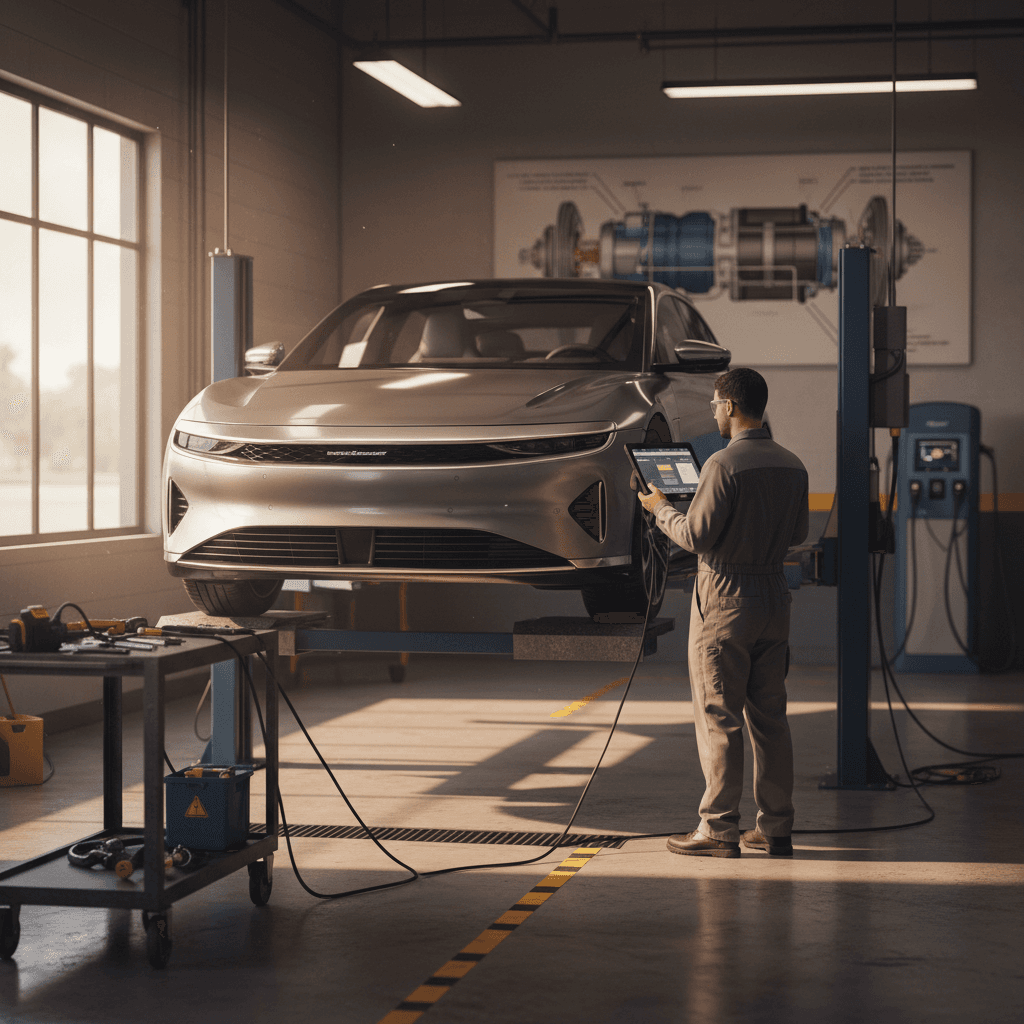
When you drive up in a battery‑electric vehicle, the state safety checklist is nearly identical to a gasoline car. Inspectors aren’t taking your battery pack apart, but they are making sure the vehicle is safe to operate on public roads.
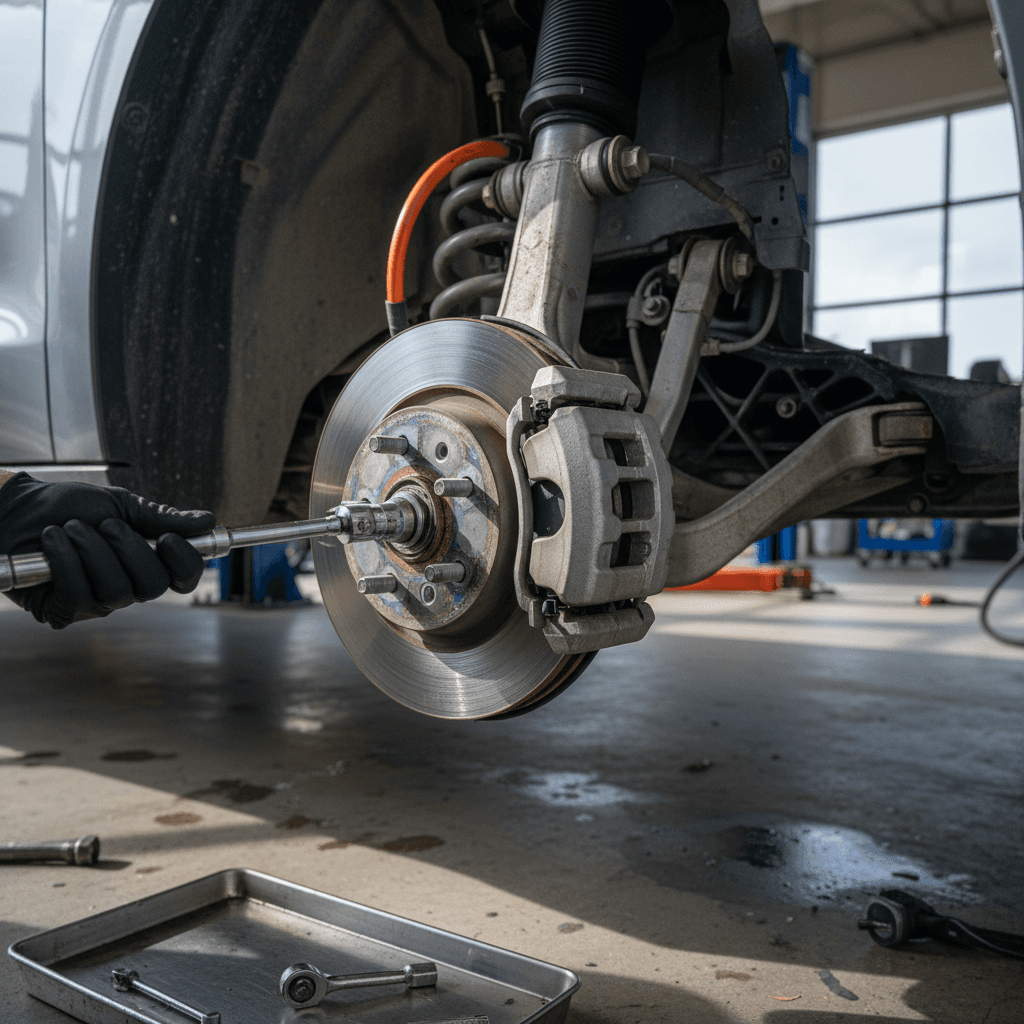
- Brakes – Rotor and pad wear, parking brake function, brake lines, and hydraulic integrity. Regenerative braking doesn’t replace the need for healthy friction brakes.
- Tires & wheels – Tread depth, sidewall condition, correct load rating, and wheel integrity.
- Steering & suspension – Tie rods, ball joints, control arms, shocks/struts, and steering components.
- Lights & signals – Headlights (including aim), tail lights, turn signals, brake lights, markers, and emergency flashers.
- Glass & mirrors – Windshield cracks in critical areas, wipers, washers, and required mirrors.
- Seat belts & safety equipment – Belts present and functional, sometimes checking basic airbag indicators.
- Body & frame – Rust in critical structural areas, secure bumpers, absence of dangerous protrusions.
- VIN & documentation – Correct VIN, registration validity, and sometimes odometer readings for records.
High‑Voltage Systems Are Off‑Limits
Inspection Costs & Timing for PA EV Owners
Inspection pricing in Pennsylvania isn’t fixed by the state; individual stations set their own labor rates. The state only sets a small fee for the sticker itself. For most EV and plug‑in drivers, costs break down like this:
Typical Inspection Costs for Electric & Plug‑In Vehicles
Actual prices vary by station, but these ranges are common across Pennsylvania.
Safety‑Only (BEVs, non‑emissions counties)
Who: Most battery‑electric vehicles and any car registered in a non‑emissions county.
Typical range: $35–$50 for the inspection plus sticker.
Shops may bundle safety inspection with other services like tire rotations or brake checks.
Safety + Emissions (Hybrids in 25 counties)
Who: Hybrids and plug‑in hybrids registered in emissions counties.
Typical range: $60–$80 for combined safety and emissions testing at many stations.
Some stations discount exempt emissions tests but still charge for paperwork and sticker.
How Long It Takes
Safety‑only: Often 20–40 minutes.
Safety + emissions: Typically 30–60 minutes, depending on backlog.
Many PA shops let you schedule online to avoid end‑of‑month rushes.
Plan Around Your Sticker Month
Used EV Buyers: PA Inspection vs. Battery Health
If you’re buying a used electric car in Pennsylvania, either from a private seller or through a retailer like Recharged, it’s important to understand what **state inspection does and doesn’t tell you**.
What the PA Inspection Sticker Tells You
- The car recently met the minimum legal safety standard at one point in time.
- Critical items like brakes, tires, lights, and basic structure were acceptable when the sticker was issued.
- If you see a very old or missing sticker on a Pennsylvania‑titled car, that’s a red flag.
However, the inspection does not guarantee long‑term reliability or provide any insight into expensive EV‑specific components.
What It Doesn’t Cover for EVs
- High‑voltage battery health or remaining capacity.
- Fast‑charging behavior and thermal management performance.
- Software and connectivity issues that may affect range displays or charging.
- Detailed corrosion on battery trays or underbody aero panels unless it’s clearly a structural concern.
For a high‑voltage vehicle, ignoring battery health can be a much more expensive mistake than replacing brakes or tires.
How Recharged Fills the Gaps
If you’re considering a private‑party EV purchase in Pennsylvania, you can still apply the same thinking: use the state inspection as a **minimum bar**, but insist on **battery health documentation** and, ideally, an EV‑savvy pre‑purchase checkup. For many buyers, starting with a vehicle that already has a Recharged Score can save significant time and uncertainty.
Checklist: Preparing Your EV for Pennsylvania Inspection
Simple Prep Steps Before Your Appointment
1. Confirm your inspection month and county status
Look at your windshield sticker for the expiration month and verify whether your registration address is in one of Pennsylvania’s 25 emissions counties. That will determine whether your hybrid or plug‑in needs emissions testing alongside safety.
2. Check tire tread and pressures
Make sure tread depth is above the legal minimum (2/32" is the legal floor, though replacing closer to 4/32" is safer) and that pressures match the door‑jamb label. EVs are heavy; worn or under‑inflated tires are a common reason for rejections.
3. Test all lights and wipers
Have a helper walk around the car while you check headlights (low and high beams), turn signals, brake lights, reverse lights, and hazards. Replace burned‑out bulbs and streaky wiper blades before you arrive.
4. Inspect brakes for noise or vibration
If you hear grinding, squealing, or feel pulsing through the pedal, schedule brake service before inspection. Regenerative braking hides pad wear, so EV owners are often surprised to fail on brake issues.
5. Clear warning lights and address known issues
A lit ABS, airbag, or check‑engine light on a hybrid or plug‑in hybrid can complicate inspection and emissions testing. Have diagnostic work done first. For BEVs, any major safety‑related warning should be addressed before you show up.
6. Bring registration and proof of insurance
Have updated registration, insurance card, and payment method ready. This keeps the visit efficient and avoids rescheduling over missing paperwork.
FAQ: Pennsylvania Electric Car Inspection Requirements
Frequently Asked Questions About PA EV Inspections
Key Takeaways for Pennsylvania EV Owners
For Pennsylvania drivers, the rules around electric car inspections are straightforward once you separate **safety** from **emissions**. Every mainstream EV or plug‑in still needs an annual safety inspection; only vehicles that burn fuel and live in emissions‑program counties have to worry about the emissions test. Pure EVs stay emissions‑exempt, but they’re still subject to the same safety standards as any other car on the road.
If you’re already an EV owner, the smartest move is to treat inspection season as a yearly safety checkup, fix small issues before they become big ones. If you’re shopping for a used electric car, don’t stop at the sticker. Combine a valid Pennsylvania inspection with **independent battery‑health data**, like the Recharged Score, so you can feel confident about the range, longevity, and value of the EV you’re bringing home.