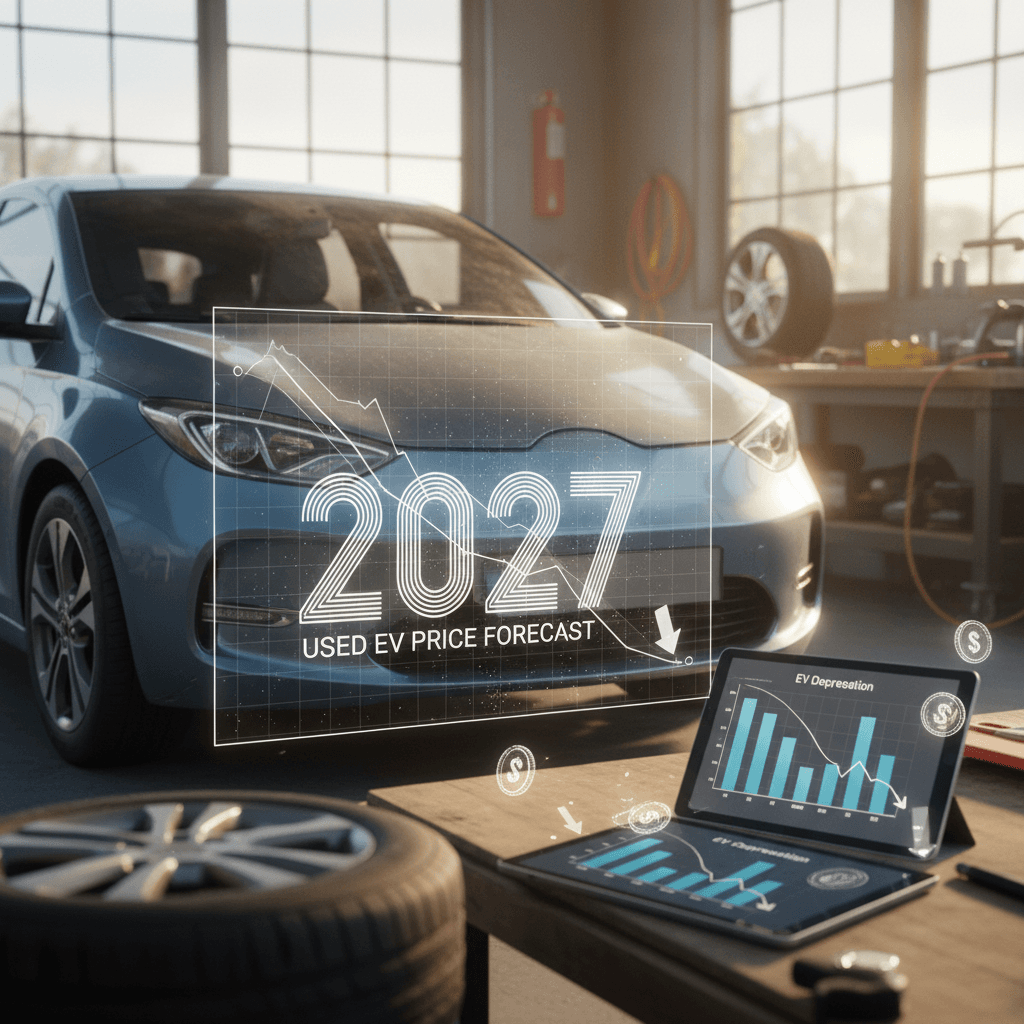
Over the next few years, the U.S. used‑vehicle market will be hit by something it’s never seen before: a true off‑lease EV flood. Hundreds of thousands of electric vehicles leased in 2022–2024 are locked in to return between 2025 and 2027, setting up a surge in late‑model, low‑mileage EV supply just as incentives change and new‑car demand cools. If you’re thinking about buying, selling, or trading an EV, this wave will shape your options and your wallet.
Key takeaway
Why off‑lease EVs are about to flood the used market
Three trends are converging to create the off‑lease EV flood you’re hearing about:
- Leasing came roaring back for EVs. Captive finance arms used aggressive lease subventions and the now‑expired commercial EV tax credit to make leasing cheaper than buying for many models, especially in 2023–2024.
- Lease terms lock in a return date. Most EV leases run 24–36 months. That means the surge in EV leasing that started in 2023 shows up as a surge in lease returns starting in late 2025 and peaking through 2026–2027.
- Buyouts make less sense now. New EV transaction prices have fallen sharply since 2022, and manufacturers piled on incentives. For many lessees, the buyout price printed in their contract is now well above current market value. Walking away and leasing or buying something new often pencils out better.
Why this matters even if you didn’t lease
How big is the off‑lease EV wave? Key numbers
The coming spike in off‑lease EV supply
Those figures might sound modest compared with the overall used‑vehicle market, but they’re huge relative to where used EV volumes have been. For years, dealers hunted for any late‑model EV they could find. By 2026, the situation flips: there will be more off‑lease EVs than many stores can comfortably retail unless they have a clear strategy.
What this flood means for used EV prices
When you inject that much nearly new inventory into any segment, you put downward pressure on prices. We’re already seeing the early stages:
- Analysts report that average prices for 1‑ to 5‑year‑old used EVs have dropped by low‑ to mid‑teens percentages year‑over‑year, compared with flat pricing for many gas and hybrid models.
- Auction and listing data show an increasing share of used EVs priced under $25,000, moving them into the heart of the mainstream used‑car market instead of a luxury niche.
- Non‑Tesla EVs in particular have seen continued price softening into early 2026, while used Teslas, after a brutal slide in 2023–mid‑2025, have recently rebounded on certain models as new‑car supply tightened and some nameplates were discontinued.
Recent used EV price trends vs. overall market
Illustrative snapshot of how used EV prices have diverged from gas and hybrid vehicles.
| Segment | Avg used price (1–5 yrs) | YoY price change | Notes |
|---|---|---|---|
| All used vehicles | $31,000 | -1% | Overall used market has largely stabilized. |
| All used EVs | ≈$30,000–$32,000 | -10% to -15% | Faster depreciation as supply rises and incentives favor new EVs. |
| Used Teslas (overall) | Low $30,000s | +4% since late 2025 | After steep prior declines, some models have bounced back. |
| Non‑Tesla used EVs | Mid‑$20,000s | -3% to -8% since late 2025 | Many mainstream EVs continue to get cheaper. |
Numbers are rounded examples based on recent industry studies; actual values vary by model, mileage, and region.
Opportunity for shoppers
The catch is timing. Prices don’t fall in a straight line. Supply ramps up through 2026, while federal and manufacturer incentives shift. If you can be flexible on brand and trim, you’re likely to find compelling value in the 2025–2027 window.
Winners and losers: which EVs hold up best?
Not every EV will react the same way to this surge in supply. Brand strength, software support, charging access, and battery reputation all play a role in how each model weathers the off‑lease wave.
How different EV segments are positioned for the off‑lease flood
Broad patterns we’re seeing in pricing and demand as lease returns ramp up
Stronger residuals
Tesla core models (3, Y) and a handful of premium EVs with strong brand pull still show relatively healthy demand.
- Large owner base and brand recognition.
- Supercharger access and frequent software updates.
- Recent discontinuations (for some models) tighten supply.
Pressure points
Mainstream non‑Tesla crossovers and sedans, think first‑gen compact SUVs, face the brunt of price pressure.
- Many were heavily subsidized on lease, pushing down used values.
- Competition from newer, longer‑range models.
- Less brand loyalty and more lease walk‑aways.
Wild cards
Early‑generation EVs and niche performance models can swing either way.
- Limited range or slow charging can hurt values.
- But rare trims or performance variants may hold up better.
- Battery warranty coverage is a critical differentiator.
Model‑by‑model behavior will keep evolving as more off‑lease units hit the lanes. That’s why it’s important to look past the badge and drill into battery health, charging options, and total cost of ownership on any used EV you’re considering.

How dealers and auctions are preparing
For remarketers, a 200%+ spike in returning off‑lease EVs is both an opportunity and a headache. Here’s how the wholesale and retail sides are adjusting before the wave crests:
Dealer and auction playbook for the off‑lease EV surge
1. Reworking valuation models
Traditional residual curves built around gas vehicles don’t fit EVs with faster early‑life depreciation and tech‑driven obsolescence. Lenders and remarketers are rebuilding models specifically for EV lease returns.
2. Shortening turn times
With prices softening, the stores winning on EVs are treating them like fast‑moving tech inventory, not long‑sitting specialty units. The goal: recondition quickly, price to market, and turn within 20–30 days.
3. Investing in EV expertise
Dealers are training staff on battery warranties, home charging, and range expectations, and in some cases hiring EV specialists, so they can retail off‑lease EVs confidently instead of wholesaling them at a loss.
4. Segmenting the inventory
Better‑spec’d, longer‑range models with strong demand stay on the front line. Older tech, limited‑range or incentive‑heavy lease returns may be wholesaled quickly or retailed only with aggressive pricing.
5. Partnering with EV‑focused platforms
Some dealers are leaning on EV‑centric marketplaces and diagnostic tools to help them price, certify, and move off‑lease EVs they’re not yet comfortable handling alone.
Risk for traditional stores
What this means for you as a used EV buyer
Put simply, the off‑lease EV flood tilts the playing field toward buyers who are prepared. Here’s how you can use it to your advantage:
Shop the sweet spot: 2–4 years old
Most off‑lease EVs are 24–36 months old, with miles in the 20,000–40,000 range and plenty of factory battery warranty left. That’s often the best balance of price, remaining life, and up‑to‑date tech.
Watch for 2022–2024 model‑year vehicles coming off lease between late 2025 and 2027, this is where much of the value will be.
Be flexible on badge, firm on battery
Brand loyalty can cost you money in a flooded market. If you’re open to multiple makes but hold a hard line on verified battery health, range needs, and charging speed, you can often get more car for the same payment.
This is where tools like the Recharged Score report become critical, they quantify battery condition and fair market pricing across brands.
Leverage changing incentives
Risks to watch: battery health, incentives, and excess supply
A big supply of attractive, late‑model EVs doesn’t eliminate risk. It changes which risks matter most. As you shop in an off‑lease‑heavy market, keep an eye on three fault lines:
Three big risks in an off‑lease EV‑heavy market
Understand where the pitfalls are before you chase the lowest price
1. Battery health & range
Battery condition is the single biggest variable in a used EV’s real‑world value.
- Two identical off‑lease units can differ by 10–20% in usable range.
- Fast‑charging‑heavy histories may show more degradation.
- Verified diagnostics beat generic “battery OK” claims.
2. Shifting incentives & tax credits
Federal credits for new and used EVs are in flux, and some programs have already expired or tightened.
- New‑EV purchase credits were central to past pricing, and their loss can drag used prices lower.
- Manufacturer lease support can suddenly make new vehicles cheaper to drive than off‑lease buys.
3. Local oversupply & thin demand
Some markets will be awash in certain models, especially where leasing was popular.
- In high‑lease metro areas, identical EVs may stack up at auctions and lots.
- High supply can mean great deals, but also faster future depreciation if you resell locally.
Don’t ignore future resale
How Recharged helps you navigate the off‑lease EV flood
At Recharged, this is exactly the market we were built for: a fast‑changing used EV landscape where battery health, pricing transparency, and expert guidance matter more than ever.
- Recharged Score battery diagnostics. Every vehicle on our platform comes with a Recharged Score Report that measures verified battery health, estimated remaining range, and how that compares to similar vehicles, key information when you’re choosing among dozens of off‑lease EVs.
- Fair market pricing in a moving market. Our pricing tools ingest current wholesale and retail data for EVs specifically, so you can see whether a given off‑lease unit is priced above, below, or right at market for its condition and mileage.
- Digital convenience plus real humans. You can shop, finance, and complete your purchase fully online, but you’re never on your own. EV specialists can walk you through trade‑in options, battery reports, home charging needs, and whether a given off‑lease vehicle fits your use case.
- Flexible selling and trade‑in options. If you already own or lease an EV, we offer instant offers, consignment, and trade‑in paths designed for electric vehicles, not just gas‑car templates.
- Nationwide reach, local touch. We support nationwide delivery and operate an Experience Center in Richmond, VA for shoppers who want to see, touch, and test‑drive before they buy.
Turning a market shift into an advantage
Ready to find your next EV?
Browse VehiclesOff‑lease EV flood: frequently asked questions
Common questions about the off‑lease EV surge
The bottom line on the off‑lease EV flood
Over the next few years, the off‑lease EV flood will turn late‑model electric vehicles from rare auction prizes into a mainstream used‑car category. Prices on many models are already falling faster than the broader used market, and a surge of lease returns in 2026–2027 is poised to amplify that trend. For shoppers, that’s an opening: more choice, better technology, and lower prices, if you buy with your eyes wide open.
The smart move is to treat each off‑lease EV not just as a payment and a monthly range figure, but as a long‑term asset whose value lives or dies on battery health, charging practicality, and future demand. With transparent diagnostics and EV‑specific market data, platforms like Recharged aim to turn a complicated market shift into a simpler, more confident path to going electric on the used side.