Trying to choose between an AWD vs RWD electric car can feel like a tug-of-war between winter confidence, range, price, and performance. With EVs, the classic gas-car rules only get you part of the way there, dual motors, instant torque, and software-driven traction control change the equation in important ways.
Quick takeaway
AWD vs RWD in Electric Cars: Big Picture
AWD vs RWD EVs at a Glance
Across popular models, you see the pattern clearly. A Ford Mustang Mach‑E or Tesla Model Y with one rear motor offers more range and a lower price, while dual‑motor AWD versions trade some efficiency for punchy acceleration and much stronger all‑weather traction.
Start with your worst day, not your best
How AWD and RWD Work in an Electric Vehicle
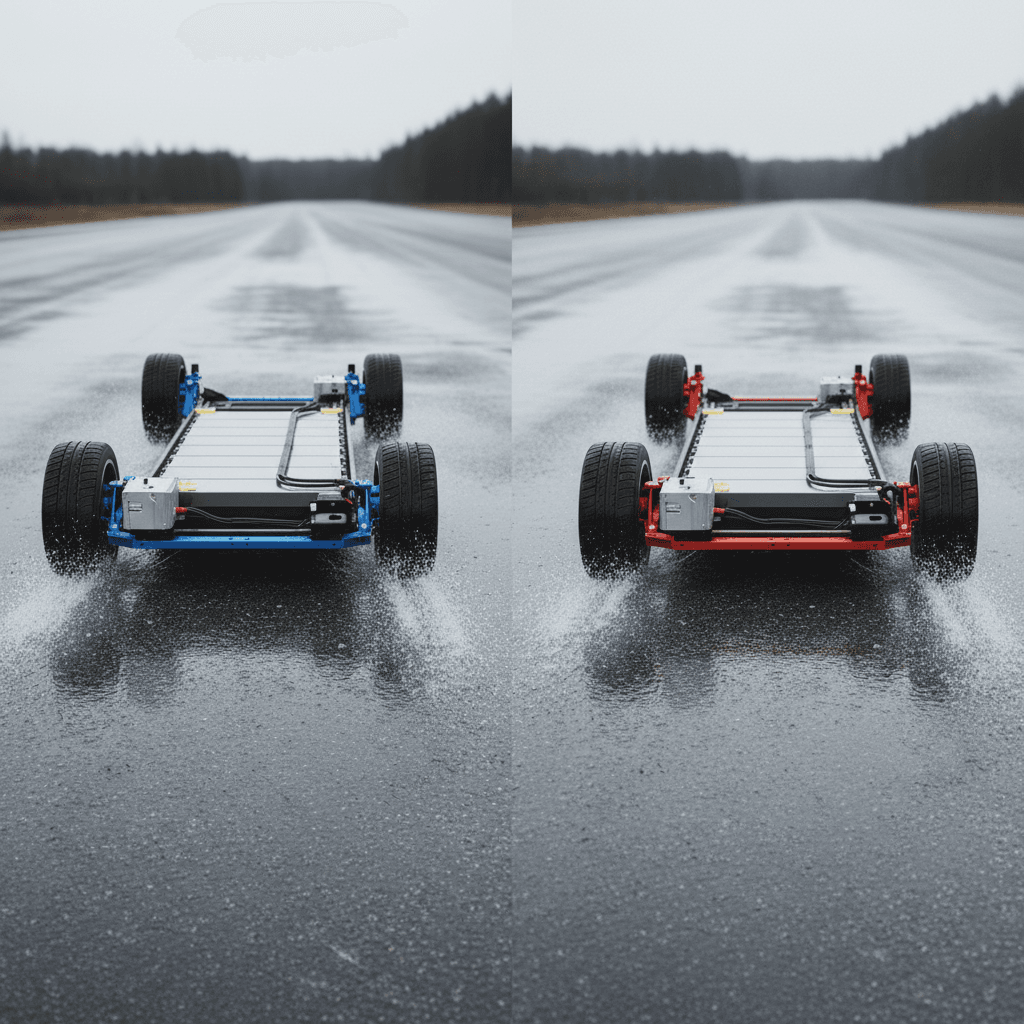
Rear‑Wheel Drive (RWD) EV
- Single motor on the rear axle drives the back wheels.
- Battery pack runs along the floor; weight is well balanced.
- Simpler, lighter, and usually more efficient than AWD.
- Stability and traction systems manage rear‑wheel slip.
All‑Wheel Drive (AWD) EV
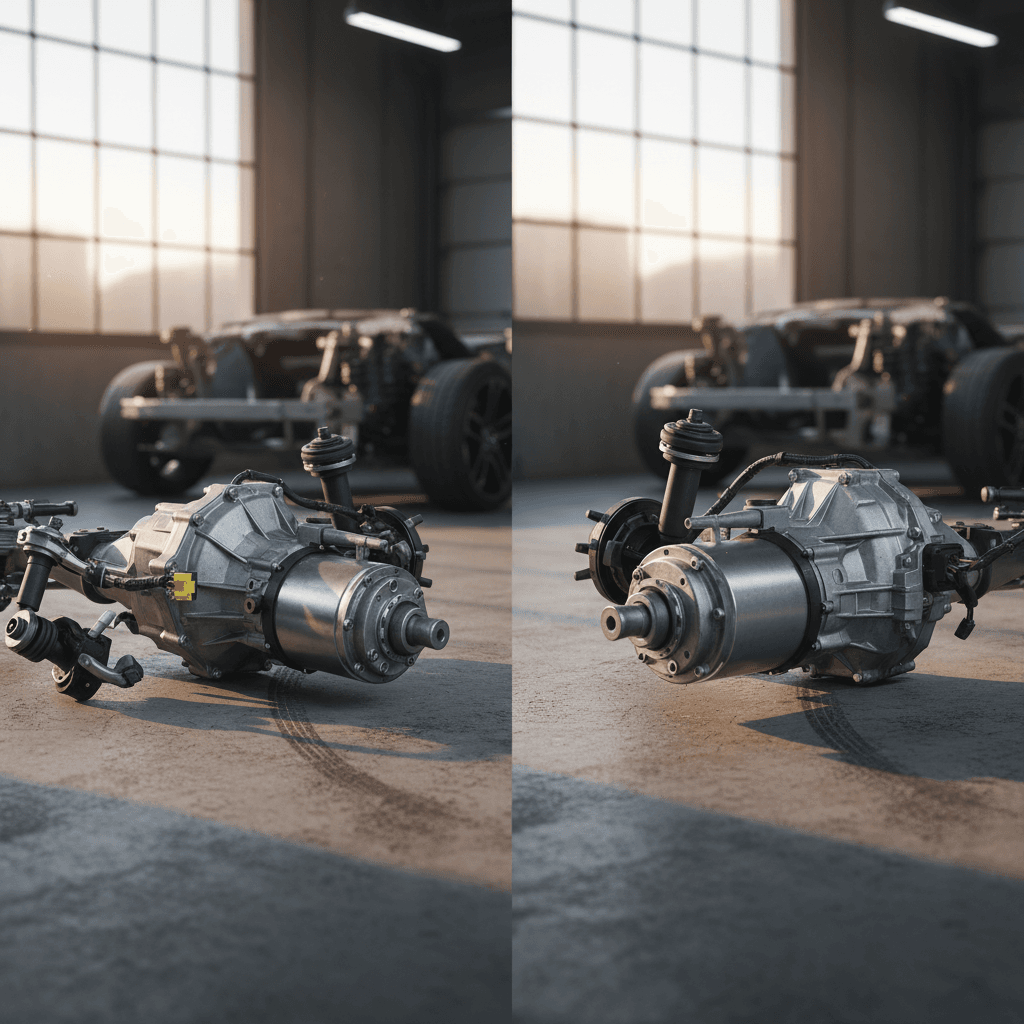
- Two motors: one front, one rear, both powered by the same battery.
- Software continuously adjusts torque to each axle (or even each wheel) for traction.
- More grip when accelerating, especially on slick surfaces.
- Extra hardware adds weight and cost, and usually lowers range.
Because electric motors can respond in milliseconds, AWD EVs can shuffle torque between axles far faster and smoother than most gasoline AWD systems. That’s why even heavy electric SUVs can feel surprisingly composed when you launch hard on wet pavement or snow.
Rear-Wheel Drive EVs: Key Pros and Cons
RWD Electric Car Pros & Cons
Light, efficient, and engaging, if your conditions match
RWD EV advantages
- Better range: Most RWD trims go noticeably farther on the same battery than their AWD siblings.
- Lower price: You skip the cost of the second motor, inverter, and associated hardware.
- Lighter weight: Less mass to move helps efficiency and can make the car feel more agile.
- Simpler mechanically: Fewer major components to potentially fail out of warranty.
- Enthusiast-friendly feel: Rear‑drive balance can feel more playful and “classic” to some drivers.
RWD EV drawbacks
- Traction in snow/ice: On steep or very slick surfaces, RWD can struggle to pull away cleanly.
- Regen stability on ice: Strong rear‑axle regenerative braking can unsettle the car if you lift abruptly on glare ice.
- Launch performance: 0–60 times are usually slower than AWD versions of the same car.
- Towing limits: RWD trims sometimes have lower tow ratings than AWD equivalents.
RWD + all‑season tires in real winter
All-Wheel Drive EVs: Key Pros and Cons
AWD Electric Car Pros & Cons
Confidence and speed, at a cost in range and price
AWD EV advantages
- Superior traction: Two driven axles dramatically reduce wheelspin on wet, snowy, or loose surfaces.
- Faster acceleration: Dual motors can put down power without overwhelming any single axle, slashing 0–60 times.
- Better hill starts: On steep, slick driveways or ramps, AWD can feel night‑and‑day better than RWD.
- Towing and payload: Many AWD trims carry higher tow or payload ratings.
- Peace of mind: For many families, the confidence boost alone justifies the upgrade.
AWD EV drawbacks
- Lower range: The added motor and weight usually trim range by 5–12% compared with a similar RWD trim.
- Higher cost: Expect several thousand dollars more on the window sticker.
- Slightly higher complexity: More components, more software, more to diagnose if something goes wrong.
- Small efficiency penalty year‑round: You pay the range and energy‑use cost even on perfect summer days.
When AWD is a smart upgrade
Range & Efficiency: How Much Does AWD Really Cost?
With gas cars, AWD often knocks a mile or two off fuel economy. With EVs, the impact shows up directly in range and energy use, which means more frequent charging and slightly higher electricity costs over time.
Sample AWD vs RWD Range Differences
Approximate EPA range differences for popular EVs with the same battery pack, to illustrate the typical efficiency penalty of AWD.
| Model (recent US spec) | Drivetrain | Battery | EPA range (approx.) | Notes |
|---|---|---|---|---|
| Ford Mustang Mach‑E (extended battery) | RWD | ~88–91 kWh | Up to ~320 miles | RWD offers the longest range configuration. |
| Ford Mustang Mach‑E (extended battery) | eAWD | ~88–91 kWh | Around ~300 miles | AWD trims sacrifice roughly ~20 miles of range for extra traction and power. |
| Hyundai Ioniq 6 Long Range | RWD | 77.4 kWh | Top of class among EV sedans | RWD version has notably higher EPA range than the AWD version. |
| Hyundai Ioniq 6 Long Range | AWD | 77.4 kWh | Lower than RWD | Dual‑motor AWD trades some of that efficiency for quicker 0–60 times. |
| Tesla Model Y Long Range | AWD only in US | ~75–80 kWh | ~310–330 miles | In this case, there is no RWD equivalent anymore, but earlier Model 3 data show similar patterns, RWD usually goes farther. |
Exact numbers vary by wheel size and trim, but the pattern is consistent: <strong>AWD gives more traction and power, RWD goes farther on a charge.</strong>
Across the market, moving from a RWD to an equivalent AWD trim usually costs you 5–12% of your range. If you have a long commute with few charging options, or you road‑trip frequently, that’s a meaningful difference.
Think in miles per week, not just range number
Winter, Rain & Rough Roads: Which Feels Safer?
For many shoppers, the AWD vs RWD debate is really about one thing: how the car behaves on bad roads. EVs add some twists here because of regenerative braking and instant torque.
- In a RWD EV, lifting off the accelerator can apply strong regenerative braking at the rear wheels. On ice, that sudden deceleration at the driven axle can make the rear feel light or twitchy if you’re not smooth.
- In an AWD EV, traction control and torque vectoring can share work between both axles, giving you more controlled launches and more stable behavior on slippery hills or during quick passes in the rain.
- Regardless of drivetrain, tires matter enormously. A RWD EV on good winter tires can outperform an AWD EV on worn all‑seasons in deep snow or on glare ice.
Don’t rely on AWD alone in deep winter
Performance & Driving Feel: Fun vs Confidence
Electric torque is addictive. That’s part of why many dual‑motor AWD versions exist in the first place: they can put huge power down cleanly without spinning the tires. But RWD has its charms too.
How AWD vs RWD EVs Feel on the Road
Same battery, very different personalities
Launch & passing power
AWD: Usually much quicker off the line and in highway passes. Dual motors split the work so each axle can use more of the available grip.
RWD: Still plenty quick in most modern EVs, but you’re more likely to encounter traction limits when you floor it on cold or wet pavement.
Handling character
RWD: Often feels more playful and rear‑biased, which some drivers love. With stability control on, it’s still very safe, it just rotates a bit more willingly.
AWD: Tends to feel more neutral and planted, especially at higher speeds or with a full load of passengers and cargo.
Family comfort & confidence
AWD: Many parents and new EV drivers simply feel calmer knowing "all four wheels are working for me" when the weather turns.
RWD: In fair climates, families rarely notice any limitation, and enjoy the quieter ride and extra range.
“For most daily driving, either setup works beautifully. The real question is whether you’d rather have the extra peace of mind of AWD on your worst days, or the extra range and savings of RWD on all the others.”
Price, Insurance & Used Value Considerations
AWD doesn’t just change how an EV drives; it changes the total ownership math. When you’re deciding between AWD vs RWD, keep the full financial picture in view, not just the monthly payment.
Cost Factors: AWD vs RWD Electric Vehicles
How drivetrain choice can affect your wallet over time.
| Factor | RWD EV | AWD EV | What it means for you |
|---|---|---|---|
| Purchase price | Usually lower | Usually higher | RWD helps you get into the same model for less money. |
| Electricity use | More efficient | Less efficient | AWD uses a bit more energy per mile, so you’ll charge slightly more often. |
| Insurance (typical) | Sometimes slightly lower | Sometimes slightly higher | AWD trims can be pricier to repair and may be rated as higher performance. |
| Maintenance risk | Fewer major components | More components (extra motor, inverter) | Both are low‑maintenance vs gas, but AWD has more hardware overall. |
| Resale in warm markets | Strong if range is high | Similar, depending on buyer preferences | Range and battery health often matter more than drivetrain alone. |
| Resale in snow‑belt markets | Adequate | Often preferred | In states with real winters, AWD can make your EV easier to resell. |
While AWD often costs more up front and at the charger, it may retain value better in cold‑weather markets.
Thinking about long‑term value?
Checklist: Which Drivetrain Fits Your Life?
AWD vs RWD EV Decision Checklist
1. Where do you live and drive?
If you’re in the Sun Belt or a dense city with great plowing and mostly flat streets, RWD will likely serve you well. In mountain states or lake‑effect snow zones, AWD quickly moves from “nice to have” to “highly recommended.”
2. How often do you see snow, ice, or gravel?
One or two storms a year? Good winter tires on a RWD EV might be enough. Snow on the ground for months or lots of dirt roads? AWD’s extra traction will feel worth it almost every week.
3. How far is your typical daily drive?
If you drive modest miles and can charge at home, AWD’s 5–12% range penalty is easy to live with. If you already stretch your range or rely heavily on public DC fast charging, the extra efficiency of RWD is valuable.
4. Do you tow or haul heavy loads?
If you plan to tow a small trailer, bikes, or a camper, check the tow ratings. AWD trims often have higher capacities and improved stability under load.
5. What matters more, raw speed or smooth savings?
If you love instant, pinned‑to‑your‑seat launches, the AWD version of your chosen EV is often the ticket. If you’d rather maximize savings and still have brisk acceleration, RWD is usually more than enough.
6. How long will you keep the car?
If you’ll own it for a decade in a warm climate, RWD’s lower cost and simplicity are compelling. If you plan to sell sooner in a cold‑weather state, AWD may help your EV stand out to the next owner.
Buying a Used AWD vs RWD EV
On the used market, you’re not just choosing AWD vs RWD in the abstract, you’re looking at specific vehicles with specific histories. That’s where a data‑driven view of battery health, prior use, and pricing really matters.
Key Checks for Used AWD & RWD EVs
What to verify before you sign anything
Battery health first
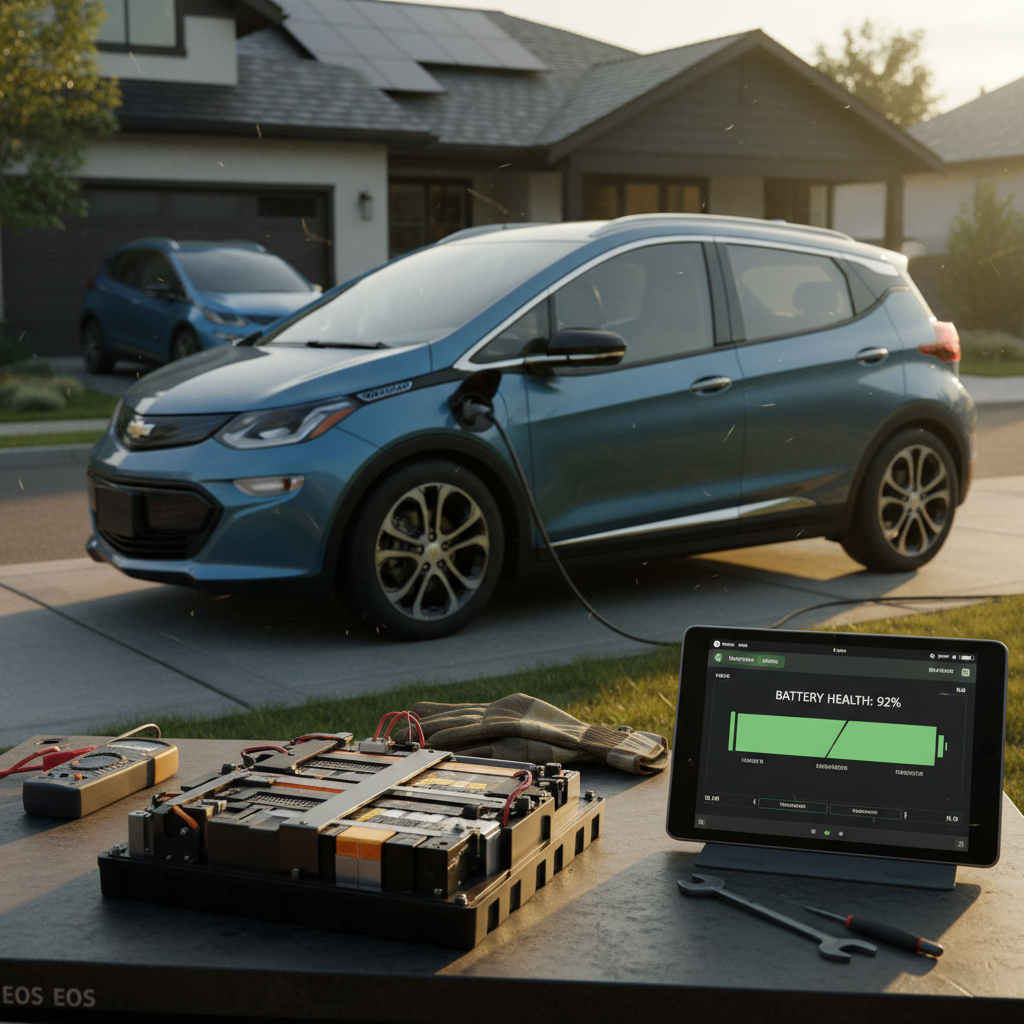
Regardless of drivetrain, start with the pack. A strong battery with documented care is more important than whether the car is AWD or RWD.
At Recharged, every vehicle includes a Recharged Score Report with verified battery diagnostics so you aren’t guessing about real‑world range.
Match drivetrain to history
For AWD EVs, look for signs of heavy towing or off‑road abuse. For RWD EVs in snow states, pay attention to any accident history or alignment issues that might hint at winter mishaps.
Compare price vs capability
In the used market, price gaps between AWD and RWD trims sometimes shrink. An AWD model that was a pricey upgrade new may be only modestly more used, worth grabbing if you value traction.
Leaning used but unsure?
AWD vs RWD EV: Frequently Asked Questions
Common Questions About AWD vs RWD Electric Cars
Bottom Line: How to Decide With Confidence
When you strip away the marketing labels, the AWD vs RWD electric car decision boils down to three questions: How often do you face genuinely bad traction? How far do you really need to drive on a charge? And how much are you willing to pay for extra confidence and speed?
If you live in a moderate climate, mostly drive on plowed streets, and care most about range and value, a RWD EV is usually the sweet spot. If you routinely deal with snow, steep or unpaved roads, towing, or simply want the quickest, most sure‑footed version of a particular model, AWD is worth serious consideration.
Looking at used options? That’s where it really pays to see beyond the badge. At Recharged, every EV, RWD or AWD, comes with a Recharged Score Report that details battery health, fair market pricing, and key history so you can weigh drivetrain choice alongside the things that matter most to real‑world ownership. Add expert guidance, nationwide delivery, and flexible options like trade‑ins and financing, and you can focus on one thing: picking the EV that truly fits your life.