When people first consider an EV, the first big question is almost always, “How far can this thing really go on a charge?” Electric car range is more than a single number on a window sticker. It’s a mix of battery size, efficiency, weather, speed, and how you drive, especially if you’re looking at a used electric car and want to know how much range it has left.
Key takeaway
What electric car range really means
At its simplest, electric car range is the distance an EV can travel on a full charge before the battery is depleted. In the U.S., the official number you see on the Monroney label comes from EPA-rated range, which is based on standardized lab tests and then adjusted to approximate real-world driving.
Three layers of EV range you should know
Understanding these will keep your expectations realistic
1. Rated range
This is the EPA combined range you’ll see in marketing materials and on the window sticker. It’s useful for comparing one EV to another because every car is tested the same way.
2. Real-world range
What you actually see day to day depends on speed, weather, terrain, and climate control use. It might be higher or lower than the rated value.
3. Usable range
In practice, you rarely drive from 100% to 0%. Most owners live in the 10–90% band to protect the battery and keep a buffer, so their usable range is less than the headline number.
Think in percentages, not just miles
How much range modern EVs actually have
Snapshot: electric car range in 2024–2025
Importantly, the bottom end of the market has moved up. Not long ago, many EVs offered under 100 miles on a charge. Current U.S. EPA data shows no new models below 100 miles; even compact city cars typically start above that, and many mainstream crossovers, sedans, and trucks sit in the 230–320 mile band of rated range.
Typical EPA-rated electric car range by vehicle type
These are broad ranges based on recent models on the U.S. market. Specific vehicles will fall above or below.
| EV type | Typical battery size (kWh) | Typical EPA range (mi) | Who it fits best |
|---|---|---|---|
| City commuter hatchback | 30–50 | 120–180 | Short urban commutes, second cars |
| Compact/midsize sedan | 55–80 | 240–360 | Most daily drivers and small families |
| Compact/midsize SUV | 70–90 | 230–320 | Families, mixed city/highway driving |
| Luxury long-range sedan | 90–120+ | 350–500+ | High-mileage drivers, frequent road-trippers |
| Electric pickup truck | 95–130+ | 230–340 (unloaded) | Towing/hauling occasionally, larger families |
Use this as a directional guide, not a promise for any specific model.
Payload and towing matter
EPA rated range vs real-world results
The EPA tries to account for real-world conditions, but it still tests cars in a controlled lab. Automakers run a series of cycles that simulate city and highway driving, then the EPA applies an adjustment factor, commonly around 0.7, to better reflect reality before publishing the combined range on the label.
How EPA testing works
- Cars are tested on a dynamometer (a sort of treadmill for vehicles).
- They run specific city and highway driving cycles.
- Results are then adjusted down to reflect factors like air conditioning, cold weather, and aggressive driving.
- City and highway results are combined into the EPA "combined" range you see on the sticker.
What independent testers see
- Many EVs fall a bit short of EPA range in steady 70–75 mph highway testing.
- Some models, often efficient sedans and certain German luxury EVs, actually beat their EPA rating in real-world tests.
- Big, heavy, or very powerful vehicles are more likely to miss their official number at highway speeds.
Bottom line: treat EPA range as a comparable benchmark, not a guaranteed real-world number.
City vs highway range
10 factors that change your EV range
Once you’re behind the wheel, your real range is shaped by a set of very predictable factors. Understand these, and you’ll understand why the same car can feel generous one day and tight the next.
The big 10 range influencers
1. Speed and driving style
Driving 75–80 mph can eat into range much faster than cruising at 60–65 mph. Hard acceleration and frequent heavy braking also increase consumption.
2. Outside temperature
Batteries are most comfortable in moderate temperatures. Extremely hot or cold weather forces the car to spend energy warming or cooling the pack, cutting range.
3. Cabin heating and cooling
Running the heater or A/C, especially the cabin heater in winter, can noticeably reduce range, sometimes by <strong>20–30%</strong> in extreme cold.
4. Terrain and elevation
Long uphill climbs demand more power; long descents let regenerative braking give some of it back, but not all.
5. Wind and weather
Strong headwinds, heavy rain, or snow increase aerodynamic drag and rolling resistance, reducing how far you can go per kWh.
6. Vehicle weight and cargo
Extra passengers, luggage, or a rooftop box add weight and drag. The heavier and less aerodynamic your EV is, the more range you’ll give up.
7. Tires and wheels
Big wheels and aggressive performance tires look great but can knock noticeable miles off your range compared with smaller, low-rolling-resistance tires.
8. Driving mode settings
Eco modes soften throttle response and optimize climate control. Sport modes keep everything sharper and can easily increase consumption.
9. Battery temperature and conditioning
Some EVs precondition the battery for fast charging or cold weather. That’s good for performance but uses energy in the background.
10. State of charge habits
Staying mostly between <strong>20–80%</strong> state of charge improves long-term battery health but means the car’s full theoretical range is rarely available.
Watch for compounding effects
Winter driving and electric car range
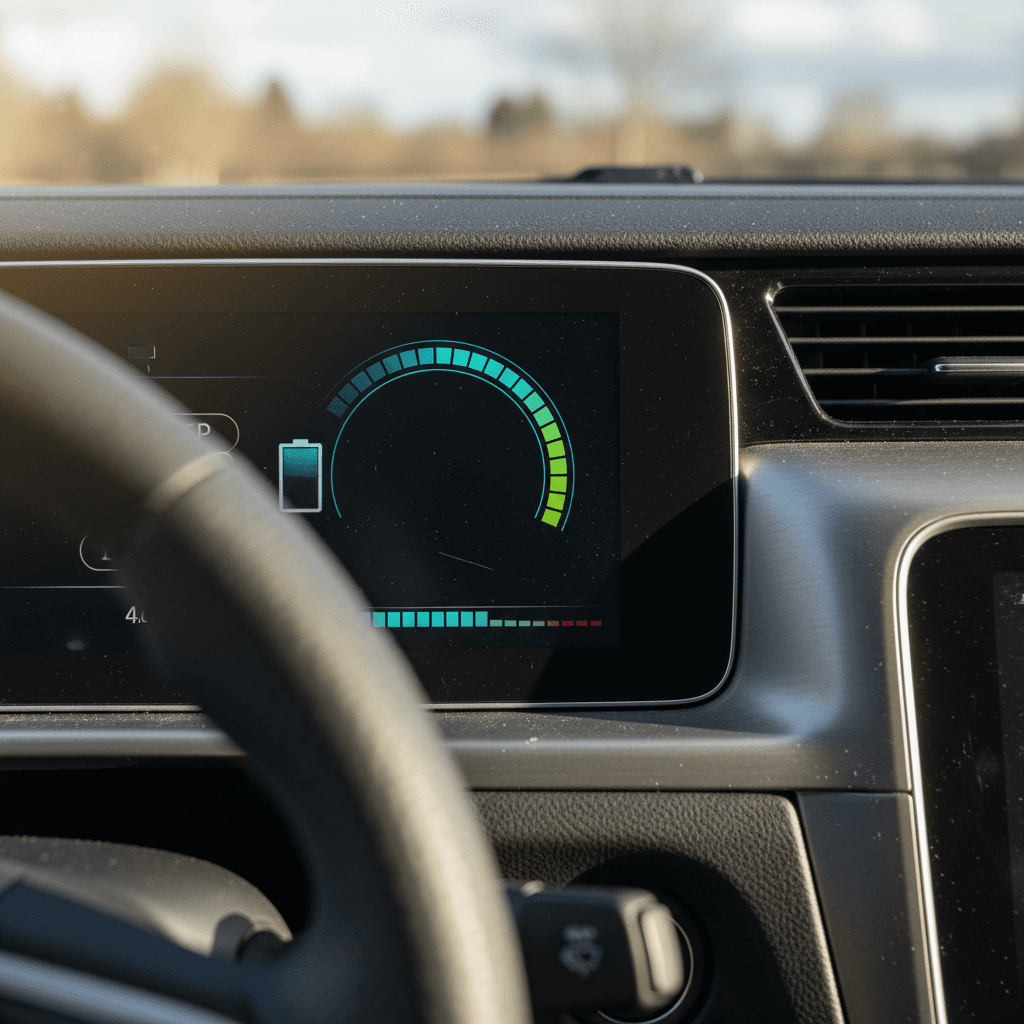
If you live in a colder state, you’ve probably heard stories about EVs “losing half their range” in winter. The reality is more nuanced. Real‑world data from U.S. fleets shows that median range typically drops in colder months, particularly in northern states, but it doesn’t vanish.
Why cold hits range
- Cold batteries can’t accept or deliver energy as efficiently.
- Cabin heat draws significant power, especially at start‑up.
- Snow and slush increase rolling resistance.
- Wintry winds add drag, especially at highway speeds.
What drivers actually see
- Moderate winter weather might mean a 10–25% reduction vs. summer.
- Very cold snaps, short trips, and high speeds can push losses toward 30–40%.
- Warm‑weather states usually see less dramatic range swings.
Planning with a conservative buffer and preconditioning the car while plugged in go a long way toward making winter EV driving drama‑free.
Winter EV survival tip
Battery degradation and used EV range
If you’re shopping for a used electric car, battery health and remaining range matter more than the original EPA number. All lithium‑ion batteries lose some capacity over time, but the pace depends heavily on how the car was charged and driven.
What really affects long-term EV range
Not all miles are created equal
Fast charging habits
Occasional DC fast charging is fine. Frequent, back-to-back fast charges, especially to 100%, tend to accelerate capacity loss over many years.
Daily charge level
Keeping an EV at 100% for long periods isn’t ideal. Many owners and automakers recommend daily charging to around 70–90% and reserving 100% only for trips.
Heat and storage
Parking in full sun in a hot climate for years is harder on a pack than being garaged in moderate temperatures. Thermal management systems help, but heat is still a long‑term stressor.
The good news is that many modern EVs show surprisingly modest degradation in the first several years, often on the order of single‑digit percent losses for average use. But because range is so central to how you’ll use the car, you want more than guesses when you buy used.
How Recharged helps with used EV range
Ready to find your next EV?
Browse VehiclesHow much electric car range do you really need?
The right answer isn’t “as much as possible”; it’s enough for your life with a comfortable buffer. More range almost always means a bigger, more expensive battery. Buy what you’ll actually use, not just what looks good on paper.
Range needs by driver type
Urban & suburban commuters
Daily round-trip under 40–50 miles.
Home or reliable workplace charging.
Comfortable with occasional fast charging on trips.
<strong>Recommended EPA range:</strong> 180–240 miles or more.
Families with mixed driving
Regular errands plus weekend trips, maybe sports or activities across town.
Occasional 150–200 mile day trips.
Mix of home and public charging.
<strong>Recommended EPA range:</strong> 230–300 miles.
High-mileage drivers & sales reps
Routinely cover long distances, often on the highway.
Need flexibility for added last-minute stops.
Can plan routes around DC fast charging.
<strong>Recommended EPA range:</strong> 280–350+ miles.
Frequent road-trippers & tower/haulers
Regular interstate travel, sometimes towing or carrying heavy loads.
Care about minimizing charging stops.
Live near robust DC fast charging networks.
<strong>Recommended EPA range:</strong> 320+ miles, or larger battery trucks/SUVs if towing.
A simple rule of thumb
Practical strategies to maximize your range
You don’t have to drive like a hypermiling champion to get good range out of an EV. A few simple habits will give you most of the benefit with very little sacrifice.
- Use Eco or Normal mode for everyday driving; save Sport for when you really want it.
- On the highway, cruise closer to 65–70 mph than 80+ when you can, it makes a big difference.
- Precondition the cabin and battery while plugged in, especially in very hot or cold weather.
- Use seat and steering wheel heaters instead of cranking cabin heat; they use far less energy.
- Keep tires properly inflated and avoid unnecessary roof racks or cargo boxes.
- Plan fast-charging stops where the car will arrive with 10–30% battery, charging is quickest in this band.
- Keep software updated; many EVs get efficiency and range improvements over the air.
Let the car be your coach
Electric car range and road trips
Long road trips are where EV range, charging speed, and charging network quality all intersect. A car with modest range but very fast charging on a strong network can be easier to live with on the highway than a big-battery vehicle tied to sparse or unreliable chargers.
Planning your charging strategy
- Use route planners (built into many EVs or via apps) that account for elevation, weather, and charging stops.
- Aim to charge more often from 10–60% rather than sitting from 10–100%; it’s usually faster overall.
- Favor high-power DC fast chargers from reliable networks along your route.
Where range still matters most
- Remote areas with few fast chargers, especially in winter.
- Trips where you can’t easily add time for additional stops.
- Towing trailers, boats, or campers, where effective range may be halved.
For many drivers, a 250–300 mile EV paired with good route planning is already road-trip capable. Just expect a different rhythm than in a gasoline car.
Know your network
FAQ: electric car range
Frequently asked questions about electric car range
Electric car range has come a long way in a short time. Most modern EVs deliver enough distance on a charge to handle everyday life comfortably, and many are now entirely road‑trip capable with the right planning. The key is understanding the difference between the number on the sticker and the miles you’ll actually see, and then choosing a car whose real‑world range, and battery health, if it’s a used EV, fits how you drive.
If you’re thinking about a used EV but aren’t sure how much range is “enough,” or how to interpret battery health, that’s exactly where Recharged comes in. Every vehicle on our platform includes a Recharged Score Report with verified battery diagnostics, fair-market pricing, and EV‑specialist guidance, plus financing, trade‑in options, and nationwide delivery. That way, you can shop by the metric that really matters: a car whose real‑world range matches your life, not just its original brochure.