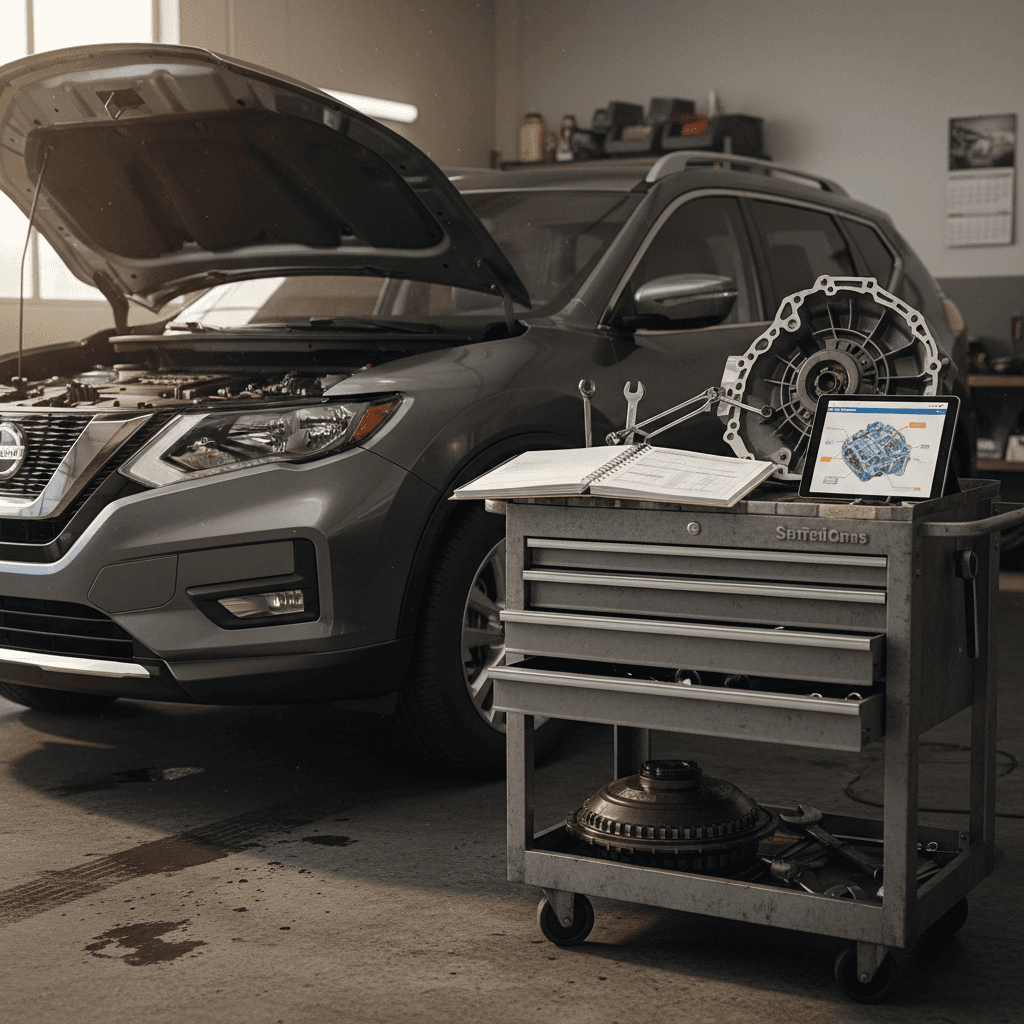
If you own a Nissan Rogue, keeping up with the recommended service intervals is the cheapest insurance you can buy against big repair bills later. The good news is that the Rogue’s maintenance schedule is fairly simple once you see it broken down by mileage and time.
One schedule, many model years
Overview: How Nissan Rogue service intervals work
Nissan structures Rogue maintenance around miles or months, whichever comes first. For most recent model years, the pattern looks like this:
- Basic service (oil change, inspection) about every 5,000–7,500 miles or 6–12 months
- More extensive fluid and filter service every 20,000–30,000 miles or 24 months
- Major items like spark plugs and coolant typically around 60,000–100,000 miles or 6–10 years
Dealerships often publish their own Rogue maintenance menus based on Nissan’s guidelines. Most agree on oil and filter changes about every 5,000–7,500 miles and a more complete inspection with brake-fluid replacement about every 20,000 miles or 24 months for many owners.
Why Nissan Rogue service intervals matter
Watch the small print
Quick reference: Nissan Rogue service intervals by mileage
While you should always confirm the specifics for your model year, this quick reference reflects what many Nissan dealers recommend for 2018–2024 Rogue models in the U.S.
Typical Nissan Rogue service intervals (recent model years)
Approximate service intervals for many 2018–2024 Nissan Rogue models with standard (non‑severe) use. Always check your owner’s manual for your year and engine.
| Mileage / Time | Typical Services Included | Notes |
|---|---|---|
| Every month | Check tire pressure, inspect lights, top up washer fluid | Quick DIY check; not usually a paid service visit. |
| 5,000 miles / 6 months | Engine oil & filter change; tire rotation; brake inspection; general multi‑point inspection | Some schedules start at 5,000 miles, others at 7,500 depending on model year and oil type. |
| 10,000 miles / 12 months | Engine oil & filter change; tire rotation; inspect brakes, steering & suspension; inspect CVT fluid and driveline (AWD) | Often mirrors the 5,000‑mile visit, plus additional inspections. |
| 15,000 miles / 18 months | Oil & filter; cabin air filter replacement; inspect key fob battery | Cabin filter interval may vary slightly by model year. |
| 20,000 miles / 24 months | Oil & filter; brake‑fluid replacement; inspect fuel & EVAP lines; full brake and steering inspection | Brake‑fluid replacement commonly appears here on dealer schedules. |
| 30,000 miles / 36 months | Oil & filter; tire rotation; detailed inspection (belts, hoses, suspension, exhaust) | Some dealers also recommend a CVT drain‑and‑fill around this mileage. |
| 50,000–60,000 miles / ~5 years | Oil & filter; inspect or replace drive belt; replace engine air filter; repeat brake‑fluid service; cabin filter; deeper CVT check | Spark plugs and coolant start to appear here or at 75k/100k depending on engine. |
| 100,000+ miles / ~8–10 years | Spark plugs; coolant service; repeat brake‑fluid and transmission checks; thorough inspection of suspension & exhaust | Exact timing varies widely by year and engine; follow your manual closely here. |
Service intervals are shown as miles OR months, whichever comes first.
Make your own simplified schedule
What happens at each Nissan Rogue service interval
Core Nissan Rogue service visits explained
What you’re really paying for at each interval
5k–7.5k miles / ~6–12 months
Main focus: Oil, filter, tires.
- Replace engine oil & filter
- Rotate tires and adjust pressures
- Inspect brakes for pad and rotor wear
- Basic fluid check (coolant, washer fluid, etc.)
Even if you drive very few miles, changing oil at least yearly is cheap peace of mind.
15k–20k miles / ~18–24 months
Main focus: Cabin air and brake fluid.
- Replace in‑cabin microfilter (keeps HVAC air clean)
- Replace brake fluid on many dealer schedules
- Inspect fuel and EVAP lines
- Check CVT fluid condition
Brake‑fluid changes are especially important if you live in humid or very hot climates.
30k–60k miles / ~3–5 years
Main focus: Wear items & driveline.
- Inspect or replace drive belt
- More thorough suspension & steering check
- CVT fluid inspection & possible drain/fill
- Repeat brake‑fluid and cabin‑filter services as needed
If your Rogue tows, climbs mountains, or lives in heat, this is a smart time to refresh the CVT fluid.
Major services around 60k–100k miles
As your Rogue ages, certain components simply wear out or the fluids that protect them break down. Depending on model year and engine, Nissan calls for items like spark plugs and coolant somewhere between about 60,000 and 105,000 miles.
On turbocharged engines or vehicles that see lots of short trips, it’s often wise to lean toward the earlier end of those ranges. Fresh ignition parts and coolant help the engine run cleaner and cooler, which matters even more as the miles add up.
Age matters as much as miles
If you drive only 6,000–7,000 miles a year, you might reach “8 years old” long before you hit the mileage Nissan lists for something like spark plugs or coolant. In that case, don’t wait forever for the odometer to catch up, discuss time‑based service with your shop.
Rubber seals, hoses, and fluid additives age with the calendar. A well‑maintained, older‑miles Rogue tends to be easier to sell or trade than a low‑miles one with obviously overdue maintenance.
Skipping intervals can be expensive
Key fluids and filters: Oil, CVT, coolant, and more
Most of what Nissan calls out in the Rogue service schedule boils down to a handful of fluids and filters. Understanding these makes the whole maintenance plan easier to prioritize.
Essential Nissan Rogue fluids & their intervals
What they do and when to service them
Engine oil & filter
What it does: Lubricates and cools internal engine parts.
Typical interval: About 5,000–7,500 miles or 6–12 months on late‑model Rogues, depending on oil type and driving conditions.
Tip: Short‑trip and turbocharged engines are harder on oil. If you do lots of short drives or live in very hot or very cold weather, lean toward the shorter end of the interval.
CVT transmission fluid
What it does: Both lubricates and operates the continuously variable transmission.
Typical interval: Nissan often lists inspection first, with actual replacement recommended later or under severe service. Many independent technicians suggest a drain‑and‑fill about every 30,000–60,000 miles to be safe.
Tip: Heat is the enemy of CVTs. If you tow, climb long grades, or sit in heavy traffic in hot weather, don’t treat CVT service as optional.
Engine coolant
What it does: Carries heat away from the engine and protects against corrosion and freezing.
Typical interval: Often 60,000–100,000 miles for initial service on modern coolants, with shorter intervals after that. Check the coolant section of your owner’s manual for your model year.
Tip: Coolant is cheap; overheated engines are not. If you’re near 10 years old and the coolant has never been changed, it’s time.
Brake fluid
What it does: Transfers force from the pedal to the brakes. It absorbs moisture over time, which can corrode internal brake parts and lower boiling point.
Typical interval: Many Nissan dealer schedules list about every 20,000 miles or 24 months for routine fluid replacement; severe‑service schedules for some years call for even shorter intervals.
Tip: If your Rogue is older and you don’t know when the brake fluid was last changed, replacing it now is inexpensive insurance.
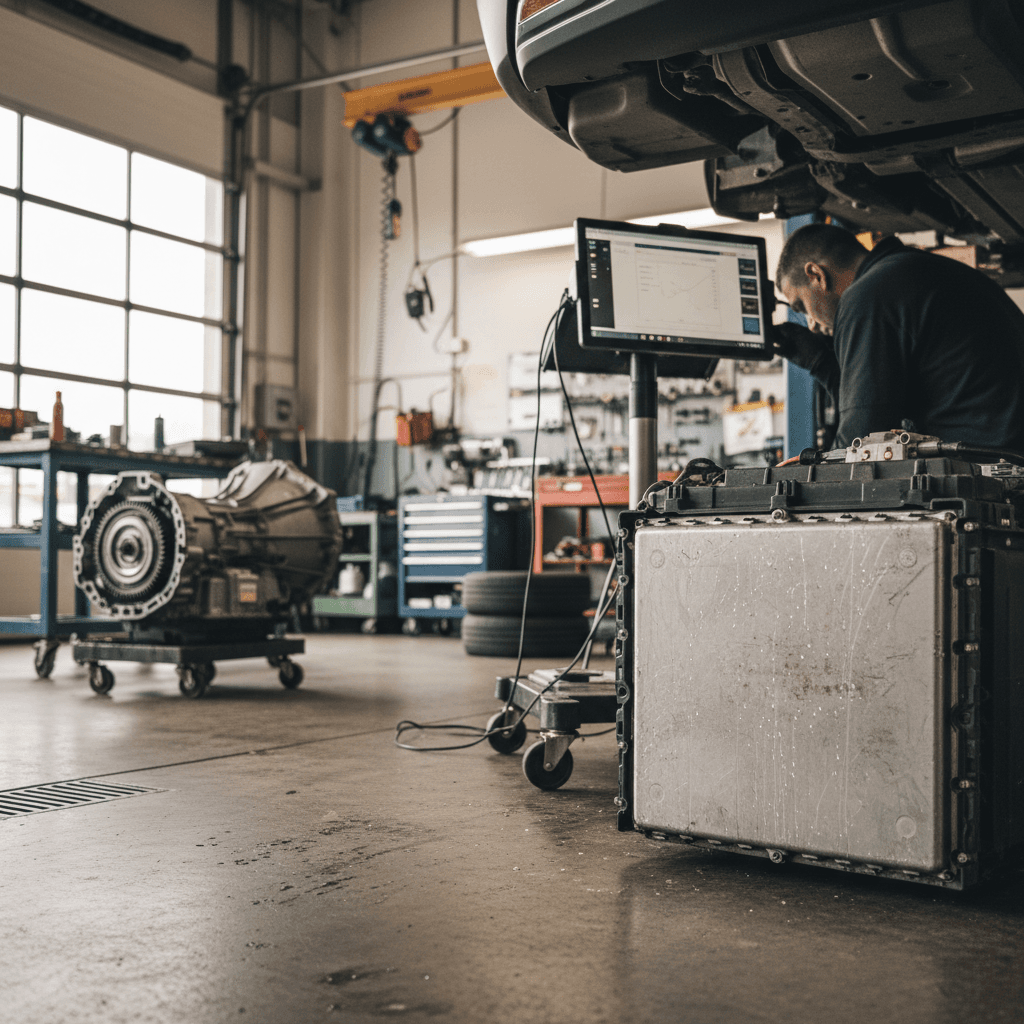
Filters on a Nissan Rogue
Small parts with an outsized impact
Engine air filter
Helps the engine breathe clean air. Commonly inspected at most visits and replaced somewhere between 15,000–30,000 miles depending on dust and conditions.
Cabin air (microfilter)
Filters the air entering the HVAC system. Many Rogue schedules call for replacement about every 15,000 miles or 18 months, or more often in dusty or urban environments.
Key fob battery
Not a filter, but often listed in the schedule around the 15,000‑mile/18‑month mark. Cheap to replace and worth doing before it leaves you stranded outside a locked car.
Normal vs. severe service for a Nissan Rogue
The biggest source of confusion with Nissan Rogue service intervals is the difference between the standard and severe maintenance schedules in the owner’s manual. Many owners are surprised to learn that their driving technically counts as severe.
What Nissan considers “severe” use
- Repeated short trips (often under 5–10 miles) where the engine rarely fully warms up
- Stop‑and‑go city traffic or extended idling
- Regular driving in very hot or very cold climates
- Frequent hill driving or towing
- Driving on dusty, muddy, or salted roads
If several of these describe your routine, your fluid change intervals, especially oil, brake fluid, and CVT, should be on the shorter, severe‑service side.
How severe service changes the schedule
- Oil changes move closer to every 5,000 miles (or even sooner in extreme cases)
- Brake‑fluid and other fluid changes may be recommended more often
- CVT inspections and fluid replacements show up earlier
- Filters (air and cabin) may be replaced more frequently due to dust or pollution
You don’t have to obsess over every line in the severe schedule, but it’s smart to budget for more frequent fluid service if your Rogue has a tough commute.
Use a simple rule of thumb
How following service intervals affects resale value
From a buyer’s perspective, something we think about a lot at Recharged, maintenance history can be nearly as important as mileage. A Nissan Rogue with complete service records is simply easier to sell and worth more money than an identical SUV with a mystery past.
Why maintenance records matter when you sell your Rogue
What buyers and dealers look for
Proof of care
Stamped service booklets, printed invoices, or digital records show that you changed oil, brake fluid, and other items on time. That makes a buyer less nervous about future problems.
Stronger trade‑in value
Dealers typically appraise a well‑maintained Rogue higher because they’re less likely to face expensive reconditioning, especially transmission or braking‑system repairs.
Warranty support
If you’re still within powertrain warranty and a major component fails, being able to show that you followed Nissan’s schedule helps your case for coverage.
At Recharged, every used vehicle we list includes a Recharged Score Report with a deep look at condition, battery health for EVs, and maintenance history when available. When a Rogue (or any SUV) shows evidence of skipped services, especially CVT or brake‑fluid neglect, that’s factored into how we price it and whether it makes the cut at all.
Buying a used Rogue? How to read its service history
If you’re shopping for a used Nissan Rogue, the service intervals we’ve been talking about become your checklist. You’re not just trying to confirm that it’s been serviced, you’re checking how closely it followed the schedule.
Used Nissan Rogue maintenance checklist
1. Match mileage to the schedule
Look at the odometer, then compare to the service chart. A 60,000‑mile Rogue should have evidence of multiple oil changes plus at least one brake‑fluid service and thorough multi‑point inspections.
2. Look for time‑based gaps
If a low‑miles Rogue is 6–8 years old but documents show very few services, it may have sat a lot. Fluids and rubber parts can age even when the car is barely driven.
3. Confirm CVT attention
For higher‑mileage Rogues, check whether the continuously variable transmission fluid has ever been replaced or at least inspected with notes. A preventative drain‑and‑fill around 30,000–60,000 miles is a positive sign.
4. Check brake‑fluid and brake work
Well‑kept records often show brake‑fluid changes roughly every 2–3 years plus brake pad and rotor work as needed. A car with several pad changes but no mention of fluid is overdue.
5. Scan for warning notes
Oil leaks, coolant loss, abnormal transmission behavior, or repeated check‑engine light visits should be taken seriously. Ask for documentation on what was fixed and how.
6. Use a third‑party inspection
Even with paperwork, a pre‑purchase inspection from a trusted mechanic, or a detailed condition report like the Recharged Score, can reveal maintenance issues that invoices don’t spell out.
How Recharged can help
Ready to find your next EV?
Browse VehiclesWhen an EV might make more sense than keeping your Rogue
There’s nothing wrong with hanging on to a well‑maintained Nissan Rogue, especially if it’s paid off. But as service intervals tighten with age, more frequent fluid changes, potential CVT work, suspension components, and eventually emissions‑system repairs, the math sometimes starts to favor switching to a used EV.
Costs that ramp up as a Rogue ages
- More frequent brake and suspension work, especially in rust‑belt climates
- Higher chance of CVT or turbo‑related repairs as miles climb
- Emissions‑system components (O2 sensors, catalytic converters) later in life
- Regular fluid services plus the usual wear‑and‑tear items like tires and brakes
At some point, the cost of staying on top of an aging SUV’s needs can rival a monthly payment on something newer and cheaper to run.
What changes with a used EV
- No engine oil, spark plugs, or timing components
- No conventional transmission fluid changes in the same sense
- Less brake wear thanks to regenerative braking
- Maintenance focuses on tires, cabin filters, brake fluid, and battery‑system checks
If you’re curious what a trade from your Rogue into a used EV would look like, you can explore financing, trade‑in, and nationwide delivery options through Recharged without stepping into a showroom.
Nissan Rogue service intervals: FAQ
Common questions about Nissan Rogue maintenance
Bottom line: A simple plan for your Rogue
You don’t need to memorize every line of Nissan’s maintenance booklet to take good care of your Rogue. If you change the oil and filter roughly every 5,000–7,500 miles, replace brake fluid about every two years, keep up with filters, and give the CVT and coolant attention by the time you hit 60,000 miles, you’ll be on the right side of the curve.
Keep copies of your invoices, follow the schedule that matches how you actually drive, and ask questions any time a shop proposes add‑on services that don’t appear in your manual. And if you decide the next step after a well‑cared‑for Rogue is a used EV, Recharged is set up to make that transition transparent, from trade‑in or sale to financing and delivery, all backed by clear condition reporting.