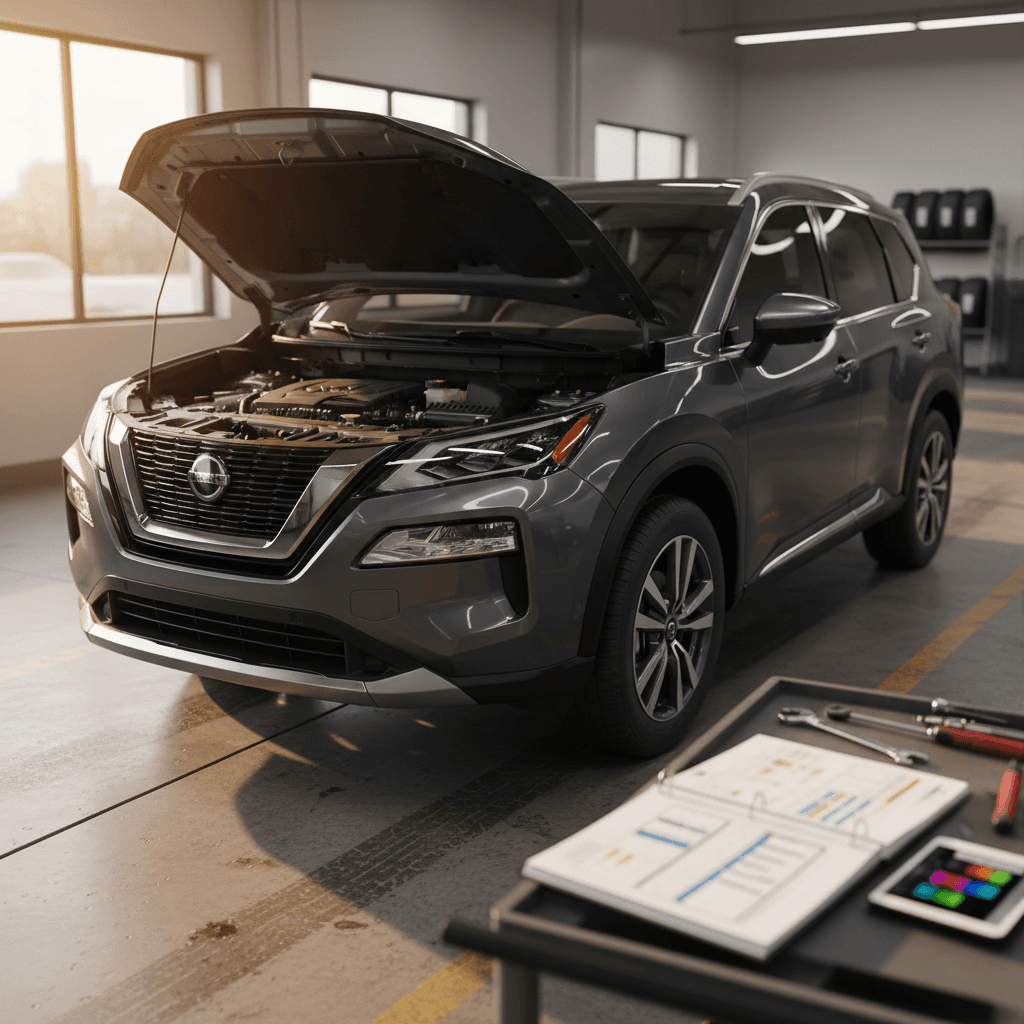
Hitting 100,000 miles in a Nissan Rogue is a big milestone. Whether you already own the SUV or you’re considering buying a used Rogue with six‑figure mileage, understanding the Nissan Rogue 100k service is key to avoiding expensive surprises, especially with the CVT transmission and brake system.
Applies to most Rogue model years
Why 100,000 miles is a turning point for a Nissan Rogue
On paper, 100,000 miles is just another odometer reading. In practice, it’s when wear on key systems, CVT transmission, suspension, brakes, and cooling system, starts to separate the well‑maintained Rogues from the neglected ones. Nissan’s own service schedules cluster several important inspections and fluid changes between 80,000 and 120,000 miles, and that’s no accident.
What typically changes for a Rogue around 100K miles
Three systems that deserve extra attention at this milestone
Drivetrain & CVT
The Rogue’s continuously variable transmission (CVT) is sensitive to heat and fluid quality. Around 100K miles, degraded fluid or earlier neglect can start showing up as shuddering, slipping, or whining noises.
Brakes & Steering
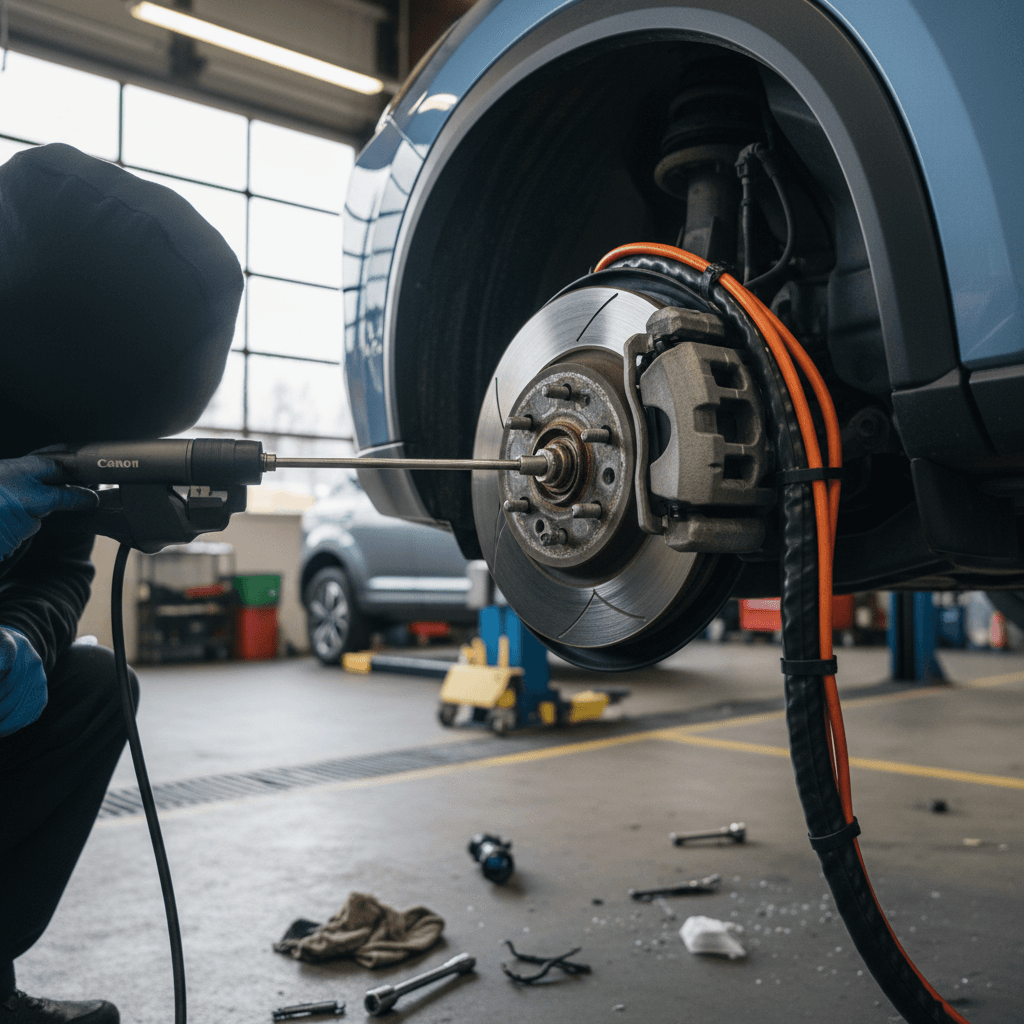
Brake pads and rotors may have been replaced before, but at 100K you want a full inspection of lines, calipers, steering rack, and power steering components for leaks and wear.
Suspension & Ride
Struts, shocks, bushings, and control arms have endured years of real‑world use. Worn parts here show up as clunks, wandering, and uneven tire wear, and they affect safety as much as comfort.
High‑mileage reality check
Official Nissan Rogue 100K service checklist
Individual dealers phrase it differently, but Nissan‑aligned service schedules for the Rogue consistently call for a fairly robust visit at 100,000 miles or 120 months. Here’s what is typically on the menu at that point, regardless of trim level.
Typical Nissan Rogue 100K service items
Common dealer‑recommended items for 100,000 miles / 120 months on many Rogue maintenance schedules. Always confirm against your year‑specific maintenance guide.
| System | Service Item | Action at 100K | Why it matters |
|---|---|---|---|
| Engine | Engine oil & filter | Replace | Fresh oil protects an aging engine and keeps internal components lubricated under higher wear. |
| Brakes | Brake fluid | Replace | Old fluid absorbs moisture, lowering boiling point and corroding internal brake components. |
| Brakes | Pads & rotors | Inspect / replace as needed | Ensures safe stopping distances and prevents rotor damage from worn pads. |
| Brakes | Brake lines & hoses | Inspect | Checks for leaks, cracks, and rust that could lead to sudden brake failure. |
| Transmission | CVT fluid | Inspect (often replace around this mileage) | Helps maintain smooth operation and temperature control in the CVT. |
| Driveline (AWD) | Transfer case & differential fluid | Inspect (replace as needed) | Keeps all‑wheel‑drive components lubricated and quiet. |
| Steering & suspension | Steering gear, tie rods, control arms, bushings | Inspect | Catches play, leaks, and wear that affect handling and tire life. |
| Exhaust | Exhaust system & hangers | Inspect | Looks for leaks, rust, and loose components that can cause noise or emissions issues. |
| Tires | Tires & alignment | Inspect / rotate / align | Ensures safe grip, even wear, and straight‑line tracking. |
Items marked “Replace” are usually mandatory; “Inspect” may become a replacement depending on condition.
Don’t wait if you’re already past 100K
CVT transmission care at 100K miles
The Rogue’s continuously variable transmission is one of its biggest advantages in daily driving, and one of its biggest liabilities if neglected. Earlier model years in particular have a reputation for CVT problems, and many owners report issues around or even before 100,000 miles when fluid changes were skipped or the vehicle was driven hard in heat or stop‑and‑go traffic.
- Hesitation or jerking when accelerating
- A droning or high‑pitched whining noise that changes with speed
- RPMs flaring up without a corresponding increase in speed
- Overheating warnings or sudden loss of power on long highway climbs
Why CVT maintenance isn’t optional
CVT‑specific steps at (or before) 100K miles
1. Review service history
Confirm whether the CVT fluid has ever been changed. If there’s no record and you’re near 100K miles, plan on replacing it with the correct Nissan‑spec fluid.
2. Test drive under load
On a warm engine, accelerate briskly onto a highway and up a long grade if possible. Listen and feel for shuddering, slipping, or RPM flares.
3. Scan for transmission codes
Have a shop or trusted technician scan for stored or pending transmission‑related codes, even if the dash is clear. Some early signs won’t illuminate a warning light yet.
4. Ask for a fluid inspection
During service, ask the technician to check fluid color and smell. Burnt or very dark fluid can indicate overheating or internal wear.
5. Avoid ‘universal’ fluids
Insist on the correct Nissan‑approved CVT fluid. The wrong fluid can accelerate wear and may void remaining coverage.
Brakes, steering, and suspension inspections
By 100,000 miles, your Rogue’s rotating and moving hardware has absorbed a decade’s worth of potholes, panic stops, and curb kisses. Even if the SUV still feels “fine,” a detailed mechanical inspection can uncover issues long before they become safety problems or tire‑eating alignment headaches.
Brake system checks
- Pads and rotors: Measure thickness and look for grooves, scoring, or heat spots.
- Hoses and lines: Check for rust, leaks, and dry‑rotted rubber.
- Calipers: Inspect for sticking sliders and uneven pad wear.
- Parking brake: Confirm it holds firmly on an incline.
Steering & suspension checks
- Struts and shocks: Look for oil seepage, bounce after speed bumps, or nose‑diving when braking.
- Tie rods & ball joints: Check for play that can cause wandering or vibrations.
- Control arm bushings: Inspect for cracking, tearing, or separation.
- Alignment & tires: Check for cupping, inside edge wear, or steering pull.
A quiet test drive is not enough
Other fluids and filters to address around 100K
Even if your owner’s manual doesn’t explicitly list every item at 100,000 miles, there are a few other consumables worth addressing somewhere between 80K and 120K, depending on age and prior history.
- Engine air filter: Often due every 30,000–45,000 miles; if it’s been a while, replace it for better performance and fuel economy.
- Cabin air filter: Keeps the HVAC system clean and the interior free of debris; many owners neglect this and end up with weak airflow or odors.
- Spark plugs: Many Rogue engines call for replacement around 100K miles. Worn plugs can cause misfires, rough idle, and poor fuel economy.
- Coolant: Check both age and mileage. Old coolant loses corrosion protection and can stress the water pump and radiator.
- Battery: If it’s more than 4–5 years old, have it load‑tested; starting problems in winter often start here, not the alternator.
Why staying ahead on Rogue maintenance pays off
How much Nissan Rogue 100K service typically costs
Service pricing varies by region, shop, and model year, but you can build a realistic budget for a Nissan Rogue 100k service by thinking in terms of bundles: required fluid changes, wear items that may be due, and any deferred repairs discovered during inspection.
Typical Nissan Rogue 100K service cost ranges (U.S.)
Approximate price ranges for common 100K‑mile services on a Rogue at independent shops vs. dealerships. These are ballpark figures, not quotes.
| Service Item | Typical Range (Independent) | Typical Range (Dealer) |
|---|---|---|
| Engine oil & filter + full inspection | $80–$160 | $120–$220 |
| Brake fluid flush | $110–$180 | $150–$250 |
| CVT fluid service | $250–$450 | $350–$650 |
| Spark plug replacement | $200–$400 | $300–$550 |
| Front & rear brake job (pads + rotors) | $350–$800 | $500–$1,100 |
| Strut/shock replacement (per axle) | $450–$900 | $650–$1,200 |
Labor rates and parts quality vary, always request an itemized estimate for your specific vehicle and region.
Expect a range, not a single number
DIY vs dealer: where to service your Rogue at 100K
At 100,000 miles, the right place to service your Rogue is the one that understands the platform, uses correct fluids and parts, and is willing to document what they see. That can be a dealership, an independent Nissan specialist, or a skilled DIYer, each has trade‑offs.
When a dealership makes sense
- You want detailed records from a Nissan‑certified facility, which can add confidence when selling later.
- Your Rogue is still under extended or CPO powertrain coverage that specifies dealer service.
- You need access to brand‑specific diagnostics or software updates.
Expect to pay more, but you’re paying for brand familiarity and a clear paper trail.
When an independent shop or DIY is better
- You’re out of warranty and focused on controlling cost without cutting corners.
- You have a trusted shop that knows Japanese crossovers and uses proper fluids.
- For DIYers: you’re comfortable doing basics, filters, plugs, even brakes, and leave CVT service to pros.
The key is documentation: keep all receipts and note mileage and date for every service you perform.
Ask for a written multi‑point inspection
Buying a Nissan Rogue with 100K miles: checklist
If you’re shopping used, a 100,000‑mile Nissan Rogue can be a smart value play, or an SUV that’s one breakdown away from exceeding its own purchase price in repairs. The difference comes down to documentation and inspection.
Pre‑purchase checklist for a 100K‑mile Rogue
1. Confirm CVT service history
Look for at least one documented CVT fluid service before 100K miles. Lack of history doesn’t kill the deal by itself, but it should make you more cautious and may justify a lower price.
2. Review 60K–100K maintenance records
You want to see brake fluid, spark plugs, and at least one major inspection visit on record. A thick folder is a good sign; a stack of oil change receipts only is not.
3. Get a cold‑start and extended test drive
Listen for rattles, whines, and clunks from a cold start, and drive long enough for the CVT to fully warm up. Many marginal transmissions behave fine for the first few minutes.
4. Inspect tires and alignment
Uneven wear on the inner edges or cupping can point to suspension or alignment issues that will cost money to correct.
5. Have a third‑party inspection done
A pre‑purchase inspection from a shop that understands Rogues is worth far more than the modest fee, especially at this mileage.
How Recharged evaluates high‑mileage Rogues
At Recharged, we live and breathe used vehicles and the ownership experience that comes with them. While we focus on EVs and plug‑in vehicles, the same philosophy applies to any high‑mileage SUV: condition beats mileage, and transparency beats guesswork.
What we’d look for in a 100K‑mile Rogue
The same disciplined approach we apply to EV battery health also works for ICE and hybrid SUVs
Verified maintenance history
We prioritize vehicles with documented services at the major intervals (60K, 80K, 100K). When records are thin, we budget realistically for catch‑up work before recommending a vehicle.
Data‑driven inspections
Beyond a road test, we lean on diagnostics, fluid analysis, and detailed underbody inspections, the sort of diligence that catches problems before they turn into ownership headaches.
Fair, condition‑based pricing
Instead of treating 100K miles as an automatic red flag, we price around actual condition. A well‑maintained Rogue at 110K can be a better buy than a neglected one at 70K.
Thinking about your next vehicle?
Ready to find your next EV?
Browse VehiclesNissan Rogue 100K service FAQ
Frequently asked questions about Nissan Rogue 100K service
A Nissan Rogue at 100,000 miles isn’t at the end of its life, it’s at a crossroads. Invest in the right 100K service and inspections, and you can often unlock years of reliable driving. Skip them, and you’re gambling with some of the most expensive components in the vehicle. Whether you’re maintaining the Rogue you already own or evaluating a used one, treating 100K as a moment for disciplined, transparent decision‑making will pay off in lower stress and fewer surprises down the road.