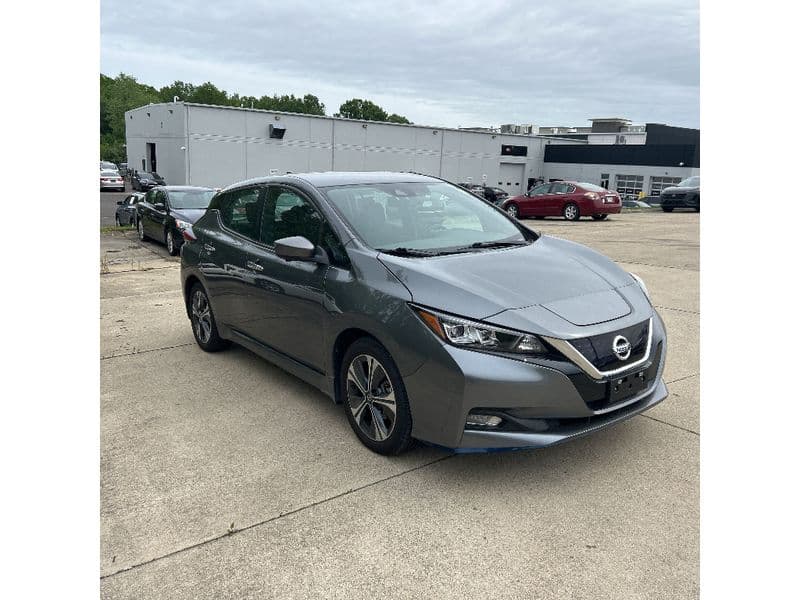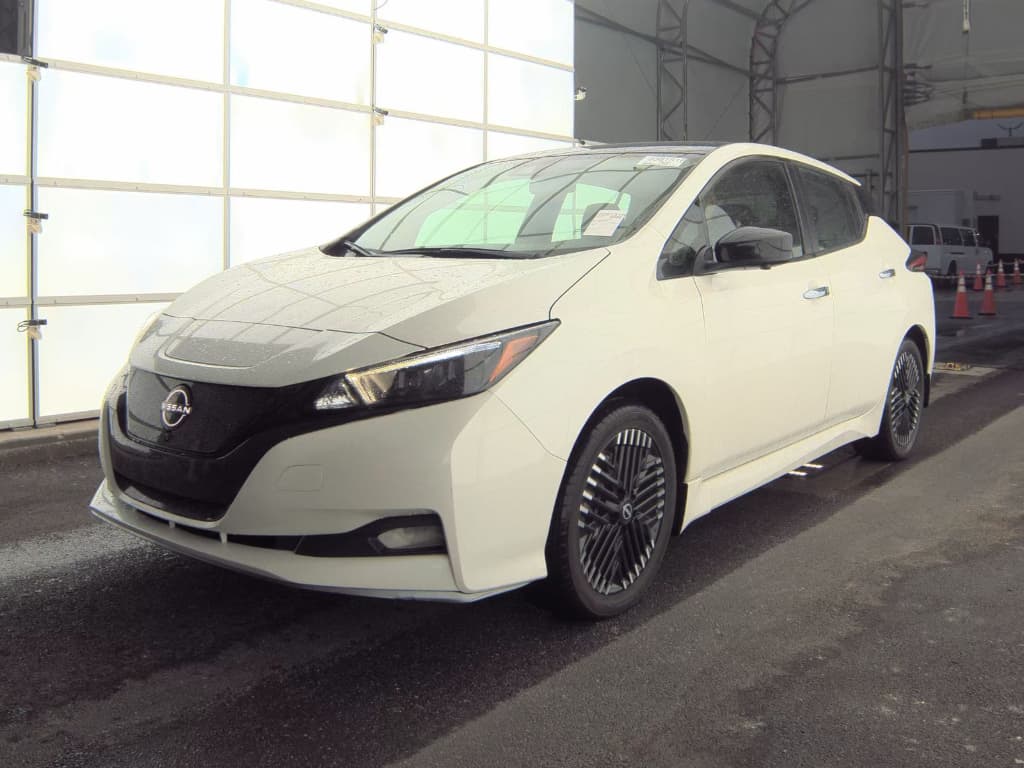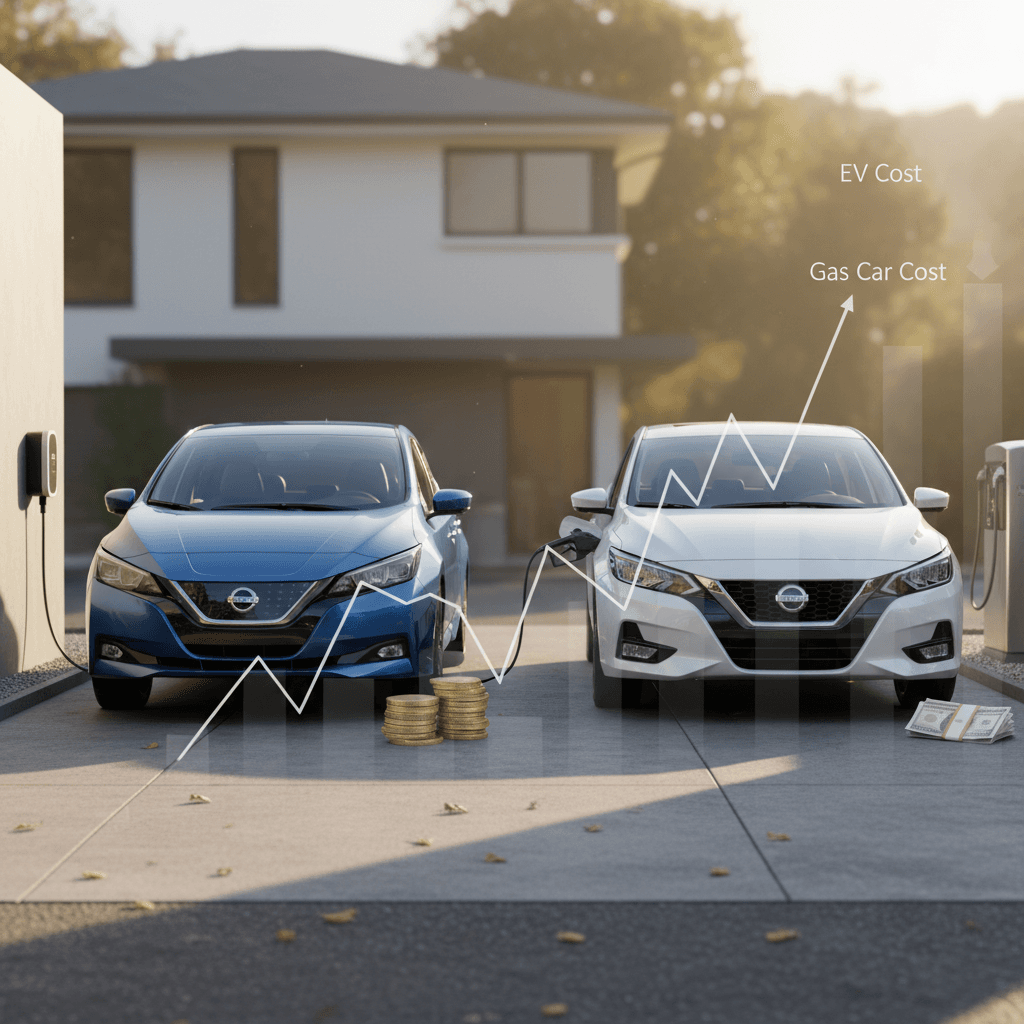
If you’re cross‑shopping a **Nissan Leaf** and a **Nissan Sentra** in 2026, you’re really asking one question: "Will going electric actually save me money, or should I stick with gas?" This Nissan Leaf vs Nissan Sentra cost comparison for 2026 walks through purchase price, fuel or electricity, maintenance, depreciation, and real‑world ownership so you can see which car truly fits your budget.
Same size class, very different fuel
Leaf vs Sentra: Who this 2026 guide is for
- You commute 20–60 miles a day and want a realistic **Leaf vs Sentra cost comparison in 2026**.
- You’re wondering if a used Leaf could be cheaper than a new Sentra over the next 5–8 years.
- You like Nissan reliability and dealer network but are EV‑curious.
- You’ve seen EV incentives and local rebates and want to know how much they really change the math.
- You’re trying to budget not just the payment, but **electricity, gas, maintenance, and resale value**.
Leaf vs Sentra: 5‑year cost at a glance (typical U.S. driver)
Quick take: Which is cheaper to own?
If you strip it down to dollars and cents, a **Nissan Leaf usually wins on total cost** over five years, especially if you buy used and mostly charge at home. A new 2026 Sentra can be cheaper month‑to‑month up front, but gas and oil changes catch up over time.
When the Leaf is cheaper overall
- You can install or already have Level 2 home charging.
- You drive **10,000–15,000 miles a year** or more.
- Your electricity rate is modest and gas in your area tends to swing high.
- You pick a **used Leaf with a verified strong battery** instead of a brand‑new Sentra.
When the Sentra can make more sense
- You can’t easily charge at home (street parking, rentals with no outlet).
- You take frequent long highway trips with minimal charging time.
- Your annual mileage is low (under ~7,000 miles), so fuel savings barely move the needle.
- You’re buying new and getting a **big discount on a leftover Sentra** with attractive financing.
Follow the fuel
Purchase price in 2026: new and used
Let’s look at what you’re likely to pay walking onto a lot in 2026, or searching online for a used car. Exact prices vary by trim, region, and incentives, but these are realistic ballpark numbers for the U.S.
Typical 2026 transaction prices: Nissan Leaf vs Nissan Sentra
Approximate out‑the‑door purchase prices before taxes and local fees. Discounts and incentives will vary.
| Vehicle & scenario | Typical 2026 price | Notes |
|---|---|---|
| 2026 Nissan Sentra S (new) | ≈ $23,000–$24,000 | Compact gas sedan; base trim with automatic; before dealer fees. |
| 2026 Nissan Sentra SV/SR (new) | ≈ $25,000–$27,000 | Popular mid/high trims; options and packages can push higher. |
| 2026 Nissan Leaf base (new) | ≈ high‑$20,000s | Nissan has been targeting sub‑$30k MSRP for the latest Leaf, making it one of the most affordable EVs. |
| 2026 Nissan Leaf long‑range trim (new) | ≈ low‑ to mid‑$30,000s | Larger 70+ kWh battery and more equipment; still often under many rival EVs. |
| 2019–2022 Nissan Sentra (used) | ≈ $15,000–$22,000 | Normal mileage, clean history; late‑model sedans have held value fairly well. |
| 2018–2022 Nissan Leaf (used) | ≈ $12,000–$22,000 | Price swings a lot with battery size, mileage, climate history, and battery state of health. |
The Leaf tends to cost more than a Sentra when new, but used Leafs can undercut new Sentras by a wide margin.
Don’t forget EV incentives
Fuel vs electricity: what you’ll actually spend to drive
Here’s where the Leaf quietly does its work. A compact gas sedan like the Sentra sips fuel, but an efficient EV can still cut your energy bill dramatically, especially if you’re not living on public fast chargers.
Leaf vs Sentra: efficiency basics
Same commute, very different energy bills.
Nissan Sentra (gas)
Recent Sentras with the 2.0‑liter engine are EPA‑rated around 33–35 mpg combined. If gas is $3.75 a gallon, that’s roughly:
- ≈ $0.11 per mile in fuel.
Nissan Leaf (EV)
Modern Leafs typically average around 3.5–4.0 miles per kWh in mixed driving. At $0.15/kWh at home, that works out to:
- ≈ $0.04–$0.05 per mile in electricity.
Typical 12,000‑mile year
- Sentra fuel: ≈ $1,300+/year.
- Leaf home charging: ≈ $500–$700/year.
- Public DC fast charging: more expensive; think of it as EV "premium gas" you use occasionally.
Beware of fast‑charger math
Maintenance and repairs over 5 years
On paper, a Sentra looks cheaper to maintain. One recent repair‑cost summary pegged average **annual maintenance** for a Sentra in the ballpark of **$500 a year**, versus more like **$700–$750 for a Leaf** when you average across all model years and owners. But those numbers mix older Leafs, some with battery issues, into the pot.
What the Sentra needs
- Oil and filter changes several times a year.
- Transmission service on the CVT.
- Spark plugs, belts, engine air filters, fuel system service over time.
- Exhaust system components as the miles rack up.
- Standard wear items: tires, brakes, suspension.
What the Leaf needs
- No engine, oil, spark plugs, or timing belts.
- Fewer moving parts and no traditional transmission.
- Brake pads often last much longer thanks to regenerative braking.
- Still needs cabin filters, tires, fluids for cooling and brakes.
- Big wild card: **battery health** once the car is older.
The big asterisk: battery replacement
Insurance, taxes, and fees
Insurance for a Leaf and a Sentra tends to fall in the same general neighborhood: compact four‑door Nissans with decent safety tech. Sometimes the Leaf is a bit higher because of the cost to repair EV‑specific components after a crash; sometimes the Sentra is higher based on local theft and loss data. It’s close enough that **fuel and purchase price matter more** than insurance in your decision.
- Some states reduce registration fees for EVs; others add a flat annual EV fee to recoup lost gas‑tax revenue.
- Sales tax may be lower for a cheaper Sentra, but EV rebates or credits can effectively wipe out part of that difference.
- In a few metro areas, the Leaf can qualify for reduced tolls or HOV access, which doesn’t show in the spreadsheet but helps daily life.
Depreciation and resale value
Depreciation is the quiet line item that doesn’t hit your checking account every month, but it’s real money when you sell or trade in. Here the Sentra and Leaf behave differently.
How these cars lose (and keep) value
Nissan Sentra depreciation
- Conventional compact sedans tend to have **predictable, moderate depreciation**.
- After five years, a well‑kept Sentra might retain roughly 40–50% of its original value, depending on mileage.
- Gas tech doesn’t change as quickly, so buyers know what they’re getting.
Nissan Leaf depreciation
- Early Leafs shed value fast because of limited range and battery‑degradation fears.
- Newer, long‑range Leafs with improved packs hold value better, but **battery health still drives resale more than model year**.
- As EV technology improves rapidly, older EVs can feel "outdated" sooner than comparable gas cars.
Where depreciation helps you
Side‑by‑side 5‑year cost snapshot
Let’s put everything together. These are **illustrative ballpark totals** for someone driving about 12,000 miles a year for five years, buying in 2026 and keeping the car through 2031. We’ll assume reasonable discounts and modest incentives, but skip edge‑case deals.
Approximate 5‑year cost: Nissan Leaf vs Nissan Sentra (bought in 2026)
These figures are simplified for comparison. Your actual numbers will depend on financing terms, energy prices, and incentives in your area.
| Category (5 years) | 2026 Nissan Sentra (new) | 2026 Nissan Leaf (new) |
|---|---|---|
| Purchase price & financing | ≈ $27,000–$29,000 paid/financed | ≈ $30,000–$32,000 paid/financed before incentives; effective cost can drop if you qualify for credits. |
| Fuel or electricity | ≈ $6,500–$7,500 in gasoline | ≈ $2,500–$3,500 in home charging; more if you lean on fast chargers. |
| Routine maintenance & minor repairs | ≈ $3,000–$4,000 | ≈ $2,000–$3,000 (no engine service, longer‑lasting brakes). |
| Insurance | ≈ similar range for both | ≈ similar range for both. |
| Depreciation (lost value) | Moderate; easier to predict | Can be steeper early on, but partly offset by incentives and low running costs. |
| Total 5‑year tendency | Often high‑$40,000s overall cost | Often mid‑$40,000s overall cost, sometimes lower if you scored strong incentives. |
In many realistic scenarios, a Leaf’s higher up‑front price is offset, and sometimes more than offset, by lower energy and maintenance costs over five years.
Read the table like a trend, not a quote

Which Nissan fits your life better?
Ask yourself these questions before choosing Leaf or Sentra
1. Can I reliably charge at home or work?
If you can plug in overnight on a regular outlet or, better, a Level 2 charger, the Leaf’s low electricity cost is easy to unlock. If charging would always be a scavenger hunt, the Sentra’s gas tank is simpler.
2. How many miles do I really drive?
If you’re at or above the U.S. average of about 12,000 miles a year, the Leaf’s energy savings add up fast. If you only put 5,000–7,000 miles a year on your car, fuel won’t dominate your budget either way.
3. Do my regular trips fit in the Leaf’s range?
Newer Leafs deliver 250–300 miles of range in many trims, plenty for most commutes and weekend trips with occasional fast‑charging. If you routinely knock out 400+ mile days in thin‑charging regions, a Sentra may be less stressful.
4. What’s my risk tolerance?
The Sentra’s risks are traditional, engine or transmission problems in old age. The Leaf’s big risk is high‑voltage battery health on an older car. If you hate unknowns, focus on newer Leafs with strong warranties or a lightly used Sentra.
5. Am I planning to keep this car 3 years, or 10?
Over 3–5 years, incentives and energy savings often make the Leaf look great. If you stretch ownership out to a decade or more, Sentra maintenance and repairs creep up, while a Leaf’s story hinges on how that battery ages.
How a used Leaf can beat a new Sentra on cost
If you’re open to buying used, this is where the Leaf vs Sentra cost comparison gets really interesting. Because older EVs depreciate faster, **you can often buy a solid, second‑generation Leaf for the price of a much older or lower‑trim Sentra**, and still spend less on energy every month.
Scenario A: New Sentra shopper
You have about $400 a month to spend and were planning on a new Sentra SV.
- New Sentra SV payment: roughly in your budget with average financing.
- Fuel: another $100+ a month, depending on gas prices.
- Maintenance: predictable but regular, oil, fluids, inspections.
Scenario B: Used Leaf alternative
Instead, you pick a **2019–2021 Leaf with a healthy 62 kWh battery** from a trustworthy source.
- Purchase price: often several thousand less than the new Sentra.
- Payment: can be lower, or you stretch a shorter loan term for the same monthly number.
- Electricity: maybe $40–$60 a month if you home‑charge.
- Maintenance: mostly tires, cabin filters, brake fluid, and checkups.
Where Recharged fits in
Ready to find your next EV?
Browse VehiclesBuying a used Nissan Leaf: what to watch
If you want Leaf‑level running costs without an expensive surprise, the homework is different than for a Sentra. You’re less worried about oil‑change records and more focused on electrons and battery chemistry.
Used Leaf shopping checklist
Check battery state of health (SoH)
Ask for a recent battery‑health report, not just "it seems fine." Tools like Leaf‑specific diagnostics (and the Recharged Score on our marketplace) quantify how much capacity the pack has left.
Know the battery size and range
Later Leafs have larger 60+ kWh packs and 200‑plus‑mile ranges. Earlier cars with 24–30 kWh packs can work great for short‑range duty, but they’re not Sentra replacements for long highway slogs.
Review charging history and climate
Cars that lived their lives in extremely hot climates or on fast chargers 24/7 have a tougher life. A Leaf that mostly home‑charged in a mild climate will usually age more gracefully.
Confirm charging options at home
Before you fall in love with a Leaf listing, make sure you can safely plug it in. A simple 120V outlet works slowly; a 240V Level 2 setup makes ownership feel like cheating.
Compare total cost, not just the sticker
Run the math: monthly payment + electricity + expected maintenance. Then compare it to a Sentra’s payment + gas + service. The Leaf often wins that exercise outright.
FAQ: Nissan Leaf vs Nissan Sentra costs
Frequently asked questions about Leaf vs Sentra costs
When you compare the Nissan Leaf vs the Nissan Sentra on cost in 2026, the story isn’t one of clear winners and losers, it’s about **matching the right car to the way you live and drive**. If you can charge at home and your daily routes fit within an EV’s range, the Leaf’s cheaper energy and simpler maintenance usually make it the better financial play, especially if you buy used with a healthy battery. If you live far from reliable charging or you just want a no‑drama compact with gasoline everywhere you go, a Sentra keeps life simple and costs predictable. Either way, running the full math, not just the monthly payment, is the smartest move. And if you want help comparing real Leafs with verified battery health, Recharged’s EV‑specialist team and Recharged Score reports are built to make that decision a lot easier.