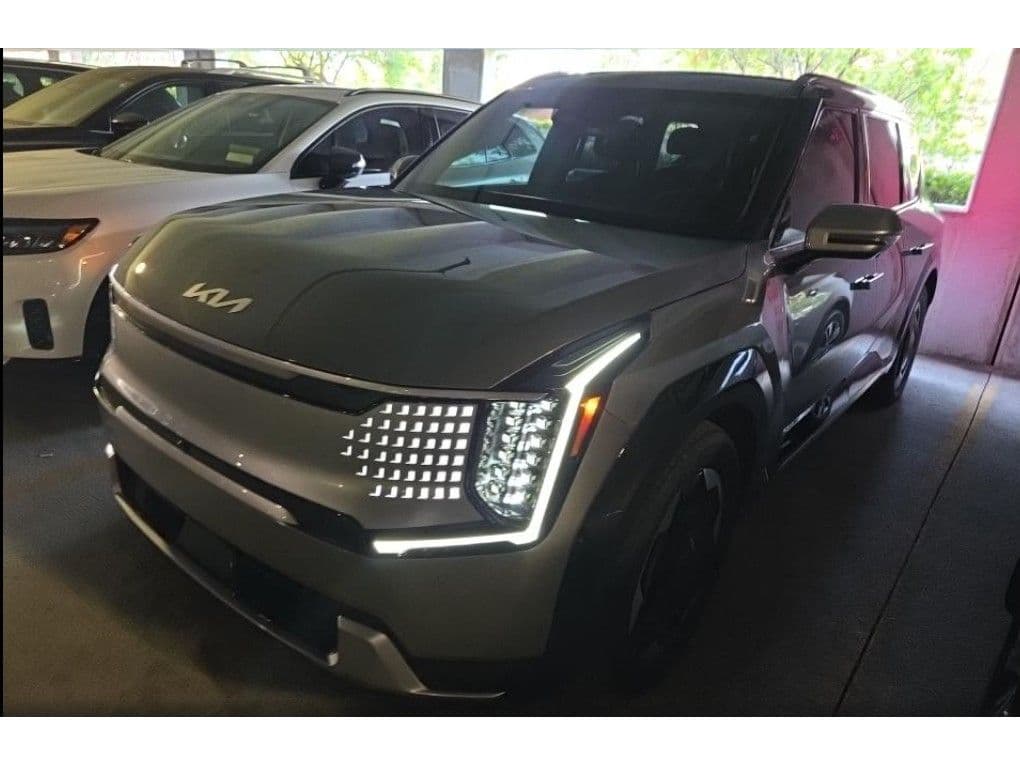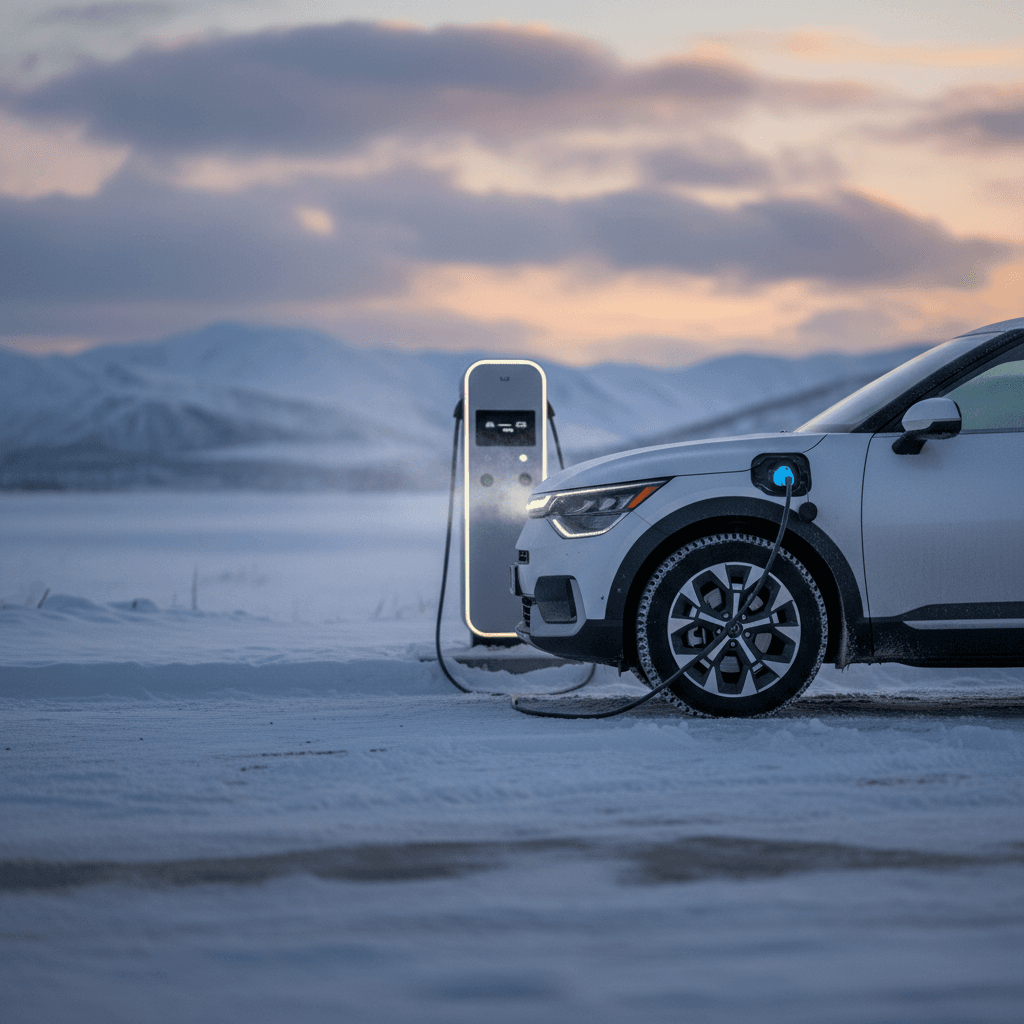
If you’ve just driven through your first cold snap in a Kia EV9, the winter range loss can be startling. That big three-row SUV that showed 280–300 miles on a mild fall day might suddenly predict barely 200 miles, or less, on a frigid morning. The key question is: how much Kia EV9 winter range loss is normal, and when should you start worrying?
Quick take
Kia EV9 winter range basics
Before we talk about winter range loss, it helps to anchor on the EV9’s official EPA range ratings. For 2024–2026 models in the U.S., the EPA estimates span roughly 230 to about 300–305 miles depending on trim and battery pack size. That’s your warm‑weather, mixed‑driving baseline, not your worst‑case winter number.
EPA-rated range for Kia EV9 trims (recent U.S. figures)
Approximate EPA combined range ratings you might see on the window sticker. Exact numbers can vary slightly by model year and wheel/tire choice.
| Trim | Drivetrain / Battery | Approx. EPA Range |
|---|---|---|
| Light RWD | 76.1 kWh, RWD | ≈230 miles |
| Light Long Range RWD | 99.8 kWh, RWD | ≈304–305 miles |
| Wind AWD | 99.8 kWh, AWD | ≈280–283 miles |
| Land AWD | 99.8 kWh, AWD | ≈280 miles |
| GT-Line AWD | 99.8 kWh, AWD | ≈270–285 miles |
Use these as warm‑weather baselines; winter often cuts into them by double-digit percentages.
Warm vs. cold baseline
How much Kia EV9 winter range loss is normal?
Typical Kia EV9 winter range loss
Independent cold‑weather testing has pegged the Kia EV9’s winter range loss at around 20% versus EPA range in sub‑freezing conditions, which actually puts it in the better‑than‑average group among new EVs. In real owner reports from cold U.S. regions, EV9 drivers commonly see usable efficiency around 2.0–2.3 mi/kWh in the 15–25°F range, versus 2.7–3.0+ mi/kWh in mild weather. That works out to roughly a 20–30% hit for many drivers.
Put differently, a Wind or Land AWD model rated around 280 miles might realistically deliver something like 200–225 miles of highway‑heavy range on a cold day with normal heat use. Around‑town driving can look worse on the dash because many short trips burn energy warming the cabin and battery without racking up many miles.
When to be concerned
Real-world EV9 winter range examples
To make this more concrete, let’s translate the numbers into scenarios you might actually experience in your Kia EV9. These are simplified examples based on test data and owner reports, they’re not guarantees, but they’ll get you in the ballpark.
Sample Kia EV9 winter range scenarios
How conditions and driving style change your real‑world miles
Highway drive, 30°F
Vehicle: EV9 Wind AWD (≈280‑mile EPA)
- Temps just below freezing
- 70 mph cruise, Eco/Normal mode
- Cabin set around 68°F
Typical outcome: ~210–230 miles from 100% to near empty.
Short city trips, 20°F
Vehicle: EV9 Land AWD
- 2–8 mile errands, car cold‑soaks between trips
- Heater and seat/steering wheel heat on high
Typical outcome: Dash might suggest barely 150–180 miles from a full charge because most energy goes to warming the cabin and battery.
Snowy mountain run, teens °F
Vehicle: EV9 Light Long Range RWD
- Uphill driving, packed snow
- Winter tires + AWD regen
Typical outcome: 30%+ loss isn’t unusual, plan as if you have ~200–210 miles usable and expect slower DC fast charging until the battery warms up.
Ignore the first 5–10 minutes
Why the EV9 loses range in cold weather
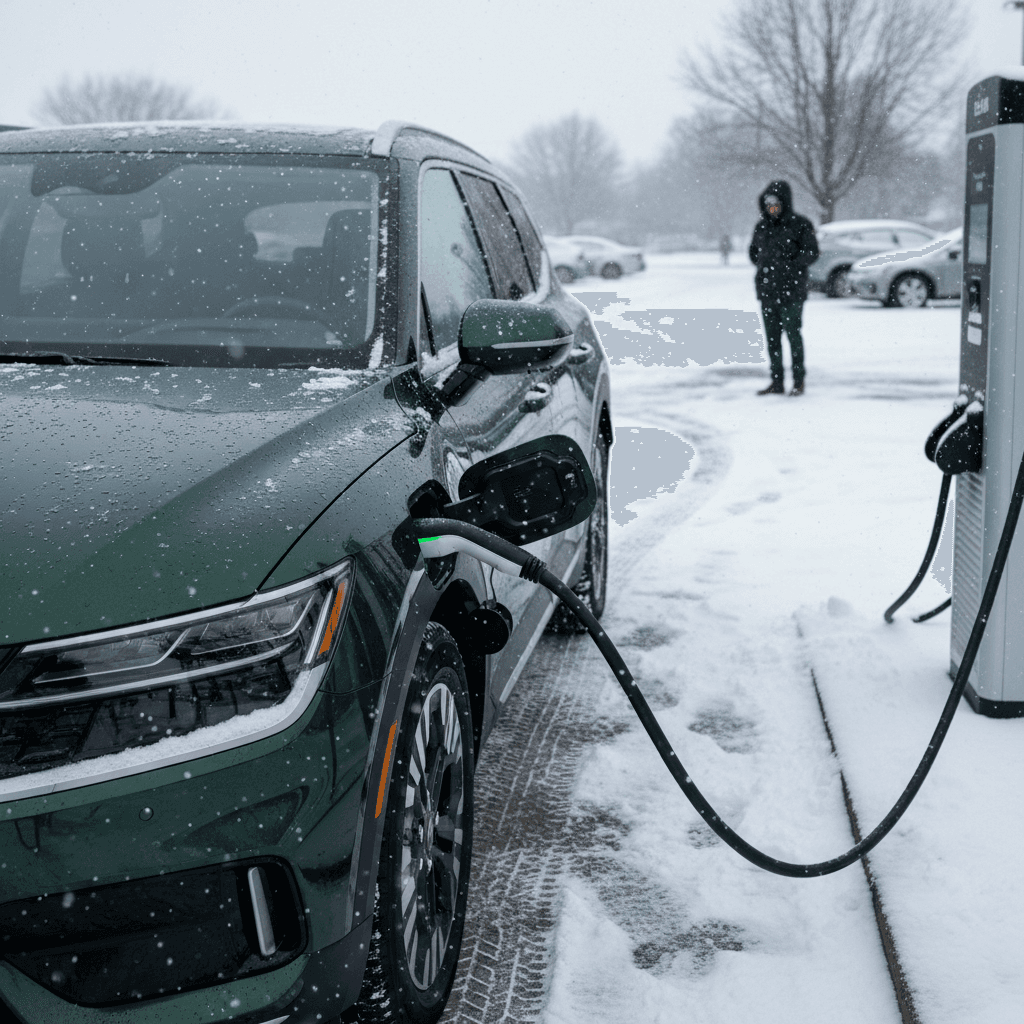
Every EV loses range in winter. The Kia EV9 is no exception, even though it’s on the more efficient end of the three‑row SUV segment. There are four main culprits:
- Cabin heating load: Unlike a gas engine, an EV powertrain doesn’t throw off much free waste heat. Warming a big three‑row cabin takes real battery energy, especially when passengers want 70°F and it’s 15°F outside.
- Cold battery chemistry: Lithium‑ion cells don’t like to charge or discharge quickly at low temperatures. That temporarily reduces usable capacity and efficiency until the pack warms up.
- Higher rolling and air resistance: Cold air is denser, and winter tires plus slush or snow all increase the effort required to move that 5,000‑plus‑pound SUV.
- Short‑trip penalty: Starting from a cold soak repeatedly means you keep paying the “startup” heating cost without ever getting into a steady‑state, efficient cruise.
Battery health vs. battery behavior
EV9 features that help in winter
The good news is that Kia didn’t send the EV9 into winter unprepared. Mid‑ and upper‑trim models, especially in North America, come with hardware and software specifically designed to tame winter range loss.
Cold‑weather tech baked into the EV9
These features exist to keep you comfortable without completely wrecking your range.
High-efficiency heat pump
Instead of using energy‑hungry resistance heaters alone, many EV9 trims use a heat pump system to move heat from the outside air, motors, and battery into the cabin.
This can cut heating energy use significantly in the 20–40°F range, which directly helps preserve range.
Remote preconditioning via app
Using the Kia Connect app, you can warm the cabin and battery while plugged in. That means more of your battery’s energy goes to driving, not warming up your frozen fingers on the first mile.
Battery preconditioning before DC fast charge
When you navigate to a DC fast charger, the EV9 can pre‑heat the battery to an optimal temperature. This protects the pack and lets you take better advantage of the EV9’s 200+ kW fast‑charging capability.
Multi-zone climate and seat heaters
Tri‑zone climate control plus heated seats and steering wheel let you run a slightly cooler cabin while still keeping people comfortable, another quiet way to save watt‑hours in winter.
Three-row winter commuter
How to reduce winter range loss in your EV9
You can’t beat physics, but you can work with it. A few simple habits can easily claw back 30–50 miles of winter range in a Kia EV9, especially on routine commutes.
Practical ways to stretch EV9 range in winter
1. Always precondition while plugged in
Use the Kia Connect app or scheduled departure times so the cabin and battery are warm before you leave, drawing heat from the grid, not your battery. This is especially valuable if you park outside overnight.
2. Lean on seat and wheel heaters
Heated seats and steering wheels use far less energy than blasting cabin air to 74°F. Try dropping the cabin setpoint a couple degrees and let the contact heaters do more of the work.
3. Drive smoothly and slow down a bit
Above 65–70 mph, aerodynamic drag eats range regardless of temperature. In the cold, that penalty is magnified. Dropping 5 mph on the highway can easily return 10–20 miles of extra range over a long trip.
4. Use Eco mode in real cold
Eco mode tames acceleration and can soften HVAC behavior. That’s not just for saving electrons, it also makes it easier to avoid wheelspin on slick roads.
5. Minimize repeated cold starts
If you can batch errands into a single outing, you pay the ‘warm‑up tax’ once instead of three times. The EV9 becomes more efficient after the first 10–15 minutes as everything comes up to temperature.
6. Check tire pressure regularly
Tire pressure drops as temperatures fall. Running several PSI low increases rolling resistance and range loss. A quick check on a cold morning pays off in both safety and efficiency.
Don’t chase the guess‑o‑meter
Planning trips with winter range in mind
If you’re road‑tripping a Kia EV9 in January, planning for winter range loss is less about perfection and more about conservative assumptions. Start with your warm‑weather EPA number, knock off a chunk for conditions, and then layer in your personal comfort buffer.
A simple winter planning rule
Take your EV9’s EPA range and multiply by 0.7 in winter. That 280‑mile AWD rating? Plan your legs around 190–200 miles instead of 250–260. If it’s bitterly cold, snow‑covered, or you’re towing, you can tighten that down to 0.6.
This doesn’t mean the car can’t go farther. It just means your plan assumes a worst‑case scenario, so you’re pleasantly surprised more often than not.
Charging strategy in the cold
- Arrive low, not empty: Target 10–20% on arrival at DC fast chargers; the pack will be warm from driving, which boosts charge power.
- Charge to 70–80%: In cold weather, the taper above 80% can be even slower. Topping to 100% for highway legs often wastes time.
- Favor reliable sites: In winter, a glitchy site is extra painful. Have backups planned along your route, especially in rural areas.
Use apps that factor in weather
When winter range loss might indicate a problem
Most Kia EV9 winter range loss is just physics and will vanish when spring returns. But there are a few red flags that suggest you should talk to a dealer, open a support case with Kia, or, if you’re buying used, get an independent battery health check.
- Severe loss vs. peers: If other EV9 owners in similar climates report using 70–80% of EPA range in winter and you’re consistently seeing only 50–55% on long, steady drives, something might be off.
- Sudden, lasting change: A one‑week cold snap is normal. But if your range and efficiency stay terrible even after temps return to 50–60°F, investigate.
- Weird charging behavior: Jumping from 50% straight to 100% on the display, or taking hours to move from 70–90% on DC fast charge in mild weather, can signal a software or battery‑management issue.
- Warning lights or reduced‑power messages: Any combination of big range loss plus battery or drivetrain warnings should be checked promptly.
- Large left/right temperature differences: If you can view detailed cell or module temps via service menus or an OBD dongle and see big imbalances, that’s a sign to dig deeper.
Don’t ignore warranty coverage
Kia EV9 winter range vs other EVs
It’s natural to wonder whether the EV9 is uniquely bad, or good, when it comes to winter range. Independent testing that put multiple modern EVs through the same cold‑weather route found that the Kia EV9 lost about 20% of its rated range, while some competitors lost 30% or more under similar conditions.
Cold-weather range loss: EV9 vs. other popular EVs
Simplified snapshot from independent winter testing; actual results vary with route, speed, and temperature.
| Model | Type | Approx. Winter Range Loss |
|---|---|---|
| Kia EV9 | 3-row SUV | ≈20% |
| VW ID.4 | Compact SUV | ≈20% |
| Kia Niro EV | Compact SUV | ≈30% |
| Tesla Model 3 | Sedan | ≈30% |
| Hyundai Ioniq 5 | Crossover | ≈35%+ |
| Ford F-150 Lightning | Pickup | ≈35%+ |
The EV9 lands on the better side of average for winter efficiency among family‑size EVs.
In other words, the EV9 isn’t a winter outlier in a bad way. For a boxy, spacious three‑row SUV, it holds up relatively well compared with smaller crossovers and sedans. But physics doesn’t give any EV a free pass once the thermometer dives.
Buying a used Kia EV9 for cold climates
If you’re shopping for a used Kia EV9 and you know winter performance matters, maybe you live in the upper Midwest, New England, or the Rockies, you’ll want to look beyond the sticker EPA number. Real‑world winter range, charging behavior, and battery health all matter.
Key checks when evaluating a used EV9 for winter duty
Simple questions that tell you a lot about how the battery has been treated.
Ask how it was charged
Frequent DC fast charging from low state of charge in very hot climates is tougher on batteries than mostly home Level 2 charging in temperate regions. A well‑cared‑for pack will typically show less degradation and better winter performance.
Look at long-trip efficiency
On a test drive, reset a trip meter and do at least a 20–30‑minute loop at steady speeds. In winter, seeing around 2.0–2.3 mi/kWh in an EV9 on cold highways is in the expected range; wildly lower numbers could merit a closer look.
Get a battery health report
A generalized range estimate doesn’t tell you much about cell‑level health. At Recharged, every EV we list includes a Recharged Score with verified battery health, so you know how that specific vehicle is aging before you buy.
Match trim to your use
If you routinely drive in sub‑freezing temps and want the strongest winter cushion, the Light Long Range RWD or Wind/Land AWD trims with the big battery give you the most margin for road trips and ski weekends.
How Recharged can help
Ready to find your next EV?
Browse VehiclesKia EV9 winter range FAQ
Frequently asked questions about Kia EV9 winter range loss
Bottom line on Kia EV9 winter range
The Kia EV9 is a big, comfortable three‑row electric SUV, and big, comfortable vehicles pay a price in winter efficiency. Most owners will see 15–30% winter range loss compared with EPA figures, with deeper dips during short, heater‑heavy trips in very cold weather. That’s not a sign of a bad EV9; it’s just how batteries and physics work.
The upside is that you have plenty of tools to manage it: a heat pump, preconditioning, efficient seat heaters, and smart charging strategies. Learn how your specific EV9 behaves across a couple of winters, plan your trips with a comfortable buffer, and that initial range anxiety tends to fade into the background.
And if you’re considering a used Kia EV9 and want confidence that its winter performance will match your expectations, shopping with Recharged gives you access to verified battery‑health data, fair pricing, and EV specialists who understand how cold‑weather range really works, not just what’s printed on the window sticker.