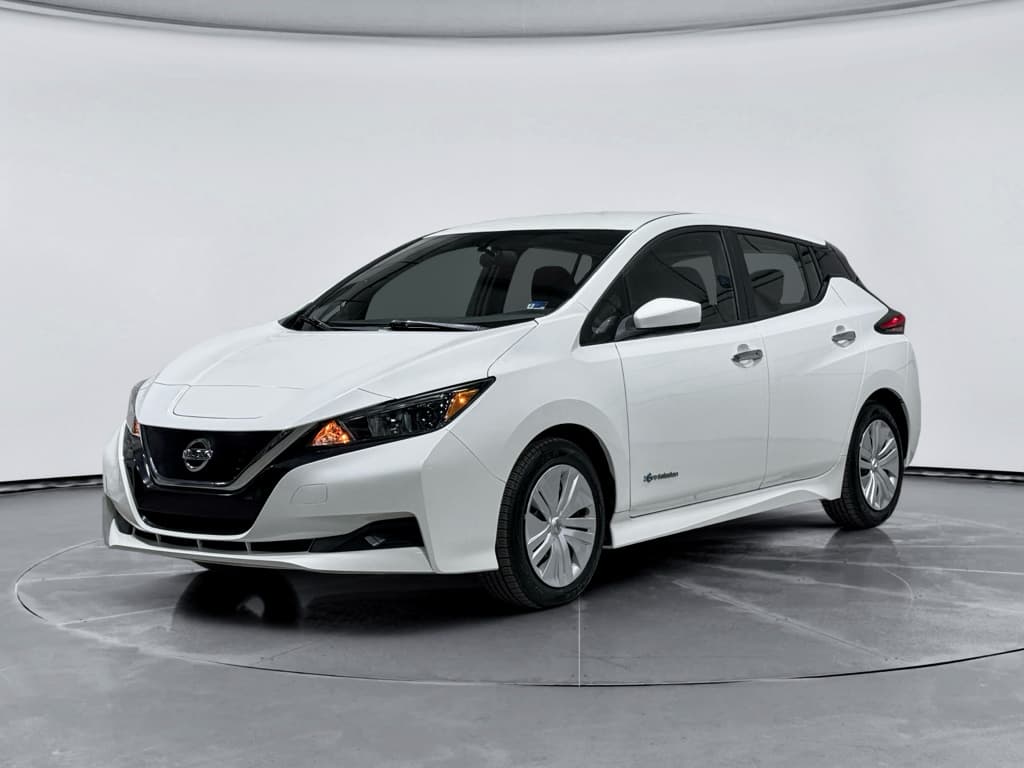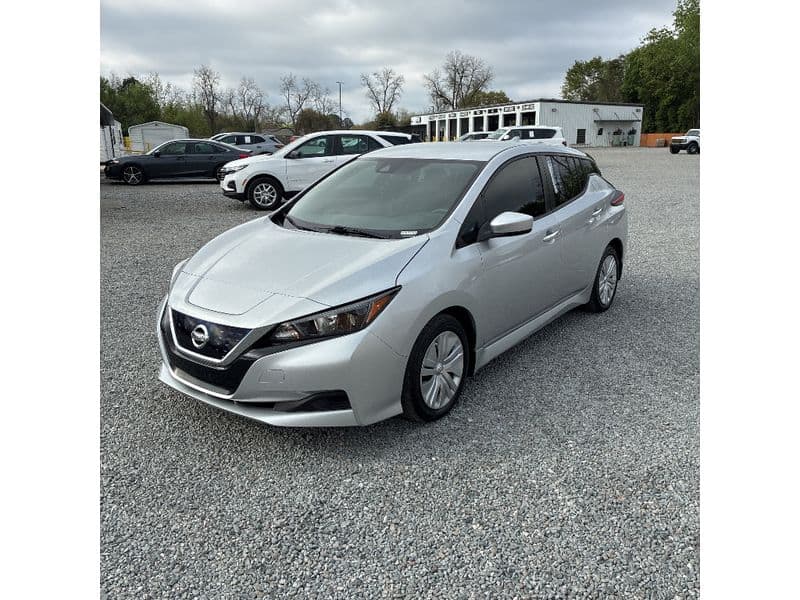
If you’re looking at a used Nissan Leaf, you’re probably asking one blunt question: **what is a Nissan Leaf worth after 5 years?** The Leaf has a reputation for dropping in value faster than many other EVs, and much faster than most gas cars, but that story is only half true. The other half is that those big price drops can make a 5‑year‑old Leaf one of the smartest used‑EV buys on the market, if you know what you’re looking at.
Quick answer: Leaf value after 5 years
Why Nissan Leaf value after 5 years really matters
The Nissan Leaf was one of the first mainstream EVs in the U.S., which means there are **a lot of older Leafs** in the wild, and prices can be all over the map. Understanding Nissan Leaf value after 5 years helps you in three big ways: you avoid overpaying, you don’t panic about depreciation that’s already happened, and you get realistic about how long the car will serve your daily life.
- You’re shopping used and want to know if a 5‑year‑old Leaf is a deal or a money pit.
- You own a Leaf that’s 3–6 years old and you’re deciding whether to keep it or sell.
- You’re comparing a used Leaf to a used gas hatchback and trying to understand total cost of ownership.
Think like a second owner, not a first owner
How much value does a Nissan Leaf lose in 5 years?
Nissan Leaf 5‑Year Depreciation Snapshot (2024–2026 data)
Multiple valuation sources and recent market studies show the Leaf consistently near the top of the **“fastest depreciating EVs”** lists, with 5‑year losses in the mid‑60% range. One widely cited data set pegs the Leaf around **60%+ depreciation in five years**, compared with roughly 45–50% for the average gas car and milder losses for high‑demand EVs like Teslas.
5‑Year Depreciation: Nissan Leaf vs Averages
Approximate 5‑year value loss from original MSRP, based on 2024–2025 U.S. market data.
| Vehicle type | Typical 5‑year depreciation | Value kept after 5 years |
|---|---|---|
| Nissan Leaf | ~60–65% | ~35–40% |
| All‑vehicle U.S. average | ~45–50% | ~50–55% |
| Gas compact hatchback | ~45–55% | ~45–55% |
| Higher‑demand EV (e.g., Tesla Model 3) | ~40–55% | ~45–60% |
These are broad market averages; individual cars can sit above or below these ranges depending on mileage, condition, and battery health.
Don’t apply the wrong percentage
What actually drives Nissan Leaf depreciation?
Key reasons a Leaf loses value faster
Four forces pushing Nissan Leaf value down in the first 5 years
1. Shorter range than newer EVs
Today’s EV buyers are spoiled. A new compact EV with 250+ miles of range is common. A 5‑year‑old Leaf usually offers 150 miles or less when new, and somewhat less with age. That makes older Leafs feel outdated on paper, even if they fit a commute perfectly.
2. No DC fast charging on some trims
Lower‑trim Leafs and earlier model years sometimes lack DC fast charging entirely, or use the CHAdeMO standard that’s fading from U.S. infrastructure. Shoppers who road‑trip, or just love the idea of it, tend to avoid anything without robust fast‑charge support.
3. Rapid tech progress
EV tech has moved fast: better range, more safety tech, fresher interiors, nicer infotainment. Even if your Leaf still drives beautifully, the dashboard and features can feel dated compared with newer EVs in the same price bracket.
4. Supply, incentives, and fleet cars
Generous EV incentives, plus lease returns and fleet sales, flooded the used‑Leaf market in some regions. When lots of nearly identical cars hit auction at once, prices slide downward together, dragging book values with them.
It’s not that the Leaf is a bad car
Battery health and range on a 5‑year‑old Leaf
Resale value on any used EV hangs on one simple question: **how healthy is the battery?** Nissan’s own early projections suggested roughly 80% capacity after five years under normal use, and real‑world owner data across forums and studies broadly lines up with that, while reminding us that not all packs age equally.
Typical 5‑year battery degradation
- Later‑generation Leafs (40 kWh and 62 kWh packs) often show 10–20% capacity loss at five years, assuming moderate climate and charging habits.
- Earlier 24 kWh packs and some 30 kWh packs can degrade faster, especially in hot climates or with lots of DC fast charging.
- A 150‑mile Leaf when new might be closer to 120–130 real‑world miles at five years. A 215‑mile Leaf Plus might feel more like 170–185 miles.
Why this matters for value
- Leafs with unusually strong batteries for their age, high **State of Health (SOH)**, full complement of capacity bars, sell at a premium.
- Leafs with visibly degraded packs quickly drop to the bottom of the price curve, sometimes a **thousand dollars or more below** similar cars with healthier batteries.
- Buyers are no longer guessing: tools like LeafSpy and professional diagnostics (like the Recharged Score battery health report) make weak packs easy to spot.
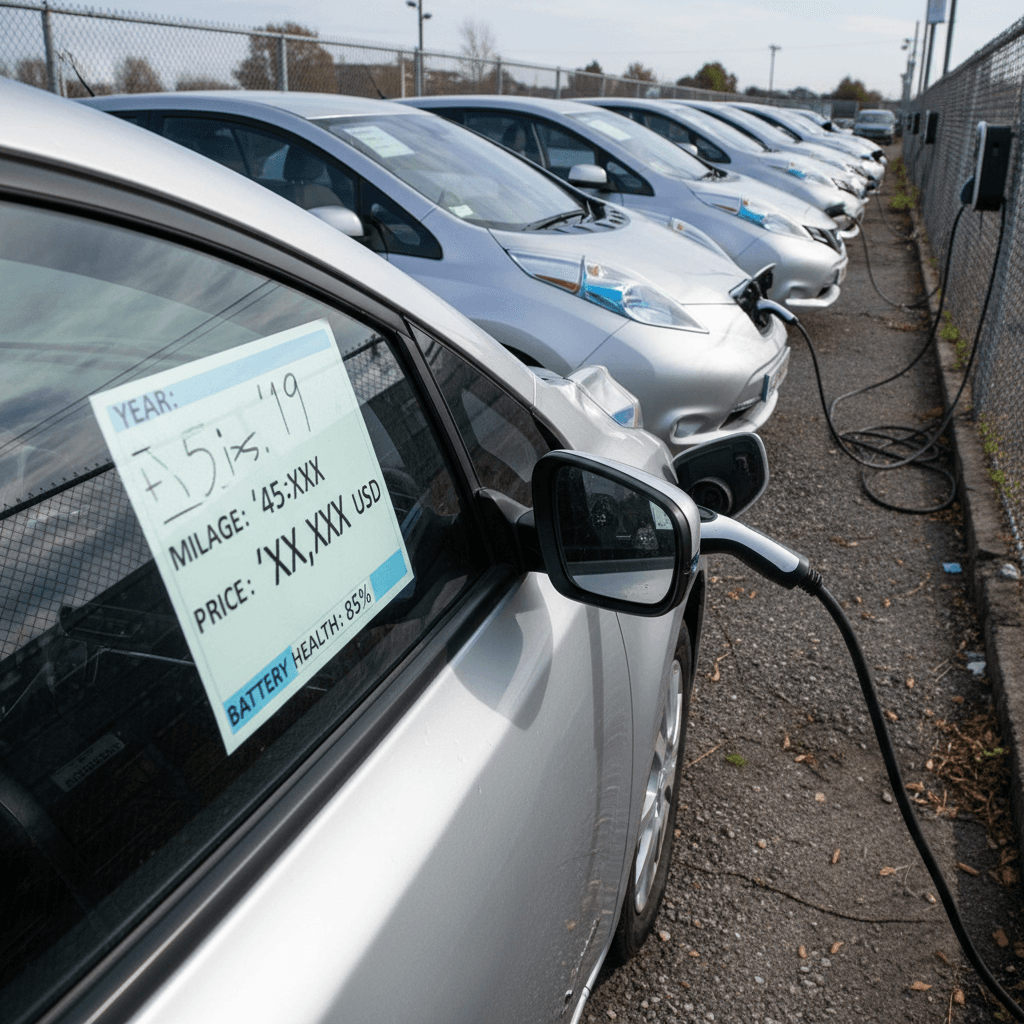
Battery report = pricing power
5‑year cost of ownership: Nissan Leaf vs gas car
Depreciation is only one side of the ledger. Even with steeper 5‑year value loss, a Leaf can still come out ahead on **total cost of ownership** once you add in fuel and maintenance. Several 2023–2025 cost‑of‑ownership analyses show EVs paying you back through cheaper energy and lower service bills, even if they lose more value on paper.
Simplified 5‑Year Cost Snapshot: Used Leaf vs Gas Compact
Illustrative example assuming a 5‑year ownership span starting with a 1‑ to 2‑year‑old vehicle purchased used in the U.S., 15,000 miles per year.
| Cost item (over 5 years) | Used Nissan Leaf | Comparable gas compact |
|---|---|---|
| Depreciation from your purchase price | Higher (Leaf values are softer) | Lower |
| Fuel/energy costs | Much lower (electricity) | Higher (gasoline) |
| Maintenance & repairs | Lower (no oil changes, fewer wear items) | Higher (engine, transmission, exhaust, etc.) |
| Total 5‑year cost picture | Often competitive or better | Often slightly higher overall, despite better resale |
Numbers are rounded estimates, not quotes, your local fuel prices, electricity rates, and purchase price will shift the math.
Who wins over 5 years?
How to value a 5‑year‑old Nissan Leaf like a pro
Putting a number on Nissan Leaf value after 5 years isn’t as simple as plugging mileage into a generic pricing tool. EV‑specific factors, battery health, fast‑charge capability, and local demand, can swing value by thousands of dollars between two cars that look identical in an online listing.
Checklist: Pricing a 5‑year‑old Nissan Leaf
1. Start with model year & original MSRP
Later‑year Leafs (with 40 kWh or 62 kWh packs and updated styling) simply command more money. Look up the original MSRP and assume **35–40% of that price** is a reasonable starting ballpark for a typical 5‑year‑old example in good condition.
2. Factor in battery size and SOH
A 62 kWh Leaf Plus with 85–90% State of Health is worth significantly more than a 40 kWh Leaf at 75% SOH, even if they share a model year. If you don’t have LeafSpy, lean on professional diagnostics such as the **Recharged Score** to understand real battery condition.
3. Check for DC fast charging and CHAdeMO use
Cars with the fast‑charge port are more desirable, but heavy DC fast‑charging use can accelerate degradation. A balanced history, occasional road‑trip fast charging, mostly home Level 2, is ideal.
4. Analyze local market comps, not national averages
Leaf demand is highly regional. In EV‑heavy metros, you may see softer prices because there are many cars. In areas where EVs are still scarce, clean Leafs can be surprisingly strong performers. Always pull **local comparables** before committing to a price.
5. Weigh options and condition like any used car
Heated seats and steering wheel, ProPILOT Assist, and nicer interiors all add value. So do clean service records, no accident history, and tires and brakes with plenty of life left. Cosmetic damage or a branded title will drag value down hard.
6. Decide your walk‑away limits
Because Leafs depreciate more, you don’t need to stretch. Set firm budget and battery‑health thresholds. If a seller’s price doesn’t line up with the pack’s remaining life, **walk away, another Leaf is out there.**
Leaf 5‑year value by trim, battery size, and options
Not all 5‑year‑old Leafs are priced the same way. A base S with a smaller pack and few options can sit thousands below a Leaf Plus with longer range and more tech. In some markets, buyers will happily pay a premium for the extra range; in others, a basic commuter spec is exactly what sells fastest.
How Trim and Battery Size Influence 5‑Year Leaf Value
High‑level look at how common Leaf configurations tend to stack up against each other at the 5‑year mark.
| Configuration (5‑year‑old) | Typical buyer appeal | Relative market value |
|---|---|---|
| Leaf S, smaller battery, no fast charge | Budget commuters with short daily drives | Lowest prices; often the best “cheap EV” deals |
| Leaf SV/SL, 40 kWh with fast charge | Most commuters and suburban families | Mid‑pack pricing; balance of cost and capability |
| Leaf SV Plus / SL Plus, 62 kWh | Range‑conscious drivers, light road‑trippers | Highest used prices; can rival some newer compact EVs |
| High‑option trims with driver‑assist | Tech‑oriented buyers | Adds modest premium if battery health is strong |
Descriptions are directional, not a substitute for local pricing data.
Shop your use case, not the badge
When a 5‑year‑old Leaf is a great buy, and when to walk
Once you understand how Nissan Leaf value behaves after 5 years, the game becomes spotting the sweet spots, and dodging the problem children. Because depreciation has already done so much work for you, the difference between a hero and a headache is mostly in the details.
5‑Year‑Old Leaf: Great Buy vs Red Flag
Use this quick mental split screen when you evaluate any specific car
Looks like a great buy when…
- Battery SOH is healthy for the age (for many 5‑year‑old Leafs, something in the 80s is reasonable).
- Sits in the **valley of depreciation**: you’re paying roughly one‑third of original MSRP, not half.
- Clean history report, routine maintenance, and no unresolved recalls.
- Pricing lines up with other similar Leafs in your region, or slightly better.
Time to walk away when…
- Battery health is significantly below peers, or multiple capacity bars are missing.
- Seller wants close to 50% of original sticker for a 5‑year‑old car without strong justification.
- Accident history, flood risk, or incomplete paperwork make the story murky.
- Fast‑charge records suggest very heavy DC use in hot climates with no battery documentation.
The one thing you shouldn’t compromise on
How Recharged can help you buy or sell a Leaf
Because Nissan Leaf value after 5 years is so tightly tied to battery health and local demand, it’s easy for both buyers and sellers to misprice these cars. That’s exactly the problem Recharged was built to solve for used EVs.
- Every Leaf sold through Recharged includes a **Recharged Score Report** with verified battery diagnostics, so you know exactly how much usable capacity is left.
- You can **buy 100% online** with EV‑specialist support, financing options, and nationwide delivery, or visit the Recharged Experience Center in Richmond, VA if you prefer to kick the tires in person.
- If you already own a Leaf, you can get an **instant offer or consignment help**, with pricing informed by real EV data rather than generic gas‑car playbooks.
Turn depreciation into your advantage
Ready to find your next EV?
Browse VehiclesNissan Leaf 5‑year value: FAQ
Frequently asked questions about Nissan Leaf value after 5 years
Bottom line: Is a 5‑year‑old Nissan Leaf worth it?
Nissan Leaf value after 5 years looks rough if you’re the one who bought the car new. But if you’re stepping in as the second owner, that same depreciation can be a gift: a comfortable, quiet, fully electric hatchback for the price of an economy used gas car, so long as you respect the battery and buy with your eyes open.
Treat the battery report as the heart of the deal, sanity‑check prices against **roughly one‑third of original MSRP**, and be honest about your range needs. Do that, and a 5‑year‑old Leaf can be one of the most cost‑effective ways to join the EV world in 2026. And if you’d rather not decode pack health and market curves alone, shopping, or selling, through Recharged wraps that analysis, the Recharged Score Report, financing, and EV‑savvy help into one place.