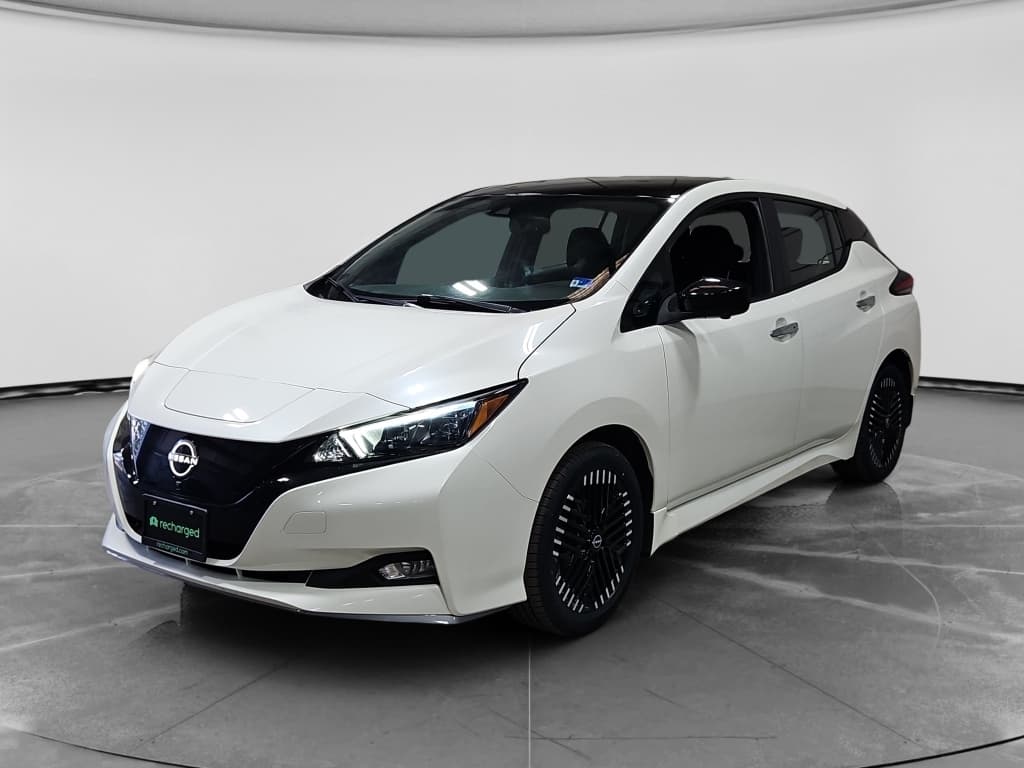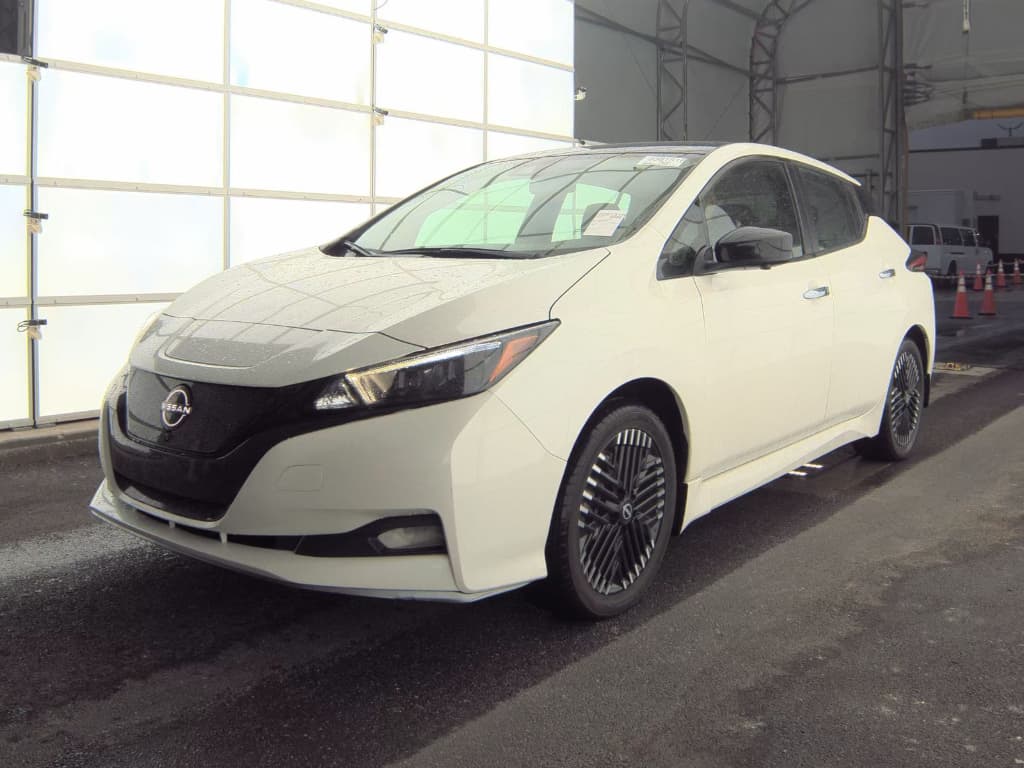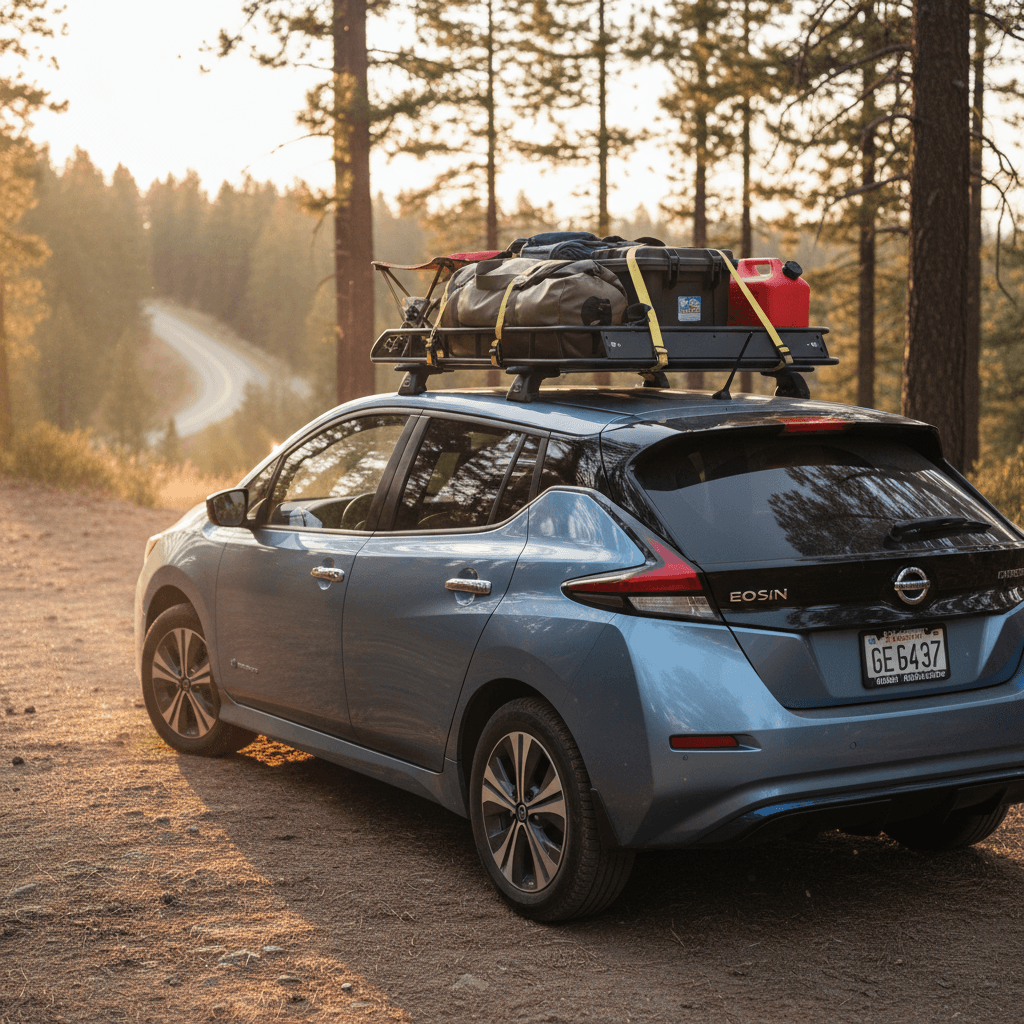
If you’ve ever strapped a big cargo box or a couple of bikes to a small hatchback and hit the highway, you know the uneasy feeling of wondering, “Is this too much weight?” With the Nissan Leaf, that question is even more important. The **Nissan Leaf roof rack weight limit** is lower than many crossovers, and ignoring it can affect safety, handling, and even your EV’s range.
The short answer
Nissan Leaf roof rack weight limit: quick overview
- Factory roof load rating for most modern Leafs (including many 2018+ cars) is **35 kg (77 lbs)** total.
- That 35 kg includes **everything above the sheet metal**: crossbars, feet/fit kit, bike racks or box, and the cargo itself.
- Aftermarket rack makers like Thule and Yakima typically **do not increase** the vehicle’s limit, they follow it.
- The 35 kg figure is a **dynamic load rating**, what the car can safely carry while moving, braking, and cornering, not parked at the campsite.
If you’ve seen bigger numbers for roof racks, like **75 kg (165 lbs)** on SUVs, that’s exactly why the Leaf’s rating surprises a lot of owners. The Leaf is a compact hatch with a relatively thin roof structure and a big, heavy battery pack down low. Nissan engineered it for efficiency and crash safety, not for rooftop tents and kayaks piled three high.
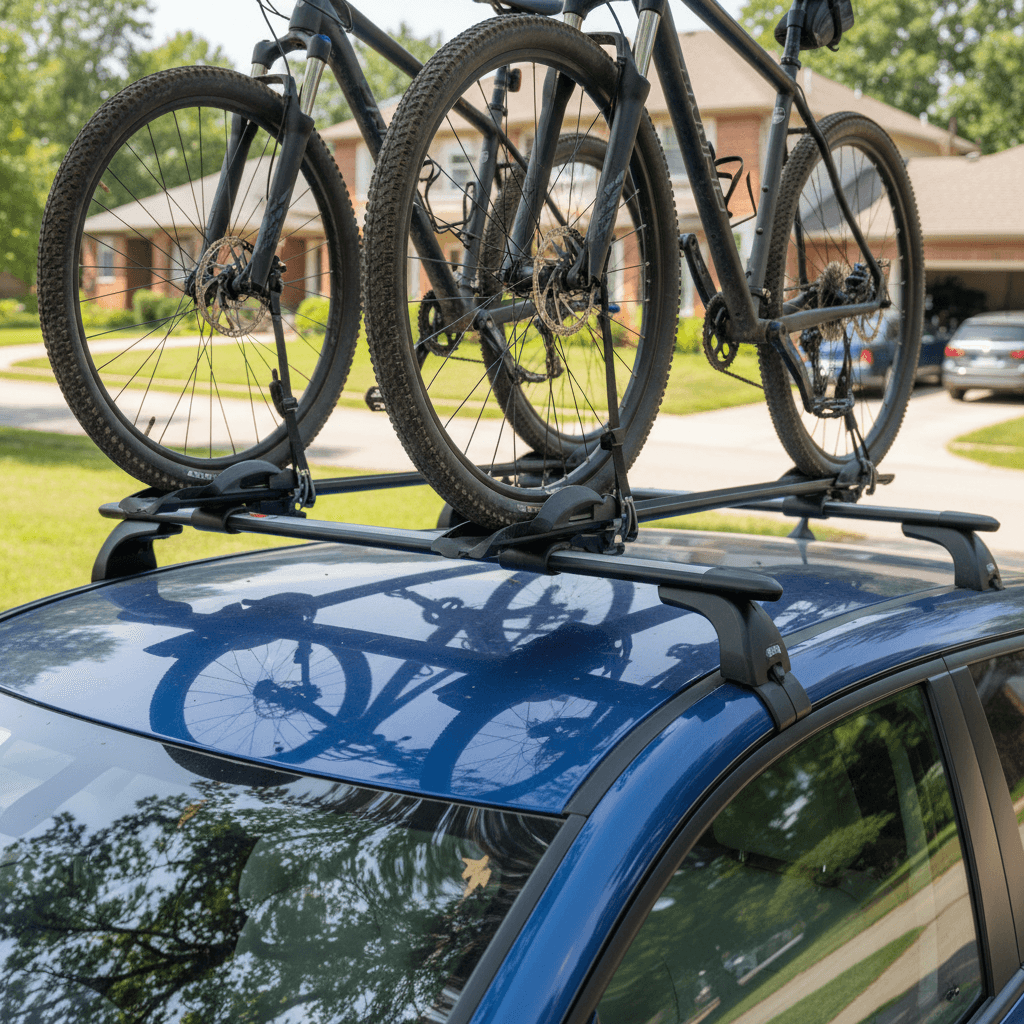
How much weight can a Nissan Leaf roof rack hold?
Let’s turn that 35 kg number into real-world examples so you can see what actually fits on a Nissan Leaf roof rack.
Typical Nissan Leaf roof rack loads
Approximate weights of common racks and cargo so you can plan around the Leaf’s 35 kg (77 lb) roof limit.
| Setup | Component | Approx. weight | Running total vs. 35 kg |
|---|---|---|---|
| Basic rack only | Aluminum crossbars + feet | 6–8 kg (13–18 lbs) | 6–8 kg |
| Two bikes | Rack + two tray-style bike carriers | +6–8 kg | 12–16 kg before bikes |
| Two bikes | Two typical adult bikes | +24–30 kg | ≈ 36–46 kg (over limit) |
| Cargo box (medium) | Rack + 400–450 L box | ≈ 15–20 kg total | 15–20 kg (leaves 15–20 kg for gear), but box + gear must stay ≤ 35 kg |
| Skis/snowboards | Rack + four snowboards | ≈ 12–18 kg | Usually under 35 kg if you pack light |
Weights are ballpark numbers; always check the exact specs for your rack and accessories.
Watch the fine print
In practice, that means a Leaf roof rack is best for **lighter, aerodynamic loads**, skis, snowboards, a compact cargo box with soft luggage, or maybe a single bike if you’re careful with the math. Trying to carry multiple heavy e‑bikes or a tall, fully stuffed cargo box will put you over the line very quickly.
Dynamic vs. static roof load on a Leaf
You’ll see two terms show up in roof rack discussions: **dynamic load** and **static load**. Getting these straight is critical, especially if you’ve wondered about mounting a rooftop tent on your Leaf.
Dynamic load (the number that matters most)
Dynamic roof load is the maximum weight the roof can safely carry while the car is in motion, accelerating, braking, swerving, or hitting potholes.
- That’s what Nissan’s 35 kg rating is referring to.
- It includes every component above the roof panel.
- Exceeding it can compromise handling, crash performance, and attachment strength.
Static load (when parked)
Static load is the weight the roof supports when the car is sitting still.
- It’s always higher than the dynamic rating.
- For many vehicles, a rough rule of thumb is 2–3× the dynamic load, but Nissan doesn’t publish a static number for the Leaf.
- Even if the roof might physically support more when parked, you’re still on your own from a warranty and safety standpoint.
Bottom line: A rooftop tent that carries people is not a good match for a Leaf’s low factory roof rating.
Rooftop tents on a Leaf? Bad idea.
Common Leaf roof rack setups: bikes, boxes, and boards
Most Leaf owners shopping for a roof rack are trying to solve one of three problems: hauling **bikes**, managing **luggage for trips**, or getting **winter gear** to the slopes. Here’s how those look against the Leaf’s roof rack weight limit.
What fits on a Nissan Leaf roof rack?
Three popular use cases and how they stack up against 35 kg.
Bikes
Two traditional bikes on the roof will often push you over 35 kg once you include racks and trays.
- 1 lightweight road bike on a tray is usually fine.
- 2 mountain bikes or e‑bikes are better on a hitch rack.
Cargo box
A small or medium cargo box plus crossbars is often in the 15–20 kg range empty.
- That leaves ~15–20 kg for soft bags.
- Pack clothes and sleeping bags, not heavy tools or water jugs.
Skis & boards
Skis and snowboards are a great match for the Leaf’s roof rating.
- Lightweight racks and narrow gear keep you well under 35 kg.
- Wind noise and drag will still go up, so expect some range hit.
Consider a hitch rack first
Do different Leaf model years or racks change the limit?
You might see slightly different language depending on whether you’re looking at an early first‑generation Leaf (2011–2017) or a later car (2018+). In recent documentation, Nissan publishes a **maximum roof load of 35 kg** for current models, and aftermarket fit guides for 2018–2025 Leafs repeat that same figure.
- If your owner’s manual says 35 kg, that’s the limit, regardless of whether you install Thule, Yakima, or another brand.
- Older 2011–2017 cars that were never sold with factory crossbars may not list a different number; in practice, aftermarket fit kits still assume ~35 kg.
- Upgrading from steel to aluminum crossbars doesn’t change the Leaf’s roof rating. It just gives you a little more usable payload by saving a kilogram or two in rack weight.
Always start with the owner’s manual
How to calculate a safe roof load for your Leaf
Instead of guessing, treat your Leaf like you would a loan application: add up every number and make sure it pencils out. Here’s a simple way to do it.
5‑step Leaf roof load calculator
1. Confirm your roof limit
Open your Leaf’s owner’s manual and look for "Maximum roof load" or "Roof rack weight limit." For most newer Leafs, you’ll see **35 kg (77 lbs)**. Write down the exact number you find.
2. Weigh or look up rack components
Check the specs for your **crossbars, feet/fit kit, and any attachments** (bike trays, ski racks, cargo box). Add those weights together. If the manufacturer doesn’t list them, weigh them on a bathroom scale.
3. Estimate cargo weight realistically
Bikes and gear are usually heavier than people think. Use manufacturer specs where possible. For luggage, weigh a packed bag once and use that as a baseline.
4. Do the math before you buy
Add **rack + accessories + cargo**. If that total is above the number in your manual, you need to rethink the setup, lighter gear, fewer items, or a different carrying method.
5. Leave a small buffer
Even if your math lands exactly at 35 kg, aim to stay **a few kilograms under** in real life. Scales aren’t perfect, and you don’t want to be right at the edge every time you load up.
A realistic “good” setup
Roof rack safety tips for EV owners
An electric hatchback like the Leaf behaves a little differently than a gas car when you start stacking weight and wind resistance on top. The basics of roof rack safety still apply, but there are a few Leaf‑specific wrinkles to keep in mind.
- **Secure attachment points**: Make sure feet and clamps are positioned exactly where the fit guide shows. On a Leaf, that often means specific distances from the windshield and hatch seams.
- **Re‑torque after the first trip**: Fasteners on new racks can settle. Re‑check torque after 50–100 miles and periodically after.
- **Mind your speed**: Some systems list a maximum recommended speed around **80 km/h (50 mph)**. Even if your rack doesn’t, keeping speeds reasonable reduces stress on the roof and wind noise.
- **Watch your center of gravity**: The Leaf already carries significant battery weight down low. Adding mass up high will be noticeable in crosswinds and sudden maneuvers.
- **Check clearance religiously**: Parking garages, carports, and drive‑thrus get tighter quickly with a box or bikes on the roof. Know your new total height.
Braking distances change
How roof racks affect Nissan Leaf range and noise
Weight is only half the story. On an EV like the Leaf, **aerodynamics** matters just as much. A bare set of slim crossbars may hardly move the needle, but a tall cargo box or upright bikes can be like driving with a parachute.
What a roof rack can do to your Leaf’s efficiency (ballpark)
Those are broad estimates, but they match what many EV drivers report: the more you stick into the airflow, the more your **highway range shrinks**. Around town, the penalty is smaller; at 65–75 mph, it becomes obvious on your guess‑o‑meter.
A simple range strategy
When a roof rack isn’t enough (and what to do instead)
Because the Leaf’s roof limit is modest, there are plenty of situations where a rack just isn’t the right tool, especially if you’re carrying **people, pets, and heavy gear** at the same time.
1. Use a hitch-mounted rack
A properly rated hitch and rear rack keep weight lower and often closer to the rear axle, which is friendlier to handling and crosswinds.
- Ideal for bikes, including heavier e‑bikes.
- Usually easier to load than lifting overhead.
- Check tongue weight limits and wiring needs.
2. Rethink what you carry
Many families overpack for road trips. Before drilling into your roof or ordering a big box, ask what can be:
- Left at home or shipped ahead.
- Repacked more efficiently inside the cabin.
- Handled with a small utility trailer where legal and appropriate.
Thinking about upgrading?
FAQ: Nissan Leaf roof rack weight limit
Frequently asked questions
Bottom line: Using your Leaf roof rack safely
The Nissan Leaf’s roof wasn’t built for heavy lifting. With a **roughly 35 kg (77 lb) roof rack weight limit**, it pays to treat that real estate as a place for light, streamlined gear, not a second cargo hold. If you respect the number in your manual, do the math on every component, and stay honest about what you’re loading, your Leaf will remain the quiet, confidence‑inspiring commuter it was designed to be, even with a bit of extra adventure on top.
And if your lifestyle is starting to outgrow the Leaf’s modest carrying capacity, that’s a good time to look at your next EV. On Recharged, you’ll find **used EVs with verified battery health, transparent pricing, and expert guidance**, so you can match your next car not just to your commute, but to your bikes, boards, and cargo, too.