If you’re shopping for an affordable electric car, the Nissan Leaf will land on your shortlist sooner or later. It was the first truly mass‑market EV, and today there’s a huge used supply at tempting prices. But a smart Nissan Leaf review in 2025 has to talk about more than sticker price, it has to cover range, charging limitations, and battery health, especially if you’re buying used.
Quick Take
Overview: Where the Nissan Leaf Fits in 2025
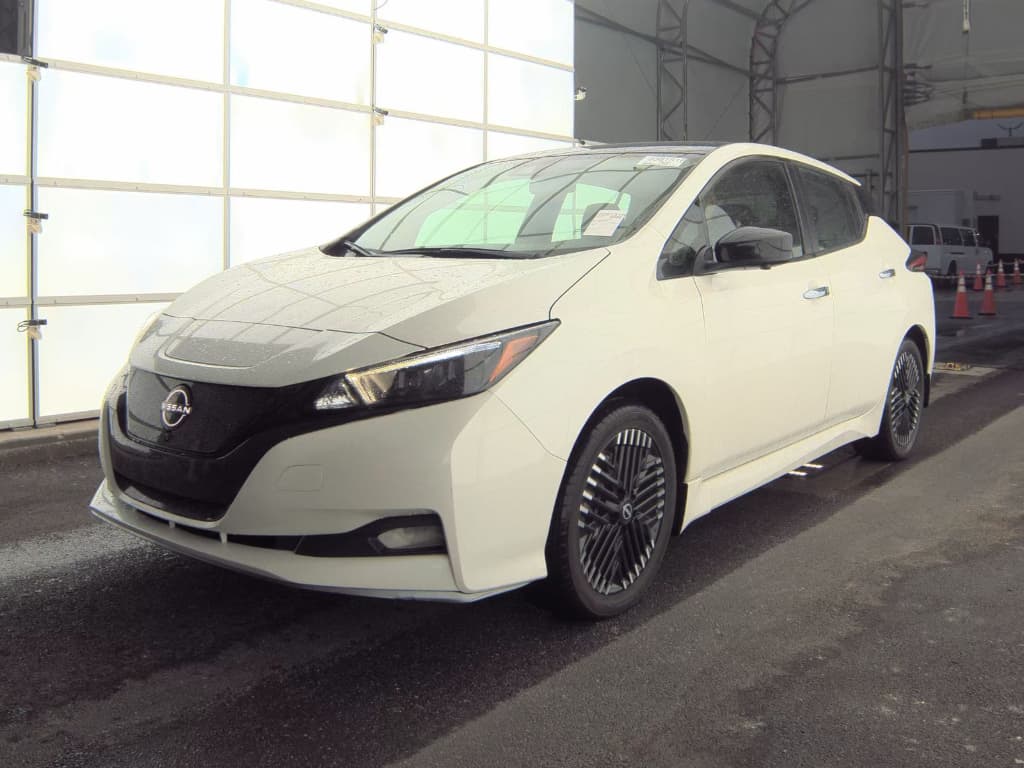
The current U.S. Leaf is a compact hatchback available in two main trims: S with a 40‑kWh battery and SV Plus with a 62‑kWh pack. EPA‑rated ranges sit around 149 miles for the S and about 212 miles for the SV Plus, putting the Leaf behind newer rivals like the Hyundai Kona Electric and Kia Niro EV that clear 250 miles or more on a charge.
Nissan Leaf at a Glance (2025 U.S. Model)
So why is the Leaf still interesting? Three reasons: price, simplicity, and availability. It’s one of the least expensive new EVs you can buy, and on the used market it’s often the cheapest way into electric ownership. For short‑range urban and suburban duty, that can outweigh its tech shortcomings, if you know what you’re getting into.
Key Specs, Range & Performance
Range & Power: Leaf S vs. Leaf SV Plus (2025)
How the two current U.S. Leaf trims compare on paper.
| Trim | Battery | EPA Range | Horsepower | Drive |
|---|---|---|---|---|
| Leaf S | 40 kWh | 149 miles | 147 hp | FWD |
| Leaf SV Plus | 62 kWh | ≈212 miles | 214 hp | FWD |
Specs are approximate but representative of 2025 U.S. models.
On the road, both Leafs are quiet, smooth, and punchy around town. The Leaf S is quick enough for everyday driving, but the SV Plus feels noticeably stronger when merging or passing thanks to its more powerful motor. Neither is a performance EV, but you’re not going to feel underpowered in city or suburban use.
Real‑World Driving Impressions
How the Leaf feels beyond the spec sheet
City Driving
The Leaf shines here. Instant torque, compact size, and good visibility make it effortless in traffic and parking lots. One‑pedal driving with e‑Pedal can reduce fatigue in stop‑and‑go commuting.
Highway Use
Stable and reasonably quiet, but range drops faster above 65 mph than its EPA numbers suggest. The low range ceiling means you’ll plan charging stops carefully on longer trips.
Ride & Comfort
Soft, compliant ride tuning makes potholes and rough pavement tolerable. Seats are comfortable for most body types, and road noise is competitive with other compact EVs.

Range Reality Check
Charging Experience: Home, Public & CHAdeMO Reality
Every U.S. Leaf uses a standard J1772 connector for Level 1 and Level 2 AC charging and a CHAdeMO port for DC fast charging. At home on a 240‑volt Level 2 charger, you’re looking at roughly 7–8 hours for a full charge on either battery, perfectly acceptable for overnight charging.
Home Charging
- Level 1 (120V): Adds only a few miles of range per hour. Use in a pinch.
- Level 2 (240V): Realistically 20–30 miles of range per hour depending on model and charger amperage.
- Best case: Install a 240V circuit in your garage or carport and pair it with a 32–40A home charger.
Public & Fast Charging
- Level 2 public: Easy to find; any J1772 station will work.
- DC fast charging: Limited to about 50 kW via CHAdeMO. Many new sites focus on CCS or NACS instead.
- Road‑trip impact: Fewer CHAdeMO plugs and slower charging make the Leaf a tough choice for cross‑country travel.
The CHAdeMO Catch
For a commuter who charges mostly at home and only occasionally at public stations, the Leaf’s charging story is fine. For drivers who dream of fast, seamless road‑trip charging, other EVs with CCS or NACS support will be far more convenient.
Battery Health, Reliability & Recalls
From a mechanical standpoint, the Leaf is a simple and generally reliable car, no engine, transmission, or exhaust system to fail. The make‑or‑break variable is the traction battery. Early Leafs (2011–2016) used air‑cooled packs that could degrade quickly in hot climates, and even newer 40‑ and 62‑kWh packs have their own quirks, especially in cold weather or under heavy fast‑charging use.
- 24‑kWh and 30‑kWh packs (early cars): Known for relatively rapid capacity loss in hot, high‑mileage use.
- 40‑kWh packs (2018+): Improved chemistry, but reports of weak cells causing sudden range drops, especially in cold climates or after repeated fast‑charging.
- 62‑kWh packs (Leaf Plus/SV Plus): Better range cushion but not immune to weak‑cell or swelling issues in a minority of cars.
Recent Battery Recall Note
The good news is that many Leafs run for years with only modest degradation, especially in moderate climates and with gentle charging habits. The bad news is that some used cars now on the market have heavily worn or defective packs that can turn a cheap purchase into an expensive mistake. That’s why a serious Nissan Leaf review in 2025 has to treat battery diagnostics as non‑optional.
“The lesson is nobody should buy a used Leaf without being able to check the battery health.”
Nissan Leaf as a Used EV: Pricing & Depreciation
Depreciation is where the Leaf becomes very interesting, for better and worse. New, you’re looking at high‑$20,000s to low‑$30,000s, but three to seven years later, many Leafs trade for a fraction of that. That’s partly because of modest range and aging charging tech, and partly because buyers are wary of battery replacement costs.
Used-Market Snapshot (Typical, Not Guaranteed)
Those numbers are rough, and local markets vary widely, but the pattern is clear: a Leaf with a strong battery can be outstanding value, especially as a second car or commuter. A Leaf with a tired pack may be hard to live with and harder to resell.
Where Recharged Fits In
Ready to find your next EV?
Browse VehiclesBest Nissan Leaf Years & Trims to Target
If you’re considering a Leaf in 2025, you’re likely cross‑shopping several model years, not just brand‑new inventory. Here’s a practical way to think about it.
Model‑Year Shortlist for Different Budgets
Which Leafs are most compelling in 2025?
Tight Budget: 2015–2017
These cars can be incredibly cheap, but they use older air‑cooled packs. They’re best suited for short‑range city duty, and only if a battery‑health report looks strong.
Sweet Spot: 2018–2020
Newer platform (ZE1), better performance, and 40‑ or 62‑kWh packs. There are known weak‑cell issues in some 40‑kWh batteries, so diagnostics are critical, but when healthy they’re very livable.
Lower Risk: 2021+
Generally less age and mileage, more remaining battery warranty, and updated safety tech. You’ll pay more, but you’re also starting from a cleaner slate.
Trim‑wise, the Leaf S works if you’re extremely price‑sensitive and your daily driving is modest. The SV Plus is simply easier to live with, thanks to its extra range and stronger acceleration. In the used market, that larger battery also gives you more headroom to absorb future degradation.
Who the Nissan Leaf Is (and Isn’t) Right For
Is the Nissan Leaf a Good Fit for You?
Match the car to your real driving needs
Great For
- Drivers with a predictable commute under ~80 miles round‑trip.
- Households with home charging (ideally Level 2).
- Second‑car duty where the other car handles long trips.
- Budget‑minded shoppers stepping into their first EV.
Think Twice If
- You frequently drive 150+ miles in a day.
- You rely heavily on public fast charging or road trips.
- You live where CHAdeMO coverage is thin or shrinking.
- You don’t have a way to verify battery health before buying used.
Use the Right Tool for the Job
Checklist: How to Buy a Used Nissan Leaf Safely
Because battery condition is everything on a used Leaf, you want a structured plan before you start test‑driving. Use this checklist as your roadmap.
Essential Steps Before You Buy a Used Nissan Leaf
1. Define Your Real Range Needs
Write down your longest typical daily drive, including detours. Add at least 25–30% buffer. If that number is over 100–120 miles, focus on SV Plus or other long‑range EVs.
2. Check Battery Capacity Display
On a test drive, look at the capacity bars to the right of the gauge cluster. A new pack shows 12 bars; fewer bars mean reduced capacity. Bars alone aren’t enough, but they’re a useful red flag.
3. Get a Professional Battery Health Report
Ask for a recent dealer battery test or, better, a third‑party diagnostic like the <strong>Recharged Score</strong> that measures true usable capacity and cell balance, not just what the dash says.
4. Confirm Recall and Warranty Status
Run the VIN through a recall checker and confirm all <strong>battery‑related campaigns</strong> have been completed. Ask for documentation on any prior pack replacements or software updates.
5. Test Charge at Level 2 or DC Fast
If possible, plug into a public Level 2 or CHAdeMO fast charger during your evaluation. Watch for unusual behavior: sudden drops in state‑of‑charge, error messages, or refusal to fast‑charge.
6. Inspect for Use Pattern Clues
Look for clues that the car has lived a hard life: rideshare decals, heavy curb rash, or many rapid‑charge sessions logged (a diagnostic tool can help). A gently used commuter is ideal.
7. Compare Total Cost, Not Just Price
Factor in potential battery replacement or the cost of choosing a healthier, slightly more expensive Leaf. A cheaper car with a tired battery is rarely a bargain over the long term.
8. Consider Expert‑Guided Purchase
If you’re new to EVs, working with a specialist, like Recharged’s EV advisors, can help you interpret diagnostics, compare trims, and arrange financing and trade‑in without guesswork.
FAQ: Nissan Leaf Range, Batteries & Ownership
Frequently Asked Questions About the Nissan Leaf
Final Thoughts: Is the Nissan Leaf Still a Smart Buy?
Viewed purely through a 2025 spec‑sheet lens, the Nissan Leaf looks dated: modest range, slow CHAdeMO fast‑charging, and fierce competition from newer compact EVs. But that’s only half the story. As a quiet, comfortable, low‑cost commuter, especially on the used market, it can still be a very smart choice for the right driver.
If your daily driving fits within its range envelope, you have reliable home charging, and you’re willing to lean on good battery diagnostics instead of guesswork, the Leaf can deliver electric motoring at a bargain‑basement cost of ownership. If, on the other hand, you dream of cross‑country road trips and effortless fast‑charging, you’re better off with a longer‑range EV built around CCS or NACS.