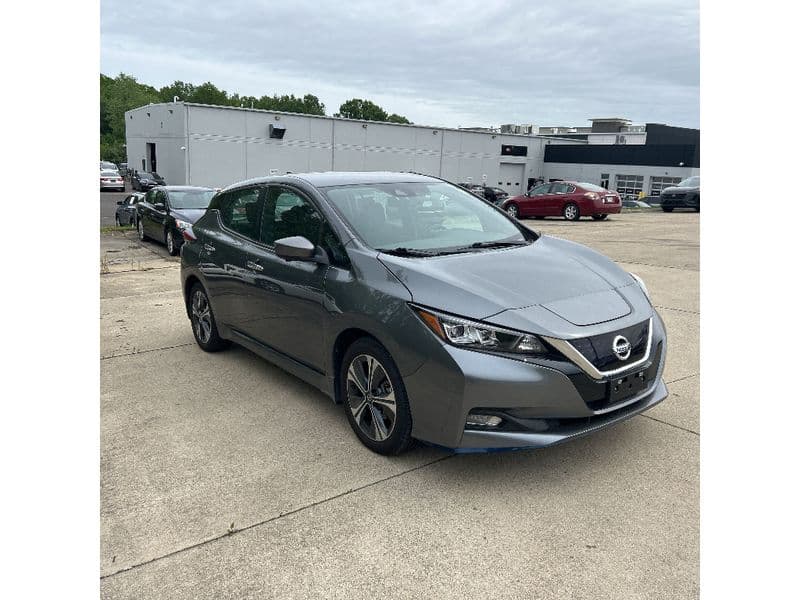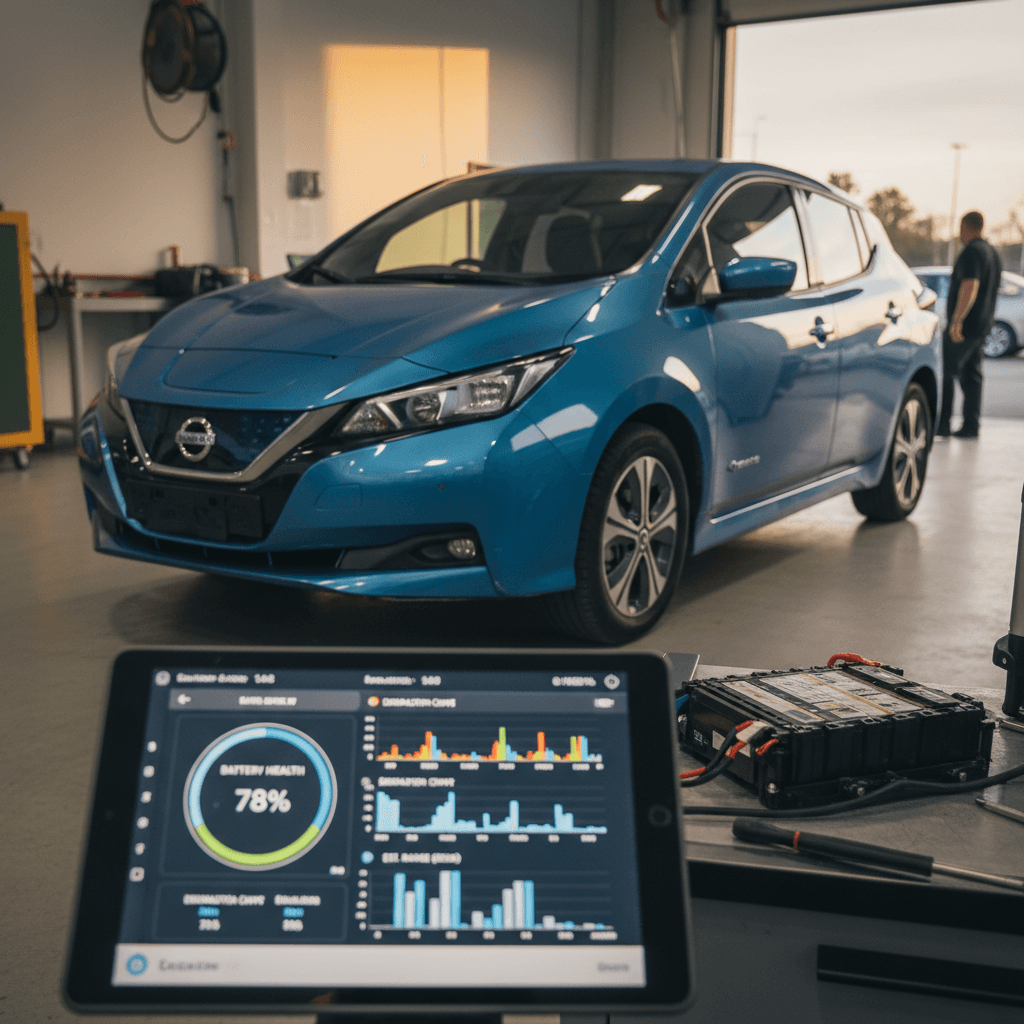
If you’re trying to understand Nissan Leaf resale value in 2026, you’re not alone. The Leaf is one of the most affordable EVs to buy used, but its values don’t behave like a typical gas car. Battery health, usable range, and charging tech matter at least as much as year and mileage. This guide walks you through how Leaf depreciation really works in 2026, whether you’re buying one or deciding when to sell.
Quick takeaway
Why Nissan Leaf resale value is unique in 2026
The Leaf is one of the longest‑running mass‑market EVs, and that history cuts both ways for resale value. On one hand, there are plenty of used Leafs in the market, and they’re often among the cheapest used EVs you can buy. On the other, early models used smaller, passively cooled batteries and CHAdeMO fast‑charging, both of which drag down value compared with newer EVs using the CCS or NACS standards.
Nissan Leaf market snapshot for 2026
Resale vs. replacement cost
How much is a Nissan Leaf worth in 2026?
Exact numbers depend on your market, trim and battery, but by 2026 most used Nissan Leafs slot into a few predictable value bands. Think of these as directional ranges, not quotes:
Typical Nissan Leaf value bands in 2026 (U.S. retail asking prices)
Broad pricing bands for well‑maintained Leafs with clean titles. Local markets and battery health can move a given car above or below these ranges.
| Model years | Battery pack | Typical mileage | Condition example | Common asking-price band |
|---|---|---|---|---|
| 2011–2015 | 24 kWh | 70,000–120,000+ | Older city runabout, 8–10 bars | $4,000–$9,000 |
| 2016–2017 | 30 kWh | 60,000–110,000 | S/SV/SL with moderate degradation | $7,000–$12,000 |
| 2018–2020 | 40 kWh | 40,000–90,000 | Next‑gen styling, better range | $11,000–$17,000 |
| 2019–2022 | 62 kWh (Leaf Plus) | 30,000–80,000 | Long‑range Plus models | $15,000–$22,000 |
| 2023–2025 | 40 kWh & 62 kWh | Under 50,000 | Late‑run Leafs, many still under full warranty | $18,000–$26,000 |
These bands assume average mileage for age, no major accident history, and at least 9–10 battery bars unless otherwise noted.
Retail vs. trade‑in vs. instant‑offer
At Recharged, we start with real‑world market data, then layer on a Recharged Score battery‑health diagnostic for each Nissan Leaf we list. That means both buyers and sellers see a price tied directly to how much usable range is left, not just how old the car is.
Leaf depreciation curve: what to expect by age
Across the EV market, the steepest drop in value usually happens in the first three years as incentives, new tech and range improvements make older cars look dated on paper. The Nissan Leaf is no exception, but because it started life as a relatively affordable EV, the dollar amounts can be smaller even when the percentage drop is large.
Typical Nissan Leaf depreciation stages
Why your 6‑year‑old Leaf may be a better value than you think
Years 0–3: The cliff
New Leafs can lose 40–50% of MSRP in the first 3 years, especially if new models add range or discounts hit new‑car pricing.
Years 3–7: Value sweet spot
Most of the big hit is over. A healthy battery and useful range can keep values surprisingly stable in this window.
Years 8–12: Battery‑dependent
At this age, the Leaf’s worth is driven mainly by remaining battery capacity. A tired pack can push values near economy‑car levels.
Think in dollars per usable mile
Battery health: the number one Leaf value driver
For a used Nissan Leaf in 2026, battery state of health (SOH) is more important than model year on the title. Two Leafs from the same year can have wildly different values if one has 11–12 capacity bars and the other has already dropped to 8.
How Leaf battery health is measured
- Capacity bars: The stacked bars on the dash show remaining battery capacity vs. new (12 bars = 100% when new).
- SOH %: Tools like LeafSpy and the Recharged Score report estimate remaining capacity as a percentage.
- Real‑world range: How far the car actually goes between 20–80% in your driving.
What buyers look for in 2026
- At least 10–11 capacity bars on a daily‑driver Leaf.
- Clear proof the pack hasn’t been repeatedly overheated or abused.
- Consistent range reports from recent owners or test drives.
All of these show up directly in a car’s Recharged Score battery‑health report.
Low bars, low value
Habits that protect Nissan Leaf value over time
1. Avoid letting the car bake at 100%
The Leaf’s pack is passively cooled. Regularly fast‑charging to 100% and then leaving it in hot sun accelerates degradation and hurts resale.
2. Use 20–80% for daily driving
Staying mostly between 20% and 80% state of charge is easier on the pack while still giving plenty of daily range.
3. Moderate fast‑charging
Occasional DC fast‑charging is fine, but living on CHAdeMO road‑trips in hot weather is hard on the pack, something savvy 2026 buyers understand.
4. Keep software and recalls up to date
Battery‑related service bulletins and firmware updates can improve longevity or address known issues. Documentation helps your case at sale time.
5. Document battery health over time
Screenshots from LeafSpy, dealer battery checks, or a recent Recharged Score report can all support a higher asking price.
Range, charging, and everyday usable miles
Most Leaf shoppers in 2026 aren’t comparing it to brand‑new 300‑mile cross‑country EVs. They’re asking a simpler question: “Will this cover my daily life without stress?” That’s where real‑world usable range, and the way you plan to charge, directly affects what your Leaf is worth.
How pack size and degradation change real‑world range
Approximate usable highway‑mixed ranges at 65 mph in mild weather
Early 24 kWh Leaf
When new: ~70–80 miles.
In 2026 typical: 50–70 miles depending on climate and care.
Best as a second car or short‑hop commuter.
30 & 40 kWh Leafs
When new: roughly 100–150 miles.
In 2026 typical: many cars still offer 90–130 miles.
Plenty for most daily U.S. commutes.
62 kWh Leaf Plus
When new: up to ~215–225 miles highway‑mixed.
In 2026 typical: 170–200+ miles for healthy packs.
These command the strongest prices.
CHAdeMO vs. CCS/NACS and your value
Trim levels, pack size, and features that move the price
Once you’ve accounted for battery health and usable range, trim and features are the next big swing factors in Nissan Leaf resale value. The differences aren’t just cosmetic; they change how livable the car feels every day.
How Leaf trims and options affect resale value in 2026
Common trim‑level and feature differences that can justify higher pricing.
| Feature / trim | Why buyers care | Typical impact on value |
|---|---|---|
| 62 kWh Leaf Plus | Longer range, more power, better highway comfort | + Highest premiums; often $2,000–$4,000 above similar 40 kWh |
| ProPILOT Assist / adaptive cruise | Makes highway commuting easier and safer | + Adds clear appeal for daily drivers |
| Heat pump HVAC | Better cold‑weather efficiency and winter range | + Especially valuable in colder climates |
| Leather seats, premium audio | Comfort and perceived quality | + Smaller bump, but helps top‑of‑market pricing |
| Base S trim with steel wheels | Still practical but feels more basic | – Slight discount vs. SV/SL equivalents |
| All‑season tires in good condition | Immediate savings for the next owner | + Easier to sell at asking price |
Exact value impact depends on local demand, but this table reflects typical buyer preferences in 2026.
Sweet‑spot configurations
Condition, mileage, and history: how buyers really evaluate a Leaf
Mileage still matters for a Leaf, but not in the same way it does for a gas car. A 100,000‑mile Leaf with a healthy battery can be more appealing than a 60,000‑mile example that spent its life fast‑charging in desert heat. Buyers look at patterns, not just odometer numbers.
Condition factors that raise value
- Clean interior with minimal wear on seats and steering wheel.
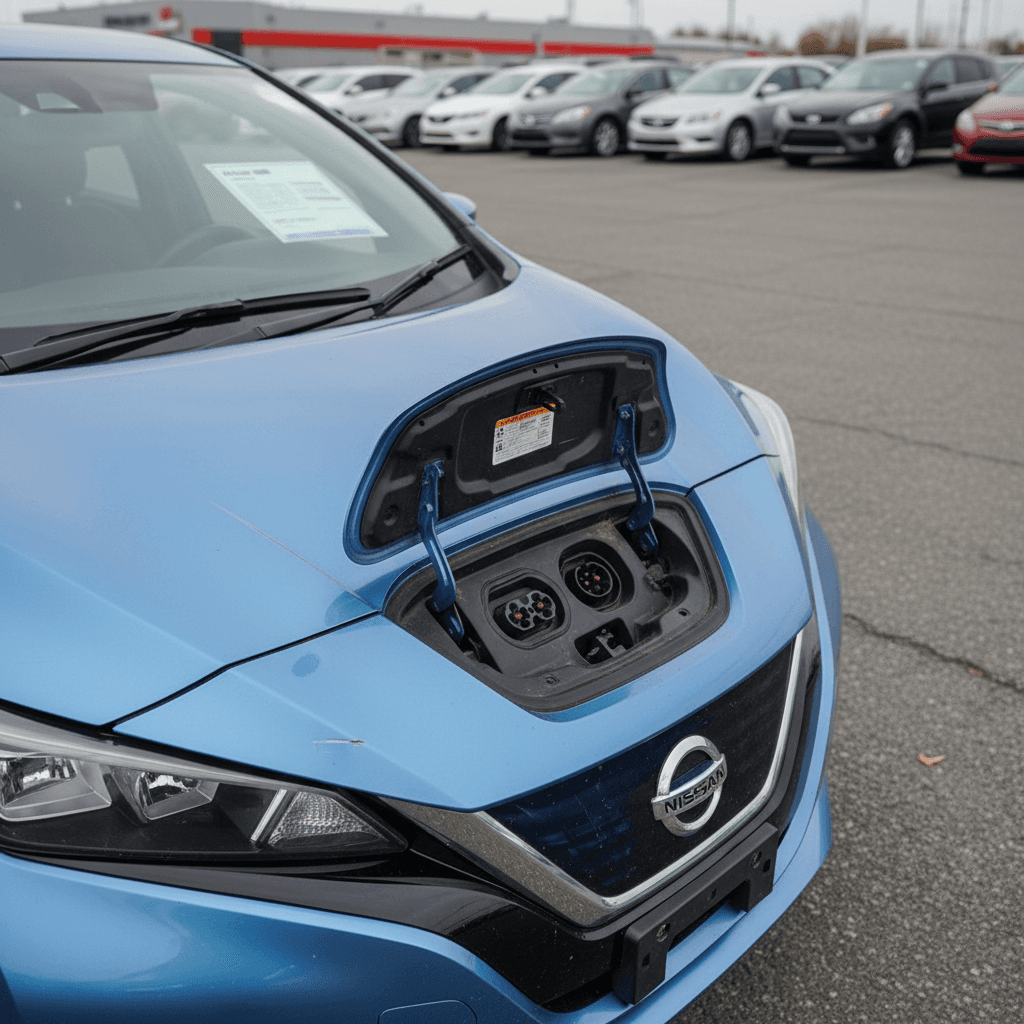
- Undamaged charge ports and cables.
- No obvious underbody rust or crash repairs.
- Up‑to‑date tires and brakes, especially on heavier 62 kWh models.
History red flags in 2026
- Repeated “rapid gate” incidents or thermal issues on long fast‑charge sessions.
- Gaps in service records or missing battery‑check documentation.
- Salvage or rebuilt titles, especially after front‑end collisions damaging the battery pack.
- Non‑transparent aftermarket battery swaps with no paperwork.
Carfax isn’t enough
How to get top dollar for your Nissan Leaf in 2026
If you’re selling or trading your Leaf in 2026, your goal is simple: prove that the car will deliver easy, predictable electric miles for the next owner. Here’s how to stack the deck in your favor.
Seller checklist: boosting your Leaf’s resale value
1. Get a recent battery‑health report
Have the pack scanned with LeafSpy or, better yet, obtain a <strong>Recharged Score battery‑health report</strong>. Being able to show SOH percentages and estimated range is worth real money.
2. Clean and detail thoroughly
Buyers forgive quirks more easily when a car looks cared for. Clean the charge ports, cargo area, and any stains on seats. A tidy Leaf photographs, and sells, better.
3. Gather maintenance and charging history
Print or save receipts for tire rotations, brake service, and any battery‑related work. If you mostly charged at home and drove moderate miles, mention it in your listing.
4. Fix inexpensive wear items
Worn wipers, a cracked windshield, or mismatched tires give buyers negotiation ammunition. Handling small items yourself often returns more than it costs.
5. Be honest about range and use case
If your Leaf is ideal as a city car with 60–70 miles of range, say that clearly. Honest positioning attracts the right buyer instead of endless low‑ball offers.
6. Compare selling paths
In 2026 you can sell privately, trade it at a dealer, or get an instant offer from marketplaces like <strong>Recharged</strong>, which specializes in EVs and prices around real battery health.
Pricing examples: what real-world Leaf values look like
To make this concrete, here are a few stylized examples of how two Leafs that look similar on paper can justify very different prices in 2026. These are not quotes, but they mirror the logic our pricing tools, and savvy private buyers, use.
Example A: 2015 Leaf S, 24 kWh
- 95,000 miles, 9 capacity bars (~70% SOH).
- Used mainly for city commuting in a mild climate.
- Cosmetic wear but no major accidents.
Value lens: Great second car or urban runabout with 50–60 miles of reliable range. Priced correctly, it can move quickly in the $5,000–$7,000 range in 2026.
Example B: 2019 Leaf SV Plus, 62 kWh
- 62,000 miles, 11–12 bars (~85–95% SOH).
- Documented home charging, few DC fast‑charge sessions.
- ProPILOT Assist, heat pump, clean history.
Value lens: Long‑range daily driver with 170–190 miles of usable range. In a healthy market this configuration often lands in the mid‑ to high‑teens, with strong demand.
How Recharged handles these cases
When it makes sense to keep vs. sell your Leaf
In 2026, the “right” move isn’t always to upgrade to a newer EV. Sometimes the best financial decision is to keep driving the Leaf you have, especially if it’s already taken the big depreciation hit.
Deciding whether to hold or move on from your Leaf
Good candidate to KEEP
Battery still shows 10–12 bars with enough range for your weekly routine.
Your insurance, taxes, and charging costs are far lower than a new‑car payment.
CHAdeMO limitations don’t bother you because you mostly charge at home.
You’re in a climate that’s gentle on batteries and degradation has been slow.
Good candidate to SELL
Capacity has dropped to 8–9 bars and range anxiety shows up on normal days.
You’re planning longer trips where CHAdeMO coverage is thin or pricey.
A looming battery warranty expiration will make the car harder to move later.
You’d like to move into a newer EV with CCS or NACS fast‑charging and more modern safety tech.
Run the math before you decide
Nissan Leaf resale value FAQ (2026)
Frequently asked questions about Nissan Leaf resale value in 2026
In 2026, the Nissan Leaf sits in a unique corner of the EV world: it’s rarely the flashiest choice, but it’s often the most affordable way to get into electric driving. Its resale value lives or dies on battery health, usable range, and honest positioning. If you understand those pieces, and use tools like a Recharged Score battery‑health report, you can buy, sell, or trade a Leaf with confidence instead of guesswork.
Whether you’re ready to list your Leaf, trade it toward a longer‑range EV, or shop for a carefully vetted used model, Recharged is built around that kind of transparency. Every car comes with verified battery diagnostics, fair‑market pricing, and EV‑specialist support from first question to final signature, so the number you see on the screen actually matches the miles you’ll get on the road.