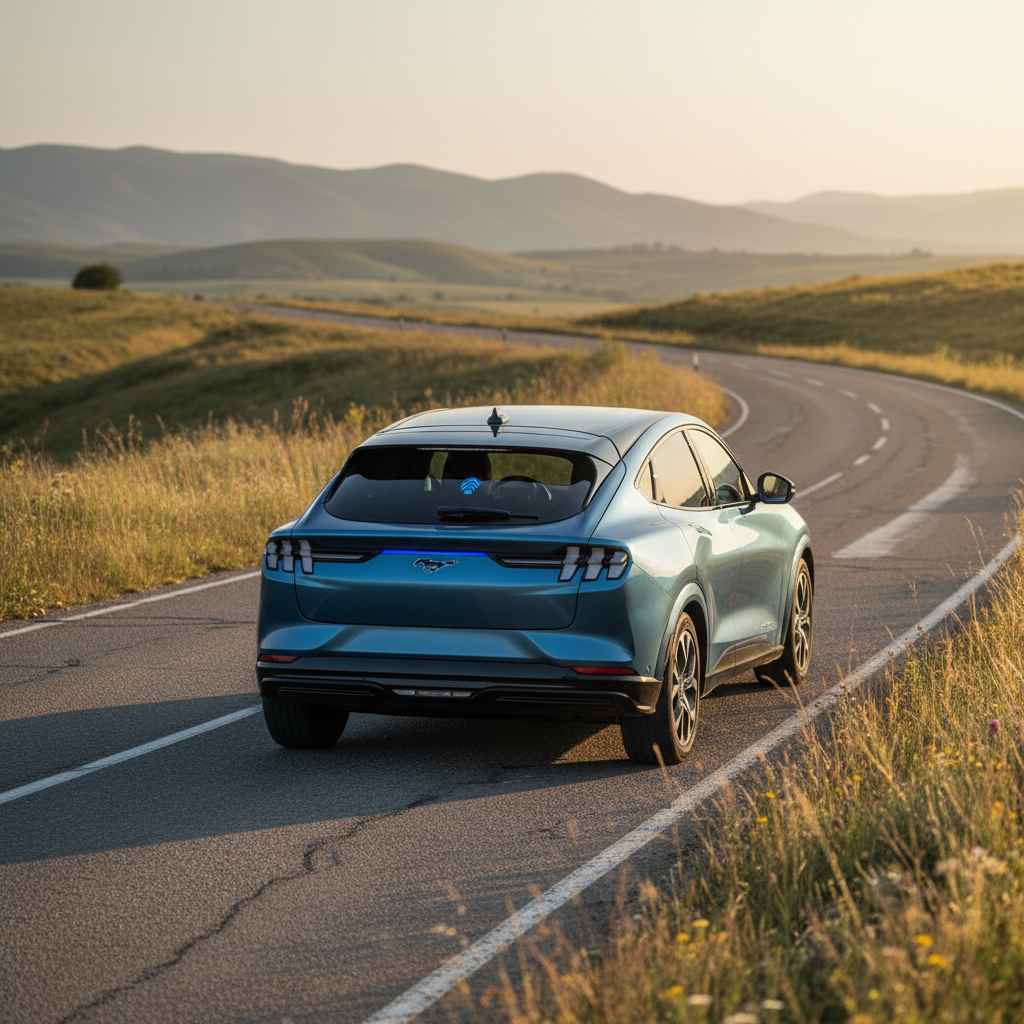
The 2024 Ford Mustang Mach-E is supposed to be the sensible performance EV: fast enough to be fun, but with the range to make a weekday commute or weekend road trip feel easy. On paper, the 2024 Mach-E stretches its legs with more range and faster charging than earlier years. In the real world, though, your actual range depends heavily on trim, speed, temperature, and how you drive. This guide walks through **2024 Ford Mustang Mach-E range tests**, what owners are really seeing, and what it all means if you’re shopping new or used.
Why this matters
2024 Mustang Mach-E range: the quick take
2024 Mustang Mach-E range snapshot
For the 2024 model year, Ford quietly did the unglamorous work that actually matters: **incremental range and charging improvements**. Extended-range rear-wheel-drive (RWD) Mach-E Premium models now claim up to about 320 miles of EPA range, while all-wheel-drive (AWD) trims typically live in the 240–300 mile band, depending on battery size and power level. In independent 70‑mph highway tests, well-driven extended‑range Mach-Es have actually beaten their EPA figures, nudging close to 300 miles before tapping out, while earlier extended-range AWD examples already showed around 299 miles in similar testing. In other words, the Mach-E is no range fraud.
Rule of thumb
EPA-estimated range by 2024 Mach-E trim
Ford offers the 2024 Mustang Mach-E in multiple trims, with two basic battery sizes: **standard range** (around 73–78 kWh usable) and **extended range** (around 88–91 kWh usable), in both RWD and eAWD configurations. Official EPA estimates vary a bit by wheel size and options, but the broad strokes below are what you’ll actually find on window stickers.
2024 Ford Mustang Mach-E EPA-estimated range (approximate)
Representative EPA range figures for common 2024 Mach-E configurations. Always verify the exact number on the specific VIN’s window sticker or EPA label.
| Trim / Battery | Drive | Battery type | EPA-est. range (mi) | Use case |
|---|---|---|---|---|
| Select SR | RWD | Standard range | ≈260 | Daily commuter, lower price, solid range |
| Select SR | eAWD | Standard range | ≈240 | All-weather confidence, modest range hit |
| Premium SR | RWD | Standard range | ≈260 | Efficient spec with more features |
| Premium ER | RWD | Extended range | ≈320 | Max-range Mach-E; ideal for road trips |
| Premium ER | eAWD | Extended range | ≈300 | All-weather long-range sweet spot |
| GT ER | eAWD | Extended range | ≈280 | Performance-first, still road-trip capable |
| Rally ER | eAWD | Extended range | ≈265 | Off-pavement fun with a range penalty |
Extended-range RWD models deliver the headline 320-mile figure; AWD and performance trims trade some range for power and traction.
Mind the wheels
How real-world Mach-E range tests are done
Before you compare numbers, you need to know how testers get them. A serious **2024 Ford Mustang Mach-E range test** doesn’t involve noodling around the neighborhood until the battery icon turns blue. The standard approach looks something like this:
- Charge the Mach-E to 100% on Level 2 or DC fast charging, then let the battery rest briefly so the state of charge (SoC) stabilizes.
- Set tire pressures to the factory spec and disable eco‑unfriendly toys like heated seats unless the test is specifically about winter use.
- Pick a test loop, often a highway segment, so the car runs steady speeds and can return to the same charger.
- Drive at a **constant GPS-verified speed**, usually 70 mph, using cruise control as much as possible.
- Record energy use (kWh consumed) and distance until the Mach-E reaches a set low‑battery threshold (typically 0–5% remaining), not just when the guess‑o‑meter scares you.
- Calculate actual efficiency in **kWh/100 mi or Wh/mi**, and compare the observed distance to the EPA estimate.
Why 70 mph?
2024 Mach-E highway range test results
Independent testing of Mach-E models with the extended-range battery and AWD has already shown the car can **outperform its EPA rating** at a steady 70 mph, with earlier extended-range AWD examples delivering around 299 miles against a roughly 270‑mile rating in controlled tests. With the 2024 tweaks that bump EPA estimates for extended‑range AWD to about 300 miles, highway results in good conditions often land very close to that headline figure, sometimes a bit above, sometimes a bit below, depending on wind, temperature, and traffic.
Extended-range Premium RWD (≈320 EPA)
- Highway test: ~280–295 miles at a true 70 mph in mild temps.
- Observed efficiency: roughly 3.1–3.3 mi/kWh (about 31–33 kWh/100 mi).
- Realistic buffer: Plan stops around 230–250 miles if you like a 15–20% cushion.
GT extended-range eAWD (≈280 EPA)
- Highway test: ~240–260 miles at 70 mph, depending on wheel/tire choice.
- Observed efficiency: closer to 2.7–2.9 mi/kWh thanks to stickier rubber and more power.
- Realistic buffer: Road-trip legs of 200–220 miles feel comfortable.
The pleasant surprise
City vs highway: where the Mach-E shines
Like most EVs, the Mach-E is a bit of a split personality. In low‑speed, stop‑and‑go driving, regen braking lets the car claw back energy every time you lift off the accelerator. On the highway, there’s no such free lunch; you’re paying the full price in air resistance.
Mach-E efficiency in the real world
Same battery, different life depending on your driving mix.
Urban & suburban driving
- Shorter trips, lower speeds, one‑pedal driving.
- Regen braking often boosts efficiency beyond EPA combined figures.
- Owners frequently see **better-than-rated** efficiency in temperate weather.
Highway commuting & road trips
- Steady 65–75 mph means aero drag dominates.
- Expect **10–15% lower** range than EPA in mild temps; more at higher speeds.
- Roof boxes, bikes, and crosswinds further erode range.
If you mostly do short trips
Cold-weather range: what actually happens
Cold is the villain in every EV story, and the Mach-E is no exception. Batteries are chemical soups; chill the soup and everything slows down. Cabin heating also draws straight from the battery, unlike a gas car that gets warmth as waste heat from combustion.
Typical winter range loss
- In the 20s–30s °F, it’s normal to see **20–30% less** range than EPA combined, especially at highway speeds.
- Short, stop‑and‑go trips are worst: the car keeps reheating a cold cabin and cold battery.
- Extended‑range packs suffer the same percentage drop, but because they start higher, you’re left with more usable miles.
How to protect winter range
- Precondition the cabin while plugged in so you’re using grid power, not battery power, for that initial warm‑up.
- Use heated seats and steering wheel first; they sip electrons compared with the HVAC blower.
- On longer trips, let the car manage battery conditioning before fast charges, Ford’s software will do this when you navigate to a DC fast charger in the built‑in route planner.
Don’t panic at the first cold snap
Charging speeds, road trips, and planning your stops
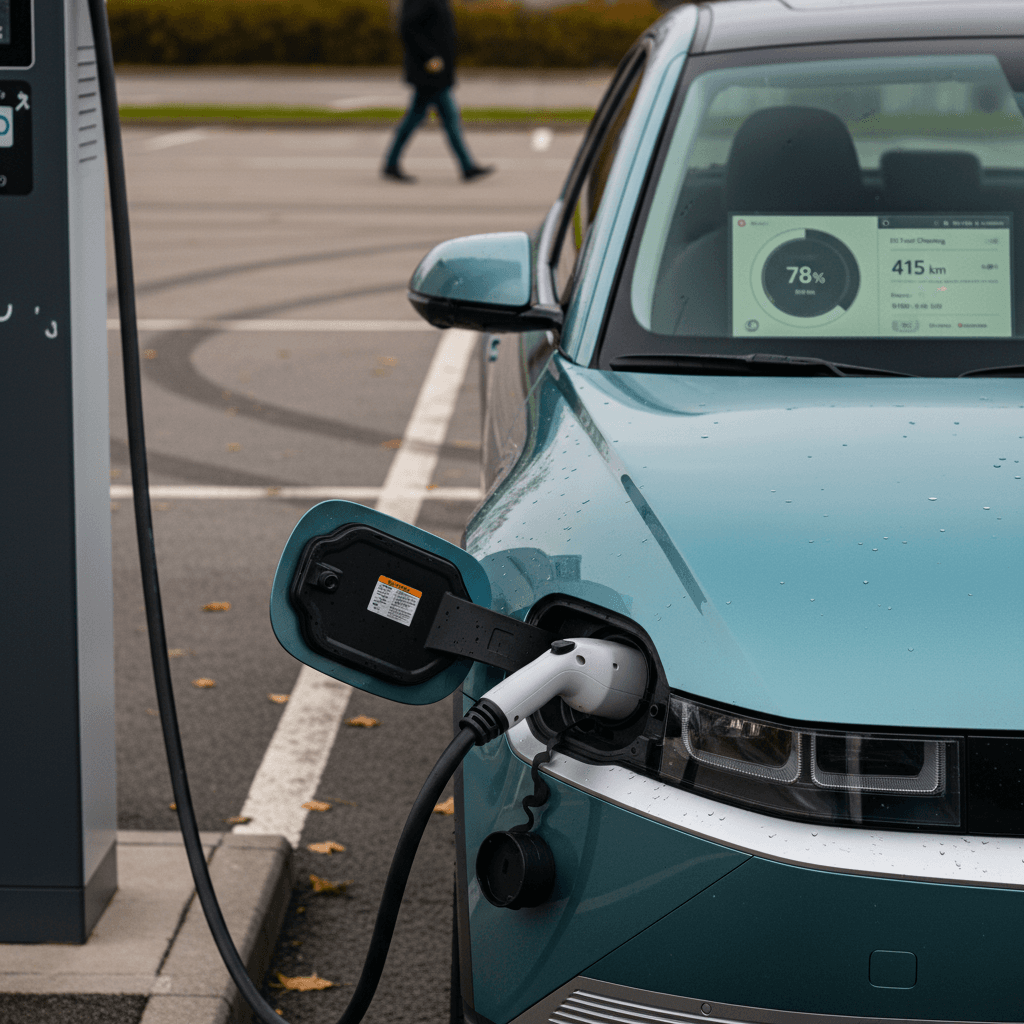
Ford gave the 2024 Mustang Mach-E not just more range, but **meaningfully faster DC fast‑charging**, especially with the extended‑range pack. On a capable 150 kW charger, Ford quotes roughly 10–80% in about 36 minutes for extended‑range models and just over 30 minutes for standard‑range packs, shaving several minutes off earlier years. That’s useful time when you’re juggling kids, snacks, and the eternal question of which exit has the least depressing coffee.
Planning a realistic Mach-E road trip
1. Start high, don’t aim for 100% every time
Leave your house or hotel around 80–90% if possible. Save 100% charges for days when you truly need the full pack; it’s kinder to the battery over the long term.
2. Plan legs around 150–220 miles
For most 2024 Mach-E trims, 2–3 hours between stops balances range and comfort. It also keeps you in the fast‑charging sweet spot (roughly 10–60% state of charge).
3. Prioritize reliable DC fast networks
Use apps to filter for 150 kW+ stations with multiple stalls. With Ford gaining access to Tesla’s Supercharger network, your 2024 Mach-E’s fast‑charging options improve dramatically when equipped with the proper adapter or NACS port.
4. Watch elevation and wind
Climbing long grades or driving into a strong headwind can easily add 10–15% to energy use. Give yourself extra margin in mountainous or exposed areas.
5. Charge while you eat
Plan charging stops at places with food and restrooms so the car is ready before you are. A well‑placed 30‑minute stop can add 150–200 miles back into an extended‑range pack.
Peak speeds kill range
Buying a used Mach-E? Range questions to ask
Used EV shoppers live in the gap between theory and reality. On paper, every 2024 Mustang Mach-E still has its shiny EPA number; in life, batteries age, previous owners abuse DC fast chargers, and tires get swapped for heavy all‑seasons. The trick is separating a healthy Mach-E from one that’s already middle‑aged at the cellular level.
Range-focused questions for a used 2024 Mach-E
You’re not just buying a car; you’re buying the remaining life in that battery pack.
1. How was it charged?
Ask how often the previous owner used DC fast charging and whether the car lived mostly at 80–90% or was habitually charged to 100% and parked hot.
2. What’s the typical range now?
A thoughtful seller should know what they get at 70 mph on the highway and on their daily commute. Vague answers are a yellow flag.
3. Any range-affecting mods?
Oversized wheels, aggressive tires, roof racks, or permanent cargo loads can quietly steal 20–30 miles of range compared with stock.
How Recharged helps
Range-savvy used Mach-E inspection steps
Check the on-screen range vs state of charge
If a 2024 Mach-E Premium ER RWD shows well under 250 miles at 80% on a mild‑day test drive, ask why. Tires, driving history, or battery health could be factors.
Look at trip computer data
Reset a trip and drive 15–20 miles at mixed speeds. Compare projected energy use (kWh/100 mi) to EPA combined; big deviations warrant questions.
Ask for recent software updates
Ford has rolled out updates improving charging behavior, range estimation, and drive modes. A fully‑updated Mach-E is generally a happier, more efficient one.
Test a real fast charge if possible
A brief DC fast‑charge session will show if the car can approach expected power (up to roughly 150 kW for the extended‑range pack) and whether charge speed falls off unusually early.
FAQ: 2024 Ford Mustang Mach-E range
Frequently asked questions about 2024 Mach-E range
Bottom line: how far will a 2024 Mach-E really go?
Strip away the marketing and the Mustang badges and you’re left with a very straightforward truth: the **2024 Ford Mustang Mach-E is a genuinely capable long‑range EV**. In its most efficient trims, it will comfortably knock out close to 300 miles on the highway and more around town, provided you treat the accelerator and climate controls with something less than track‑day enthusiasm. Even the quicker GT and Rally models, shod with performance tires and bravado, remain thoroughly usable as daily drivers and weekend wanderers.
If you’re shopping new, match the battery and drive configuration to your life: standard‑range if your world is local, extended‑range if your map has more pins than you’d like to admit. If you’re shopping used, don’t settle for vague assurances about range; look for evidence. With tools like the **Recharged Score**, which verifies battery health, pricing, and charging behavior, you can choose a 2024 Mach-E that still has most of its miles in front of it, not behind. That’s the difference between owning an electric Mustang that feels like the future and one that already feels like a footnote.